 EN
EN


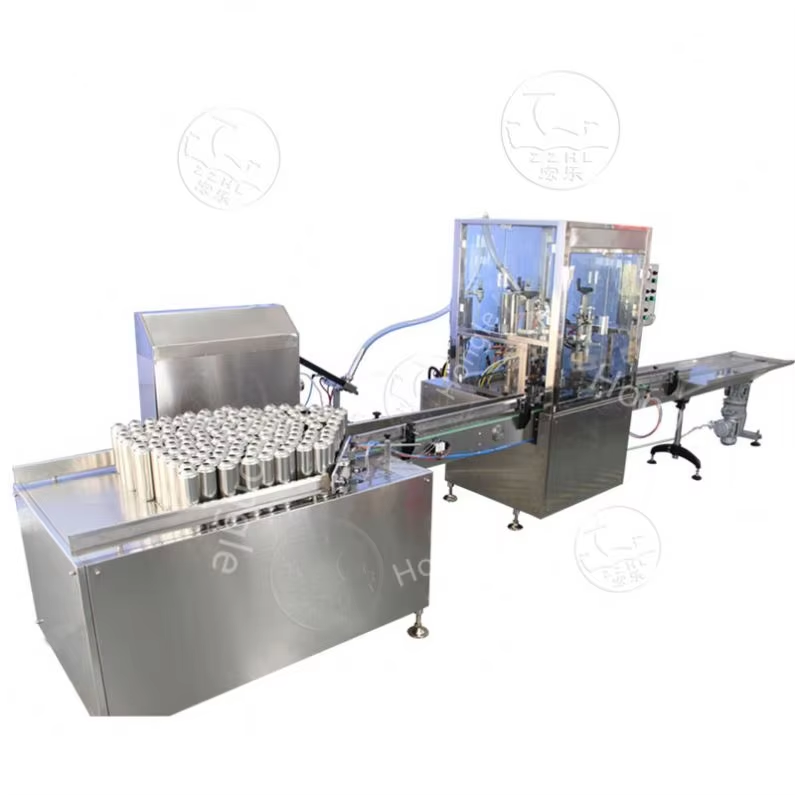
How Automatic Aerosol Filling Machines Work: From Can Feeding to Sealing
Core Principle Behind Automatic Aerosol Filling Machine Operation
Today's automatic aerosol filling machines work with synchronized electromechanical systems that bring together accurate metering, robot movement, and pressure control that loops back on itself. These machines have servo controlled nozzles which can fill containers with incredible precision, usually within half a percent of the desired amount. This kind of accuracy really matters when making products like detergents and sanitizers where consistency is key. The actual filling happens through carefully timed pressure changes that push the liquid into metal cans. Throughout all this, the system keeps the seals intact even as pressures vary between 15 and 45 pounds per square inch during operation.
Step-by-Step Process From Can Feeding to Sealing
- Can Feeding: Empty aerosol containers are aligned using vibratory bowls or conveyor belts for continuous flow.
- Orientation & Purge: Infrared sensors confirm correct positioning before nitrogen purging removes oxygen from sensitive formulations.
- Liquid Filling: Programmable Logic Controllers (PLCs) activate piston pumps to dispense base liquids such as cleaners or lubricants at speeds up to 120 cans/minute.
- Propellant Injection: Compressed hydrocarbon or HFA gases are injected under tightly regulated pressure conditions.
- Valve Crimping: Hydraulic arms apply 200–300N of crimping force to secure valves, with torque sensors verifying each seal's integrity.
Integration of Sensors and Control Systems in Automation
Advanced machines utilize redundant sensor networks for real-time quality assurance:
| System Type | Function | Tolerance Threshold |
|---|---|---|
| Laser Fill-Level Sensors | Detect under/overfills | ±1 mm liquid height |
| Pressure Transducers | Monitor propellant injection | ±2 PSI variance |
| Vision Inspection | Verify valve alignment | 0.3° angular deviation |
Data from these systems is fed to SCADA interfaces, enabling corrective adjustments within 2ms during high-speed operation.
Phenomenon: How Automation Transforms Aerosol Packaging Processes
Switching over to automated filling systems cut down on production mistakes by nearly 90% according to the Industrial Packaging Report for 2023. The dual arm robotic sealers are doing something pretty amazing too they get those containers sealed properly about 99.97% of the time. That's way better than what we see with semi automated equipment which only hits around 92%. As a result, companies have seen their product recall numbers drop by almost a third each year. What makes this technology really valuable is how it scales up so well. Manufacturers can run everything from small batches of disinfectant products at about 500 cans per hour right up to full scale industrial lubricant production lines making 2,400 cans an hour all without having to completely overhaul their main machinery setup.
Key Features and Benefits of Automated Aerosol Filling Systems
High Filling Accuracy and Production Efficiency in Modern Machines
Servo-driven pumps and real-time mass flow meters allow modern machines to maintain ±0.5% filling accuracy, supporting production rates of 300–600 cans per minute. Automated systems reduce material waste by 12–18% compared to manual methods while ensuring optimal propellant-to-product ratios critical for spray functionality.
Adjustable Filling Volumes for Different Product Types
Programmable logic controllers (PLCs) enable rapid changeovers between 100ml and 500ml containers, allowing manufacturers to switch between products like household disinfectants and industrial lubricants in under 15 minutes. This flexibility meets the needs of 87% of manufacturers producing three or more aerosol variants annually (2023 Packaging Efficiency Study).
Advanced Automation Improves Consistency and Reduces Human Error
Integrated vision systems inspect cans every 0.2 seconds, achieving a 99.98% defect detection rate. Automated pressure monitoring maintains a tight ±2 PSI tolerance during propellant injection–an essential safety measure for flammable formulations.
Reduced Labor Costs and Operational Errors Through Full Automation
Fully automated lines require only 1–2 technicians versus 8–12 on semi-automated systems, reducing labor costs by 60–75% (2023 Filling Automation Benchmark). Closed-loop feedback corrects deviations instantly, lowering batch rejection rates from 3.2% to 0.4% in standard detergent production.
Fully Automated vs Semi-Automated Systems: Evaluating Trade-offs
| Factor | Fully Automated | Semi-Automated |
|---|---|---|
| Production Capacity | 18,000+ cans/hour | 2,500–4,000 cans/hour |
| Labor Requirement | 1–2 operators | 4–6 operators |
| Changeover Time | 20–30 minutes | 10–15 minutes |
| Ideal Application | High-volume detergent production | Niche product lines |
Automated systems deliver a 23% faster ROI when producing over 5 million units annually, though semi-automated setups remain advantageous for smaller operations during product development phases.
FAQ
How do automatic aerosol filling machines maintain filling accuracy?
Automatic aerosol filling machines use servo-driven pumps and real-time mass flow meters to maintain filling accuracy, ensuring precision within ±0.5% of the desired amount.
What safety measures are in place for handling flammable substances?
The machines incorporate flameproof electrical components, explosion-proof enclosures, emergency pressure relief valves, and vapor detection sensors to ensure safe handling of flammable substances.
What are the advantages of fully automated aerosol filling systems?
Fully automated systems offer higher production capacity, reduced labor costs, improved filling accuracy, and lower operational errors compared to semi-automated systems.
How do these machines reduce labor costs?
Fully automated lines require only 1–2 technicians for operation, significantly lowering labor costs by 60–75% compared to semi-automated systems which need more personnel.
