 EN
EN


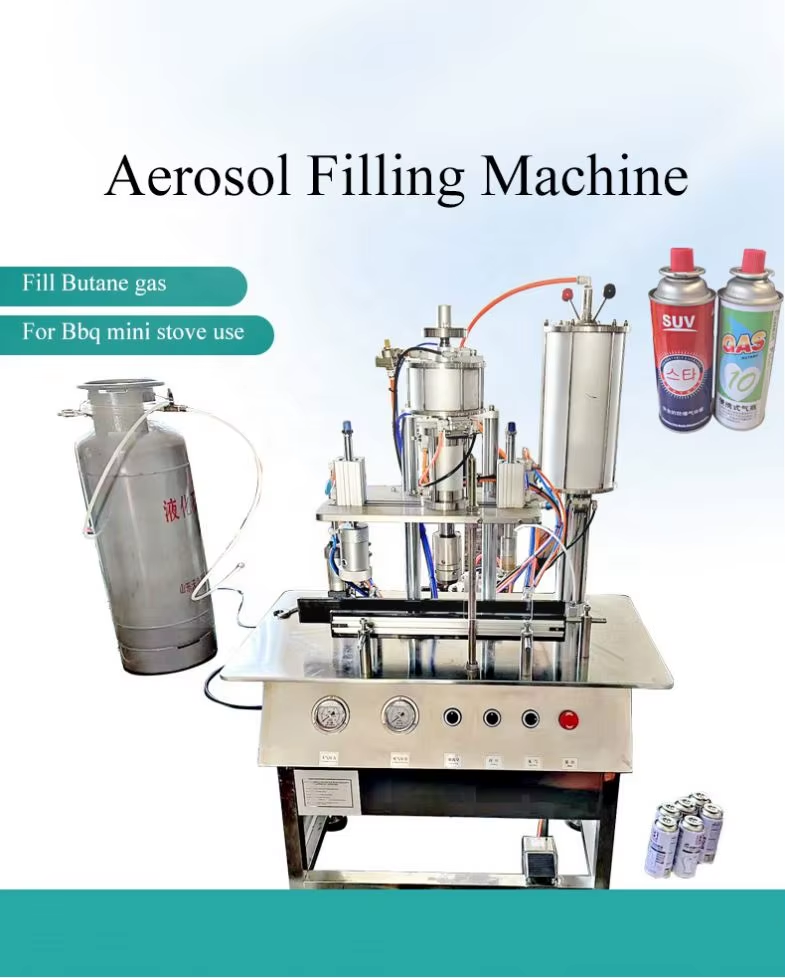
Meeting Market Demand with Versatile Aerosol Filling Solutions
Growing Production Needs in the Carb Cleaner and Detergent Aerosol Markets
Carb cleaner and detergent aerosol manufacturers need filling equipment that can handle production cycles nearly 18% faster than what was possible back in 2020 according to Future Market Insights data from last year. Industry experts are predicting pretty solid growth too, around 7.2% annual increase in aerosol product sales all the way through 2033. Most of this demand will come from automotive and industrial cleaning applications, which should account for about 42% of all new equipment purchases as per the latest Aerosol Production Report from 2024. These days, plant managers want machines that can easily switch between different types of cleaners like solvents and alkaline detergents without needing constant recalibration. The reason? Fill volumes have gotten really tight specifications now, down to just plus or minus half a milliliter across various products.
How Multi-Function Equipment Improves ROI Through Operational Flexibility
Modern multi-function aerosol fillers deliver measurable ROI improvements through three key advantages:
- 57-second changeovers between carb cleaner and detergent production, slashing transition time from the 12 minutes required by manual systems
- 98% propellant recovery rates, significantly reducing material waste during formulation swaps
- Simultaneous line operation via partitioned filling chambers for mixed-product batches
The use of automated valve alignment tech cuts down on downtime significantly, about one third less than what we see with those old single purpose machines. Manufacturers can actually spend around three quarters of their shift time actually producing goods rather than dealing with breakdowns, according to Future Market Insights from last year. These systems are quite different from things like film blowing equipment because they're built to grow with the business. When market conditions change, companies don't need to scrap entire systems but can simply adjust the hardware configuration. This kind of flexibility makes them much better suited for evolving manufacturing needs over time.
Key Features of Multi-Function Aerosol Filling Equipment
Precision Filling Mechanisms for Consistent Carb Cleaner Output
Servo-controlled piston dispensers combined with gravimetric verification ensure ±1% fill accuracy, critical for maintaining precise solvent-to-propellant ratios in carb cleaners. Deviations beyond 2% can impair cleaning efficacy (2023 Aerosol Formulation Standards). Advanced systems also feature real-time viscosity compensation, adjusting output dynamically to maintain consistency across temperature-sensitive batches.
Integrated Safety Systems for Handling Volatile Solvents and Propellants
Explosion-proof Grade I Division 1 certifications and nitrogen-purged enclosures comply with ASTM E681-23 standards for flammable compound processing. Automated vapor recovery captures 98% of VOC emissions during propellant charging, and redundant pressure relief valves activate within 0.3ms during overpressurization events, enhancing operational safety.
Automated Product Changeover to Reduce Downtime and Increase Throughput
Color-coded quick-connect assemblies enable complete formula transitions in under nine minutes—73% faster than manual setups (2024 Packaging Machinery Efficiency Report). Self-clearing product pathways eliminate cross-contamination risks between solvent-based carb cleaners and alkaline detergents, with Clean-in-Place (CIP) cycles requiring just 12L of purge solvent per changeover.
Enhancing Production Efficiency with Smart Filling Technology
Real-Time Monitoring and Error Detection for Reliable Filling Cycles
IoT-enabled sensors monitor fill volumes and valve integrity with ±0.5% accuracy during carb cleaner runs. This continuous monitoring detects viscosity anomalies in detergent formulations 30% faster than manual inspections (Process Sensing Group 2023), allowing immediate corrections before underfilled or off-spec cans proceed to packaging.
Predictive Maintenance Powered by Data Analytics to Prevent Equipment Failure
Machine learning algorithms analyze pump wear trends and propellant flow data to anticipate maintenance needs. Facilities using AI-driven predictive maintenance report 35% fewer unplanned outages annually compared to those relying on fixed schedules (McKinsey 2023), extending nozzle service life by 22% when processing abrasive solvents.
Balancing Full Automation and Operator Involvement for Optimal Control
While automation manages 90% of filling operations, human oversight remains essential for verifying solvent purity, adjusting pressure settings for seasonal fluctuations, and validating emergency shutdown protocols. Semi-automated workflows allow rapid adaptation to new detergent thickeners without halting production, achieving 18% faster changeovers than fully robotic systems.
FAQs: Versatile Aerosol Filling Solutions
What benefits do multi-function aerosol fillers offer?
Multi-function aerosol fillers offer faster changeovers, higher propellant recovery rates, and simultaneous line operation, enhancing operational flexibility and ROI.
How do these systems ensure precision filling?
These systems use servo-controlled piston dispensers and gravimetric verification to ensure ±1% fill accuracy, crucial for maintaining solvent-to-propellant ratios.
Are the safety features compliant?
Yes, these systems include explosion-proof certifications and vapor recovery, complying with ASTM E681-23 standards for flammable compounds.
How does smart filling technology enhance production efficiency?
Smart filling technology utilizes IoT sensors and predictive maintenance to enhance reliability, reduce outages, and optimize production efficiency.
