 EN
EN


Match Produce Type and Sensitivity to Vegetable Washing Machine Design
Leafy Greens: Low-impact agitation and gentle spray systems
For spinach, lettuce, and kale, machines with buoyancy tanks or flume systems minimize physical damage. Gentle oscillating spray bars operating below 2 bar pressure remove soil while preserving cellular integrity. Perforated conveyor belts support thorough drainage without compression bruising—critical for maintaining crispness and shelf life.
Root Vegetables and Tubers: Robust brush rollers and abrasive cleaning action
Potatoes, carrots, and beets require counter-rotating brush rollers with medium-stiff bristles to effectively scrub entrenched soil. Adjustable pressure settings (15–30 psi) and integrated stone traps prevent debris-related damage. Cylindrical brush designs reduce peel loss by 18% compared to flat-brush systems when processing root crops—a validated efficiency gain in commercial trials.
Delicate Fruits (e.g., berries, tomatoes): Conveyor-based, non-contact hydro-rinse options
Waterfall-style or air-knife assisted rinsing tunnels deliver laminar-flow water curtains at controlled temperatures (4–10°C), often enhanced with microbial-reduction additives like peracetic acid. Non-contact cleaning preserves natural surface waxes essential for moisture retention and shelf-life extension—reducing post-harvest waste in berries by up to 23%.
Evaluate Throughput, Scalability, and Integration with Your Processing Line
Sizing capacity (kg/hr) against current volume and 2–3 year growth projections
Align hourly throughput (kg/hr) with both current peak volumes and realistic 2–3 year growth projections—based on sales forecasts or market analysis. Undersized equipment creates bottlenecks; oversized units increase energy use and capital expense without performance gains. A facility processing 500 kg/hr today with a 30% annual growth target would need ~900 kg/hr capacity within three years. Adjustable speed controls allow dynamic response to yield variability while sustaining cleaning efficacy.
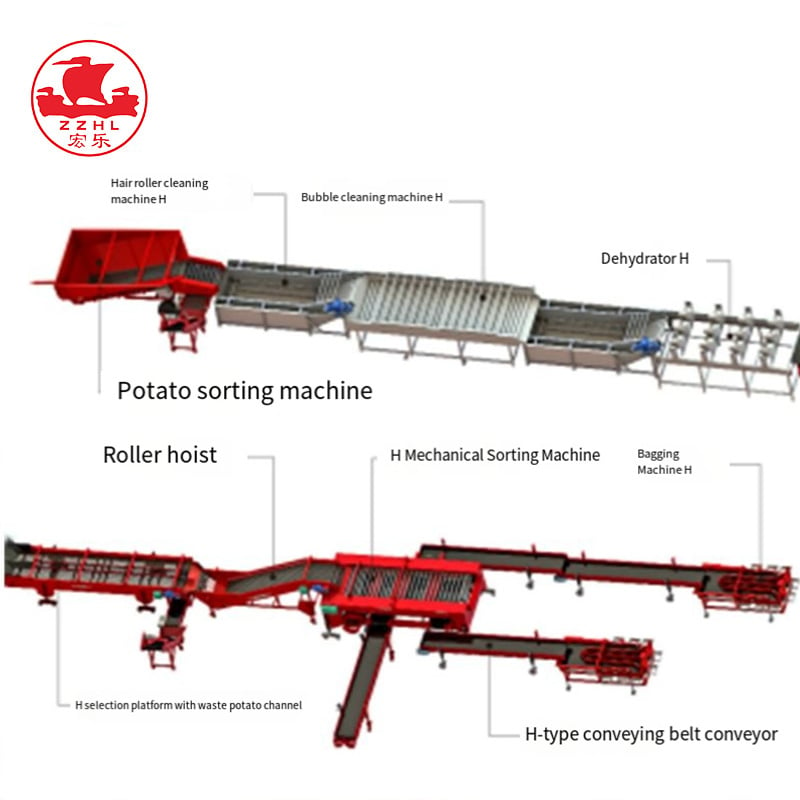
Modular design and compatibility with existing equipment (e.g., potato lines, sorting conveyors)
Modular vegetable washing systems must integrate seamlessly with upstream (e.g., peelers, destoners) and downstream (e.g., sorting, packing) equipment. Confirm compatibility across flange dimensions, PLC communication protocols, and conveyor height synchronization. Quick-change brush cassettes or nozzle arrays enable reconfiguration between crop types within a single shift—especially valuable in mixed-production facilities. Structural frames should accommodate standard mounting points to avoid costly retrofits during upgrades to legacy potato or carrot lines.
Ensure Compliance, Sanitation, and Long-Term Reliability
Food-grade materials (SUS304 stainless steel), NSF/CE certification, and clean-in-place (CIP) readiness
Vegetable washing machines must be constructed from SUS304 stainless steel—corrosion-resistant, non-reactive, and compliant with FDA and EU food contact regulations. NSF or CE certification validates adherence to global hygiene standards, correlating with a 72% reduction in contamination risk in commercial environments (Food Safety Journal, 2023). Clean-in-place (CIP) capability enables automated sanitation without disassembly, cutting downtime by 40% versus manual cleaning. Systems combining these features demonstrate 90% higher average lifespan—supporting consistent compliance, product safety, and operational continuity.
Compare Cleaning Technologies: Brush, Spray, and Hybrid Systems
Selecting the optimal cleaning mechanism directly influences produce quality, water efficiency, and food safety outcomes. Matching technology to crop physiology ensures reliable performance across harvest cycles.
Brush roller configurations: Standard vs. hard bristle for peeling vs. surface cleaning
Standard soft-to-medium bristle rollers safely remove soil from delicate produce like peppers or zucchini without bruising. Hard nylon or abrasive rollers are reserved for peeling dense root vegetables, mechanically dislodging clods and thin outer skins. Precision matching of bristle firmness to produce resilience maximizes debris removal while preventing surface damage.
Adjustable high-pressure spray nozzles: Optimizing water use, residue removal, and microbial reduction
Adjustable high-pressure spray systems (30–100 psi) enable targeted residue removal—from fine pesticide films on apples to coarse sand on carrots. This precision reduces water consumption by up to 40% compared to flood rinsing while achieving >95% microbial reduction, as verified in third-party food safety audits. Strategic nozzle placement ensures full coverage during conveyor transit and supports seamless integration with CIP sanitation protocols.
FAQ
What type of vegetable washing machine is best for leafy greens?
For leafy greens like spinach or lettuce, machines with buoyancy tanks and gentle oscillating spray systems are ideal to avoid damage and maintain shelf life.
How can I process root vegetables without damaging them?
For root vegetables, counter-rotating brush rollers with medium-stiff bristles and adjustable pressure settings are effective. Adding stone traps further reduces damage risks.
What is the most suitable method for washing delicate fruits?
Conveyor-based hydro-rinse systems with laminar-flow water curtains are ideal for delicate fruits, as they ensure non-contact cleaning to preserve their natural coatings.
How do I choose equipment capacity for my processing line?
Estimate your equipment capacity needs based on current volumes and project growth for the next 2–3 years. Adjustable speed controls help adapt to fluctuating yields.
What materials should I look for in vegetable washers to ensure compliance?
Vegetable washers should use SUS304 stainless steel for food-grade compliance, and be NSF or CE certified to meet global hygiene standards.
Table of Contents
- Match Produce Type and Sensitivity to Vegetable Washing Machine Design
- Evaluate Throughput, Scalability, and Integration with Your Processing Line
- Ensure Compliance, Sanitation, and Long-Term Reliability
- Compare Cleaning Technologies: Brush, Spray, and Hybrid Systems
-
FAQ
- What type of vegetable washing machine is best for leafy greens?
- How can I process root vegetables without damaging them?
- What is the most suitable method for washing delicate fruits?
- How do I choose equipment capacity for my processing line?
- What materials should I look for in vegetable washers to ensure compliance?
