 EN
EN


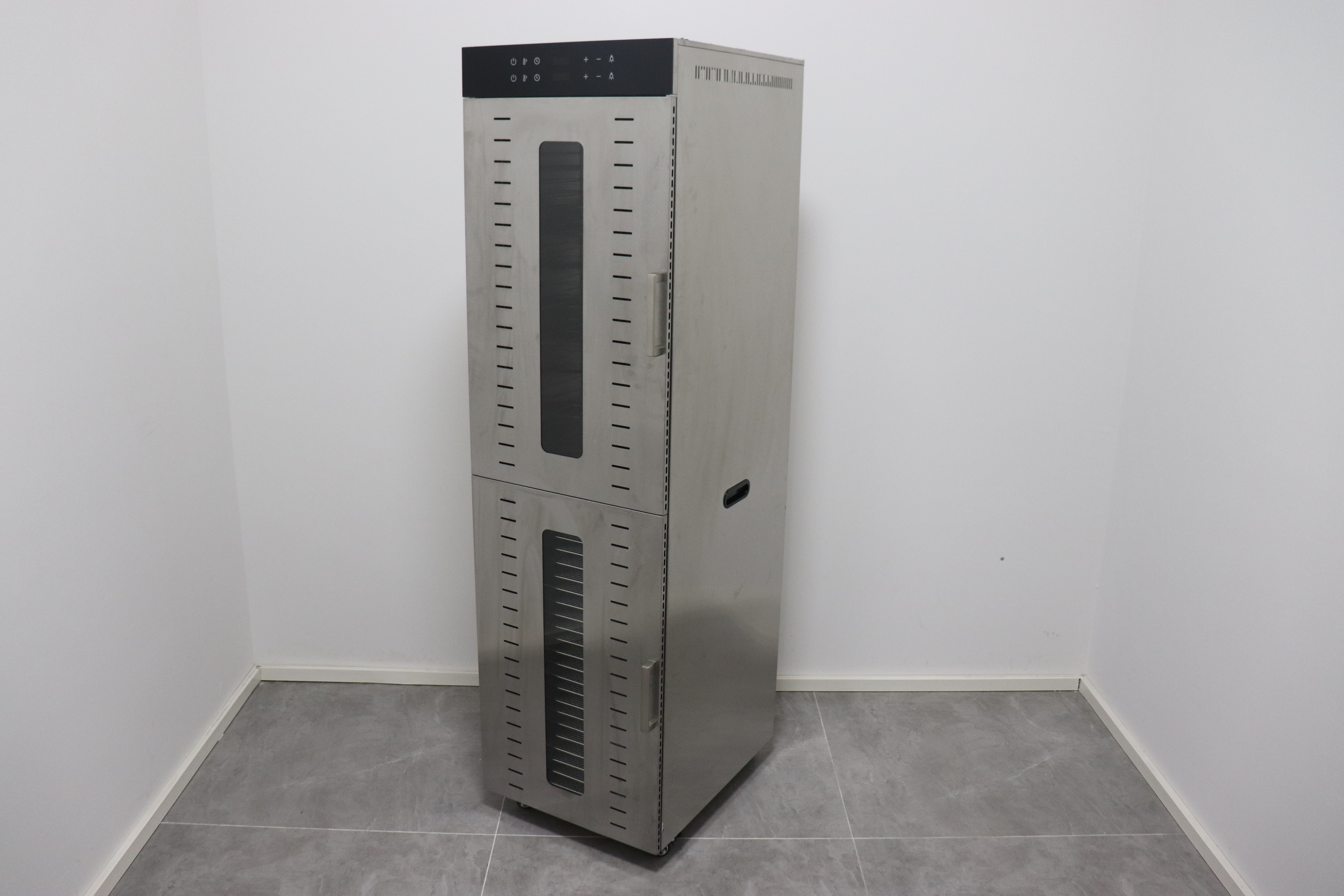
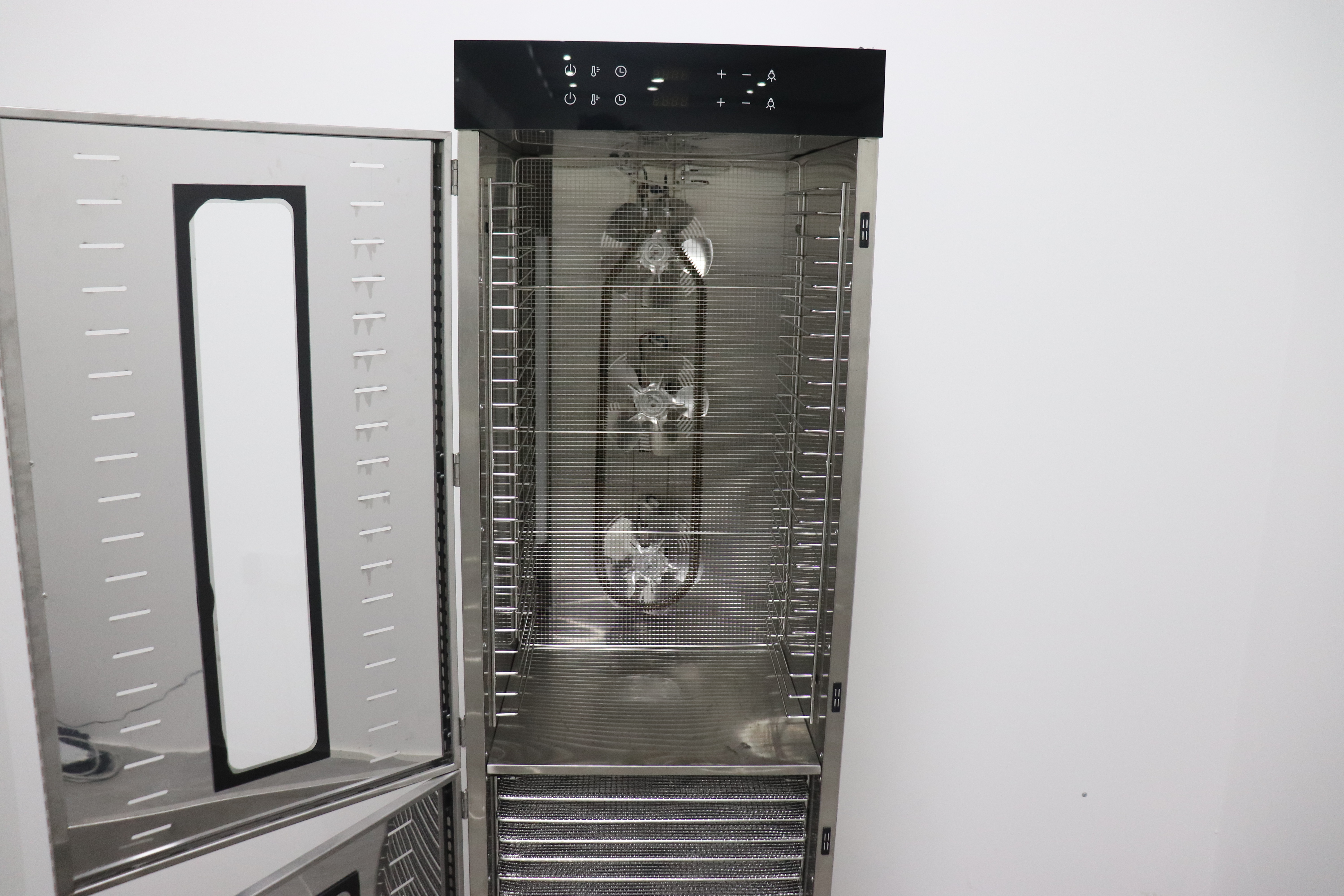
The core engineering principle of uniform airflow in a dehydrator
How uneven airflow leads to differences in moisture content and quality loss between trays
Inconsistent airflow within industrial dehydrators can lead to moisture content differences exceeding 8% between trays. This is primarily due to the airflow channel effect: high-speed airflow removes excessive moisture from the product (resulting in nutrient loss and surface hardening), while other areas remain unaffected, resulting in excessively high moisture content and potential safety hazards. These issues pose serious food safety risks, as bacteria can proliferate unchecked in underprocessed areas. Furthermore, fruits brown faster during processing than normal. Studies show that when moisture content differences exceed 3%, the shelf life of apple and tomato products is shortened by approximately 40%, and their ability to reabsorb moisture after drying decreases by 35%. The end result? Texture issues and uneven color, leading to poor product appearance and impacting market sales.
Mature design solutions: static baffles, rotating tray systems, and engineered perforated tray geometries
Three targeted engineering interventions can correct airflow imbalances:
- Static baffles with an aerodynamic shape can change the direction of turbulence and eliminate dead zones.
- The rotating pallet system continuously repositions the product through a 360° rotation cycle.
- The engineered porous tray employs a computational fluid dynamics (CFD) optimized aperture pattern to maintain ±5% airflow variation.
These measures work together to reduce moisture differences between trays to below 2%. Mango dehydration tests show that, compared to traditional designs, this method improves color retention by 90%, extends shelf life by 30%, and reduces energy waste caused by airflow compensation circulation.
Precise temperature control (±1°C) in the dehydrator
Why is the stability within ±1°C during fruit dehydration crucial for enzyme integrity, color retention, and shelf life?
Maintaining a stable temperature of around 1 degree Celsius during dehydration is crucial for preserving the biochemical properties of fruit. When enzymes such as polyphenol oxidase are exposed to temperatures outside this safe range, they either fail to shut down properly, leading to browning, or they decompose excessively, losing their nutritional value. To preserve the integrity of carotenoids, the temperature needs to be controlled within 50 degrees Celsius, with an error margin of no more than 1 degree Celsius. If the temperature exceeds this range, according to a study published last year in the journal *Food Chemistry*, mangoes will develop black spots more rapidly due to the Maillard reaction, increasing the rate by approximately 40%. The shelf life of food largely depends on the proper removal of moisture. Even a temperature fluctuation of only 2 degrees Celsius can leave enough moisture inside the food, making it easier for microorganisms to grow, thus shortening the shelf life by about 30%. Precise temperature control prevents so-called "surface hardening," the formation of an outer crust, and locks in internal moisture, ensuring uniform drying across different batches of food.
Industrial-grade PID control architecture and strategic sensor placement enable real-time thermal uniformity.
Modern dehydrators employ a three-layer PID (proportional-integral-derivative) control system with a response time of less than 25 milliseconds to maintain temperature uniformity within ±1°C. This architecture integrates:
| Control components | Function | Effect on uniformity |
|---|---|---|
| Proportional band | Adjust power immediately | Prevent ±5°C overshoot |
| Overall effect | Eliminate residual error | Compensation for load changes |
| Derivative control | Predicting thermal momentum | Offset environmental fluctuations |
The RTD temperature sensors are arranged according to computational fluid dynamics models and are typically installed in critical locations, such as air inlets and outlets, corners and center trays—geometric blind spots that are difficult to detect—and around areas where products are densely stacked. All of these sensors send real-time data back to the control system. What are the benefits of this? It allows for better control of heating components and fan operation throughout the plant. Test results show that this system reduces overheated or undercooled areas by approximately 92% compared to traditional on/off temperature control systems. This is crucial for handling perishable products such as berries, as the pigments in berries begin to decompose at temperatures reaching approximately 46 degrees Celsius.
Optimal load management: slice consistency, tray loading, and rotation schemes for uniform drying.
Empirical correlation (R² = 0.92) between slice thickness uniformity (±0.3 mm), drying rate uniformity, and reconstitution quality.
For industrial dehydrators, the precision of slice thickness is crucial. When the slice thickness error is controlled to around half a millimeter, the drying speed and subsequent rehydration effect of the product are significantly improved. Slices that are too thick or too thin will cause problems. Thicker slices retain moisture for a longer time, while thinner slices are prone to over-drying, which affects the product's texture and accelerates nutrient loss. Furthermore, the product's shelf life will be shortened. A regular shape helps moisture evaporate evenly and ensures adequate airflow to every corner of the tray. Most factories use laser cutting tools or high-precision slicing machines, which require inspection at least hourly to ensure accuracy. Some factories even have dedicated personnel to monitor these machines during shifts.
The tray rotation scheme and load density threshold were validated in dehydration experiments on apples, mangoes, and tomatoes.
Good loading management can avoid the annoying edge drying problem that plagues many drying operations. We tested several crops, including 6 mm thick apple slices, 8 mm thick mango chunks, and 5 mm thick tomato slices. The results showed that drying was most effective when the loading density was below 1.2 kg/m³ and the pallets were rotated 90 degrees every 90 minutes. If the loading density exceeded 1.5 kg/m³, the situation deteriorated rapidly. Obstructed airflow can extend drying time by 22% and result in approximately 15% scrap due to quality issues. Regularly rotating the pallets helps to counteract temperature differences on the drying surface. For fruits with high moisture content, such as tomatoes, rotating the pallets more frequently (e.g., once every 60 minutes) is even more effective. Following these guidelines can keep the moisture content of all pallets within ±7%, while saving approximately 18% in energy costs compared to keeping them stationary during processing.
Integrated parameter optimization for reliable dehydrator performance
For industrial dehydration to achieve consistent results, balancing airflow, temperature, and humidity is key. Tests show that when these factors work synergistically, energy consumption can be reduced by approximately 30%, and those annoying water stains that shorten shelf life disappear. Most traditional methods treat each factor individually, but real improvements come from focusing on their interactions. Take mango dehydration as an example—when humidity changes during dehydration, the system needs to automatically adjust airflow to maintain balance. Factories using this method report near-perfect batch consistency, with industry reports indicating around 99% consistency, especially with continuous parameter monitoring throughout the process. By fine-tuning mechanical components and environmental conditions, a simple dryer can become more efficient—a reliable tool for food preservation. Fruits, vegetables, and even delicate herbs can retain their nutrients for longer without constant manual adjustments by operators.
Frequently Asked Questions
What common problems can result from uneven airflow in a dehydrator?
Uneven airflow can cause moisture differences between trays, creating food safety risks and leading to texture problems, uneven coloring, and shortened shelf life of dry goods.
How can precise temperature control improve the quality of dehydrated fruit?
Precise temperature control maintains the integrity of the enzyme and stabilizes the temperature within ±1°C, thereby preventing browning, ensuring uniform drying, and extending shelf life.
Why is slice consistency crucial in the dehydration process?
Uniform slice thickness ensures even drying and optimal rehydration quality, preventing inconsistent texture and nutrient loss.
How do tray rotation and load management affect dehydration?
Pallet rotation and controlled loading density prevent edge drying problems, improve drying efficiency, reduce energy costs, and improve product quality.
Table of Contents
- The core engineering principle of uniform airflow in a dehydrator
- Precise temperature control (±1°C) in the dehydrator
- Optimal load management: slice consistency, tray loading, and rotation schemes for uniform drying.
- Integrated parameter optimization for reliable dehydrator performance
- Frequently Asked Questions
