 EN
EN


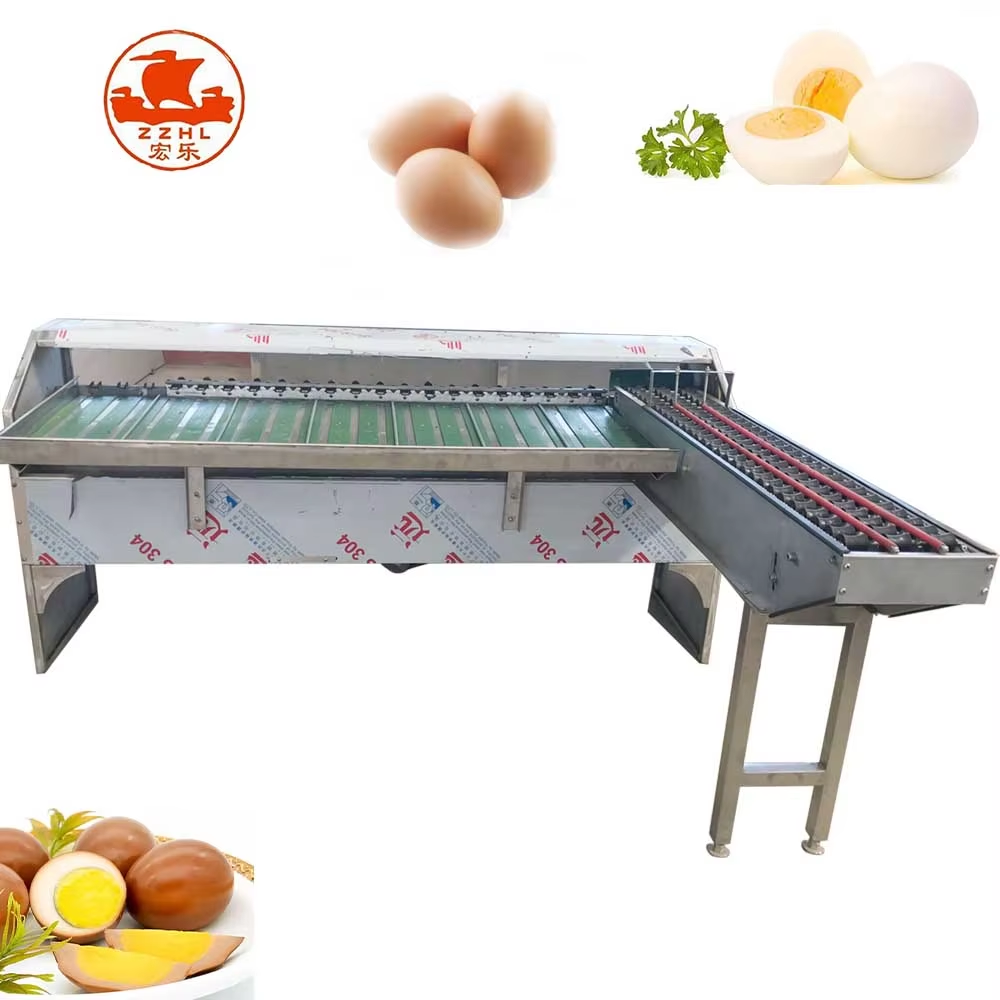
How Egg Washing Lines Ensure Food Safety Without Compromising Shell Integrity
Microbial reduction efficacy: Log-reduction benchmarks for Salmonella and Enterococcus under FDA- and EFSA-aligned wash protocols
Modern egg washing lines achieve 3–5 log reductions in Salmonella enteritidis and indicator organisms like Enterococcus through rigorously controlled, multi-phase protocols. FDA-aligned systems use warm water immersion (40–45°C) with food-grade detergents, while EFSA-compliant processes rely on pH-stabilized sanitisers (pH 6.0–7.0) to inhibit bacterial penetration without disrupting the cuticle. Deviations—such as water below 32°C or uncalibrated chemical concentrations—cut pathogen reduction by up to 60% (Food Safety Journal, 2023). Automated controls enforce precise dwell times of under 3 minutes, preventing cuticle erosion while consistently meeting regulatory microbial targets. This integration eliminates manual variability, a critical safeguard in high-volume operations where contamination risk scales nonlinearly.
The cuticle protection principle: Why water temperature, pH, and dwell time must align to prevent shell damage and post-wash sweating
The eggshell cuticle—a hydrophobic protein-lipid layer—is essential for blocking microbial ingress and limiting moisture loss. Its integrity is highly sensitive to processing conditions: water above 50°C denatures cuticular proteins, increasing shell porosity by 35%; alkaline solutions (pH >9.0) dissolve protective components within 90 seconds. Calibrated washing systems prevent “sweating”—post-wash condensation that rehydrates pores and invites recontamination—by maintaining three interdependent parameters:
- Temperature gradients ≤12°C between wash stages
- Neutral-pH sanitisers (6.2–6.8)
- Drying completed within 45 seconds using laminar airflow
This triad preserves structural function, resulting in 40% fewer hairline fractures and extending shelf life by up to 21 days—directly attributable to sustained natural defense mechanisms.
Egg Grading Machine Capabilities: From Regulatory Compliance to Real-Time Quality Intelligence
Class A vs. Grade AA standards: Mapping EU Regulation 1308/2013 and USDA grading criteria to automated inspection parameters
Today’s egg grading machines convert complex regulatory language into actionable, real-time quality control. Under EU Regulation 1308/2013, Class A classification requires verification of shell cleanliness, absence of cracks, and air cell depth ≤6 mm. USDA Grade AA imposes tighter internal quality thresholds—including albumen height ≥0.20 cm and sharply defined yolk contours. Modern systems enforce both standards via synchronized sensor suites:
- Shell analysis: Laser-based detection identifies hairline cracks with ≤0.1 mm resolution
- Weight classification: Dynamic load cells sort eggs to ±0.5 g accuracy
- Internal quality: Digital candling sensors measure air cell depth against jurisdiction-specific maxima
| Regulation | Key Automated Parameters | Tolerance Threshold |
|---|---|---|
| EU Class A | Air cell depth | ≤6 mm |
| USDA Grade AA | Albumen height | ≥0.20 cm |
| Both | Shell defects | Zero cracks >0.1 mm |
Vision-based quality metrics: Crack detection, air cell depth, yolk index, and albumen height — how modern egg grading machines quantify freshness
Multi-spectral vision systems now translate optical data into objective freshness indicators. Near-infrared sensors non-invasively assess yolk index (YI)—a composite metric reflecting centration, membrane elasticity, and lipid stability—while laser profilometry quantifies albumen height decay, directly correlating with protein denaturation over time. Hyperspectral imaging detects micro-cracks with 99.2% accuracy (Poultry Science, 2023) by analyzing light refraction anomalies at sub-surface levels. These metrics are predictive: eggs with air cells >4 mm and YI <0.25 degrade 35% faster than those meeting Grade AA benchmarks. Real-time algorithms automatically downgrade borderline eggs—e.g., triggering Class B reclassification when albumen height falls below 3.5 mm—replacing subjective human judgment with auditable, repeatable decisions.
Integrated Egg Grading and Washing Line Design: Preventing Cross-Contamination Through Workflow Engineering
An integrated egg washing line and grading machine system mitigates cross-contamination risk through purpose-built workflow engineering—not just equipment pairing. Unidirectional, zoned layouts physically isolate soiled (pre-wash) and clean (post-wash) processing zones, eliminating backtracking and shared contact points. This segregation aligns with HACCP principles and food safety frameworks requiring risk-based spatial control. All egg-contact surfaces use non-porous stainless steel with electropolished finishes, enabling validated sanitisation cycles that remove residual yolk film and biofilm-prone moisture. Dedicated conveyor paths, sealed transfer interfaces, and programmable cleaning-in-place (CIP) sequences further reduce pathogen persistence. Facilities adopting this engineered integration report over 40% lower cross-contamination incidents compared to legacy, disjointed setups—particularly where raw egg handling coexists with finished product staging.
Operational ROI of Combined Egg Grading and Washing Lines: Throughput, Labor Savings, and Traceability Gains
Throughput optimization: How synchronized washing and grading reduce bottlenecks and increase line capacity by 25–40%
Synchronising washing and grading eliminates handoff delays, idle conveyors, and manual buffering—cutting inter-process downtime by 52%. High-capacity integrated lines process up to 36,000 eggs/hour, with throughput gains of 25–40% versus standalone units. Conveyor speed harmonisation and automated transfer gates prevent queueing and mechanical stress, reducing egg breakage during movement by 24% and lifting overall line utilisation to 92%. This coherence lowers processing cost per egg by $0.03—scaling efficiently without proportional labor or facility expansion.
Labor and compliance efficiency: Automated documentation, batch traceability, and reduced manual handling costs
Unified software platforms across integrated lines reduce manual interventions by 90%, consolidating USDA, EU, and FDA compliance reporting into a single audit-ready stream. Core efficiencies include:
- Traceability: Dynamic QR codes encode flock ID, lay date, wash timestamp, grade classification, and operator ID—enabling full-chain recall readiness in under 90 seconds
- Resource savings: 78% lower labor hours per 10,000 eggs processed; closed-loop water filtration cuts consumption by 66%
- Error reduction: Machine-generated logs decrease documentation inaccuracies by 79%, shrinking audit preparation from hours to minutes
These operational improvements lift gross profit margins by 23%, with typical payback periods under three years—driven not by hardware alone, but by the intelligence embedded in coordinated, standards-aware design.
FAQ: Egg Washing and Grading Systems
Why is maintaining the cuticle important during egg washing?
The cuticle is a hydrophobic protein-lipid layer that blocks microbial entry and limits moisture loss. Maintaining its integrity is crucial to preventing contamination and extending the shelf life of eggs.
What factors help prevent post-wash condensation or “sweating” on eggs?
Temperature gradients between wash stages, neutral-pH sanitisers, and quick drying within 45 seconds using laminar airflow are key to preventing post-wash sweating and recontamination.
How do egg grading machines detect cracks or defects in eggshells?
Egg grading machines use laser-based detection systems that identify hairline cracks with resolutions as precise as ≤0.1 mm.
What regulations do modern egg grading machines comply with?
Modern systems typically comply with EU Regulation 1308/2013 and USDA standards for Class A and Grade AA eggs, ensuring shell cleanliness, air cell depth, and albumen quality measurements align with international standards.
How do integrated systems improve efficiency in egg processing plants?
Integrated washing and grading systems optimise throughput by reducing bottlenecks, synchronising processes, and minimising downtime, achieving gains of 25–40% in line capacity and reducing manual labor by 90%.
Table of Contents
- How Egg Washing Lines Ensure Food Safety Without Compromising Shell Integrity
- Egg Grading Machine Capabilities: From Regulatory Compliance to Real-Time Quality Intelligence
- Integrated Egg Grading and Washing Line Design: Preventing Cross-Contamination Through Workflow Engineering
- Operational ROI of Combined Egg Grading and Washing Lines: Throughput, Labor Savings, and Traceability Gains
-
FAQ: Egg Washing and Grading Systems
- Why is maintaining the cuticle important during egg washing?
- What factors help prevent post-wash condensation or “sweating” on eggs?
- How do egg grading machines detect cracks or defects in eggshells?
- What regulations do modern egg grading machines comply with?
- How do integrated systems improve efficiency in egg processing plants?
