EN


Blade Peeling vs Abrasion Peeling for Carrots and Root Vegetables
Choosing a vegetable peeler machine for carrots, potatoes, beets, parsnips, or similar roots is not mainly a question of nominal throughput. The peeling principle has to fit the incoming crop. Shape variation, skin condition, trim tolerance, and the next processing step all change the right answer. For a processor buying an automatic carrot peeler, the useful question is: which method gives an acceptable finish while keeping usable product, water use, and line interruptions under control?
From a procurement perspective, it is easy to assume that a larger vegetable peeler machine solves a capacity problem. That is not quite accurate. Actual output depends on how consistently the raw material enters the machine and how much rework the peeling result creates downstream. A good comparison starts with raw carrots and roots, not with a brochure headline.
How blade and abrasion peeling work
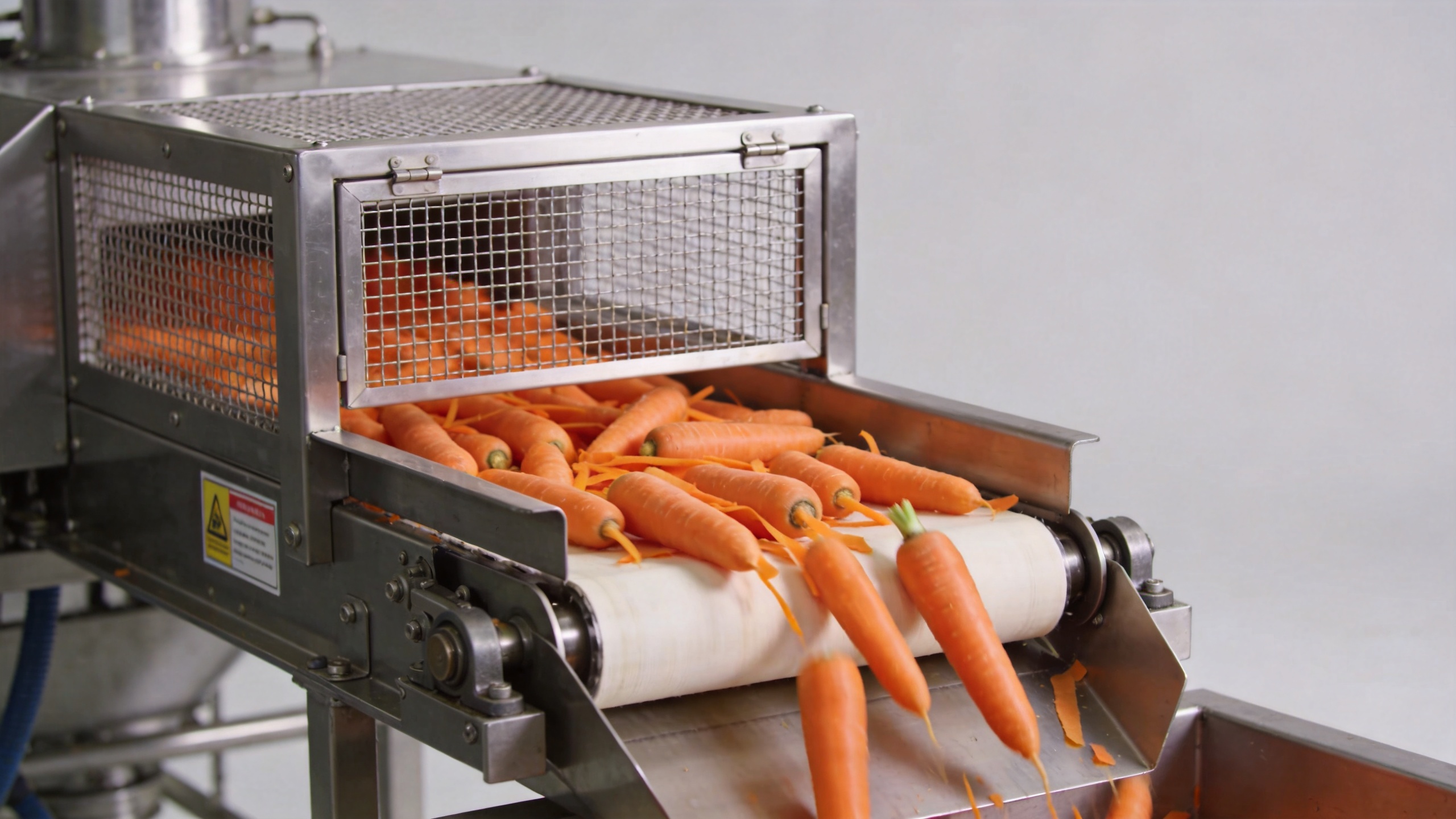
A blade-type vegetable peeler machine removes skin by bringing controlled cutting elements into contact with the product surface. It is generally considered when processors want a cleaner, more defined finish on roots with relatively consistent geometry. With an appropriate feed and adjustment, blade peeling can limit unnecessary removal of flesh on carrots that are straight, graded, and firm.
An abrasion vegetable peeler machine removes the outer layer through friction as product moves against abrasive surfaces. It is often practical for robust roots and operations that can accept a more textured finish. Its effectiveness depends heavily on the crop's surface, dwell time, water flow, and how evenly the product tumbles. Neither method is universally preferable; each trades peel removal against product loss, finish, and process tolerance.
Published industrial equipment examples show that both knife and abrasive approaches are used for carrot processing. A 2026 semi-industrial carrot-peeling study also reported different average peel thicknesses under its own test conditions, which is a useful reminder that peel loss should be measured with the actual crop rather than assumed from a machine type.
Start with the raw-material profile
Before specifying a vegetable peeler machine, inspect several incoming lots rather than one representative sample. Record diameter range, length, curvature, broken pieces, soil load, skin toughness, and defects. A line that receives uniform, straight carrots can use a different peeling window from one that processes mixed-size roots harvested across several fields.
- Uniform, firm carrots: Blade peeling is often worth evaluating when surface presentation and flesh retention matter.
- Irregular or heavily soiled roots: Abrasion may tolerate variation more readily, provided washing and sorting are sufficient.
- Deep eyes, grooves, or damaged areas: Expect trimming or a second process step; one vegetable peeler machine setting may not resolve every defect.
- Soft or stored product: Run trials carefully because aggressive contact can affect appearance and breakage.
This is where trials matter. A processor may begin by chasing the highest rated capacity, then discover that a smaller, better-matched vegetable peeler machine produces less manual trimming and a steadier packing line.
Compare the two methods by the outcomes that affect your line
| Decision factor | Blade peeling | Abrasion peeling |
|---|---|---|
| Typical strength | Controlled skin removal and a defined finish on consistent roots | Robust mechanical action for suitable root crops and variable surfaces |
| Raw-material preference | More regular dimensions and manageable surface defects | Roots that can tolerate tumbling and friction |
| Yield risk | Requires correct adjustment; poor sizing or alignment can leave skin or create trim work | Long contact time or harsh settings can remove more edible material |
| Downstream fit | Useful when visual uniformity matters before cutting, freezing, or packing | Useful when the process accepts a less refined finish or includes later trimming |
| Trial focus | Blade setting, feed stability, skin removal, and breakage | Dwell time, abrasive condition, water flow, surface finish, and waste |
For an industrial vegetable peeler machine, yield should be judged as usable finished product after any trim, not merely as the amount leaving the peeler. That distinction helps procurement teams avoid a false economy: a low initial equipment price can be offset by labor, waste handling, or unstable downstream performance.
Prepare the roots before they reach the peeler
Both systems benefit from controlled preparation. Washing should remove loose soil and stones before a vegetable peeler machine receives the crop; otherwise, contaminants can affect surface contact and increase wear. Size grading also makes settings more repeatable. Removing unusually small, broken, or severely misshapen pieces before peeling helps avoid stoppages and reduces the need to compromise settings for the whole batch.
Coordinate peeling with cutting, blanching, or packaging requirements. For example, a smooth, consistent carrot surface may be more important for products sold whole or in visible pieces than for material destined for mash or diced ingredients. In one FAO potato-preservation procedure, washing follows peeling immediately under specified process conditions. That is not a universal rule for every root product, but it illustrates why the peeler cannot be selected separately from the wash and downstream hygiene plan.
Run a meaningful acceptance trial
Ask a supplier to evaluate several real batches, not only clean, uniform showcase samples. During the test, weigh incoming material, peeled product, and trim or waste. Photograph the finish, inspect residual skin, and track how many pieces need manual intervention. Also assess cleaning access, changeover time, and whether the vegetable peeler machine connects correctly with your existing wash and conveying equipment.
- Define the crop varieties, grade range, and acceptable finish before the trial.
- Test at more than one operating setting rather than accepting one demonstration run.
- Measure usable yield after trimming and record product damage.
- Check water management, sanitation access, consumable wear, and operator workload.
- Confirm that throughput remains stable when the product mix changes.
A processor that evaluates only a single parameter can miss the system effect. For example, we often see buyers focus on the peeler itself without examining how it connects to their existing wash line; later, additional conveying or buffering may be needed. A well-planned vegetable peeler machine trial exposes those requirements early.
When to consider a blade-type carrot peeler
Blade peeling deserves closer review when carrots or similar roots arrive in a reasonably controlled size range, the finished product has visible surfaces, and the operation wants to manage flesh removal carefully. Hongle Machinery provides a blade-type automatic carrot peeling machine for buyers assessing this process route. The final choice should still be based on a trial using the buyer’s actual raw material and required finish.
For processors comparing an automatic carrot peeler with an abrasive solution, there is no single final answer. Blade peeling may better serve certain presentation-sensitive, consistent carrot streams. Abrasion may fit tougher or more varied root-vegetable streams when its process effects are acceptable. The practical decision is to define the crop, test the usable yield, verify line compatibility, and select the vegetable peeler machine that supports the whole process rather than one isolated specification.