EN


How Does a Tray Dryer Work in Food Processing?
A tray dryer can be a practical option when a food processor needs controlled batch drying rather than a continuous line. The tray dryer working principle is simple: prepared food is spread on trays, heated air moves through the chamber, and that air carries moisture out of the chamber. Consistent results still depend on preparation, loading, airflow, temperature, time, and cleaning.
For fruit and vegetable processors, the fruit dehydration process is not just about a dry feel. It aims to reach the intended moisture condition while protecting product shape, color, texture, and handling quality. A separate batch is useful when seasonal material or different ingredients need their own drying routine.
What the tray dryer working principle means
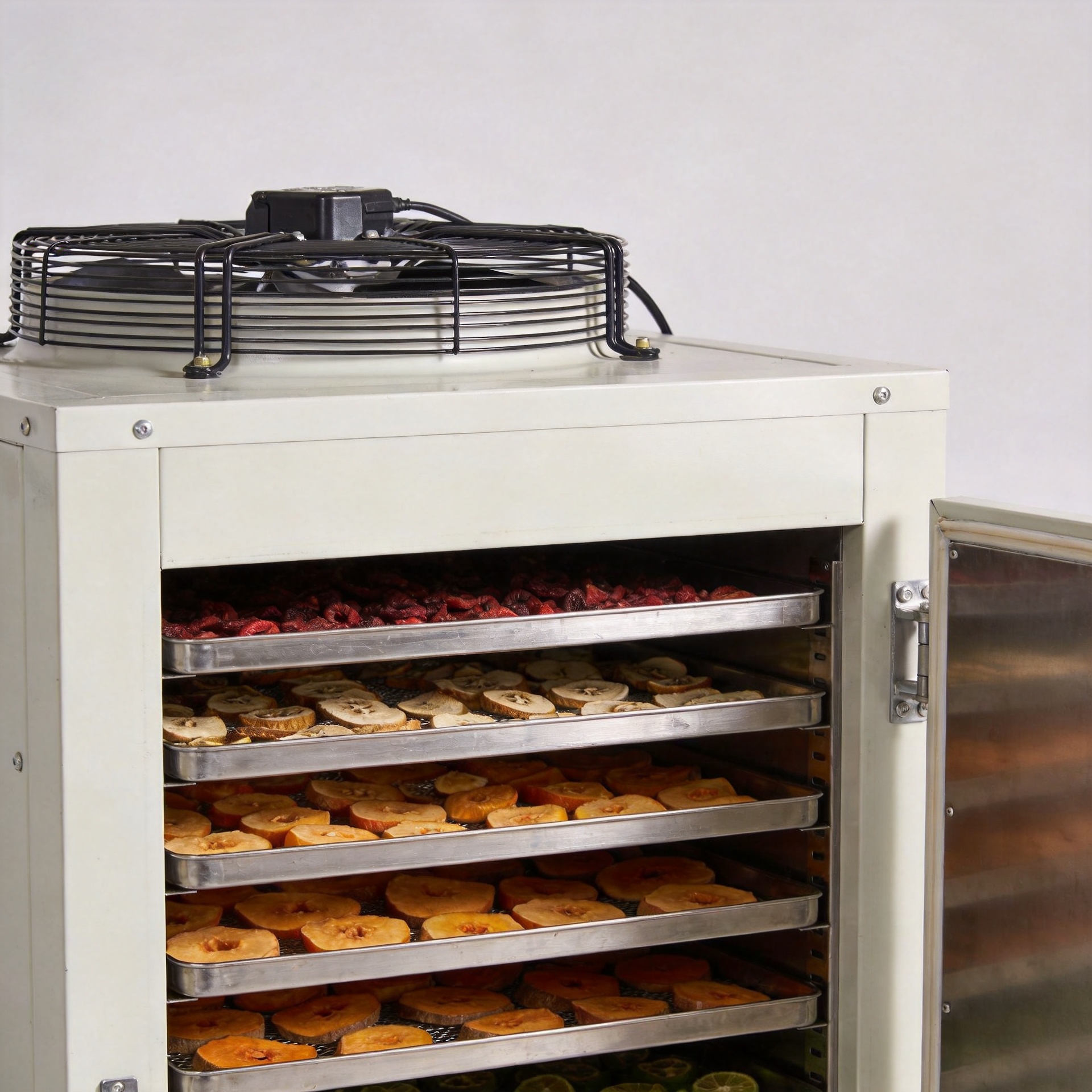
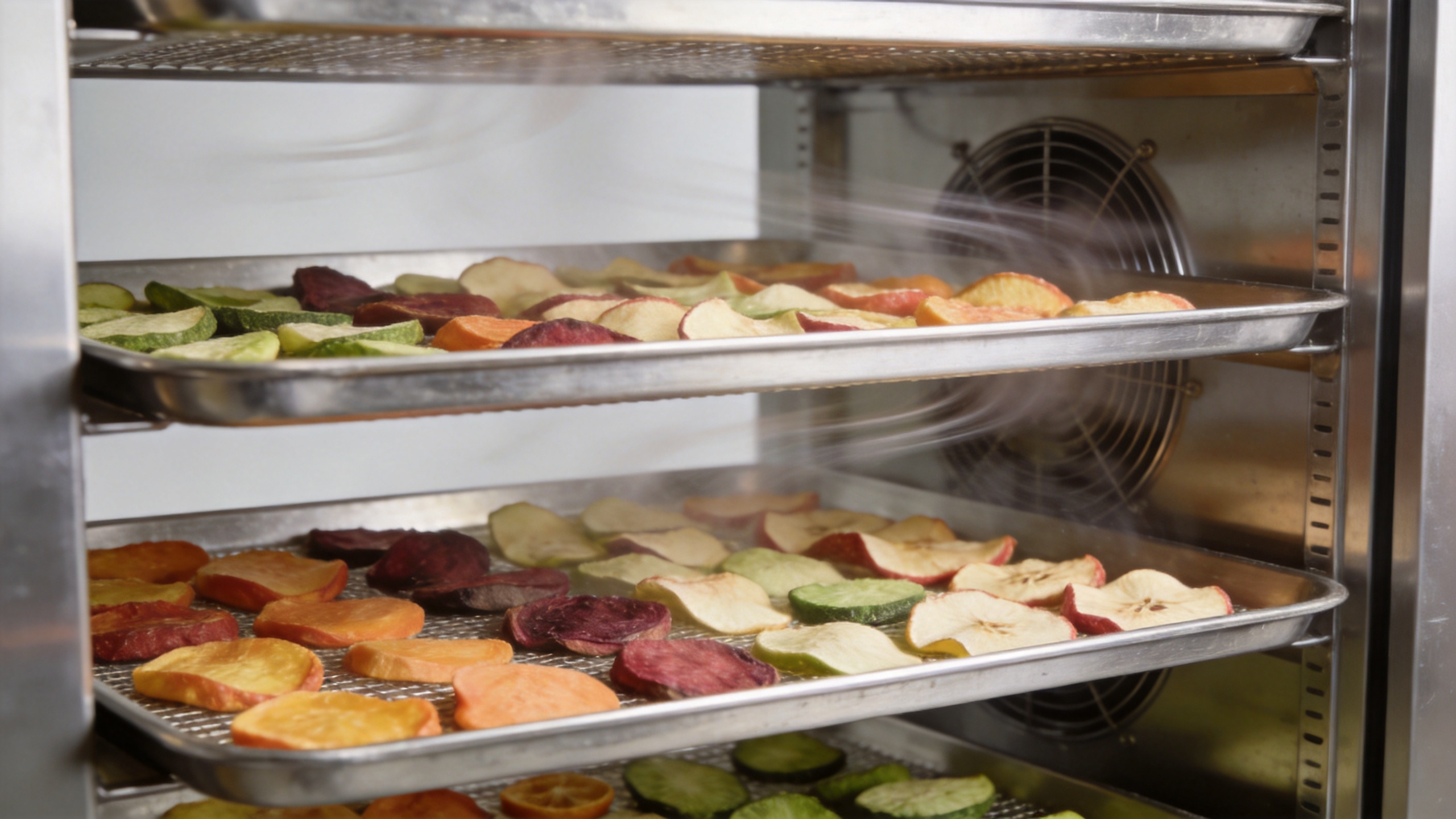
In a hot-air cabinet, trays sit on racks inside an enclosed chamber. A heating system raises the air temperature while fans or circulation paths move air over and around the food. Surface moisture becomes vapor and is carried out with the exhaust air. Heat continues to move from the air into the food, while internal moisture gradually travels toward the surface.
This is the core tray dryer working principle: heat supplies energy for evaporation, and air movement removes vapor. Hot air with weak circulation can leave some trays drying more slowly. Very forceful airflow or an unsuitable temperature can affect appearance or dry the surface before moisture moves outward. The appropriate setting therefore depends on the material rather than on one universal number.
Because trays are loaded and unloaded as a batch, one recipe, slice size, and loading pattern can stay together. This arrangement can suit trial production, small-to-medium batches, changing schedules, or operations that separate ingredients between runs.
How a food batch moves through the dryer
1. Prepare the raw material
Start with sorting, washing, and cutting that fit the product. Similar piece size matters because thin and thick pieces release moisture at different rates. In a fruit dehydration process, uneven cuts can create an uneven batch: small pieces may be ready while larger pieces still hold more internal moisture. Draining surface water after washing can also reduce unnecessary water entering the chamber.
2. Load each tray for airflow
Spread food in a reasonably even layer and avoid stacking pieces where possible. Air needs open paths across the product surface. Overloading may seem to use tray area efficiently, but it can restrict airflow and make the batch harder to control. Define a repeatable loading weight and layer depth for each recipe instead of filling each tray differently.
3. Set heat and start circulation
Once the chamber is closed, heated air circulates through the trays. The tray dryer working principle does not call for chasing the highest temperature. The setting should match the ingredient, cut size, starting moisture, required finish, and production timing. A routine may need adjustment when raw-material condition changes from one delivery to the next.
4. Monitor the batch and confirm its endpoint
Check representative trays instead of assuming every position behaves identically. Review texture, flexibility, surface condition, and product mass or other quality-control criteria used by the facility. “Dry enough” is not a process control method. The endpoint should be defined for the product and its next step, such as packing, storage, milling, or further processing.
Why airflow and tray loading affect uniformity
Food processors sometimes focus on heater capacity first. In practice, airflow management is equally important to the tray dryer working principle. Warm air must reach loaded trays, move across exposed surfaces, and leave with moisture. Rack spacing, tray arrangement, product-layer openness, and cabinet air direction all influence this pattern.
During early trials, document which tray positions dry faster or slower. If the difference is meaningful, review loading consistency, airflow paths, and whether a controlled tray-position change is appropriate for that recipe. The objective is not a universal setup; it is a repeatable procedure for the food being processed.
In a fruit dehydration process, preparation and airflow work together. Uniform slices present a similar area to the air, while a consistent layer enables more even contact. Those controls are often more useful than copying one temperature setting from a different product.
Where temperature adjustment fits in food drying
Temperature is one part of a larger process window. Fruits, vegetables, herbs, and prepared ingredients can respond differently to heat. Initial moisture, sugar content, piece geometry, pretreatment, and the desired final use all influence the practical routine. The tray dryer working principle remains the same, but the recipe changes.
Begin with a documented small batch, record loading conditions and settings, then evaluate the result before scaling. If a product has a wet surface but a firm interior, changing only temperature may not solve the issue; airflow, layer thickness, or time may matter. If the surface changes too quickly, a gentler process may warrant evaluation.
Does a tray dryer match your processing rhythm?
A tray dryer is worth considering when you process defined lots, need flexibility across ingredients, or prefer to validate a routine batch by batch. It may suit operations where product is manually prepared and loaded, provided the labor plan and cleaning routine are realistic. Large, continuous, highly standardized output may call for comparison with another drying configuration.
Before requesting a quotation, prepare a short production brief: raw material, starting condition, piece size, target quantity, expected batch frequency, utilities, floor space, and cleaning expectations. The tray dryer working principle can then be assessed against an actual production rhythm instead of a generic capacity statement.
- Material: What food is being dried, and how consistent is incoming moisture?
- Preparation: What slice thickness, shape, and surface-water condition are typical?
- Batch plan: How many batches are needed per shift, including loading, drying, unloading, and cleaning?
- Quality target: How will the team verify the required endpoint before packing?
- Hygiene: Which trays, surfaces, and access points require cleaning between products or shifts?
Cleaning and changeover are part of drying
Cleaning is part of drying performance. Residue on trays or in air paths can complicate changeover and equipment inspection. Before a run, confirm that trays, racks, chamber surfaces, and accessible air routes meet the facility procedure. After a run, remove food particles and note any points needing additional attention.
For mixed-product facilities, a written changeover plan is useful. Identify the product removed, surfaces to inspect, cleaning method approved by the facility, and required condition before the next batch. This makes the fruit dehydration process easier to repeat and helps separate process variation from housekeeping variation.
A practical equipment discussion for batch fruit and vegetable drying
When reviewing equipment, ask how the cabinet provides tray access, directs airflow, supports your operating routine, and fits the space and cleaning method at your site. A page such as this box-type dryer for batch fruit and vegetable dehydration can begin the discussion, but the final configuration should be checked against your material and batch schedule.
Zhengzhou HongLe Machinery Equipment Co., Ltd. supplies food-processing equipment for buyers in multiple export markets. Share your food type, preparation method, expected batch quantity, and cleaning requirements so the equipment format can be evaluated against your operation.
Key takeaways
The tray dryer working principle is controlled moisture removal by circulating heated air around food on trays. Treat drying as a complete routine: prepare consistent pieces, load for airflow, set product-appropriate conditions, verify the endpoint, and clean between runs. When those controls suit your production rhythm, tray drying can support flexible batch dehydration.