EN


How Does a Peanut Butter Production Line Turn Groundnuts into Smooth Paste?
For a nut processor, smooth peanut butter is not created by one fast grinder alone. A dependable line controls the peanuts before grinding, manages heat while the paste develops, and moves the finished product into packaging without losing consistency. A peanuts grinding machine is central to this work, but it performs most reliably as part of a connected process rather than as an isolated unit.
In commercial production, the aim is repeatable texture, flavor and flow from batch to batch. That is why a typical line brings together cleaning, roasting, cooling, skin removal, grinding, mixing, cooling and filling. Understanding how each stage affects the next helps processors specify equipment around their real production goals.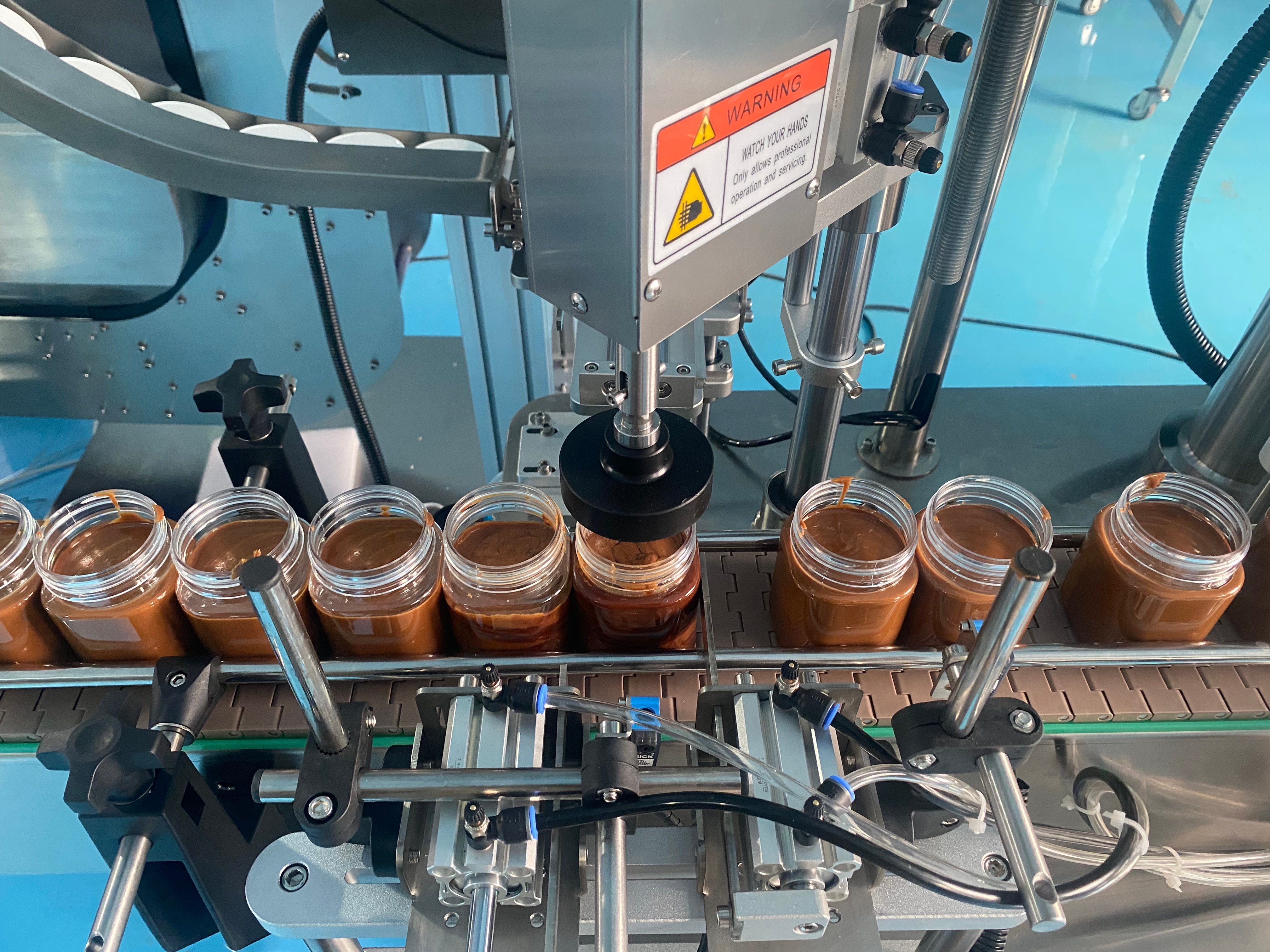
Start with clean, uniform peanuts
The line normally begins with receiving, cleaning and sorting. Stones, metal fragments, dust and damaged kernels should be removed before heat treatment and grinding. Even a capable peanuts grinding machine cannot correct a raw-material problem introduced upstream. Consistent kernel size and condition also make roasting more even, which supports a more predictable flavor and grind.
For export-oriented food operations, this stage should connect with the plant’s documented food-safety controls. Equipment layout should allow practical access for inspection and cleaning, while the overall process should prevent cross-contact with other allergens where applicable.
Roast, cool and remove skins before the paste stage
Roasting develops the familiar nutty character and reduces moisture, but the target profile depends on the desired product. Light, medium and darker roasting can create noticeably different flavor and color. The important operational point is uniformity: uneven roasting can leave a batch with mixed taste, variable oil release and inconsistent behavior at the peanuts grinding machine.
After roasting, peanuts need controlled cooling before they move through blanching or skin-removal equipment. Removing skins and hearts where the recipe calls for it can reduce bitter notes and helps create a cleaner-looking paste. A well-organized transfer path also keeps the material moving without unnecessary exposure to dust or rework.
Why a peanuts grinding machine usually works in more than one pass
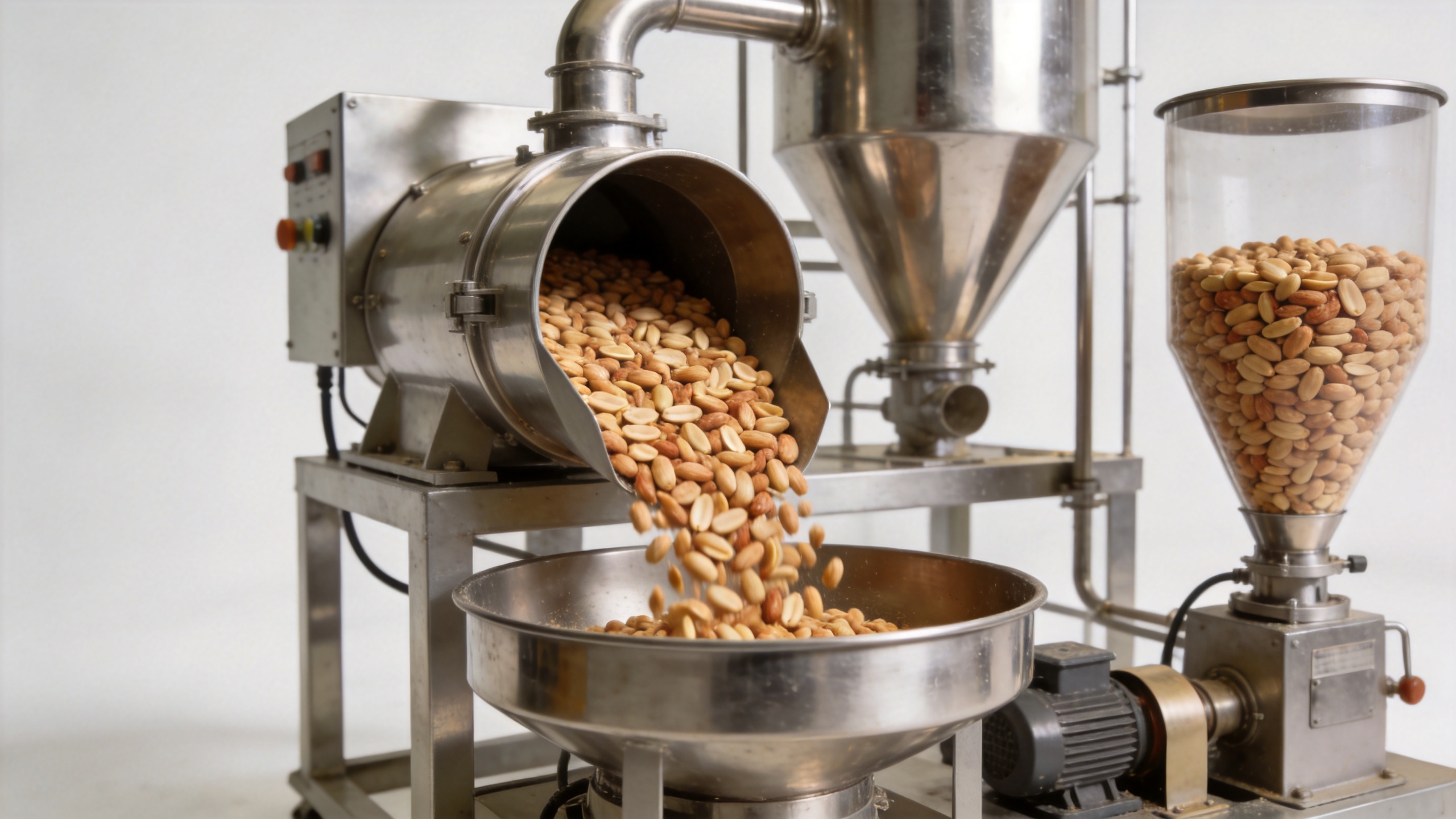
The first grind breaks roasted peanuts into a flowing paste by applying shear and pressure. Natural oil released from the kernels helps the material move through the grinding zone. In a commercial line, a second refining or homogenizing pass is commonly used to reduce remaining particles and make the mouthfeel more uniform. This is why two-stage grinding is often discussed in industrial peanut butter processing.
A groundnut grinding machine should be selected with the complete material flow in mind. Feed consistency, grinding gap or working settings, circulation time and paste temperature all affect the result. Operators should not rely on speed alone: higher shear can improve fineness, but it may also add heat. Monitoring the paste during commissioning gives the team a practical baseline for texture and temperature.
Mix ingredients without losing the desired texture
Once the base paste reaches the required fineness, the mixing stage can incorporate recipe ingredients such as salt, sugar or stabilizing components when the formulation requires them. The purpose is not simply to blend; it is to distribute ingredients evenly while preserving the viscosity needed for filling. Recipe additions, order of addition and mixing time should be established through controlled trials rather than assumed from another product.
This stage is also where processors decide whether they want smooth, crunchy or flavored peanut butter. For a crunchy variant, prepared peanut pieces are generally introduced after the fine-paste stage so the process can preserve the intended particle profile.
Cool the paste and prepare it for filling
Grinding and mixing generate heat. Before packaging, the paste may be cooled or held under controlled conditions so its viscosity suits the filling system and the product remains stable in the container. The exact temperature window is product-specific, so it should be validated against the recipe, filling equipment and packaging format.
A complete line links this final conditioning step to hygienic transfer, filling and sealing. Food-contact surfaces need a cleaning approach that fits the facility’s sanitation program. Good access, sensible pipe routing and clear verification procedures support reliable changeovers and help protect product quality.
How to evaluate a commercial peanut butter line
- Define output first: establish the required hourly capacity, operating schedule and expected product range.
- Map the process: decide which steps—from cleaning through vacuum packing—belong in the line and which are handled separately.
- Check material flow: ensure the roaster, cooling, peeling, peanuts grinding machine, mixer and filler are sized to avoid bottlenecks.
- Plan for cleaning: assess access to food-contact parts and the plant’s allergen-control and sanitation routines.
- Run product trials: use actual peanuts and recipes to confirm texture, flavor, temperature behavior and filling performance.
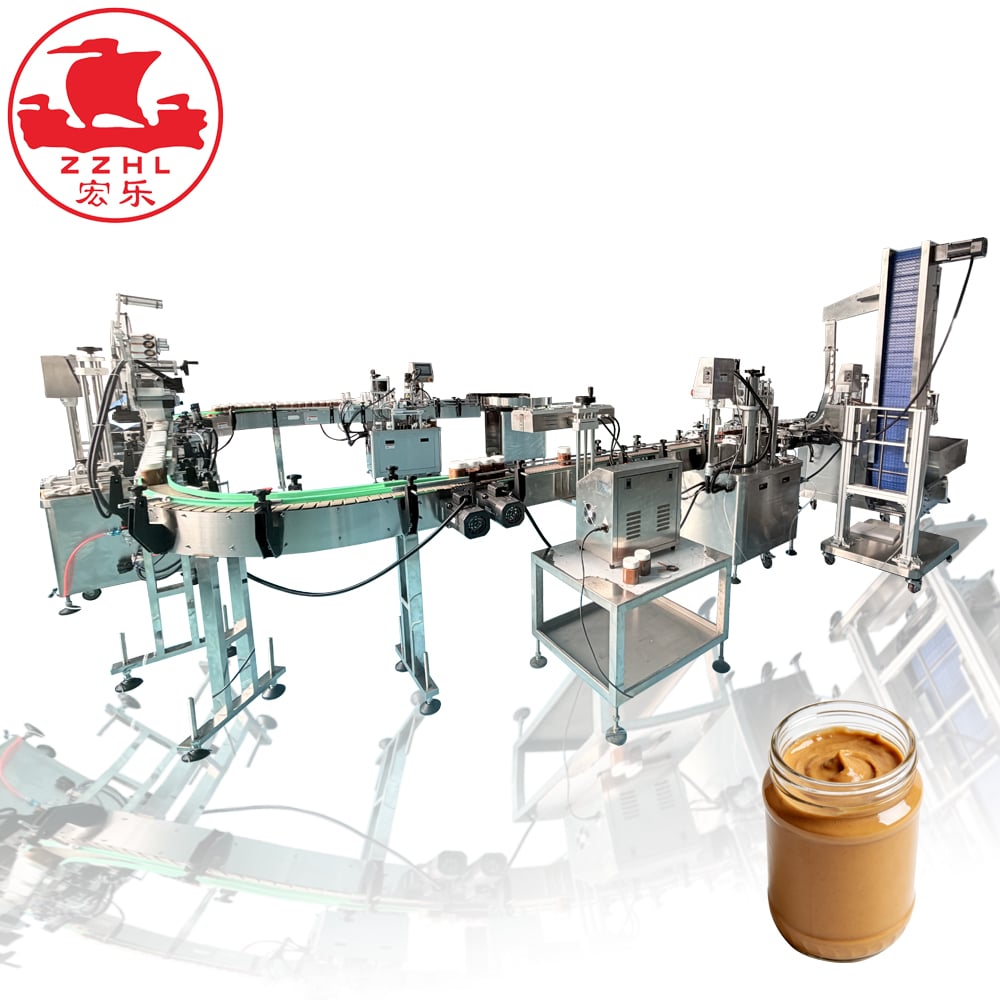
For processors building or upgrading a line, an automatic peanut butter production machine for nut factories can be reviewed as part of the full process layout. Confirm the actual configuration, applicable capacity and packaging requirements directly against the project specification before making a purchasing decision.
Practical checks around the grinding section
Before routine production, confirm that the peanuts grinding machine receives roasted kernels at a stable condition and that its feed path does not introduce intermittent surges. Record the initial material appearance, outlet paste appearance and operating temperature for a representative batch. These records help operators distinguish a raw-material change from a setting change when smoothness shifts.
During start-up, allow the peanuts grinding machine to establish a continuous paste flow before judging texture. If the line uses recirculation, define when a batch is ready to move onward instead of relying only on elapsed time. The same principle applies to the groundnut grinding machine used for a first pass: its output is an intermediate material whose final smoothness depends on refining and mixing downstream.
At shutdown, the production team should follow a documented cleaning sequence suited to the plant and recipe. Residual nut paste can make visual inspection difficult, so accessible contact parts and clear sanitation verification matter. This operational discipline supports product consistency just as much as the selected peanuts grinding machine does.
Match the line to the product you intend to sell
A line designed for a plain smooth spread may need different handling from one producing flavored, crunchy or portion-packed products. Discuss the anticipated recipe range early, then check whether the peanuts grinding machine, mixer and filler can work with the intended viscosity and inclusions. If several products will share the line, factor in changeover time, cleaning validation and packaging adjustments.
The most useful equipment discussion therefore starts with a process map and a trial plan. A groundnut grinding machine should be evaluated by how it supports the whole operation—from prepared peanuts to a filled container—not by a single headline specification. That broader view gives processors a sounder basis for scaling output while keeping the finished paste smooth and repeatable.
From kernels to a stable, smooth paste
Successful peanut butter production depends on the relationship between stages. Clean, consistently roasted peanuts give the grinding system a better starting point; controlled two-stage refining improves smoothness; and thoughtful mixing, cooling and filling help preserve the result. When a peanuts grinding machine is specified as one element of an integrated production line, nut processors can make more informed decisions about consistency, hygiene and scalable output.