EN
EN


Vegetable Slicer and Chopper vs Dicing Machine: Which Fits Your Line?
For a commercial processor, choosing a vegetable slicer and chopper is not simply a question of buying the machine with the most blade options. The right decision starts with the cut you must deliver, the condition of the incoming produce, and the way that cut moves through washing, mixing, cooking, packing, or further processing. A slicer, chopper, and dicing machine can all reduce vegetables, but they do not create the same shape, handle the same product behavior, or place the same demands on a production line.
As a technical advisor evaluating food-processing equipment, I would first map the line requirement, then compare the cutting mechanism, and only after that compare price. This distinction matters because a vegetable slicer and chopper may be the flexible answer for mixed preparation work, while a dedicated dicing setup can be the better fit when cube consistency controls the downstream process.
Start With the Finished Cut, Not the Machine Name
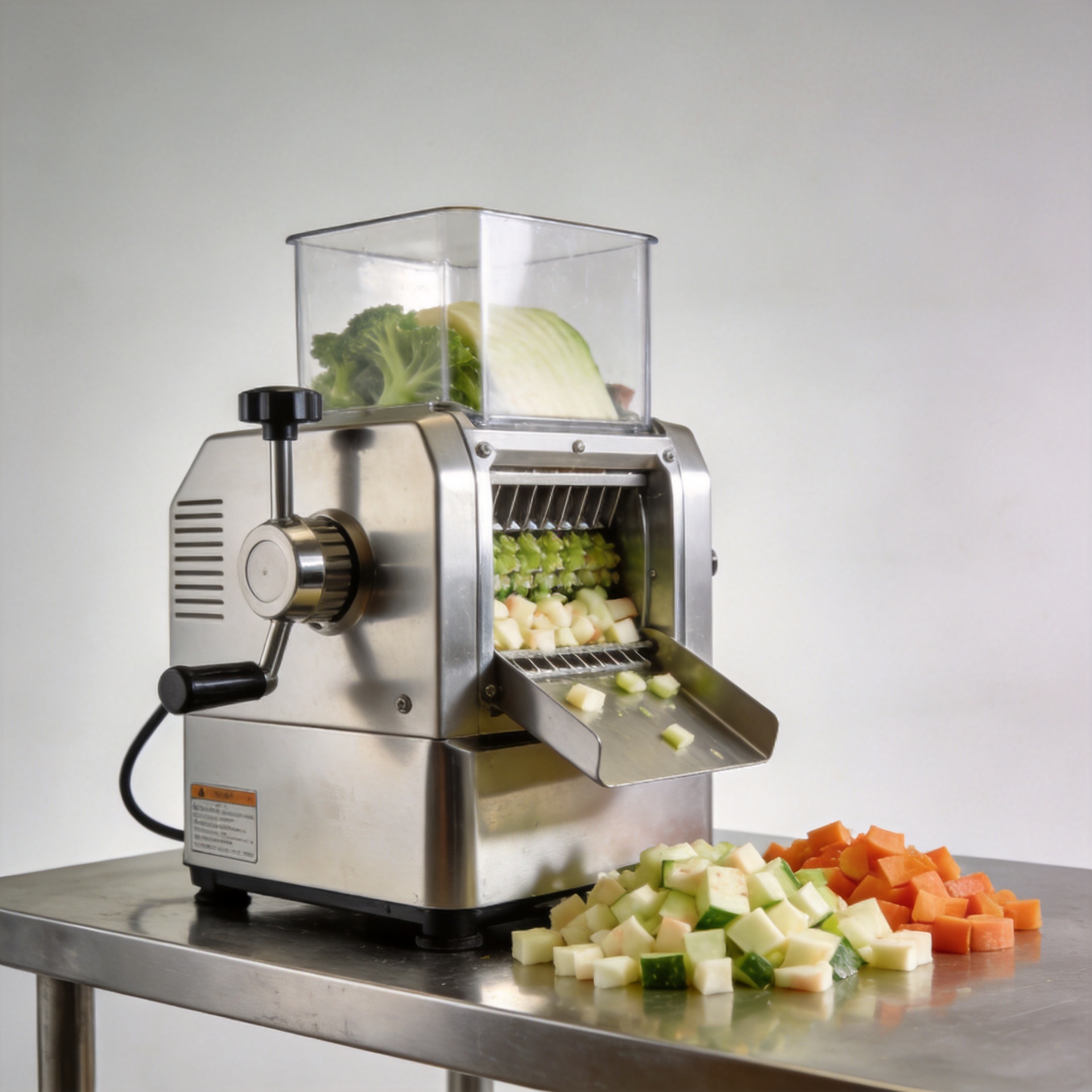
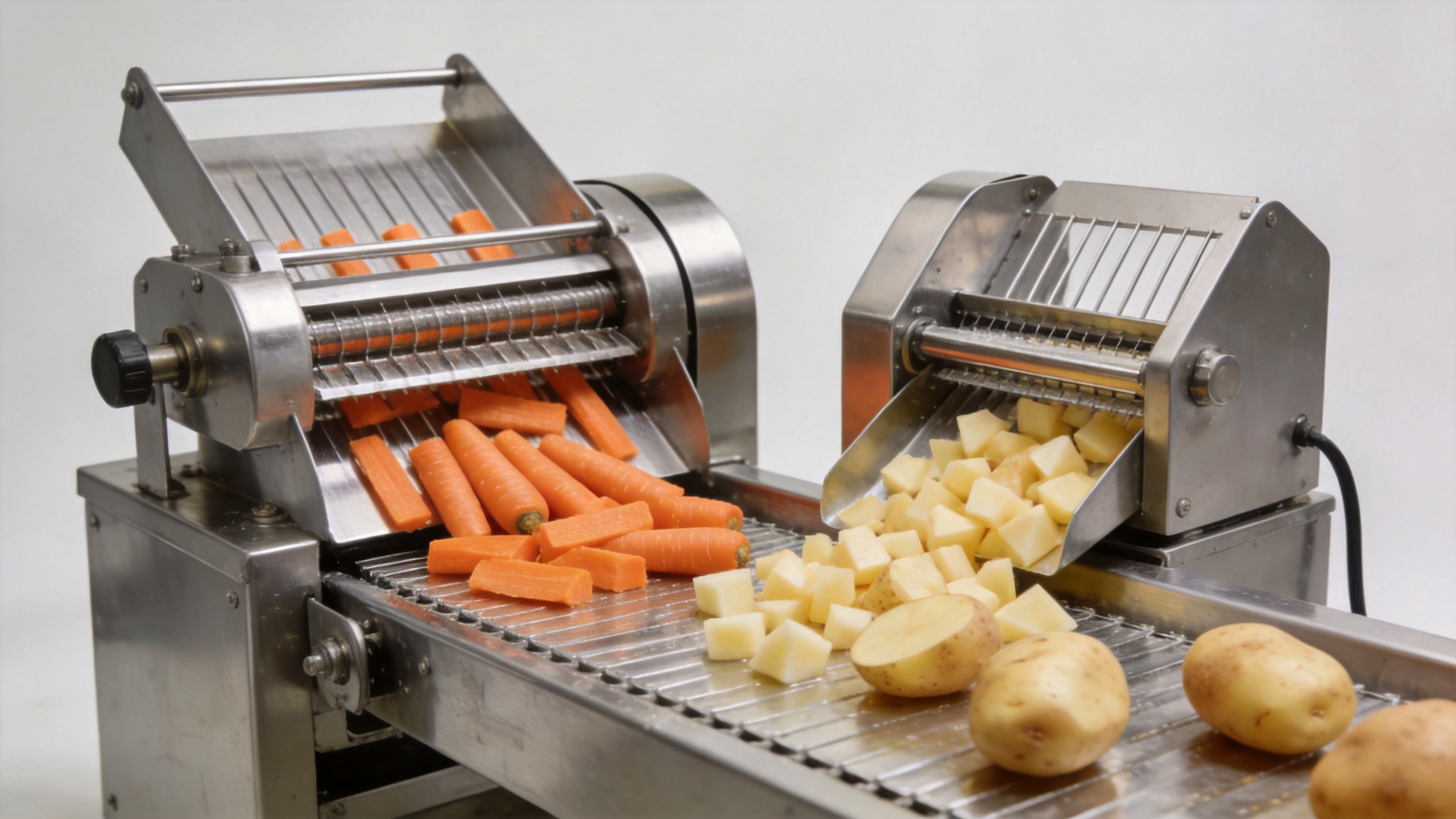
A vegetable slicer and chopper generally suits operations that need slices, strips, shreds, or irregular chopped pieces across several vegetables. It is often a practical choice for kitchens, central preparation rooms, fresh-cut operations, and processors with varied menus. A dicing machine is designed around a more specific result: repeatable cubes or defined dice dimensions. It is usually considered when the final product must look uniform in frozen vegetable packs, prepared salads, soup mixes, sauces, or other portion-controlled products.
The difference is more than appearance. Slice thickness can affect drying, frying, or cooking time. Shred width can affect blending and filling. Dice size can affect portion weight, heat transfer, and how ingredients distribute in a finished pack. If your specification calls for a clear cube size and low variation, put a dicing machine at the center of the evaluation. If you routinely switch among sliced cabbage, shredded carrot, chopped leafy vegetables, and similar preparations, a flexible vegetable slicer and chopper may reduce changeover complexity.
Compare the Cutting Mechanisms
A typical vegetable slicer and chopper uses discs, knives, or interchangeable cutting tools to create slices, strips, shreds, or chopped forms. Its strength is versatility. The operator can often change a cutting tool to support another format, provided the product and line conditions are compatible. That flexibility is valuable when seasonal produce or customer orders change frequently.
Dicing commonly requires a more controlled cutting path. The product may be sliced first, then cut into strips, then cross-cut into cubes. Because the final shape depends on several coordinated cuts, raw-material condition becomes especially important. Very soft tomatoes, overly ripe produce, fibrous stalks, or inconsistent pre-cut sizes may not behave like firm potatoes, carrots, onions, or root vegetables. There is no universal winner: a vegetable slicer and chopper suited to a mixed line can be the wrong choice for a cube-critical recipe, and a dedicated dicer can be unnecessary for a line that rarely needs dice.
Raw Material Determines Real Output
Buyers sometimes assume a higher rated capacity automatically means a better line. A more accurate view is that actual output depends on vegetable firmness, size consistency, feed method, desired cut, operator loading, and cleaning intervals. Published industrial examples span roughly 500–1,500 kg/h for smaller commercial cutting equipment and 2,000–3,500 kg/h for larger units, but those figures should be treated as orientation only. They are not a substitute for a trial with your own raw materials.
Before selecting a vegetable slicer and chopper, separate products into groups: firm root vegetables, leafy vegetables, elongated products, soft fruit-like vegetables, and pre-processed ingredients. Ask whether each group needs trimming, halving, peeling, washing, dewatering, or pre-sizing before it reaches the cutter. A machine can be fast at the cutting point but still create a bottleneck if preparation or discharge is poorly matched.
When a Vegetable Slicer and Chopper Is the Better Fit
- You process several vegetable types and need frequent format changes.
- Your final products use slices, shreds, strips, or coarse chopping more often than cubes.
- You need a flexible preparation station before cooking, mixing, or packaging.
- Your production volume varies, so utilization matters more than maximum nameplate capacity.
- You want to start with a defined tool set and add compatible cutting formats as the product mix becomes clearer.
For these situations, a vegetable slicer and chopper can provide a balanced route between output and adaptability. It should still be assessed for feed safety, blade access, discharge height, and the time required to change and clean components.
When a Dicing Machine Is the Better Fit
- Cube size and visual uniformity are written into the product specification.
- Your major products use potatoes, carrots, onions, or other materials that dice reliably after proper preparation.
- Downstream cooking, freezing, filling, or portioning benefits from a stable cut size.
- The line runs a limited set of recipes often enough to justify a more specialized cutting arrangement.
- You can control incoming-product size, firmness, and pre-treatment consistently.
A dicing machine is not automatically less flexible, but its value grows when uniform cubes solve a real production problem. If cube demand is occasional, a vegetable slicer and chopper with the right cutting configuration may be a more economical starting point. If cube demand is constant, a dicer can make quality control easier to manage.
Use a Line-Level Comparison, Not a Machine-Only Comparison
| Decision factor | Vegetable slicer and chopper | Dicing machine |
|---|---|---|
| Primary output | Slices, shreds, strips, coarse chopped pieces | Defined cubes and consistent dice |
| Best for | Mixed product programs and frequent changeovers | Repeatable cube-focused recipes |
| Key raw-material concern | Feed size and suitability for each cutting tool | Firmness, pre-sizing, and stable product behavior |
| Evaluation focus | Tool range, changeover time, cleaning access | Dice consistency, yield, and downstream fit |
Inspect Hygiene, Safety, and Changeover Before You Buy
Commercial cutting equipment should be assessed as part of a sanitation workflow. Stainless contact surfaces, accessible cutting parts, practical cleaning access, safety interlocks, and a clear shutdown routine all deserve attention. Ask the supplier to show the actual steps for removing cutting components, cleaning the feed area, and reassembling the machine. A vegetable slicer and chopper that looks versatile on paper can become a poor fit if changeovers repeatedly delay production or make hygiene verification difficult.
Also check the interfaces around the cutter: infeed height, collection bins or conveyors, floor space, power supply, drainage, operator guarding, and spare cutting tools. These details often matter more to daily uptime than a brochure headline. For an equipment option that combines commercial vegetable cutting and dicing functions, review the confirmed product page for the Commercial Industrial Electric Vegetable Cutter Dicing Machine for Potato, Fruit & Green Onion and discuss your material and target cut with the supplier before final configuration.
A Practical Selection Checklist
- List each vegetable, its condition, and the required finished cut.
- Identify whether slices, shreds, chopped pieces, or dice drive most of your sales volume.
- Measure the upstream preparation and downstream handling limits.
- Run representative samples rather than relying only on generic capacity claims.
- Compare cleaning time, blade changes, spare-part planning, and operator training.
- Choose the vegetable slicer and chopper or dicing solution that fits the line’s dominant work—not the largest list of possible functions.
Final Decision: Match the Equipment to the Line’s Dominant Cut
If your operation needs broad cutting flexibility, varied vegetables, and frequent format changes, a vegetable slicer and chopper is usually the stronger starting point. If your product quality depends on repeatable cubes and a stable raw-material program, a dedicated dicing machine may better protect consistency. In either case, make the decision after reviewing real samples, sanitation steps, cut quality, and the entire material flow. The goal is not to buy the most complicated machine; it is to make the most reliable cut for your production line.