EN
EN


Fruit Pulper vs Screw Press: Choosing a Juice Extraction Method
For an industrial juice line, the question is not simply which machine extracts more liquid. The better question is what kind of product the line must deliver. A fruit pulper and a juicer press solve different parts of the extraction problem: one creates a controlled pulp-rich fruit base, while the other separates liquid from fibrous solids under pressure. Selecting between them starts with the raw material, the desired texture, and the downstream process—not with a single headline capacity figure.
From an equipment-selection perspective, the practical comparison is about process fit. A mango nectar, tomato beverage, apple juice, ginger shot, and berry concentrate can all begin with fruit preparation, yet their extraction routes can be very different. This guide gives production and purchasing teams a neutral framework for deciding where pulping, screw pressing, or a combined route makes sense.
Start with the product you want to sell
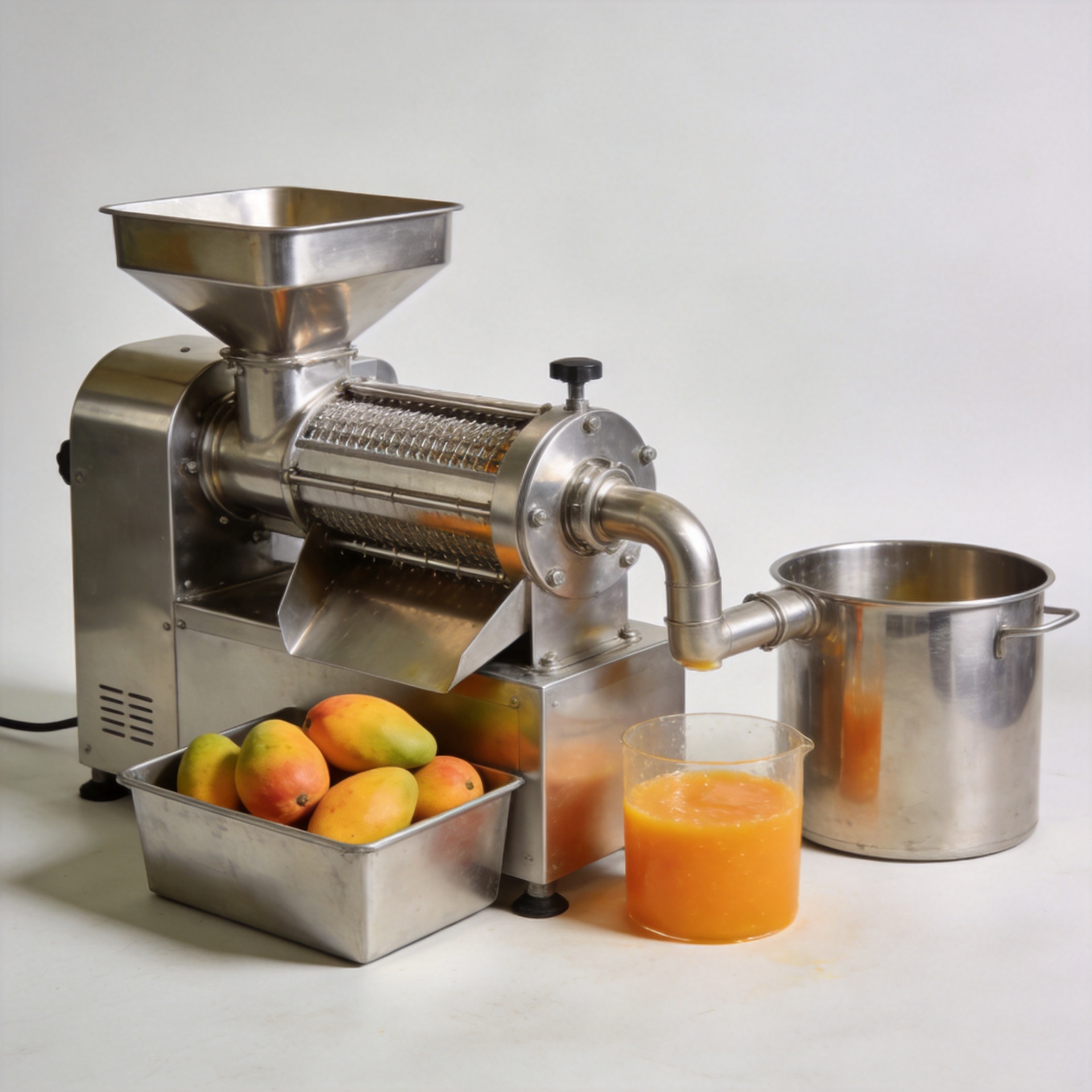
A fruit pulper is generally chosen when the finished drink should retain fine fruit flesh. After washing, sorting, crushing, and often heating or softening, the fruit passes through a screen-and-rotor system that separates skins, seeds, and coarse fibers while allowing usable pulp and juice to pass. This route supports puree, nectar, tomato products, and other beverages where body, color, and suspended solids are part of the specification.
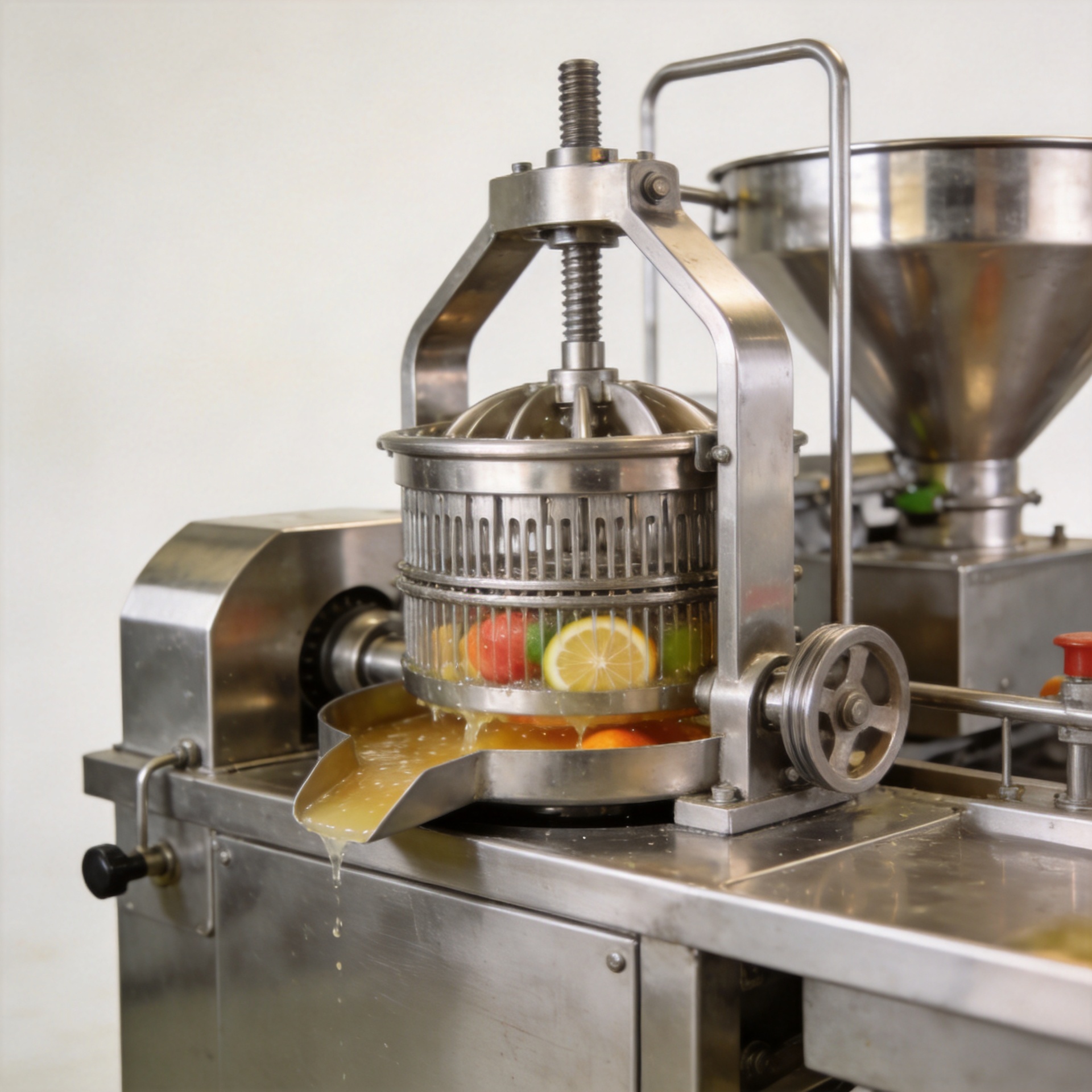
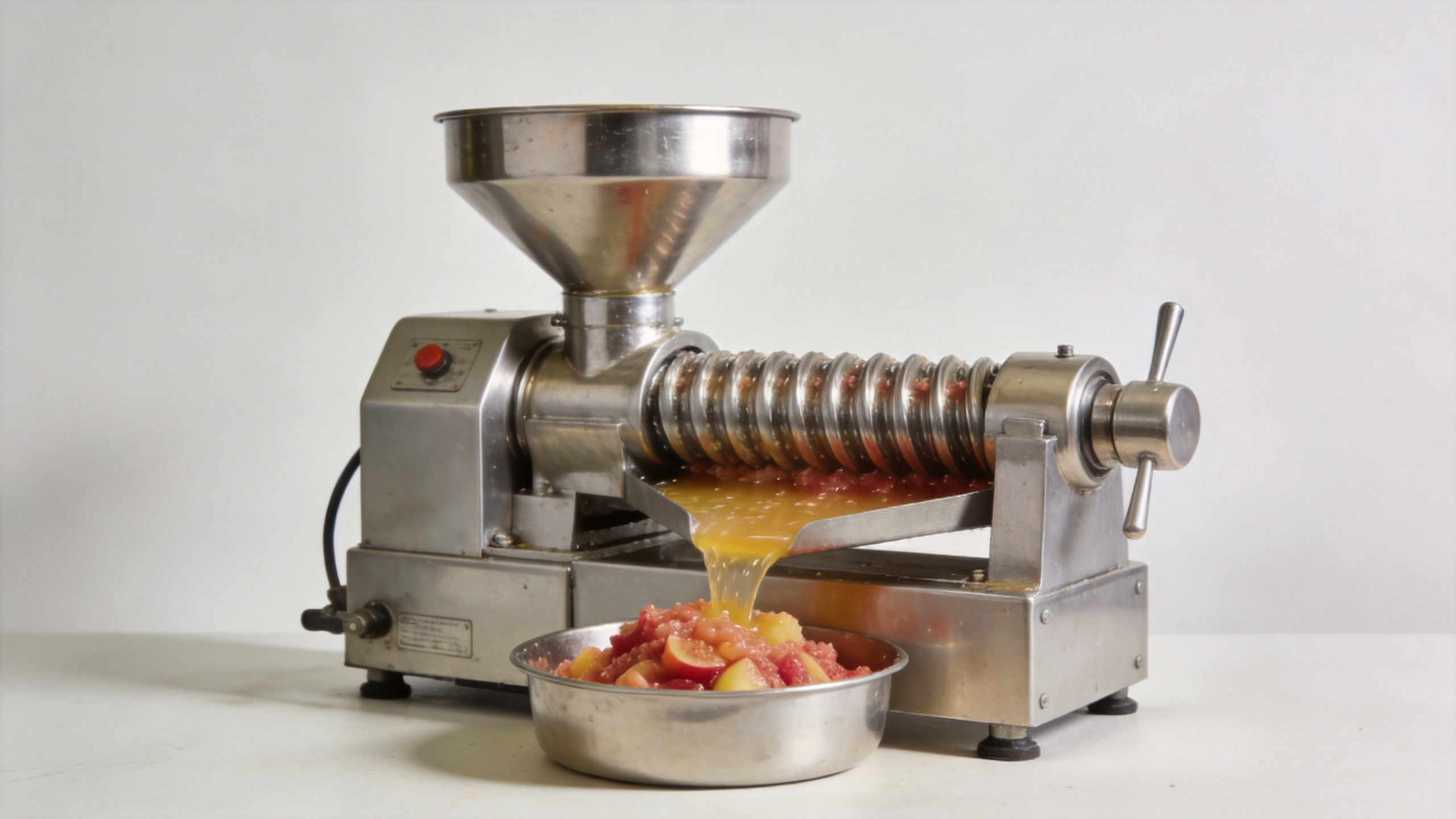
A juicer press, especially a continuous screw press, is generally used when the objective is to squeeze free liquid from a prepared mash and discharge a relatively dry pomace. It is a common fit for apples, pears, grapes, ginger, many vegetables, and other feedstocks where the liquid phase is the priority. The press does not automatically create a finished clear juice; it creates an extract that may still need screening, settling, centrifugation, filtration, pasteurization, or blending.
In other words, pulp is not a defect in every beverage, and clarity is not the goal in every recipe. Decide the target mouthfeel, allowable pulp level, and packaging concept first. That one decision usually narrows the equipment route faster than comparing motor power alone.
How fruit pulping and screw pressing differ
| Decision point | Fruit pulper | Screw press |
|---|---|---|
| Primary job | Refine fruit flesh and separate coarse waste | Express liquid from mash or prepared material |
| Best product direction | Puree, nectar, pulp-rich juice, sauces | Juice extraction and pomace dewatering |
| Typical feed | Soft, ripe, cooked, or pre-crushed fruit | Crushed fruit, shredded vegetables, fibrous mash |
| Main output focus | Controlled particle size and usable pulp | Liquid recovery versus discharged solids |
| Common downstream step | Finishing, blending, deaeration, heat treatment | Screening, clarification, filtration, pasteurization |
These categories can overlap in a real plant. A pulper can be followed by a finisher to manage particle size, and a press can be installed after crushing or enzymatic treatment to improve liquid release. Some lines use both: pulping for selected fruit components and pressing for a separate juice stream or by-product recovery.
Match the machine to the raw material
Soft fruit with high flesh content—such as mango, peach, apricot, tomato, or certain berries—often benefits from pulping because the valuable portion is the flesh itself. The screen aperture, rotor action, feed condition, and number of passes influence how much desirable pulp is retained and how much seed or skin material is excluded.
Firm or fibrous raw materials—such as apples, pears, celery, ginger, or some leafy and root vegetables—often suit a juicer press after effective size reduction. Uniform crushing matters because large pieces can reduce drainage, while excessively fine mash may make separation harder. A published study on apple juice found that extraction outcomes changed with press construction; that is a useful reminder that yield must be verified with the actual fruit variety, maturity, preparation method, and operating settings rather than assumed from equipment type.
Seed sensitivity also matters. Some fruit seeds, pits, and skins should be separated early to avoid unwanted texture or flavor. For abrasive or fibrous feedstocks, ask suppliers about wear surfaces, screen access, cleanout time, and how the machine handles variable feed consistency. These details can affect uptime more than a small difference in rated throughput.
Do not compare yield without comparing the whole process
Yield is important, but it is not one universal number. It depends on fruit condition, moisture, particle size, pre-treatment, press speed, backpressure, screen configuration, and the definition of “juice” used in the calculation. A higher liquid yield may bring more fine solids into the stream, which can add clarification cost or change the beverage profile. Conversely, a lower extraction result may be acceptable when clean handling, desired pulp texture, or simpler downstream separation has greater value.
For a pulpy beverage, processing references note that extractor discharge can contain substantial suspended pulp, and secondary finishing is used to reduce it toward a chosen target. For a clear juice project, that same pulp load becomes a downstream design question: settling time, centrifuge duty, filter media, and product loss all need evaluation. Treat the extraction machine and the clarification section as one system.
The most reliable procurement method is a representative trial. Supply a sample that reflects the expected variety, ripeness, temperature, and pre-treatment. Measure input mass, extract mass, pomace moisture, solids, and cleaning time. Then compare the outputs against the finished-product specification—not only against the machine’s nameplate capacity.
Where a screw press fits in a juice line
A continuous screw press is often selected when a line needs steady extraction and a controlled pomace discharge. The available product option, Food-Grade Screw Press 80% Juice Yield 0.5-1T/H SUS304 for Fruit & Vegetable Processing, can be reviewed as a starting point for discussing material handling, capacity range, and fit within a fruit-and-vegetable process. Its listed capacity and yield wording should still be validated against your own raw materials and process conditions before a purchase decision.
Before specifying a press, confirm the feed hopper arrangement, crusher interface, drainage path, pomace conveying method, CIP or manual cleaning plan, and electrical/control integration. A press that performs well in isolation can become a bottleneck if the crusher feeds unevenly or the clarification section cannot accept the extract rate.
A practical selection checklist
- Define the beverage: Is it a puree, nectar, cloudy juice, or clarified juice?
- Map the feedstock: Record fruit variety, ripeness range, seed/skin content, fiber level, and seasonal variation.
- Choose the extraction logic: Retain refined flesh with a pulper, express liquid with a press, or combine both functions where the recipe requires it.
- Evaluate downstream equipment: Include finishing, clarification, filtration, heat treatment, and waste handling in the comparison.
- Run a material trial: Use representative feedstock and agree on how yield, pulp, and pomace moisture will be measured.
- Check lifecycle fit: Compare screen replacement, wear parts, cleaning access, operator training, and service support—not only initial price.
Juicer press evaluation worksheet for purchasing teams
Use this juicer press worksheet during a supplier comparison. For each juicer press candidate, record the feed preparation, test-run duration, extract mass, pomace condition, cleaning sequence, and power demand. A juicer press quote should identify the material-contact surfaces and the screen or drainage configuration. Ask whether the juicer press can accept the planned mash consistency without bridging at the inlet.
- Does the juicer press receive fruit directly, or does it require crushing, shredding, or enzymatic treatment first?
- What feed rate allows the juicer press to discharge pomace steadily during a representative trial?
- How does juicer press speed affect extract quality and pomace moisture for your fruit?
- Can the juicer press be cleaned within the changeover window set by the production plan?
- Which wear parts should be stocked for the juicer press, and how are they replaced?
- Can the juicer press outlet flow be matched to the downstream tank, finisher, or clarifier?
- What safety interlocks protect operators around the juicer press feed and discharge zones?
- Does the juicer press trial use the same fruit variety, maturity, and temperature expected in production?
These questions do not make a juicer press inherently better than a pulper. They make the juicer press comparison measurable. When a juicer press is the selected route, document the acceptance criteria before ordering: throughput, extract characteristics, pomace condition, cleaning time, and integration responsibilities. This prevents a juicer press decision from being driven only by a brochure yield statement.
The right choice is usually a process choice
There is no universal winner between a fruit pulper and a juicer press. Choose pulping when controlled fruit flesh is a product asset. Choose screw pressing when liquid recovery from a prepared mash is the central task. Choose a combined route when the recipe and raw material call for both separation and pulp management.
For B2B buyers, the most useful supplier discussion begins with samples and specifications: raw material, target capacity, finished product, allowable pulp, cleaning requirements, and downstream equipment. With those inputs defined, a process-oriented comparison becomes more reliable than choosing a machine by label alone.