EN
EN


How Food-Grade Screw Presses Improve Juice Extraction Efficiency
For a fruit processor, a juice extraction machine is not simply a device that squeezes liquid from pulp. It is the point where raw-material preparation, mechanical pressure, screen separation, hygiene, and downstream handling meet. A food-grade screw press can improve juice recovery when the machine is matched to the fruit or vegetable, set up for a stable feed, and cleaned in a way that keeps the process repeatable.
From an industrial equipment selection perspective, the first question is not “What yield can the brochure promise?” It is “What yield can this line reproduce with our actual raw material?” Fruit firmness, particle size, peel content, and pulp consistency all influence the result. A well-chosen juice extraction machine gives operators controlled compression and a practical route for separating juice from pomace.
What a Screw Press Does in a Juice Extraction Line
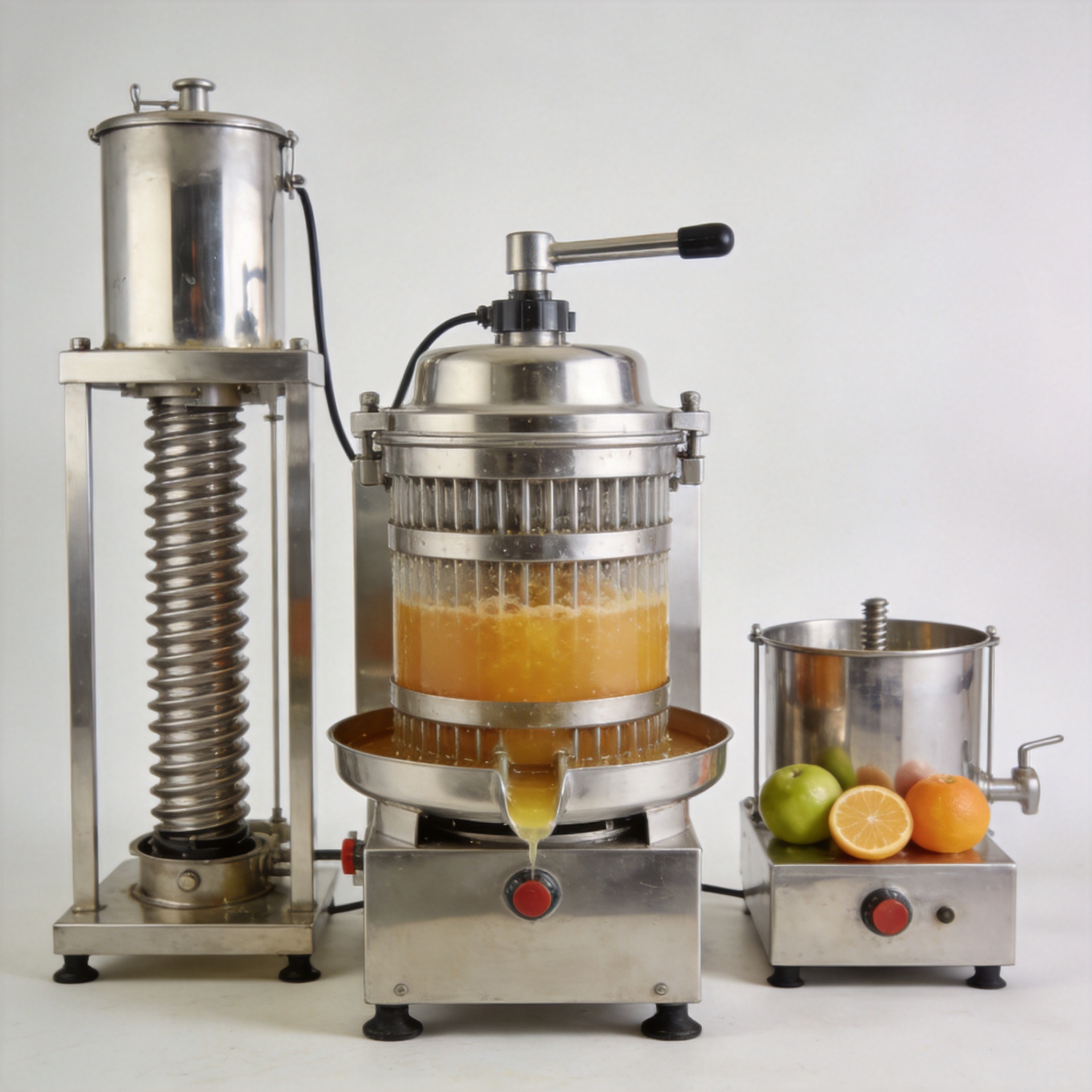
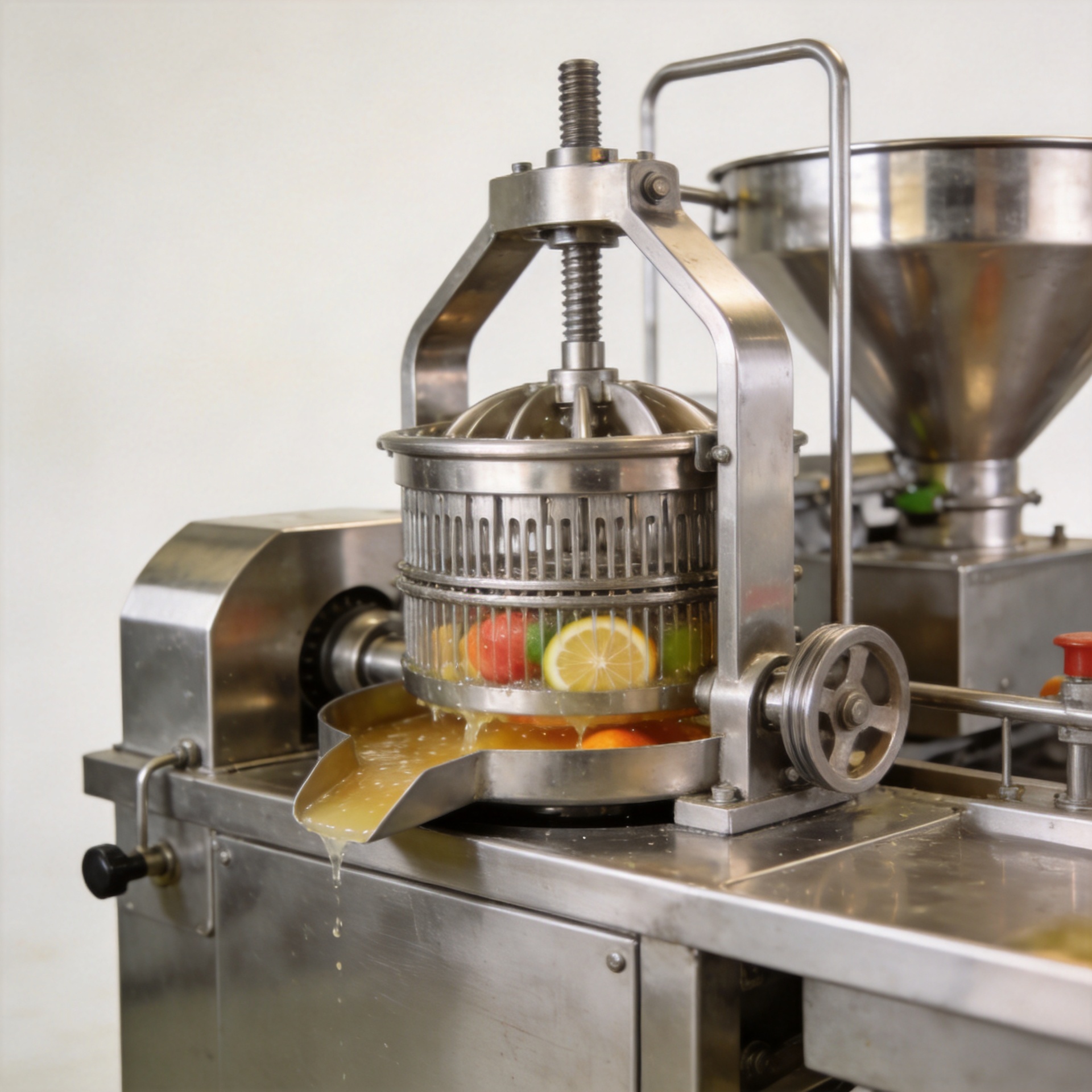
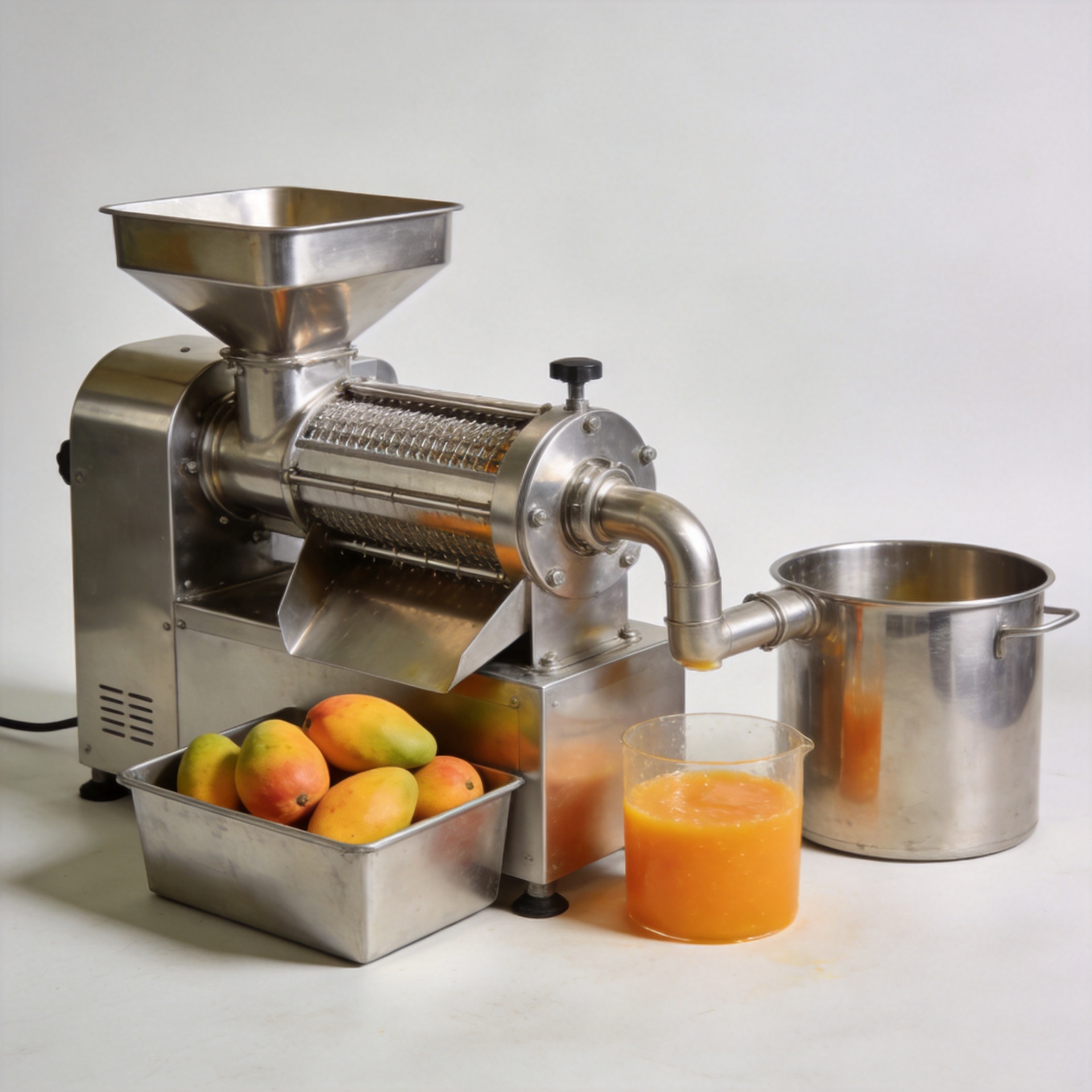
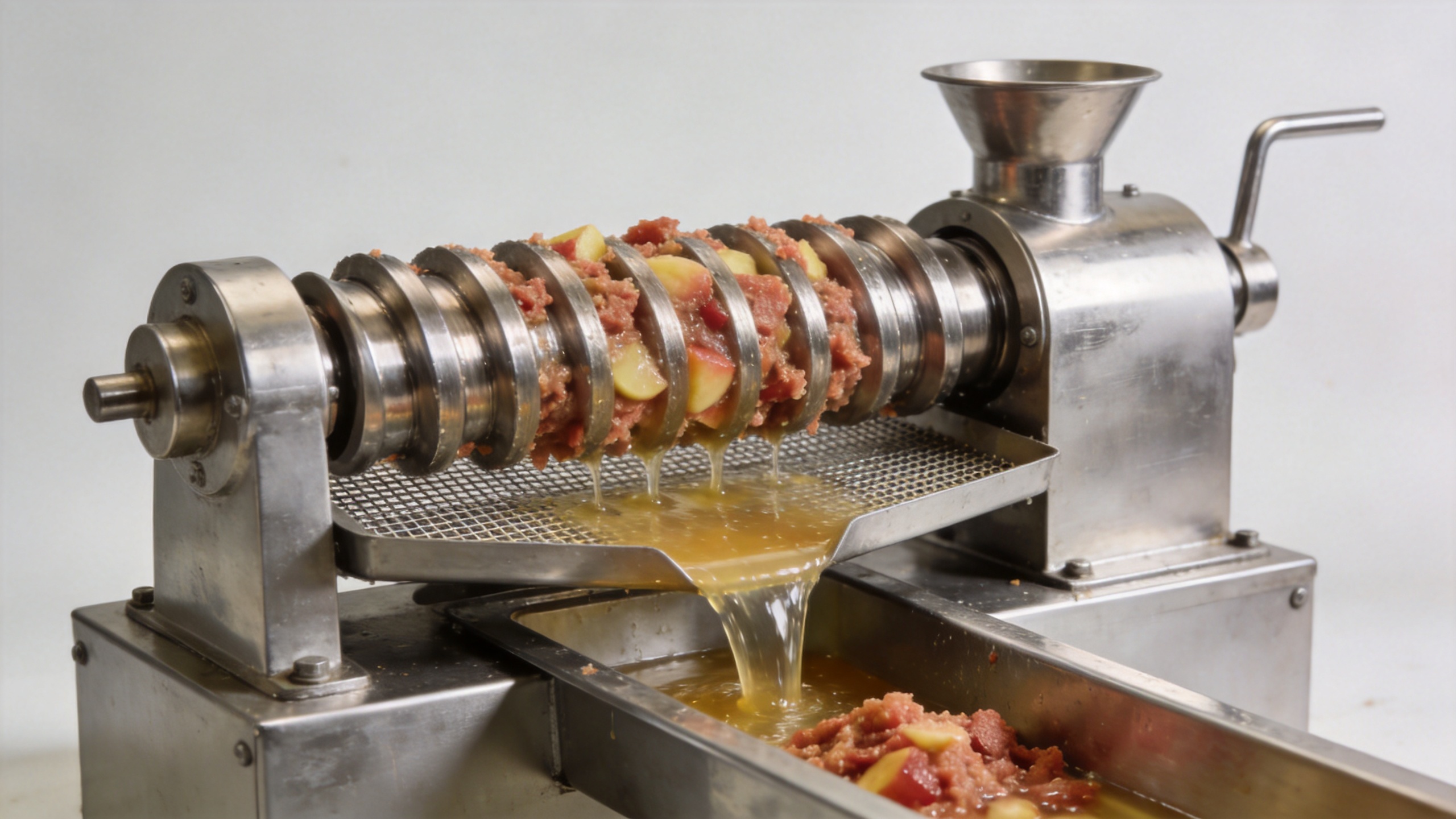
A screw press is commonly installed after washing, sorting, crushing, or pulping. Material enters a feed zone and is conveyed by a rotating screw toward a restricted outlet. As the available volume narrows, pressure increases. Liquid passes through a screen while the dewatered solids leave as pomace. This makes the juice extraction machine part of a process, not an isolated piece of equipment.
The exact result depends on the raw material. Soft berries, citrus pulp, apples, tomatoes, and fibrous vegetables do not behave in the same way under compression. That is why the feed preparation stage matters: a consistent mash helps the press apply pressure more evenly, while oversized pieces, excessive peel, or uneven pulp can cause unstable discharge and inconsistent separation.
How Controlled Compression Raises Recoverable Juice
The key advantage of a screw-based juice extraction machine is gradual, continuous compression. Instead of relying on a short pressing event, the screw moves material through a pressure zone while the screen provides a defined path for liquid. Operators can then balance several variables:
- Feed consistency: More uniform pulp gives more predictable flow through the press.
- Screw speed: Higher speed may move more material, but it does not automatically create the most suitable separation for every raw material.
- Outlet resistance: Back-pressure affects how much liquid is released and how dry the pomace becomes.
- Screen condition: A clean, suitable screen supports drainage without allowing unwanted solids into the juice stream.
These settings must be tuned together. One published screw-press study reported an optimized tested spring setting at 185 rpm for its own apparatus, illustrating that pressure regulation and speed work as a pair. It should not be copied as a universal setting; it is a reminder to validate the juice extraction machine with the intended fruit, maturity level, and throughput target.
Why Fruit Preparation and Pomace Separation Matter
A press cannot fully correct poor upstream preparation. Washing protects the product stream from field debris. Sorting reduces the chance that damaged material changes flavor or blocks the process. Crushing or pulping then creates a feed that the press can convey consistently. In this workflow, a pulp extractor may be used upstream or alongside pressing to condition the material and manage the separation of seeds, skins, coarse fiber, or pulp according to the finished drink specification.
When evaluating a juice extraction machine, look at the whole flow: feed hopper behavior, conveyance, screen accessibility, juice outlet, pomace discharge, and the connection to filtration or pasteurization. A smooth handoff between these stages helps prevent bottlenecks that can erase the efficiency gained at the press.
Food-Grade Construction Supports Stable Production
Yield is important, but it is not the only measure of an efficient juice extraction machine. Food-contact surfaces need to be practical to inspect and clean. Hygienic-design guidance favors corrosion-resistant stainless steel because it helps equipment retain a cleanable surface over time. Smooth, accessible surfaces and a sensible cleaning routine reduce the risk that residue builds up in screens, joints, or discharge areas.
For example, the Food-Grade Screw Press 80% Juice Yield 0.5-1T/H SUS304 for Fruit & Vegetable Processing can be reviewed as a product-page starting point when comparing a screw press for a fruit or vegetable line. Before purchase, confirm the actual food-contact configuration, cleaning access, and capacity fit for your material rather than relying on the product name alone.
Practical Checks Before You Select a Juice Extraction Machine
Production managers often find that rated capacity and real output differ. The difference usually comes from material variability, operator practice, cleaning intervals, or a mismatch between the press and upstream pulping. A structured trial is more useful than an isolated specification comparison.
- Define the fruit or vegetable varieties, maturity range, and target product style.
- Measure feed condition after washing and pulping, including the amount of peel, seed, and fiber carried into the press.
- Run a representative trial and record input mass, juice mass, pomace condition, processing time, and screen observations.
- Adjust speed and outlet resistance gradually; avoid changing several variables at once.
- Review cleaning time and access points, because an efficient juice extraction machine must also be efficient to reset between runs.
This approach turns “juice yield” into a controllable production indicator. It also reveals whether the limiting factor is the press itself, the pulp extractor stage, raw-material preparation, or downstream handling.
Build Efficiency Around Repeatability, Not a Single High-Yield Run
A practical result is a repeatable balance of extraction, juice quality, hygiene, and operating time. Excess pressure may make pomace drier in some situations, yet it can also change pulp carryover or make cleaning more demanding. Conversely, a conservative setting may protect product characteristics but leave recoverable liquid in the solids. The right operating window is the one that fits the product specification and can be maintained shift after shift.
In short, a food-grade screw press improves a juice extraction machine workflow by creating controlled, continuous separation. Combine it with consistent fruit preparation, appropriate screen management, verified food-contact design, and documented operating trials. That is how a processor moves from a claimed yield figure to a more dependable juice-production process.