EN
EN


How a Fruit Pulper Machine Works in Juice Processing
In a commercial juice room, a juicer press is only one part of the picture. Citrus presses squeeze relatively clean juice from halved fruit, while a fruit pulper turns prepared fruit into a controlled pulp stream for nectar, puree, blends, sauces, or juice products with body. Understanding that difference helps processors specify the right equipment and arrange the line in the right order.
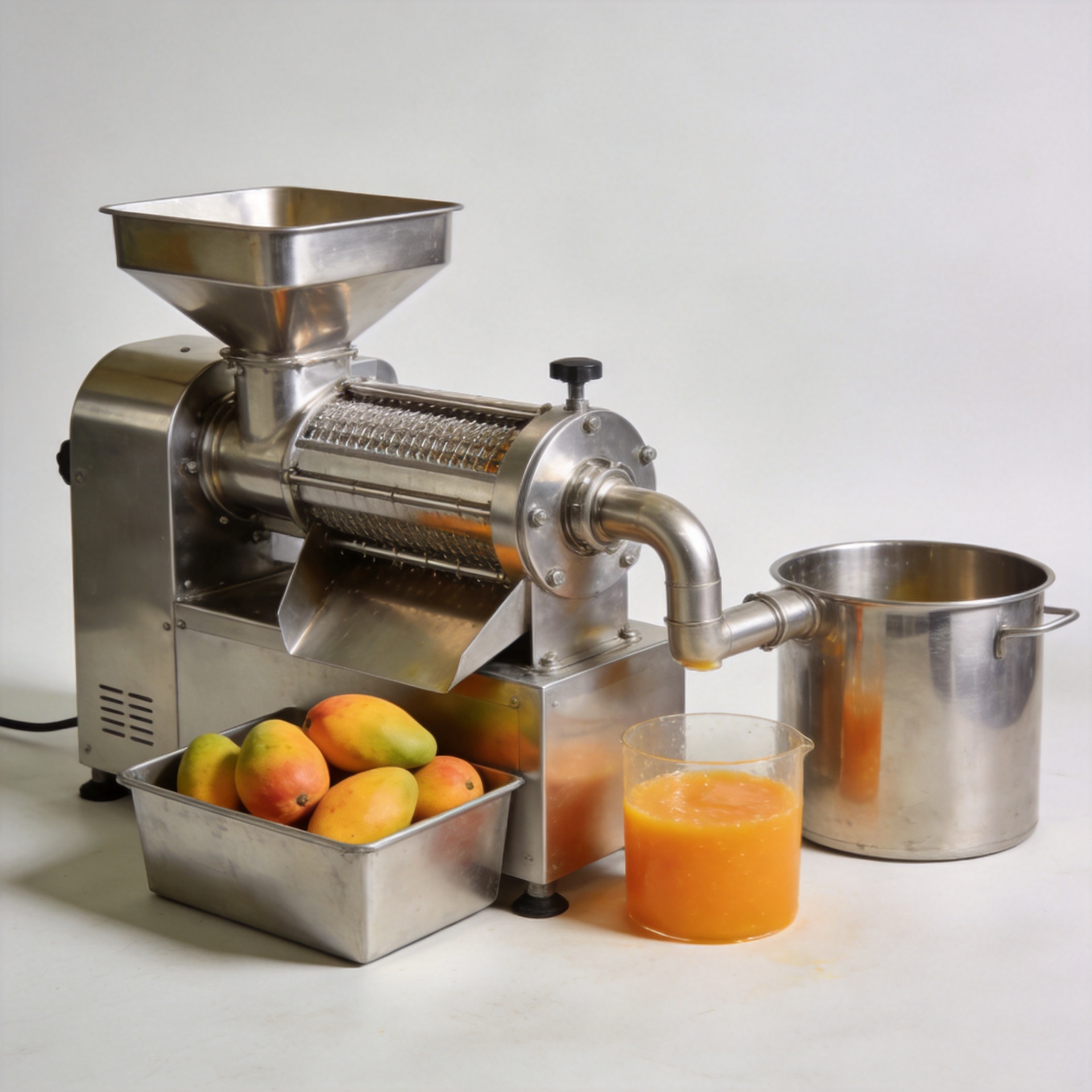
A fruit pulper works by moving softened or crushed fruit through a perforated screen while a rotor, paddles, or beaters gently force usable flesh through the openings. Skins, coarse fibre, seeds, and stones remain on the reject side. The outcome is not simply “more juice”; it is a more uniform fruit base that can be blended, deaerated, pasteurized, or filled.
Start with the fruit and the intended product
The process begins before the pulper. Incoming fruit is inspected, washed, and sorted so damaged material, field debris, and unsuitable pieces do not enter the machine. Depending on the fruit, operators may peel, cut, heat, or crush it first. A juicer press is useful when the target is clarified or low-pulp juice, but it is not a substitute for pulping when the recipe needs fruit solids.
Apples, berries, tomatoes, mangoes, apricots, passion fruit, and similar raw materials behave differently. Soft fruit may feed directly after washing and crushing. Stone fruit needs a destoning stage so pits are removed without excessive breakage. A well-planned line matches the preparation method, screen size, and rotor action to the fruit’s firmness, fibre level, and final texture.
Crushing creates a consistent feed
Most lines use a crusher before the pulper. Crushing opens the fruit structure and creates pieces that can pass evenly into the inlet. Uniform feed matters because surges can overload the screen, while oversized pieces can lower recovery or leave unprocessed material in the discharge. For some products, gentle handling is especially important because aggressive crushing can release bitter seed material or create too much fine debris.
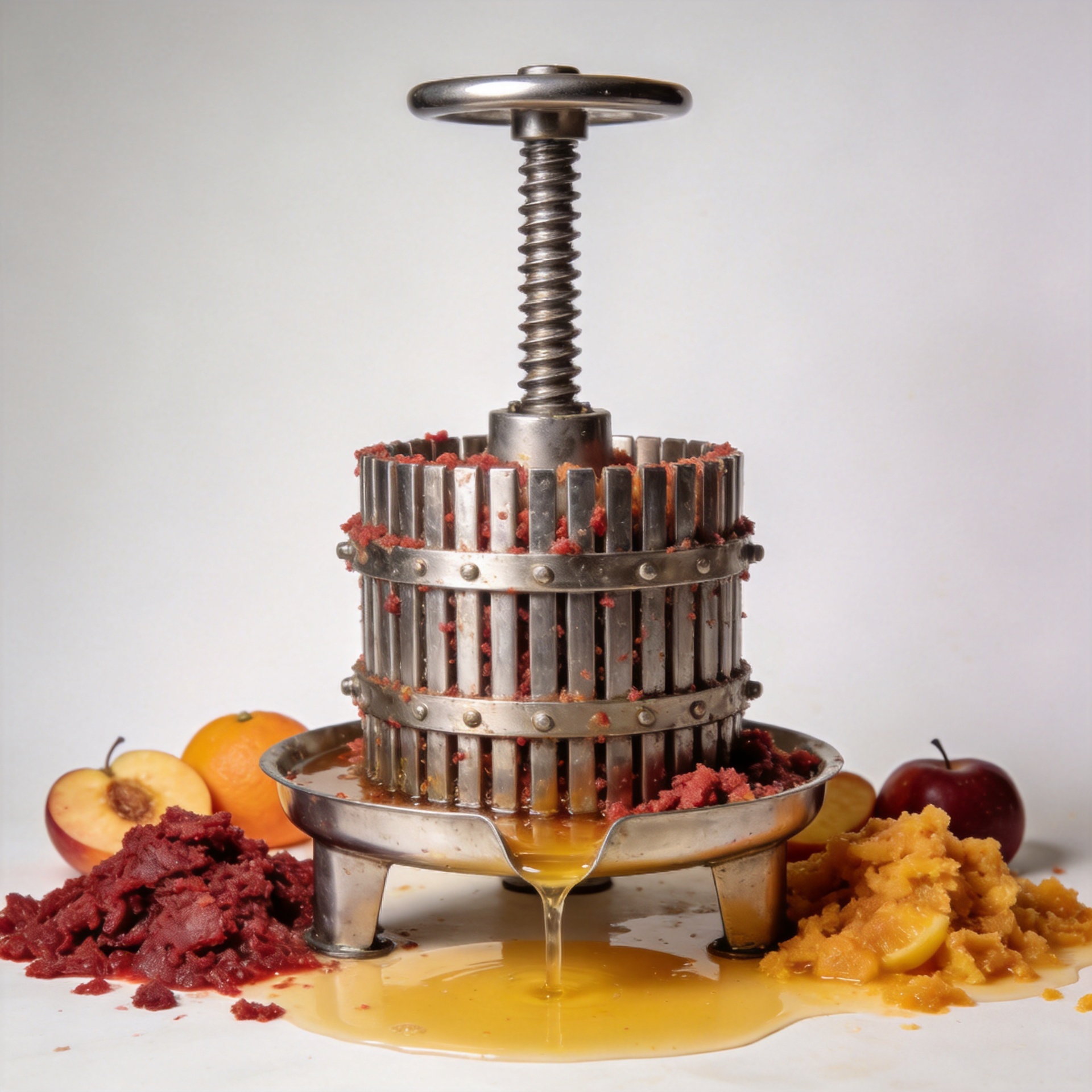
At this point, a juicer press line and a pulping line often diverge. A press separates liquid from pomace by compression. A pulper separates edible flesh by screening. Facilities may use both, but the sequence depends on the product specification rather than a general rule.
Destoning protects product quality
For peaches, apricots, plums, mangoes, and other stone-bearing fruit, a destoner is commonly integrated with the pulper. The fruit is guided into the working chamber, where the edible flesh is separated from pits and skins. The aim is to recover pulp while keeping hard stones out of downstream pumps, heat exchangers, and fillers.
This is a practical quality-control point. Broken pits can affect texture and may introduce unwanted material into the pulp. Operators therefore monitor fruit maturity, feed rate, rotor clearance, and reject discharge. A juicer press cannot perform this separation by itself; a dedicated destoning and pulping arrangement is designed for that task.
Inside the pulping chamber
Once prepared fruit enters the pulper, the rotor moves it against a screen or sieve. The usable pulp passes through the perforations and is collected below or around the chamber. Larger particles are carried toward the outlet as residue. Screen openings influence the mouthfeel: a finer screen can produce a smoother pulp, while a larger opening may retain more body. The appropriate choice depends on the fruit and the desired finished product.
Process control is more useful than chasing a single yield number. Fruit variety, ripeness, temperature, screen condition, and feed consistency all change results. A processor should record throughput, pulp texture, residue appearance, and cleaning time during trials. For reference, published equipment examples for stone-fruit destoning and pulping may state capacities up to 1,000 kg/h for a particular model, but actual line performance must be confirmed with the selected fruit and configuration.
From pulp discharge to finished beverage
The discharged pulp can move to a holding tank, blender, finisher, deaerator, pasteurizer, or filling system. A juicer press may still appear later in a broader line when another ingredient requires pressed juice. The key is that pulped fruit provides a different ingredient profile: it carries suspended solids and natural texture that a press alone may not deliver.
Before production, verify the downstream pump’s ability to handle viscosity and particles. Check that pipe diameters, valves, and heat-transfer surfaces match the pulp characteristics. Cleaning access also matters. Screens, rotors, chambers, and residue outlets should be reachable for routine inspection and CIP planning, because buildup can change flow and product consistency.
Juicer press checkpoints for line planning
Use the following juicer press checkpoints when mapping a fruit-processing line. Each juicer press decision should be tied to the product specification, not to a generic equipment label.
- A juicer press suits liquid extraction when the recipe calls for low pulp.
- A juicer press should follow washing and appropriate fruit preparation.
- A juicer press needs a planned route for pomace handling.
- A juicer press does not replace a destoner for stone fruit.
- A juicer press should be compared with a pulper when suspended fruit solids are required.
- A juicer press trial should include the actual fruit variety and maturity range.
- A juicer press selection should consider cleaning access and sanitation routines.
- A juicer press may work alongside a pulper in a multi-fruit beverage line.
- A juicer press must be sized with upstream feed consistency in mind.
- A juicer press should connect to downstream tanks and pumps that match the liquid or pulp stream.
- A juicer press evaluation should document recovery, texture, and residue for the intended product.
- A juicer press is one process choice within the wider juice-processing system.
These juicer press checkpoints prevent a common specification error: selecting a press when the finished drink needs a stable fruit pulp base. In that case, the juicer press can complement, rather than replace, a screened pulping stage.
Choosing a practical fruit pulping solution
When evaluating equipment, define the fruit types, expected seasonal capacity, required particle size, sanitation plan, and whether pit removal is needed. Then compare the inlet design, screen options, rotor design, material contact surfaces, discharge arrangement, and integration points with the rest of the line. A product such as the Apricot Tomato Passion Fruit Crusher Mango Destoner and Pulping Pulp Making Machine Fruit Pulper Machine illustrates the type of combined crushing, destoning, and pulping configuration a processor may review for suitable applications.
In short, a juicer press extracts liquid by pressure, while a fruit pulper builds a controlled pulp stream through crushing, separation, and screening. Selecting between them—or combining them—starts with the final beverage and the fruit’s physical characteristics. With the right preparation and settings, pulping becomes a dependable bridge between fresh fruit and consistent juice-processing output.