EN
EN


What Is a Mango Pulper Machine and How Does It Process Fruit?
A mango pulper machine is a food-processing machine that separates the soft edible flesh of ripe mangoes from skins, stones, and coarse fibres. It is used when a processor needs consistent mango pulp or purée for juice, nectar, jam, frozen products, concentrates, or further thermal processing. Rather than treating “pulping” as a single mysterious step, it is more useful to see the machine as the separation point in a larger fruit-processing workflow.
For tropical-fruit processors, the goal is straightforward: move clean, properly prepared fruit through a controlled mechanical stage, recover usable pulp, and send the remaining peel and seed fraction away from the finished product stream. An apple pulper follows the same broad idea, although the feed preparation and screening choice can differ because fruit texture, seed size, and fibre levels are not identical.
What a mango pulper machine does
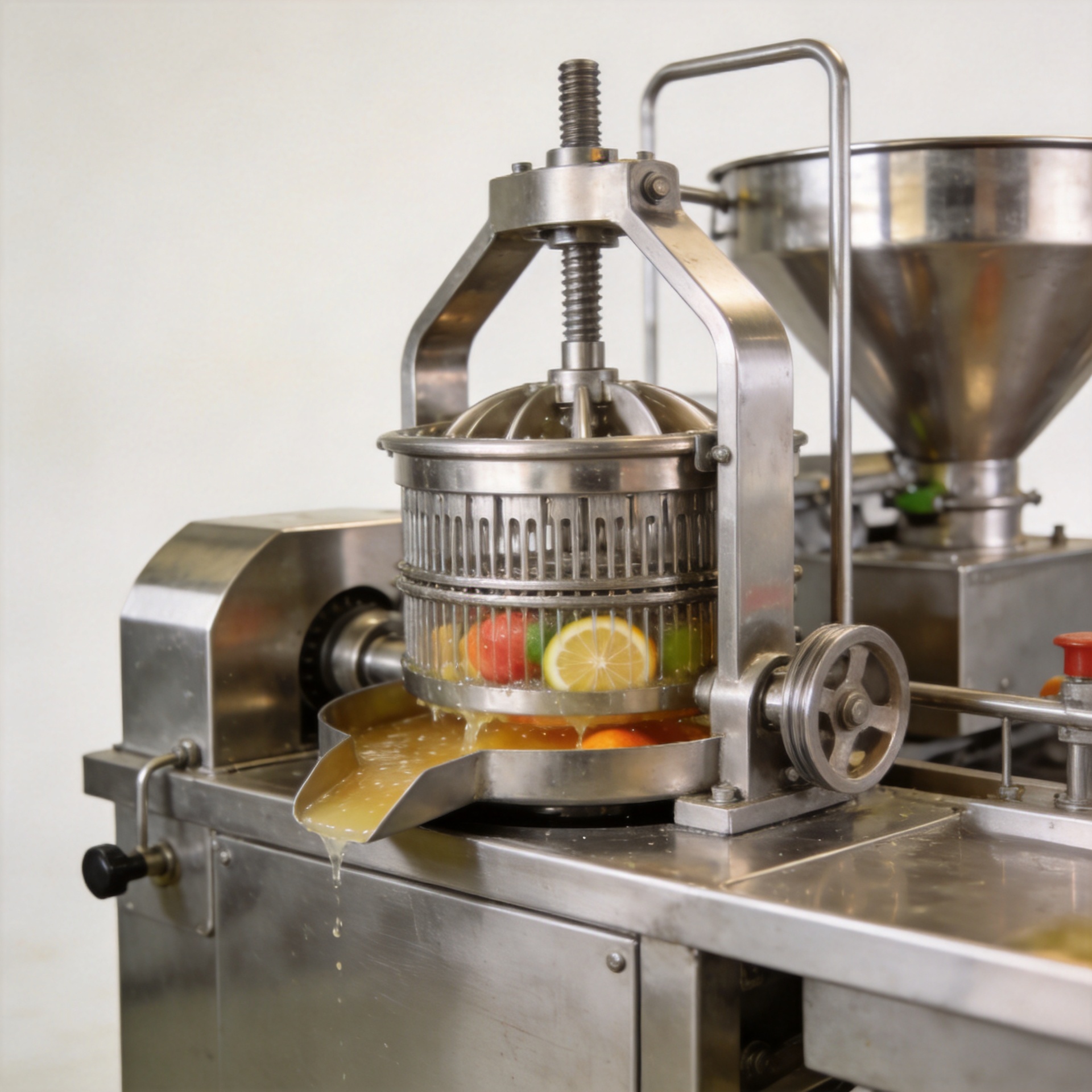
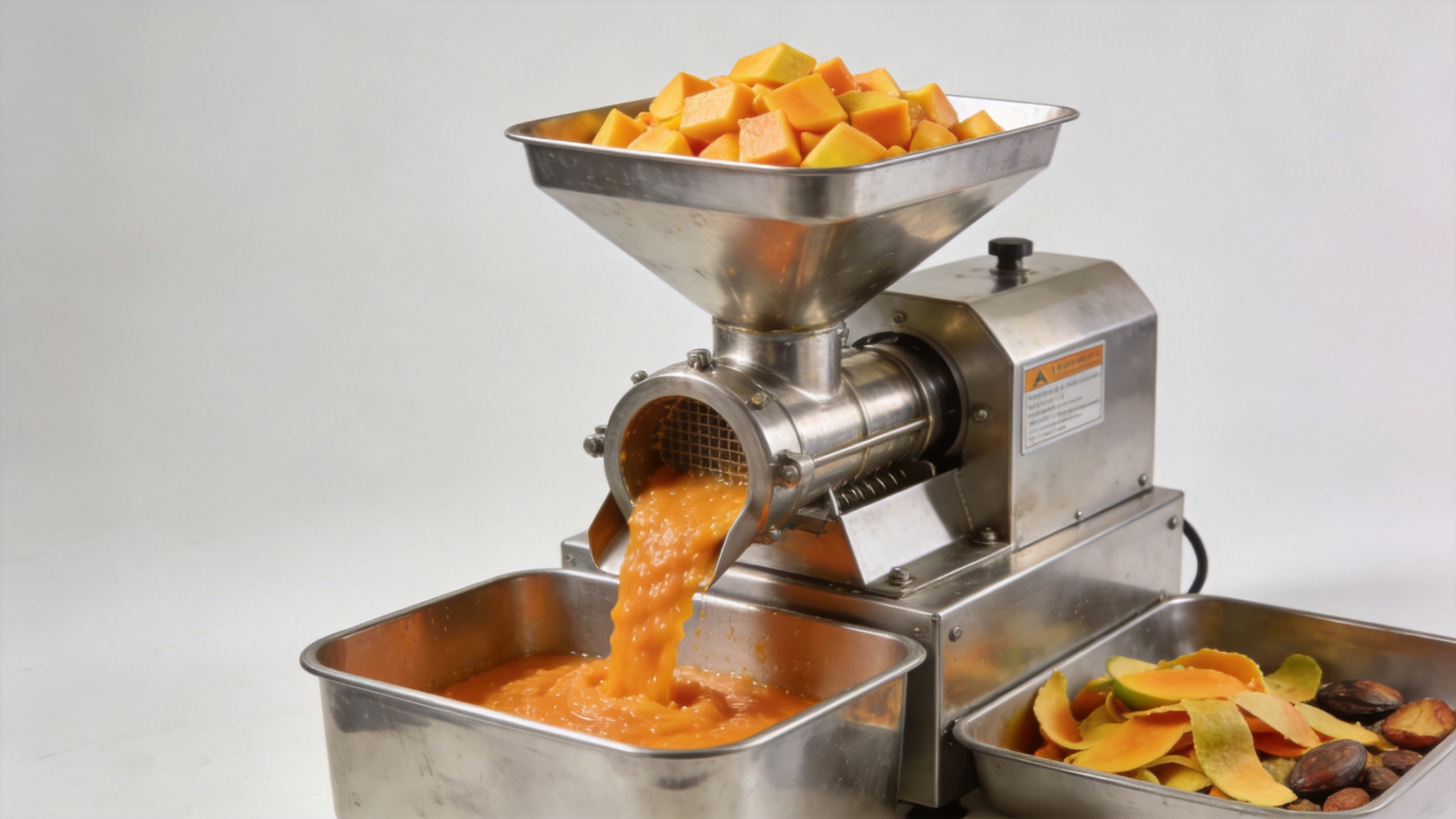
A mango pulper machine receives prepared mango pieces or softened mango mash and uses a rotating working assembly and a perforated screen to separate pulp from solids. The rotating action presses and wipes the fruit flesh against the screen. Fine pulp passes through the openings, while peel, seed pieces, and coarse residue travel toward a separate discharge outlet.
In practical terms, the machine helps a production line do three jobs at once:
- Break down softened mango flesh into a uniform pulp stream.
- Keep unwanted solids out of the pulp stream.
- Feed a more consistent material to downstream equipment such as refiners, holding tanks, deaerators, pasteurizers, or filling systems.
The machine is not a substitute for fruit selection, washing, or food-safety controls. Its performance depends on receiving fruit at the right ripeness and in a suitable prepared condition.
Where pulping fits in a mango-processing line
The awareness-stage question is not only “how does a mango pulper machine work?” but also “what happens before and after it?” A typical workflow starts with sorting. Damaged, spoiled, or unsuitable fruit should be removed before it enters mechanical processing. The remaining mangoes are washed to reduce surface soil and then prepared according to the line design.
- Sorting and washing: Operators remove unsuitable fruit and clean the selected mangoes.
- Breaking, cutting, or softening: The fruit is reduced into pieces or conditioned so its flesh can be released more efficiently.
- Destoning when required: Mango stones are large and hard, so a line may use a dedicated destoning stage or a pulper configuration designed to keep stones out of the recovered pulp.
- Pulping and screening: The mango pulper machine separates the useful flesh from peel, seed, and coarse fibre.
- Refining or finishing: A second stage may improve texture by removing remaining fibre or oversized particles.
- Preservation and packing: Depending on the product, pulp may be pasteurized, aseptically packed, frozen, or sent to another recipe stage.
Published mango-processing guidance commonly places washing, fruit preparation, pulp extraction, and heat treatment in this overall sequence. The exact arrangement changes with the final product, capacity target, local raw-material quality, and required shelf life.
How the fruit is separated inside the machine
Although designs vary, the working principle of a mango pulper machine is based on controlled mechanical force and screen separation. Fruit enters through a hopper or feed section. A rotor, scraper, beater, or paddle moves the material through a cylindrical screen. As the fruit is worked against the screen, the soft portion passes through as pulp.
The screen is important because it defines the cut between accepted pulp and rejected solids. A screen that is too open may allow excessive fibre or small peel fragments into the product. A screen that is too restrictive can reduce throughput or leave usable pulp with the waste. Processors therefore consider fruit variety, ripeness, desired texture, and whether a later refining stage is available.
The rejected fraction usually contains peel, stone material, and coarse fibre. It leaves through a different outlet so it does not re-enter the product stream. Good feed control matters: overfeeding can make separation less stable, while fruit that is too firm may not release pulp efficiently.
Why mango preparation matters before pulping
Mangoes are not processed exactly like apples, berries, or citrus. Their large stone, variable fibre, and ripeness range make preparation particularly important. Very firm fruit may require more conditioning, while overripe fruit can become difficult to handle cleanly. The preparation system should deliver a feed that lets the mango pulper machine recover flesh without unnecessarily grinding peel or seed material into the pulp.
For this reason, a processor should examine the whole line rather than choosing a machine only by its name. Fruit intake method, wash capacity, cutting or crushing approach, stone handling, screen selection, discharge arrangement, cleaning access, and downstream preservation all affect the final result.
Mango pulper machine versus apple pulper
A mango pulper machine and an apple pulper both use the principle of separating soft fruit material from unwanted solids, but the configuration must match the fruit. Apples are commonly cored or crushed and can contain skin and seed fragments that need controlled screening. Mangoes present a larger stone and can contain stringy fibre, so equipment selection often focuses on effective destoning and a pulp texture suitable for purée or beverage applications.
That is why an apple pulper should not be assumed to be a direct one-for-one replacement for mango duty. The processor should verify the permitted feed condition, screen options, fruit-contact design, cleaning method, and whether the intended machine can manage the required fruit preparation route.
What buyers should check before selecting equipment
When evaluating a mango pulper machine, start with the product specification rather than a brochure claim. Define whether the output is intended for juice, nectar, purée, jam, or another product. Then assess the raw fruit and line conditions.
| Question | Why it matters |
|---|---|
| What fruit varieties and ripeness levels will be processed? | They influence pulp release, fibre load, and screen selection. |
| Will mangoes arrive whole, cut, or pre-destoned? | This determines the required upstream preparation and stone-handling capability. |
| What texture is required? | It affects screening, refining, and the need for a second finishing step. |
| How will the pulp be preserved? | Pasteurization, freezing, or aseptic packing shapes the downstream line design. |
| How will the machine be cleaned between runs? | Accessible, food-contact components support hygiene and changeover control. |
For a real product-page starting point, processors can review this fruit pulper machine for mango destoning and pulping alongside their own fruit tests and production requirements. The final configuration should be validated against the intended process rather than inferred from a product title alone.
From pulp to a stable finished product
Freshly extracted mango pulp is still only an intermediate product. It may need refining for a smoother texture, deaeration to manage entrained air, and heat treatment or another preservation method appropriate to the finished product. FAO processing references describe mango pulp extraction as part of a sequence that can include acidification, pasteurization, and hot filling in specific applications. Those conditions are process-dependent, not universal settings for every line.
A dependable mango pulper machine therefore supports consistency, but it does not remove the need for recipe validation, hygiene controls, and downstream process design. Matching the machine to the fruit, the target texture, and the preservation plan is the practical route to stable pulp quality.
Key takeaway
A mango pulper machine mechanically separates mango flesh from peel, stone, and coarse fibre through rotating action and screened separation. It works as part of a coordinated line: selected fruit is washed and prepared, the pulp is recovered and refined as needed, and the finished material moves to preservation or packaging. With the correct feed preparation and screen configuration, the same core principle can support many fruit-pulp applications while respecting the differences between mangoes and an apple pulper workflow.