EN


Juice Extraction Equipment: How to Compare Screw Press and Pulping Solutions
Choosing juice extraction equipment is not simply a choice between two machine names. For a fruit processor, the right solution depends on the raw material, the target beverage style, the acceptable fibre level, and the separation steps that follow. A screw press and a fruit pulper can both sit in a fruit juice processing machine line, yet they solve different process problems. Comparing them by purchase price alone can lead to avoidable yield losses, difficult filtration, or an end product that does not match the intended texture.
For B2B buyers planning a new line or upgrading a bottleneck, start with the product specification—not the equipment catalogue. Define whether the goal is clarified juice, cloudy juice, nectar, puree, or a concentrate feed. Then use those targets to compare pressure-based extraction with screen-based pulping.
Start with the separation job your juice extraction equipment must perform
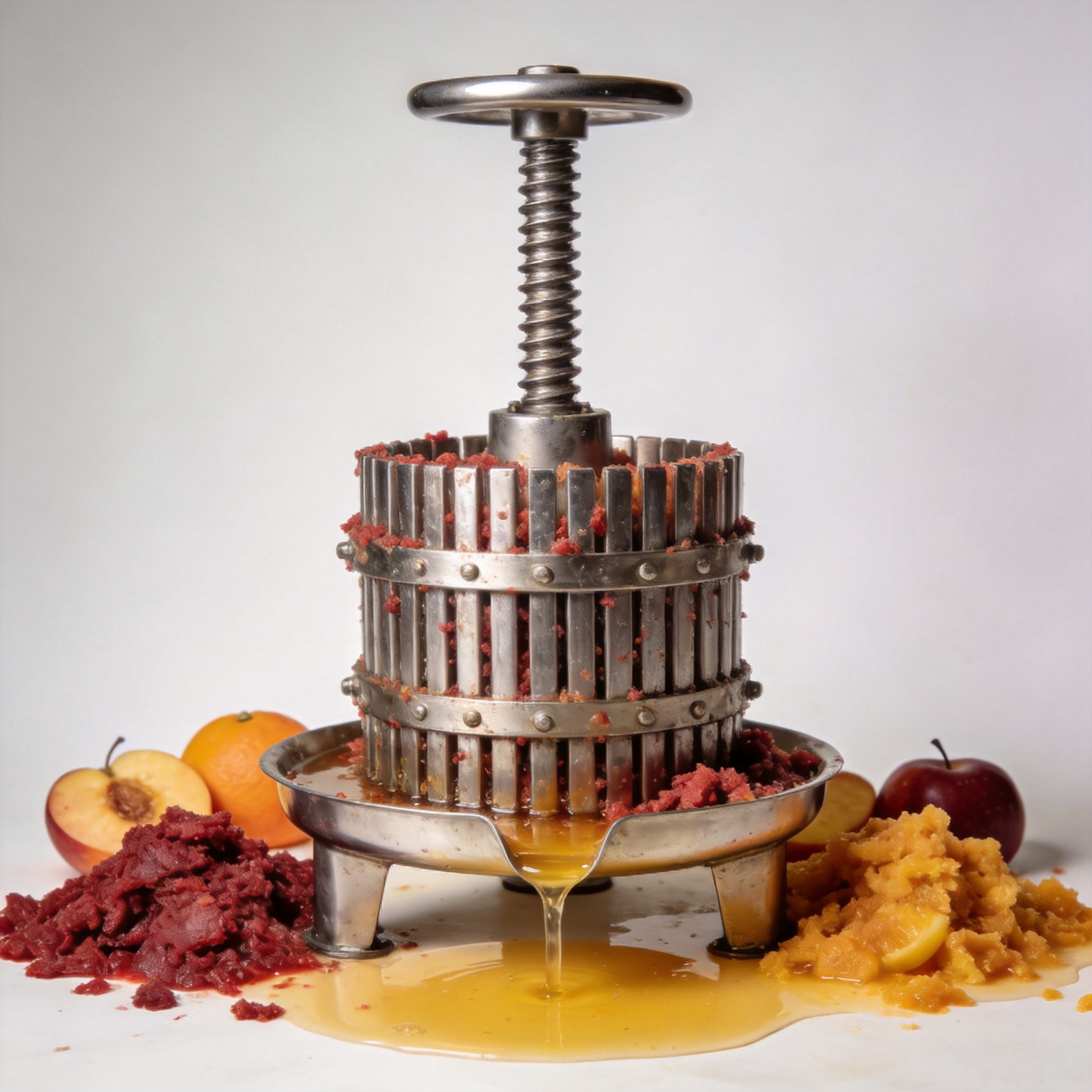
A screw press applies controlled mechanical pressure to a prepared fruit mash. Its central question is: how much liquid can be separated from pomace while keeping solids manageable? A pulper, by contrast, uses a rotor and screen to move acceptable pulp through perforations while rejecting skins, seeds, stones, and coarse fibre. Its central question is: what fraction of edible pulp should pass downstream?
This distinction matters because “juice” can mean very different products. Apple, pineapple, grape, and some berry mashes often benefit from a press-led route when the target is a lower-pulp juice and pomace handling is important. Tomato, mango, apricot, passion fruit, and similar pulpy materials often need pulping or finishing to produce a uniform puree or nectar base. In some lines, the more suitable answer is not necessarily either/or: pulping prepares the material and pressing or finishing handles a later separation step.
Industry guidance on fruit processing describes screw-type finishing as concentrating pulp within a screen before discharge. That process detail is useful for buyers because it links machine choice directly to downstream clarification, blending, and waste handling rather than to a single headline yield number.
When a screw press is the stronger choice
Screw-press juice extraction equipment is generally worth evaluating when the production objective is to recover liquid from crushed fruit or vegetable mash and deliver a relatively dry pomace stream. The material is continuously conveyed and compressed, while expressed liquid passes through the screen. Adjusting feed preparation, screen selection, back-pressure settings, and throughput changes the balance between liquid recovery and solids carryover.
Typical fit for a press-led route
- Firm or fibrous raw materials: fruit mash with a distinct liquid phase and pomace that can be conveyed and compressed.
- Clarified or lower-pulp products: operations that expect settling, centrifuging, filtration, or further clarification after extraction.
- Pomace-management priorities: projects where reduced residual moisture can simplify transport or later by-product handling.
- Continuous production: lines that need steady feed and repeatable operating controls rather than batch-style manual separation.
However, a press is not automatically the highest-yield solution in every plant. Raw-material maturity, particle size, enzymatic treatment, feed moisture, and operator settings can all change the result. One pineapple-processing example reports feed material at 78–80% moisture before pressing; that illustrates why buyers should test their own fruit condition instead of treating a published moisture figure as a design guarantee.
When pulping and finishing make more sense
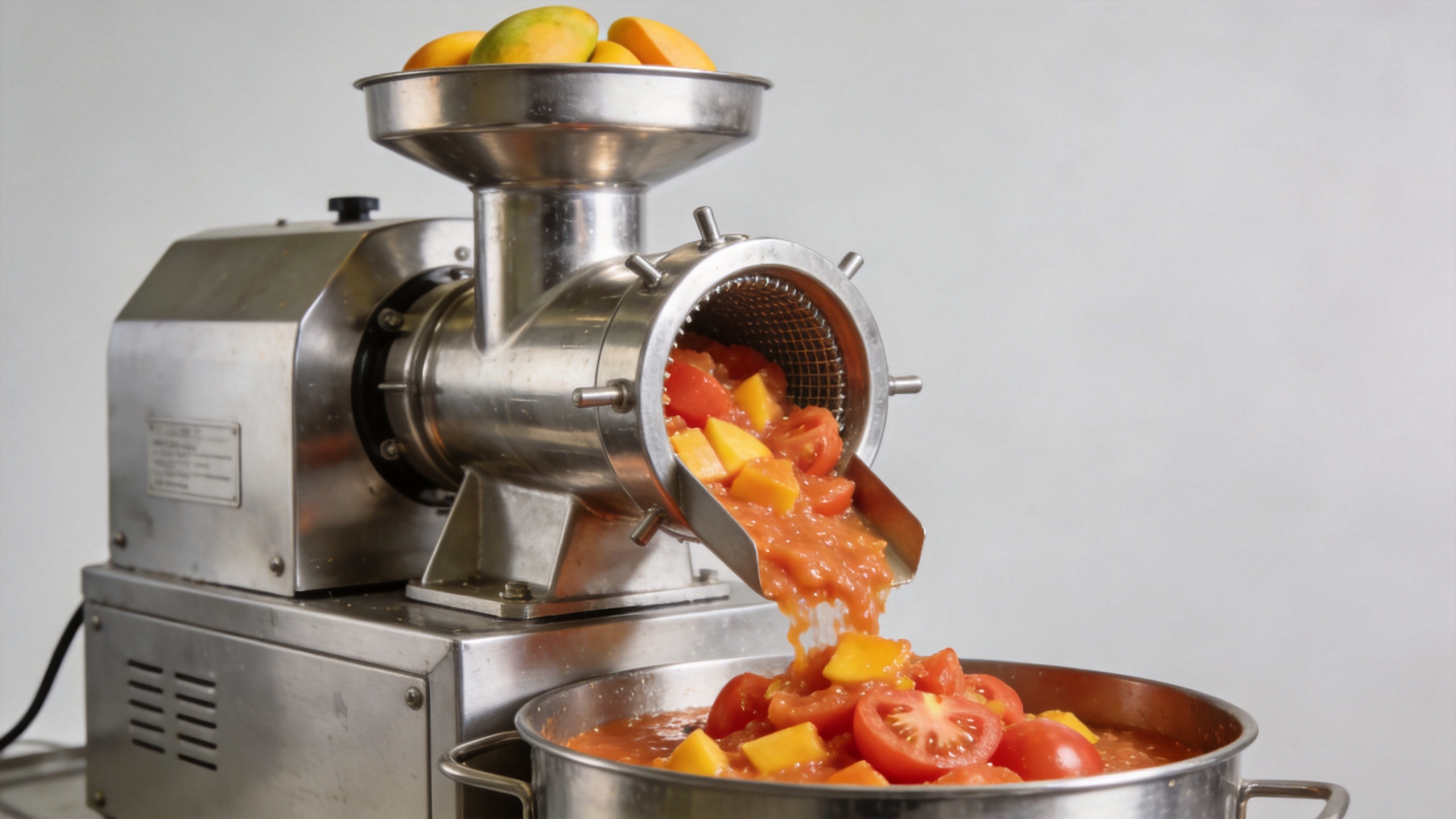
A pulper is usually the more relevant fruit juice processing machine when the product value is in the edible pulp rather than in a clear liquid phase. Rotating paddles or blades guide softened fruit against a screen, allowing pulp and juice to pass while rejecting unwanted skins, seeds, and coarse material. This supports products such as mango nectar, tomato juice, apricot puree, and passion-fruit pulp.
The most important specification is not simply motor power. Buyers should discuss screen opening, rotor design, feed condition, and the risk of breaking seeds or skins. Where unwanted fragments are a concern, staged finishing can be useful. FAO processing guidance gives an example of two pulpers in series with screens progressing from about 1 mm to 0.2 mm for cleanup. That is an application example, not a universal recipe: the right screen sequence must be proven on the actual fruit and desired texture.
For processors handling stone fruit, tomato, mango, or passion fruit, a dedicated fruit pulper machine for apricot, tomato, passion fruit, and mango processing can be evaluated as part of the preparation and pulp-separation stage. The selection should still be confirmed against fruit variety, stone or seed condition, and the intended downstream process.
Screw press vs. pulper: compare the process consequences
| Decision factor | Screw press | Pulper / finisher |
|---|---|---|
| Primary action | Expresses liquid from mash under mechanical pressure | Separates acceptable pulp through a screen while rejecting coarse material |
| Typical output focus | Juice with controlled solids and a separate pomace stream | Puree, nectar base, or pulpy juice with controlled particle size |
| Raw-material concern | Compressibility, preparation quality, moisture, and fibre behavior | Softness, seed/skin breakage, screen passage, and stone removal |
| Downstream impact | Often followed by clarification, filtration, or solids recovery | Often followed by blending, deaeration, homogenization, or thermal processing |
| Main trial metric | Liquid recovery, pomace condition, and solids load | Pulp recovery, texture, reject quality, and seed/skin carryover |
The practical takeaway is that a press optimizes a liquid–pomace separation, while a pulper optimizes a pulp–reject separation. A line can need both functions, particularly when it must remove stones or skins first and then manage a remaining liquid or fibre stream.
Plan for fibre, filtration, and cleaning before you choose
Fibre handling is where many equipment comparisons become incomplete. A screw press can lower the liquid held in pomace, but the extracted juice may still require clarification depending on the fruit and product standard. A pulper can give a desirable body to a nectar or puree, but fine pulp and fibre can increase the duty on downstream pumps, heat exchangers, filters, or homogenizers.
Ask suppliers to map the entire process: washing, sorting, crushing or destoning, extraction or pulping, screening, transfer, thermal treatment, and cleaning-in-place. For every stage, document the expected solids condition. This is more useful than comparing only nominal capacity because a line’s usable throughput is often set by the slowest separation or cleaning step.
Cleaning also deserves early attention. Sticky puree, fibrous mash, and seed fragments can behave very differently in screens and discharge zones. During a trial, assess not just output quality but also how consistently the equipment can be cleaned and returned to stable operation between product runs.
A practical trial plan for juice extraction equipment
- Define the finished product: Specify clarity, pulp percentage, particle-size tolerance, colour expectations, and required shelf-life process.
- Prepare representative fruit: Include the varieties, ripeness range, wash condition, and seasonal variation expected in production.
- Measure both sides of separation: Record juice or pulp output, pomace/reject condition, visible seed or skin carryover, and downstream filter loading.
- Test operating windows: Compare more than one feed rate and screen or pressure setting rather than accepting a single demonstration point.
- Review the whole line: Confirm that pumps, tanks, filtration, heating, and cleaning capacity suit the solids profile created by the selected machine.
This approach turns equipment selection into a documented process decision. It also gives purchasing teams a clearer basis for comparing proposals that use different capacity definitions or extraction claims.
Specification worksheet for procurement teams
Use a short worksheet during supplier reviews. For juice extraction equipment, confirm fruit variety, ripeness, feed consistency, liquid recovery, reject condition, and settings tested. For a fruit juice processing machine, document pulp texture, fibre carryover, cleaning access, and the downstream stage that limits capacity.
- Test normal and difficult fruit batches, then compare product samples and rejected material side by side.
- Agree acceptance metrics before quotation and retain trial data for line balancing, cleaning planning, and final selection.
- Make the choice from measured process behaviour and the finished beverage specification, not an isolated capacity claim.
Choose the route that matches the beverage, not the label
The suitable juice extraction equipment is the one that creates the separation your finished product needs. Choose a screw press when controlled liquid recovery and pomace separation are central. Choose a pulper or finisher when edible pulp recovery, seed/skin rejection, and texture control are central. Combine stages when the fruit and product specification require both jobs.
Before committing, run representative trials and assess yield, solids, reject quality, cleaning, and downstream compatibility together. That comparison will reveal whether the right investment is a press, a pulper, or a coordinated extraction system designed around your fruit and final beverage.