EN


Automatic Cashew Processing Machine vs. Standalone Shelling Equipment
For a processor planning a new line, the question is rarely whether a machine can crack a nut. The practical question is whether a cashew cutting machine automatic configuration fits the flow of raw nuts, labor, utilities, quality targets, and future expansion. A standalone cashew shelling machine can be a sensible first investment; an integrated automatic line can be a better operating model once upstream and downstream steps need to move together.
From a B2B purchasing perspective, compare the two options as production systems rather than as a list of motor ratings. A cashew cutting machine automatic unit is only as productive as the grading, conditioning, separation, peeling, and packing steps around it. This comparison explains where each approach works, where it creates handoffs, and what to confirm before asking for a quotation.
What is being compared?
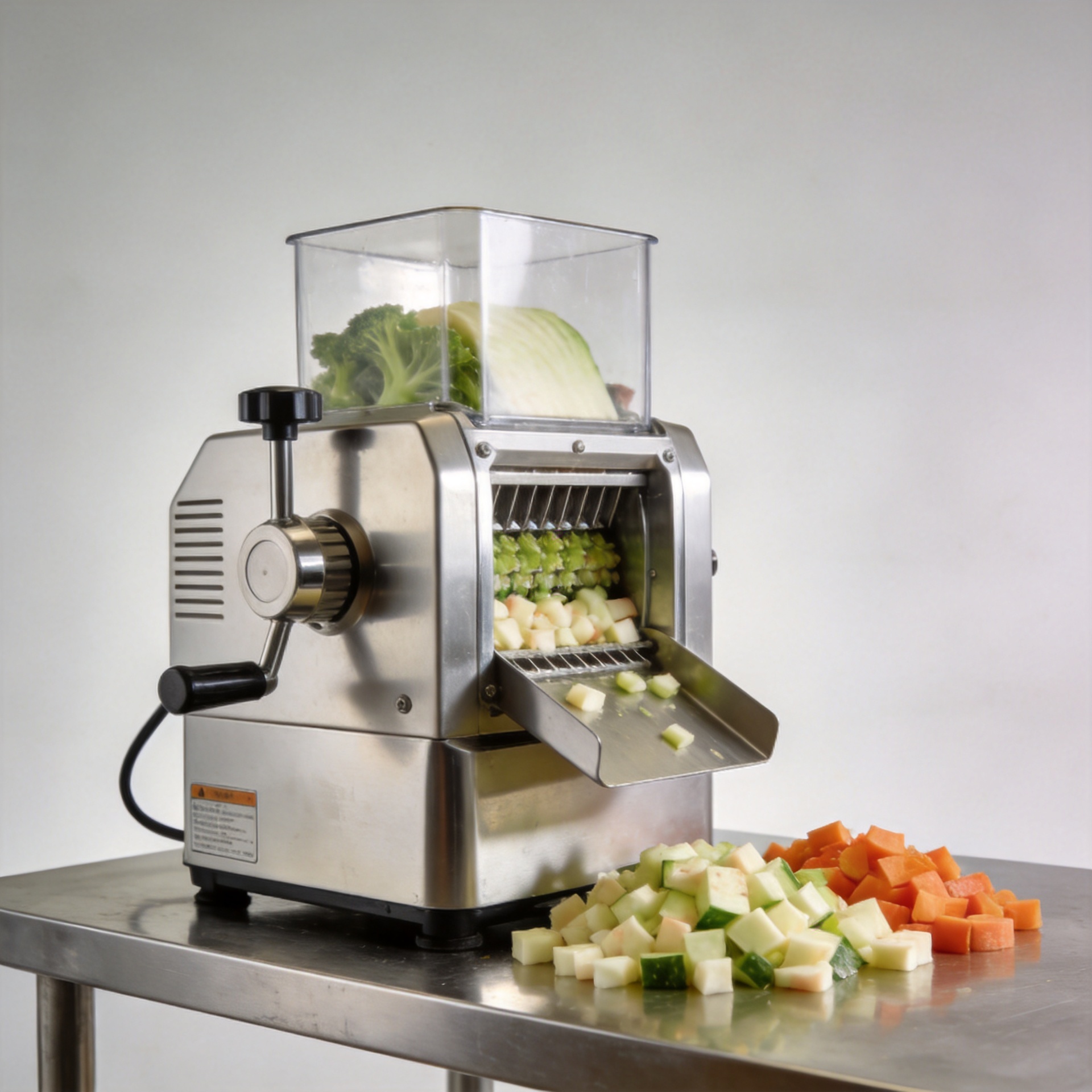
A standalone cashew cutting machine automatic setup normally focuses on cracking or shelling prepared nuts. Operators feed conditioned, size-appropriate nuts into the machine, then collect shells and kernels for separation and later processing. It is modular: a factory can buy one machine, keep some manual stations, and add equipment later.
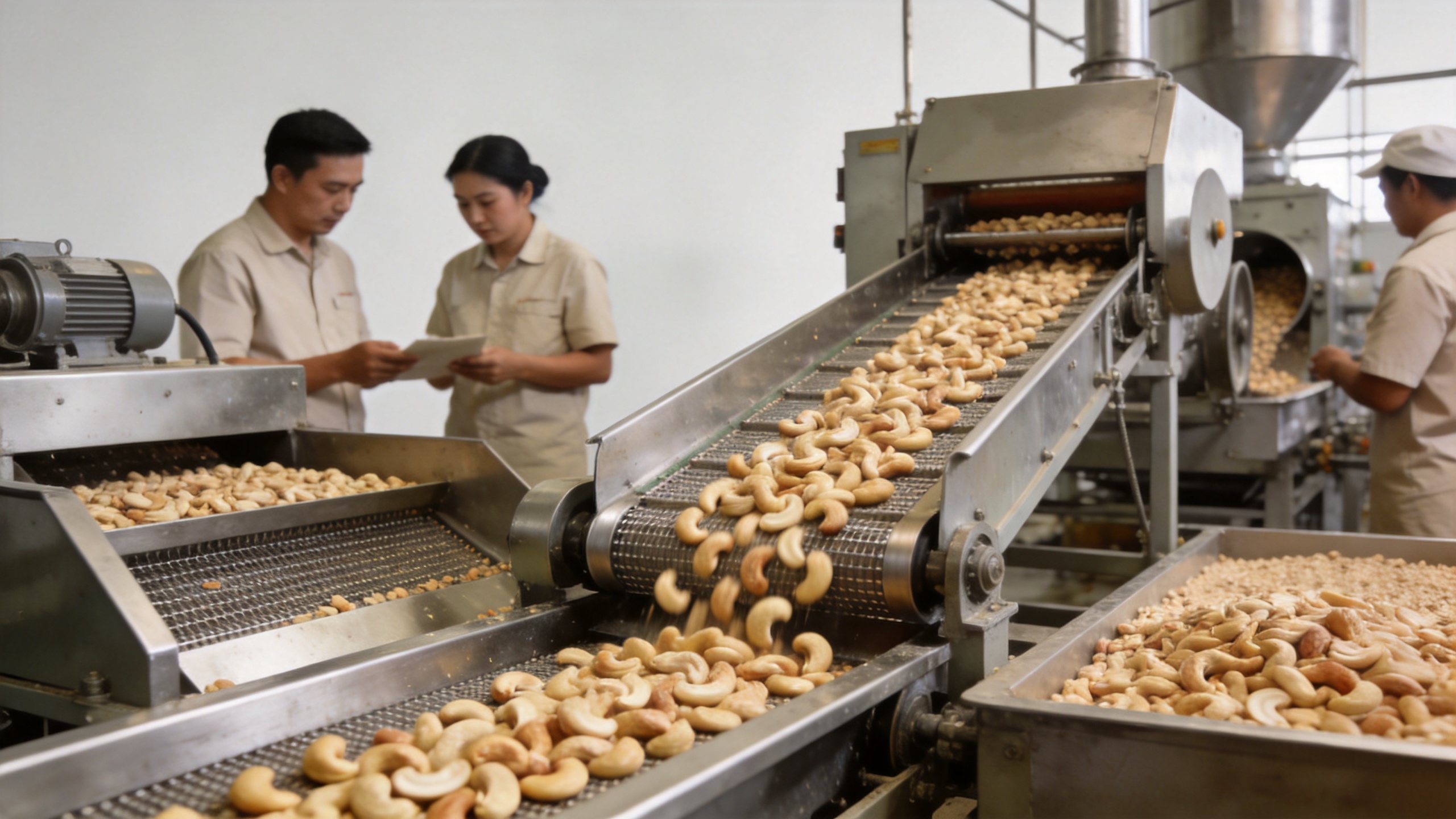
An automatic cashew processing line connects several stages around the cashew cutting machine automatic step. Depending on the project, this may include grading, steaming or conditioning, cutting and shelling, kernel-shell separation, peeling, drying or roasting, inspection, and packing. The line approach does not remove the need for operators; it reduces avoidable transfers and makes throughput easier to manage across stages.
Capacity: compare the bottleneck, not the headline number
The first comparison point is usable output. A supplier may quote the hourly capacity of a cashew cutting machine automatic unit, but that number is not the finished-kernel capacity of the plant. Nut size mix, conditioning consistency, kernel breakage, operator rhythm, and the speed of downstream separation all influence actual output.
One published line configuration lists 400 kg/h grading, 200 kg/h steaming, 170 kg/h shelling per machine, and 300 kg/h peeling. These are illustrative supplier figures, not universal specifications, but they show the core planning principle: the slowest relevant step governs the line. Two cashew cutting machine automatic machines may make sense when one shelling station would hold back a 300 kg/h downstream process. Conversely, installing a high-capacity cutter without preparation capacity can leave expensive equipment waiting for material.
| Decision factor | Standalone shelling machine | Integrated automatic line |
|---|---|---|
| Initial scope | Focused investment around one cashew cutting machine automatic task | Multiple linked processing stages |
| Throughput control | Depends on manual handoffs and separate stations | Designed around balanced stage capacities |
| Expansion | Add modules as demand becomes clearer | Plan utility, layout, and interfaces from the start |
| Management focus | Machine operation and material staging | Line coordination, preventive maintenance, and quality control |
Labor and operating workflow
A standalone cashew shelling machine is often attractive where labor is available and daily volumes vary. Staff can grade, feed, sort, peel, and pack in separate work areas. This flexibility is useful for a start-up or for a processor validating a market. The trade-off is that each transfer adds handling, staging space, and a possible source of delay or mixed batches.
An integrated cashew cutting machine automatic line is more appropriate when repeatable flow matters. Automation can reduce routine handling between stages, but it changes the labor profile rather than eliminating labor. Operators still need to monitor feeds, remove jams safely, check kernel condition, control quality, and carry out cleaning and maintenance. If trained technicians or reliable spare-parts routines are not available, a highly connected cashew cutting machine automatic line can be harder to keep at its intended output.
Whole-kernel yield depends on preparation
Buyers should not judge a cashew cutting machine automatic only by speed. Research and process literature identify moisture content, nut-size distribution, and steam exposure as factors that affect whole-kernel output. In practical terms, a cutter set for one size and condition of raw nut will not necessarily produce the same result with a mixed, overly dry, or inconsistently conditioned batch.
Before selecting a cashew cutting machine automatic, ask suppliers how the proposed line handles size grading, conditioning, blade or cutting adjustment, shell-kernel separation, and broken-kernel collection. A lower machine price can become less attractive if it produces more fragments, requires excessive rework, or forces operators to sort inconsistent material. The goal is not simply to crack more nuts per hour; it is to protect saleable kernel quality at the output your market requires.
Expansion: module first or line first?
Choose a standalone cashew cutting machine automatic when demand is uncertain, capital needs to be staged, or existing equipment already performs the surrounding steps adequately. In that situation, ask for an expansion map: expected inlet and outlet capacities, floor space, power, steam or heating needs, transfer points, and the model of future separator or peeler that can connect to the machine.
Choose an integrated line when planned volume is stable enough to justify coordinated equipment and when the factory can prepare the building, utilities, operators, and maintenance plan. A line can make labor deployment and quality control more predictable, provided its modules are sized around the same throughput target. A supplier-stated range of roughly 70–600 kg/h for automatic shelling equipment shows why a cashew cutting machine automatic must be matched to the actual production plan, not selected from a generic “automatic” label.
A purchasing checklist for either option
- Describe raw-nut size distribution, moisture condition, and target finished-kernel grades.
- Request capacity figures for every stage, not only the cashew cutting machine automatic.
- Ask how whole-kernel yield and breakage are measured during a witnessed trial.
- Confirm power, steam, compressed air, ventilation, drainage, and floor-space requirements.
- Review consumables, blade adjustment, cleaning access, spare parts, and operator training.
- For a line, verify how material moves between modules and where buffer capacity is needed.
Making the decision
A standalone cashew shelling machine is usually the better fit for phased investment, variable volumes, or factories that can manage manual interfaces. An automatic line is usually stronger when a processor needs repeatable material flow across multiple stages and has the operating discipline to maintain it. Neither option is automatically “better”; the right choice follows the production target, raw-material condition, staffing model, and expansion timetable.
If you are comparing an integrated option, review the available industrial cashew nut shelling, peeling, packing processing machine line alongside your own layout and throughput requirements. A detailed discussion of raw-nut preparation and expected handoffs will make a cashew cutting machine automatic quotation far more useful than a capacity figure alone.