EN


Batch vs Belt Drying Machines for Fruit and Vegetable Processors
Choosing a fruit and vegetable dryer is not simply a choice between two machine shapes. For a processor, it sets the rhythm of preparation, loading, drying, cooling, packing, cleaning, and quality verification. Batch cabinets and continuous mesh-belt systems can both make sound products, but they solve very different production problems. The practical question is which fruit and vegetable dryer fits the product format, daily volume, labor model, and future process flow.
From a B2B purchasing perspective, start with the desired finished product rather than a nominal capacity. Slice thickness, sugar level, surface moisture, pretreatment, target moisture, and packaging window all affect how a fruit and vegetable dryer should be configured and validated. Codex guidance for dried fruit also makes the end point important: acceptable moisture depends on the specific fruit, so time in a dryer is not a substitute for product testing.
What changes when you choose batch drying or belt drying?
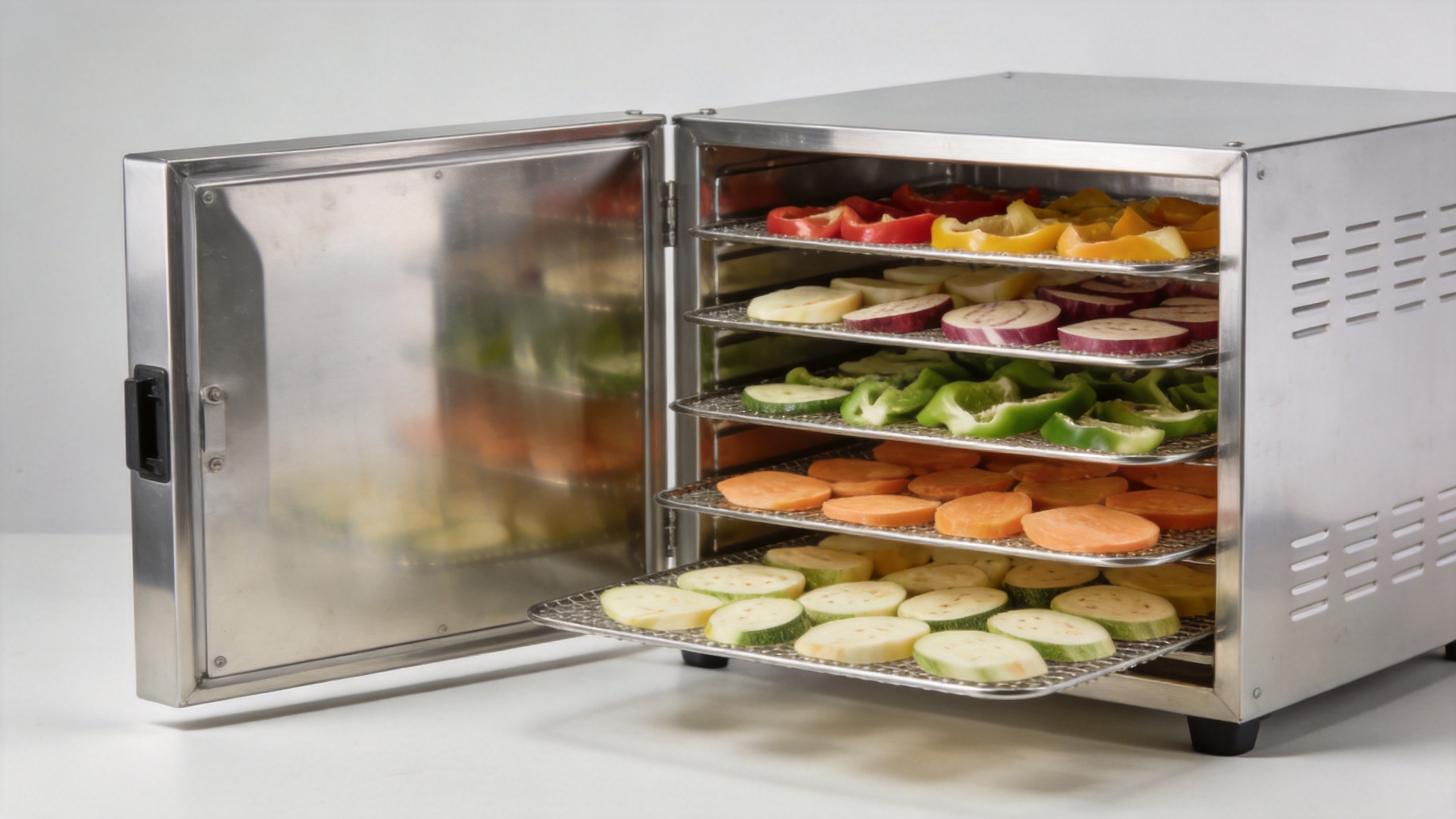
A batch fruit and vegetable dryer is loaded with one lot, run through a controlled cycle, unloaded, then prepared for the next lot. This format is often a good match for processors handling mixed products, seasonal raw materials, pilot runs, or frequent recipe changes. Operators can keep one batch separate from another, adjust a run after inspecting the product, and clean between lots without interrupting a moving line.
A mesh-belt fruit and vegetable dryer moves prepared material through one or more drying zones on a continuous conveyor. It is designed around a steady feed. When washing, cutting, blanching or pretreatment, drying, cooling, and packing can all keep pace, a belt system can reduce repeated loading and unloading work. Its advantage is not an automatic promise of better product quality; it is a more consistent process flow when upstream and downstream operations are equally stable.
| Decision factor | Batch format | Mesh-belt format |
|---|---|---|
| Production rhythm | Discrete lots and flexible schedules | Continuous, predictable feeding |
| Product changeover | Usually simpler to isolate and clean between batches | Requires planned changeover and line balancing |
| Labor pattern | More hands-on loading and unloading | Less repeated handling once the line is balanced |
| Capacity growth | Can suit staged expansion with additional batches | Best when volume justifies stable continuous operation |
| Process risk | Idle time between lots can reduce utilization | Uneven feed can create variation across the belt |
When a batch fruit and vegetable dryer is the stronger choice
Choose a batch fruit and vegetable dryer when flexibility has more economic value than uninterrupted throughput. This is common for a plant that dries several fruits and vegetables, receives raw material in uneven deliveries, or needs to test new slice sizes and formulations. A cabinet-style process lets the team define a batch record: raw-material condition, loading pattern, temperature stages, time, sample checks, and final result. That visibility is useful while a product specification is still being stabilized.
Batch drying also makes sense when production is seasonal. A line that needs to stop, switch products, or handle modest orders may not keep a continuous dryer supplied for enough hours to justify its process complexity. In these cases, the right fruit and vegetable dryer is the one that keeps product quality and labor practical at the volumes actually planned—not the one with the highest theoretical output.
For example, Hongle Machinery lists a box-type dryer for batch dehydration and drying of fruits and vegetables. Buyers can use a real batch-format option as a starting point for discussions about tray loading, lot separation, and the range of products they intend to run; final configuration should still be confirmed against the product trial and site conditions.
When a mesh-belt fruit and vegetable dryer is the stronger choice
A mesh-belt fruit and vegetable dryer becomes compelling when the plant has a repeatable product, stable feed rate, and enough daily operating hours to benefit from continuous movement. Sliced vegetables, diced fruits, herbs, and similar prepared materials are often evaluated for belt handling because the layer can be spread and carried through drying zones. Industry descriptions of continuous mesh-belt systems emphasize automatic product movement through zones; the purchasing lesson is to evaluate the entire line, not just the dryer.
Before selecting this format, map the minutes before and after drying. Can the washing and cutting section deliver a uniform layer without surges? Is there space for controlled cooling before packing? Can packing absorb output without creating a warm-product queue? If any answer is uncertain, a continuous fruit and vegetable dryer may expose the bottleneck rather than solve it.
Continuous drying also requires disciplined feed distribution. Overloaded sections, variable piece size, and inconsistent pretreatment can lead to uneven residence conditions. Ask suppliers how belt speed, layer thickness, airflow zones, and inspection access are adjusted, then confirm those answers during trials using your own raw material.
Use four numbers to compare options fairly
Purchasers often compare a fruit and vegetable dryer only by kilograms per hour. That number is incomplete unless the supplier defines incoming moisture, final moisture, product form, loading density, and operating conditions. Compare both formats with four working numbers:
- Saleable output per shift: Estimate finished, specification-compliant product—not wet feed entering the dryer.
- Labor minutes per tonne: Include loading, unloading, tray or belt cleaning, sampling, and transfer to packing.
- Changeover loss: Count cleaning, setup, stabilization, and product held during a switch.
- Utilization hours: Calculate how many hours the equipment will truly run at a stable condition in the busiest and quietest months.
These numbers reveal why a smaller batch fruit and vegetable dryer may be financially sensible for mixed production, while a belt dryer may be more attractive for a dedicated high-volume SKU. They also keep the comparison tied to the processor’s real constraints instead of generic catalog claims.
Run a product trial before committing
A product trial is the fastest way to de-risk a fruit and vegetable dryer purchase. Prepare representative raw material, including normal variation in size and maturity. Document the pretreatment, loading depth, drying stages, samples from multiple positions, cooling condition, final moisture or water activity test, appearance, and packing behavior. For a belt process, test normal and slightly uneven feed. For a batch process, compare positions within the load.
The trial should end with a decision sheet: target output, acceptance criteria, operating window, labor requirement, cleaning time, utility observations, and open risks. This turns supplier discussions into an engineering review and gives the plant a usable starting recipe after installation.
A practical selection path for processors
Select a batch fruit and vegetable dryer if you need flexible lots, frequent changes, smaller or seasonal runs, and close control while products are being developed. Select a mesh-belt fruit and vegetable dryer if one or a few products can feed the line continuously, daily utilization is high, and the plant can support balanced preparation, cooling, and packing. In either case, validate the final choice with your product, not only a brochure.
For processors planning an upgrade, begin with a process map and a trial brief. A well-defined brief helps equipment teams recommend a configuration aligned with throughput, product integrity, and the operating reality of the factory.