EN
EN


Bubble Washer vs. Vortex Washer vs. Brush Roller: How to Choose the Right Fruit Vegetable Washer
As a technical advisor who has helped food processing plants evaluate commercial washing equipment, I have seen one purchasing mistake repeat itself: buyers focus on unit price instead of matching the machine type to their actual production requirements. When selecting a fruit vegetable washer for a food factory line, the choice between a bubble washer, a vortex washer, and a brush roller washer affects but also line efficiency, water consumption, and long-term maintenance costs.
This guide compares how each type of veg washing machine works, identifies which produce types each is most suited for, and provides a practical decision framework for food factory purchasing teams.
How Each Type of Fruit Vegetable Washer Works
Bubble Washer
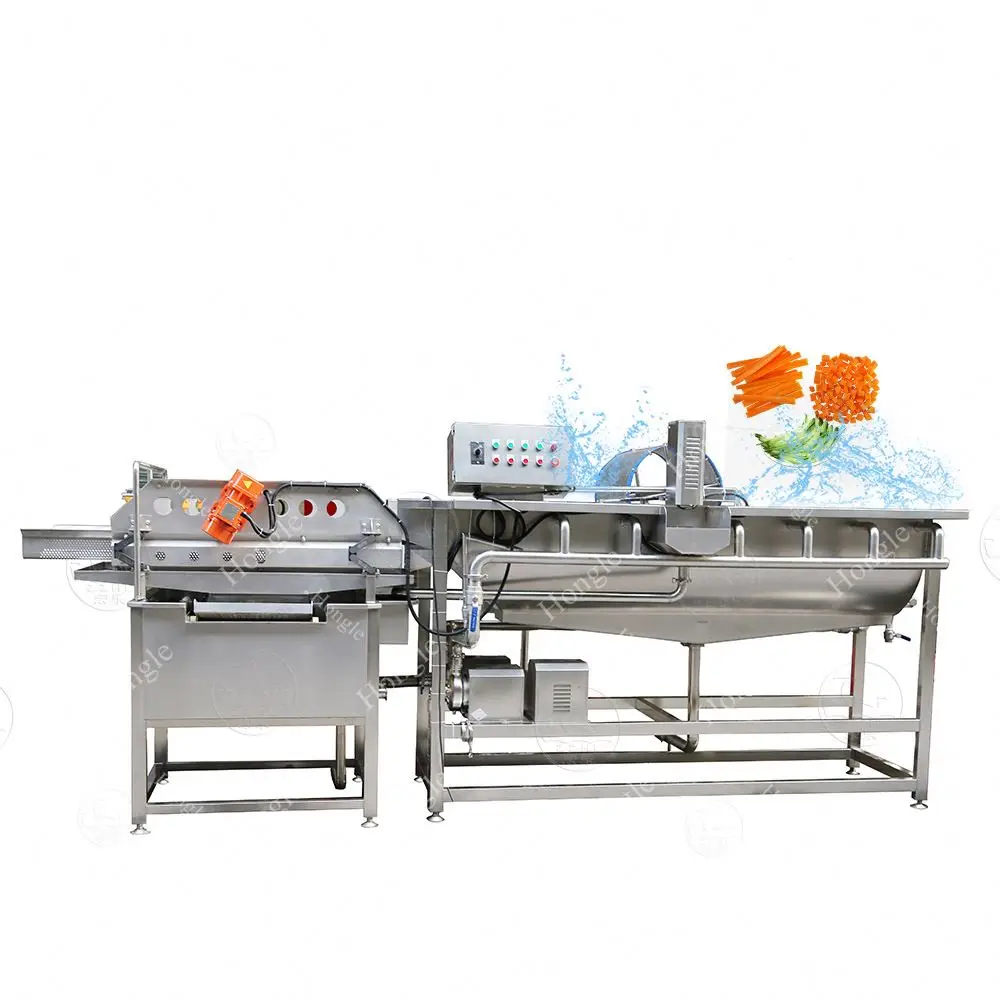
Bubble washing machines use high-pressure air injectors submerged at the base of the wash tank. As air bubbles rise rapidly through the water, they create controlled turbulence that dislodges surface soil, pesticide residues, dust, and wax from produce without any direct mechanical contact. Produce floats through the bubbling zone gently, making this approach well-suited to delicate fruits and general mixed-produce facilities.
Commercial bubble washer throughput typically ranges from 500 to 2,000 kg/hr, depending on tank volume and air injection pressure. Some configurations incorporate ozone treatment or UV modules for enhanced microbial reduction — relevant in fresh-cut and ready-to-eat processing lines. Hongle Machinery's bubble washing machine offers a food-grade stainless steel construction suited to medium-scale fruit and vegetable processing.
Vortex Washer
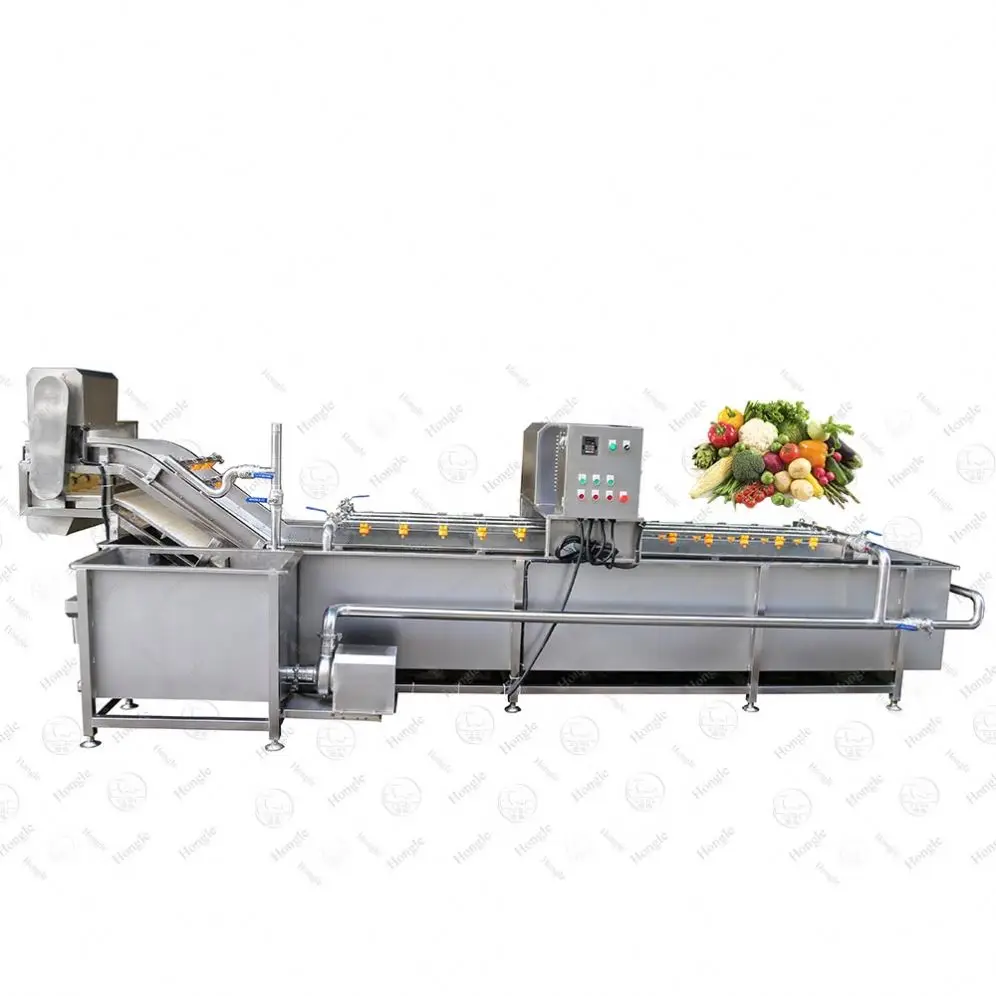
A vortex washer generates a high-velocity spiraling water flow inside a specially shaped tank. Instead of air bubbles, the water itself rotates continuously, creating centrifugal tumbling that moves produce through 360° of water contact with no paddles, brushes, or hard surfaces touching the food during the wash cycle. This no-contact deep-cleaning action is more effective than surface-level bubble agitation for leafy vegetables, cut salad mixes, mushrooms, and irregularly shaped produce where dirt collects in crevices and layered leaves.
Vortex washers are a preferred choice in facilities that process mixed vegetable assortments or operate ready-to-eat produce lines with strict hygiene standards. The commercial stainless steel vortex fruit washing machine from Hongle Machinery combines high-efficiency vortex action with ozone disinfection capability for food processing applications.
Brush Roller Washer
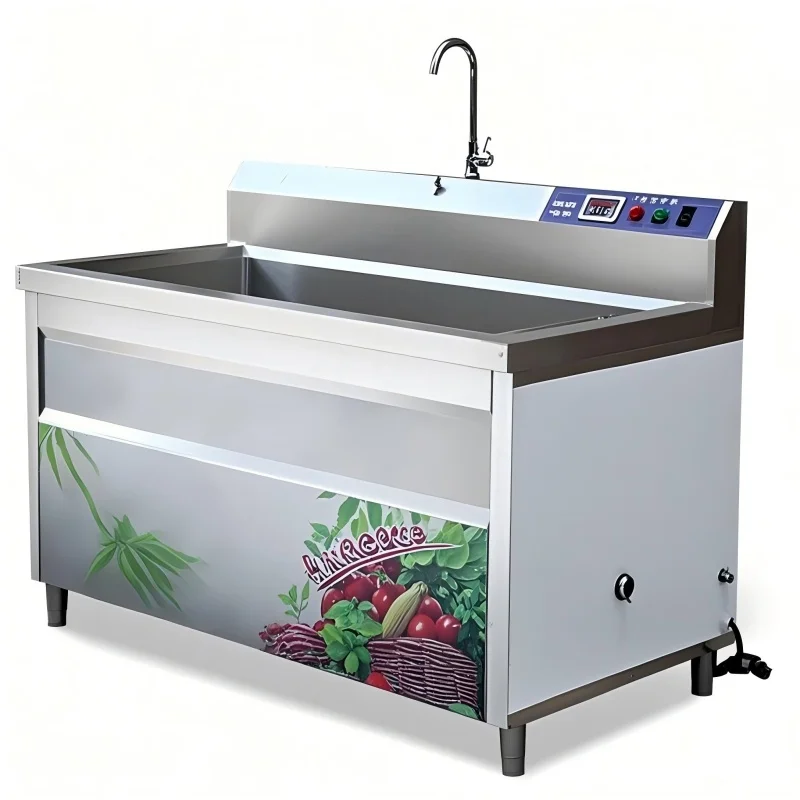
Brush roller washers use a series of rotating rubber or nylon brushes to mechanically scrub the exterior surface of produce as it passes through the machine on a conveyor. The friction generated removes thick layers of field soil, surface wax, and clinging debris — the kind of cleaning that water agitation alone cannot achieve. This type of fruit and vegetable washer is specifically suited to firm-skinned root vegetables such as potatoes, carrots, beets, and yams, where the durable skin can withstand direct brush contact without bruising.
Cleaning Performance Comparison
| Feature | Bubble Washer | Vortex Washer | Brush Roller Washer |
|---|---|---|---|
| Cleaning depth | Surface | Deep / 360° | Mechanical scrub |
| Mechanical contact with produce | None | None | Yes (brush friction) |
| Risk of bruising delicate produce | Low | Very low | Not suitable for soft produce |
| Ideal Application | General fruits and vegetables | Leafy, cut, mixed produce | Root vegetables with soil |
| Typical throughput range | 500–2,000 kg/hr | Variable by tank size | Variable by conveyor speed |
Which Produce Type Suits Each Machine?
Matching the washer type to your product mix is the single most important selection decision. Using the wrong machine for your produce will compromise cleaning results regardless of throughput capacity.
- Bubble washer: General fruits and mixed vegetables — tomatoes, peppers, cucumbers, citrus, strawberries, apples. Effective for standard surface cleaning and widely used in multi-product facilities.
- Vortex washer: Leafy vegetables (spinach, lettuce, pak choi, cabbage leaves), cut salad mixes, mushrooms, and irregularly shaped produce. Ideal when zero mechanical contact and 360° coverage are required.
- Brush roller washer: Root vegetables — potatoes, carrots, yams, beets, ginger. Designed for thick-skinned produce requiring active scrubbing to remove soil and surface debris before further processing.
Many mid-to-large food processing operations run a combined approach: a brush roller pre-wash for root vegetables, followed by a fruit vegetable washer in bubble or vortex configuration for final cleaning and rinsing before packaging or cutting.
Capacity Planning and Line Integration
Before purchasing, match your washer throughput to your actual production volume rather than average estimates. I have seen factories invest in undersized equipment because they based their calculations on a typical shift rather than the peak demand period. When the system cannot keep pace with upstream peeling or downstream packaging, the entire line slows.
Before finalizing the specification, run through these factors:
- Peak daily volume: Size for your highest-demand production window, plus a 15–20% buffer.
- Line speed compatibility: The washer output rate must match the speed of adjacent peeling, cutting, or packaging equipment to avoid bottlenecks.
- Floor space and layout: Vortex washers have a compact footprint; brush roller washers with conveyor integration typically require more linear floor space.
- Water circulation and drainage: Confirm that your facility has adequate water supply, drainage capacity, and CIP cleaning access before finalizing the installation plan.
Food Safety and Compliance Requirements
All three types of commercial fruit vegetable washer can support HACCP-compliant food processing operations when built with food-grade stainless steel and designed for clean-in-place sanitation. When evaluating suppliers, verify the following compliance checklist:
- 304 or 316 grade stainless steel for all produce-contact surfaces
- No dead zones or recessed areas where bacteria can accumulate between wash cycles
- Accessible drain, rinse, and inspection ports
- CIP or manual deep-clean compatibility
- CE marking or equivalent certification where required by your target market
For facilities operating fresh-cut or ready-to-eat produce lines, the Hongle Machinery vortex fruit and vegetable washing machine with ozone disinfection combines mechanical cleaning with chemical-free sanitization, reducing microbial load without adding cleaning agents to the wash water.
How to Choose the Right Fruit Vegetable Washer for Your Facility
Buying the right veg washing machine comes down to a three-variable framework that most food factory purchasing managers can apply in one meeting:
- Identify your primary produce type: Delicate or leafy → vortex washer; firm-skin root vegetables → brush roller; general mixed or fruit lines → bubble washer.
- Calculate your peak throughput requirement: Size for maximum demand, not average output. Factor in planned production growth over the next 2–3 years.
- Evaluate total cost of ownership: Brush roller machines carry recurring brush-replacement maintenance costs; vortex and bubble washers typically have lower consumable costs but require regular tank and nozzle cleaning.
Multi-type combinations perform most effectively in facilities handling diverse product ranges, but they also require more floor space, water connections, and maintenance capacity. Start with the machine type that covers your highest-volume produce category, then plan for expansion.
Hongle Machinery supplies commercial-grade veg washing machine solutions and fruit vegetable washer systems to food processing facilities across Africa, Asia, Europe, and the Americas. Contact us to discuss your production volume, produce types, and compliance requirements — and we will help you match equipment to your actual production conditions.