EN


Cabbage Cutter Machine Applications for Salads, Slaw, and Prepared Foods
For a growing food-prep operation, a cabbage cutter machine is not simply a faster knife. It is a way to make shredded cabbage more consistent as the menu expands from one batch of coleslaw to regular production of salads, slaw mixes, sandwich fillings, and prepared-food packs. A more useful question is not “Which cabbage cutter machine is biggest?” but “Which cutting workflow fits our ingredients, crew, cleaning routine, and daily volume?”
From a production-floor perspective, the best starting point is the product you need at the end of the line. A deli-style slaw, a crisp salad blend, and a cooked prepared-food filling can all begin with cabbage, yet they can require different strip widths, handling steps, and mix consistency. This article explains how a commercial vegetable cutter can fit those workflows without assuming that one machine is right for every kitchen or plant.
Where a Cabbage Cutter Machine Fits in Commercial Food Preparation
A cabbage cutter machine is most useful when manual slicing begins to create a bottleneck or visible variation between batches. In a small operation, hand cutting can feel flexible. Once recurring orders require repeatable prep, however, the decision changes: the issue is no longer whether a team can cut cabbage, but whether it can do so at a steady pace while keeping pieces uniform and the station manageable.
Commercial applications commonly include:
- Fresh salads: cabbage can be sliced into a defined format before it is combined with leafy greens, carrots, or dressing components.
- Coleslaw and slaw mixes: a cabbage cutter machine can support more consistent shred geometry, which helps a team portion and mix batches more predictably.
- Prepared foods: cabbage for fillings, meal kits, deli sides, or cooked vegetable mixes can be cut before the next process stage.
- Fermented or pickled products: controlled preparation can simplify the handoff to weighing, seasoning, packing, or fermentation steps.
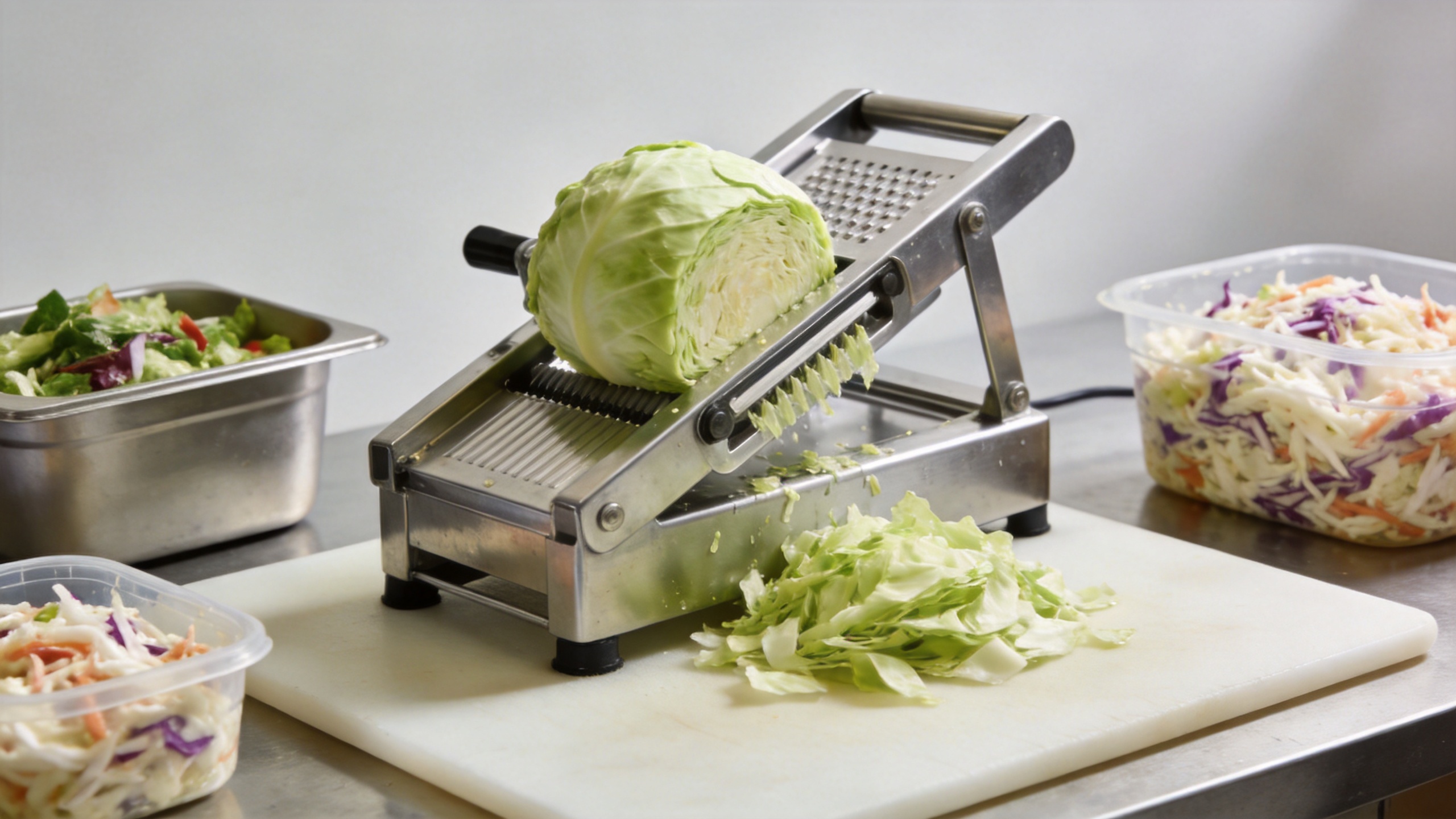
That does not mean every cabbage task needs a powered cutter. Low-volume, highly variable prep may still suit a manual process. A cabbage cutter machine becomes more compelling when production repeats often enough that cut consistency, labor flow, and cleanup time matter every day.
Why Cut Consistency Matters for Salads and Slaw
Uniformity affects more than appearance. When cabbage pieces vary widely, a finished slaw can mix unevenly, pack inconsistently, or deliver a different bite from one serving to the next. A properly selected cabbage cutter machine gives the operator a repeatable cutting method; the final result still depends on cabbage condition, feed preparation, blade selection, and operator practice.
Before comparing machines, define the output in practical terms. Ask whether the team needs thin shreds, wider strips, diced pieces, or more than one cut style. Then evaluate how heads will be trimmed and divided so they fit the feed opening safely. This avoids a common purchasing mistake: choosing a cabbage cutter machine from a brochure image before mapping the real preparation sequence.
Building a Workflow Around the Cabbage Cutter Machine
A commercial cutter is most effective when it works as one station in a clear flow, not as an isolated piece of equipment. A simple workflow may include receiving and washing cabbage, trimming and splitting heads, cutting, collecting product in food-safe containers, then mixing or packing. The exact order should reflect the operation’s sanitation program and local requirements.
For example, a salad-prep team may use the cabbage cutter machine after wash and trim, collect the cut cabbage in labeled tubs, and move it directly to a cold mixing area. A prepared-food team may send the cut ingredient to a cooking, seasoning, or filling stage. In both cases, the practical goal is to reduce unnecessary handling after cutting.
Equipment access is important here. U.S. food-safety guidance emphasizes that food-contact surfaces must be cleaned and sanitized as frequently as necessary to prevent unsanitary conditions, and that cleaned food-contact surfaces should be sanitized before use. For buyers, this turns into a simple evaluation point: can staff reach the food-contact areas, remove approved components where required, inspect them, and follow the site’s cleaning procedure without improvising?
What to Compare Before Choosing a Cabbage Cutter Machine
A useful cabbage cutter machine comparison starts with operational fit rather than a single headline specification. Use the following checklist when discussing a machine with a supplier:
| Evaluation point | Why it matters | Questions to ask |
|---|---|---|
| Cut format | Salad, slaw, and prepared-food recipes may need different shapes. | Which cutting tools or configurations support the target result? |
| Ingredient preparation | Head size and trimming steps affect real throughput. | What pre-cutting or trimming is needed before feeding? |
| Cleaning access | Sanitation must fit the actual shift routine. | Which food-contact parts require removal, inspection, and sanitation? |
| Operator workflow | Safe, repeatable handling protects both output and staff. | What training and handling steps are expected for normal operation? |
| Line integration | The cutter must work with tubs, scales, mixers, or packaging stations. | Where will cut cabbage go next, and can the station keep pace? |
It is also worth separating nominal capacity from usable output. A cabbage cutter machine can only support a smooth line when the prep station, collection containers, and downstream team can keep up. In other words, capacity is a workflow question, not just a motor or feed-opening question.
Using a Commercial Vegetable Cutter as a Starting Point
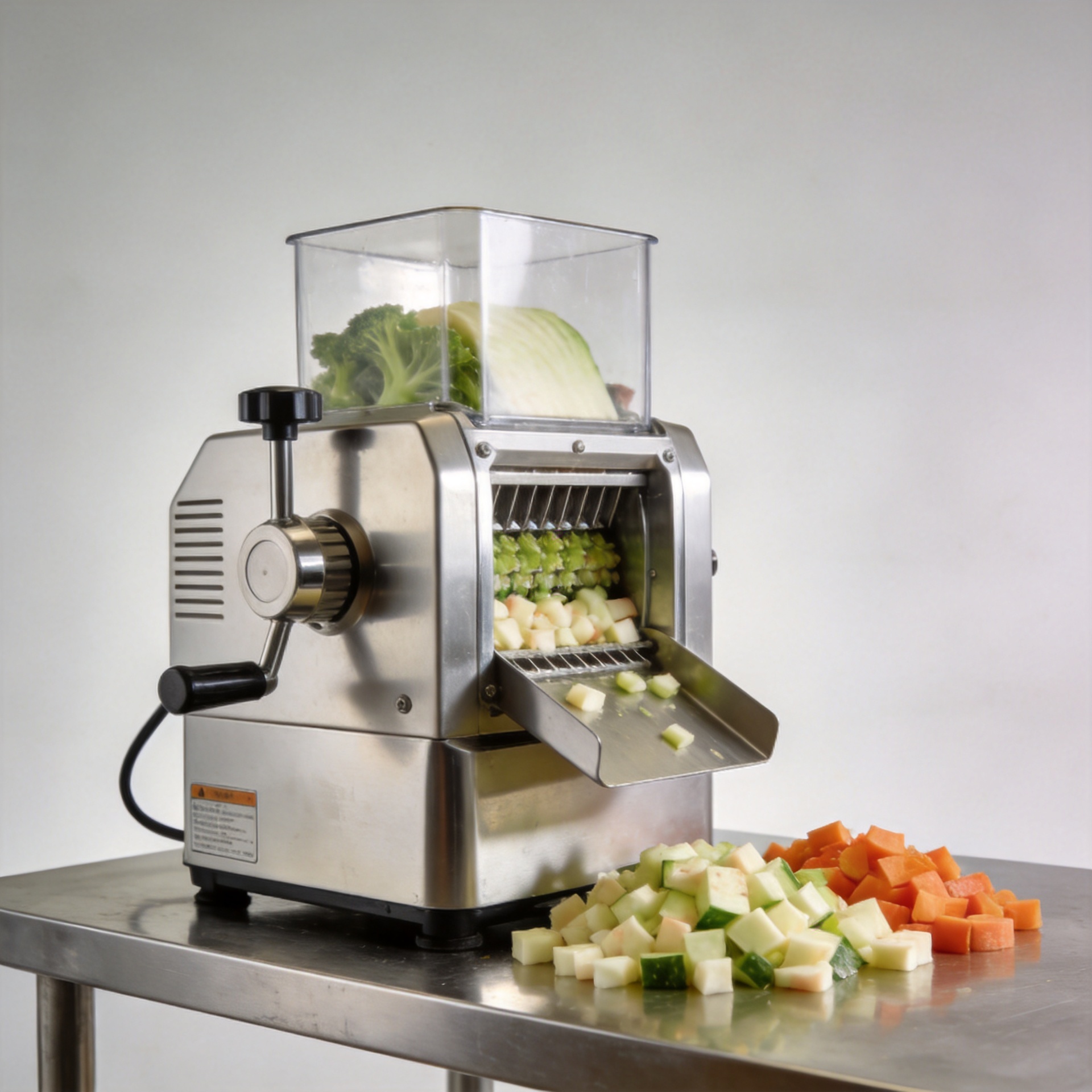
For businesses reviewing broader vegetable-processing options, Hongle Machinery lists a commercial industrial electric vegetable cutter dicing machine. When considering a product such as this, confirm the actual cabbage cutting configuration, expected ingredient preparation, and cleaning procedure with the supplier before making a purchase decision. Product names alone do not verify a particular cut size, output, or fit for a specific recipe.
Practical Questions for an Awareness-Stage Buyer
If you are still deciding whether a cabbage cutter machine belongs in the operation, begin with a short process review. Track how much time is spent trimming and hand cutting cabbage, identify where inconsistent cuts create rework, and note how the team cleans tools between batches. Then bring sample cabbage and target cut formats into the supplier discussion whenever possible.
A cabbage cutter machine is a practical foundation for salad, slaw, and prepared-food workflows when its cutting method, handling steps, and sanitation access match the way your team actually works. Start with the product format, map the full process, and choose equipment that supports repeatable preparation rather than chasing a generic capacity claim.