EN


Cashew Shelling Machine: A Buyer’s Guide to Capacity, Kernel Quality, and Automation
A cashew shelling machine is rarely a standalone purchase. It sits between raw-nut preparation and downstream drying, peeling, grading, and packing, so its real value depends on how well it fits the whole cashew processing plant. For procurement teams, the practical question is not simply “What is the highest output?” It is whether the machine can deliver stable throughput, protect whole-kernel recovery, and match the automation level that the factory can operate and maintain.
This guide gives procurement teams a practical framework for comparing a cashew shelling machine. It is written for processors planning a new line, replacing a bottleneck, or moving from labor-intensive cutting toward a more automated workflow. The right choice starts with production conditions, then compares equipment, and only then compares quotations.
Start With the Processing Line, Not the Nameplate Capacity
Suppliers may quote hourly output, but a capacity number has little meaning unless it states the nut size range, preparation method, operating time, and expected quality target. Cashew processing normally links calibration, conditioning, shelling, drying, peeling, and grading. A fast sheller can still underperform if the incoming nuts are mixed in size, poorly conditioned, or delivered unevenly from the upstream process.
When comparing a cashew shelling machine, ask for the capacity basis in writing:
- What raw cashew nut size range is used in the test?
- What preparation and conditioning steps are assumed before shelling?
- Is the result based on continuous running or a short demonstration?
- Does the stated output count all kernels, or does it show whole and broken kernels separately?
- What stops the line: feeding, cutting, sorting, peeling, or packing?
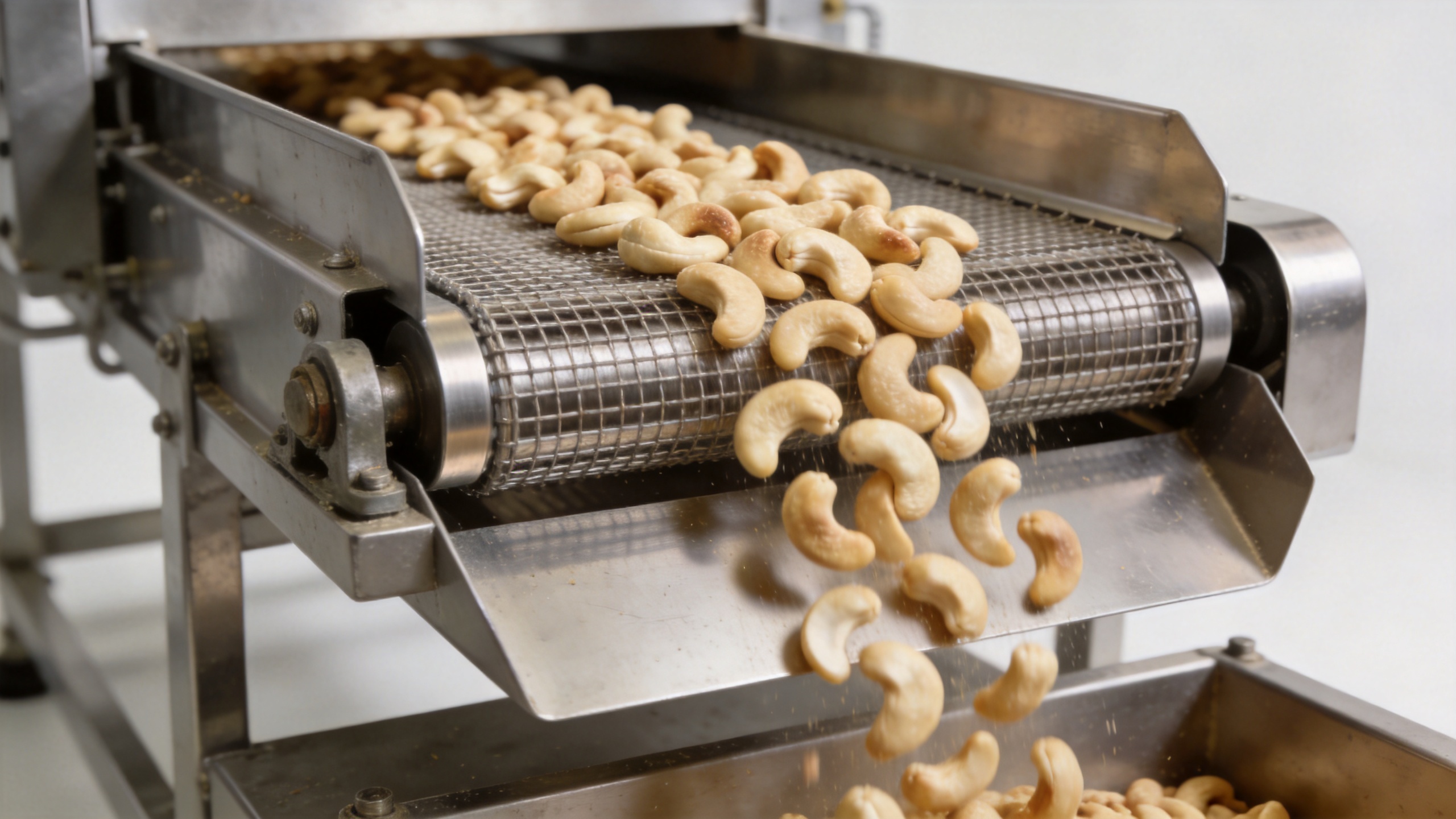
Published equipment descriptions show that throughput varies widely between compact units and multi-cutter automatic lines. That is useful context, but it is not a performance guarantee for your plant. If your nut supply changes by origin or size, a machine trial using representative raw material is more valuable than a higher headline figure.
Kernel Quality: Measure Recovery, Breakage, and Consistency Together
For many processors, whole kernels carry a stronger commercial value than broken pieces. That makes kernel quality a purchasing criterion, not a final inspection issue. Research and industry guidance point to moisture content, nut-size distribution, and pre-shelling conditioning as factors that influence whole-kernel recovery. In other words, even a well-designed cashew shelling machine needs the correct material preparation and adjustment window.
A useful acceptance plan should separate three outcomes:
| Measure | What it tells you | What to request from the supplier |
|---|---|---|
| Shelling efficiency | How consistently shells are opened | Test method and sample size |
| Whole-kernel recovery | How much saleable kernel value is preserved | Whole/broken grading results for the same run |
| Run-to-run consistency | Whether performance holds after setup | Continuous-load test and adjustment record |
Do not accept a single “breakage rate” without context. Cutter alignment, nut calibration, feed stability, and operator adjustment can all affect the result. A good buyer specification defines the raw-nut condition, the sample quantity, the grading method, and the duration of the trial. That makes quotations comparable and gives both parties a clearer basis for commissioning.
Choose the Right Automation Level for Your Factory
A cashew cutting machine automatic configuration can reduce repetitive manual work and create a more predictable flow between feeding and sorting. However, automation is not automatically the appropriate answer for every factory. It shifts part of the work from hand cutting to setup control, electrical maintenance, troubleshooting, and disciplined operating procedures.
Use a semi-automatic approach when your output is growing but operators still need flexibility with changing raw-nut grades or frequent product changes. Consider a more automated cashew shelling machine line when you have steadier material supply, defined shift targets, trained maintenance support, and downstream equipment that can keep pace. The critical issue is balance: an automatic sheller waiting for calibration, peeling, or grading is not producing its planned return.
Before approving automation, map the line from receiving to packing. Identify who will set cutter positions, clear jams, inspect kernel quality, maintain sensors, and hold spare wear parts. If those responsibilities are unclear, higher automation can create a new bottleneck rather than remove an old one.
Compare the Machine as Part of a Cashew Processing Plant
On an integrated project, evaluate the shelling section together with material handling, drying, peeling, and packing. Confirm the interfaces, floor layout, electrical standard, safety guarding, and waste handling before the order is finalized. This is particularly important for export projects, where site conditions and local service access may differ from the supplier’s factory test setup.
Buyers looking for an integrated option can review this industrial cashew nut shelling, peeling, and packing processing machine line as a starting point for a supplier discussion. Treat the product page as a project conversation starter: confirm the configured modules, throughput basis, utilities, and test scope for your own raw material before making a decision.
Supplier Questions That Prevent Expensive Surprises
A thorough supplier review combines equipment questions with delivery and support questions. Ask for a clear technical proposal rather than a generic catalog. Your RFQ checklist should include:
- Raw-nut size range, conditioning method, and the capacity basis used for the proposal.
- Expected kernel grading method and how whole versus broken kernels will be recorded during acceptance.
- Line layout, utility requirements, electrical specification, and connection points for downstream equipment.
- Guarding, emergency stops, operating instructions, and operator-training scope.
- Recommended spare parts, wear parts, and the process for remote technical support.
- Factory-test content, continuous-run duration, packing standard, and pre-shipment inspection options.
For cross-border buyers, post-sale clarity matters as much as the initial configuration. Zhengzhou HongLe Machinery Equipment Co., Ltd. states that it supports remote video technical guidance, operating manuals, spare-parts support, and pre-shipment inspection arrangements. Confirm the exact support scope, response process, and documents in the contract; these details should be verified for the specific project rather than assumed from a general company profile.
A Practical Buying Decision
The appropriate cashew shelling machine is not necessarily the one with the largest rated output or the most automation. It is the machine and line configuration that fit your raw-nut profile, target whole-kernel recovery, operator capability, and expansion plan. Start with a representative-material trial, define measurable acceptance criteria, and compare suppliers on total operating fit—not just the equipment price.
When the next step is an RFQ, send suppliers your daily or hourly target, nut-size distribution, preparation process, desired whole-kernel grade, available utilities, layout constraints, and preferred automation level. That information turns an early quotation into a proposal you can actually compare.
Cashew Shelling Machine RFQ Comparison Matrix
Use the same questions for every cashew shelling machine quotation. A consistent matrix makes a cashew shelling machine comparison more reliable than a price-only spreadsheet. For each cashew shelling machine, record the raw-nut grade, test duration, output basis, and whole-kernel result. Ask whether the cashew shelling machine proposal includes feeding, calibration, drying, peeling, or only the cutter section.
For a cashew shelling machine project, request a video or witnessed trial with representative material. The trial should show how the cashew shelling machine is adjusted for different nut sizes and how the cashew shelling machine is cleaned between runs. A supplier should also state the normal wear parts for the cashew shelling machine, the recommended spare-parts list, and the maintenance tasks required per shift.
- Cashew shelling machine capacity: document rated and trial output separately.
- Cashew shelling machine quality: document whole, broken, and uncut kernel results separately.
- Cashew shelling machine automation: identify manual adjustments, sensors, guards, and operator tasks.
- Cashew shelling machine integration: confirm feed height, discharge route, power supply, and downstream matching.
- Cashew shelling machine support: define commissioning, remote assistance, documentation, and spare-parts response.
For an automated option, ask how the cashew cutting machine automatic setup handles feed consistency and what happens when a nut jams or falls outside the intended size range. Compare the cashew cutting machine automatic control logic, safety interlocks, and restart procedure with the skills available on your maintenance team. A cashew cutting machine automatic line may be appropriate when its control requirements and downstream capacity are understood; otherwise, a simpler arrangement can be easier to stabilize.
For the final comparison, give every cashew shelling machine a total-fit score rather than a single price rank. Score each cashew shelling machine for raw-material compatibility, recovery verification, automation fit, installation readiness, service clarity, and future expansion. This creates an auditable purchase decision and helps ensure that the chosen cashew shelling machine supports the processing plant rather than becoming its next constraint.