EN
EN


Cashew Shelling Machine Price Factors for Processing Businesses
For a processor planning a new line or replacing a bottleneck, the quoted price of a cashew shelling machine is only useful when it is tied to the raw-nut condition, expected output, kernel grade targets, and downstream workflow. Two machines that appear similar in a catalog can require very different investments once feeding, grading, conditioning, separation, safety, installation, and service are included. This guide helps procurement teams compare proposals on a like-for-like basis.
Start with the Output You Need, Not a Catalog Price
The first pricing driver is capacity. A cashew shelling machine configured for a small processing operation has a different feed system, cutting arrangement, motor load, and labor layout from a line designed for continuous commercial production. Ask suppliers to state whether capacity means raw nuts fed per hour, shells processed per hour, or usable kernels delivered to the next step. Those measurements are not interchangeable.
Practical output also depends on nut-size consistency and preparation. Research on pre-shelling conditions identifies moisture content, nut-size distribution, and steam exposure as factors associated with whole-kernel out-turn. That is why a low headline price for a sheller may not be the lowest operating-cost option if it is paired with inadequate grading or conditioning. A sound quotation should define the raw material assumptions behind its throughput claim.
- Expected raw-nut input per hour and per shift
- Size range and how mixed lots will be handled
- Target balance of whole and broken kernels
- Planned operating hours, staffing, and utility availability
Automation Level Changes the Scope of the Cashew Shelling Machine
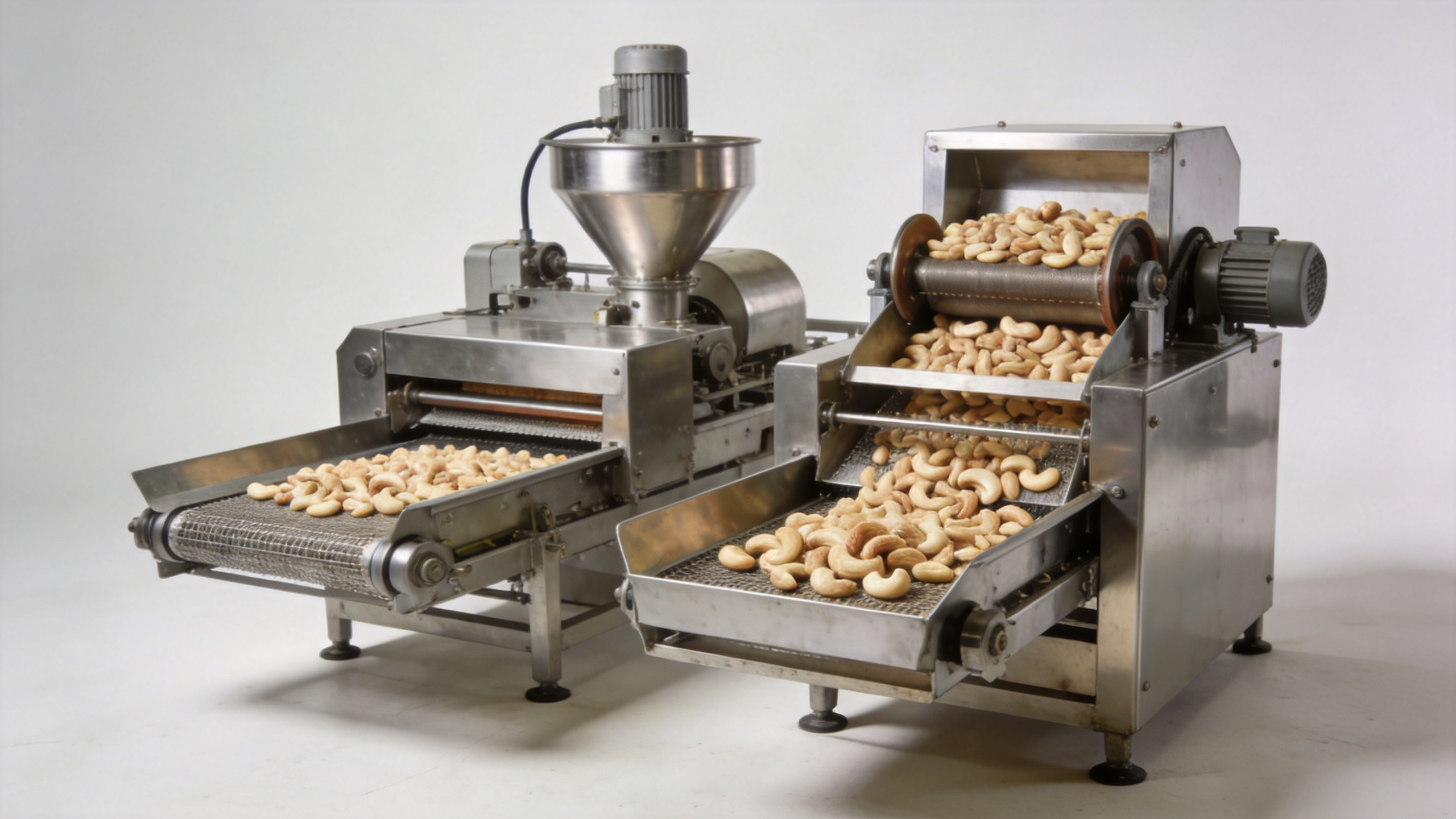
A basic shelling unit can be priced very differently from an integrated cashew cutting machine automatic configuration. The difference is not simply an automatic label. It can include automatic feeding, size grading, shell-kernel separation, conveyors, collection bins, electrical controls, and coordination with downstream peeling or packing equipment.
For a decision-stage purchase, separate the quotation into modules. This helps a buyer see which functions are essential at startup and which can be added later. It also makes it easier to compare labor savings against the extra capital required for automation. A line with fewer manual transfers may improve consistency and reduce handling, but it should be assessed against the local labor model, maintenance capability, and production schedule.
Upstream Conditioning and Grading Often Explain Price Differences
A cashew shelling machine works within a process, not in isolation. Raw cashews may need cleaning, calibration by size, heat or steam conditioning, and controlled resting before shelling. If a supplier includes these units in the proposal, the price can look higher than a sheller-only offer, yet the quotation may be closer to a usable production solution.
Buyers should ask which process steps are included, which are excluded, and who is responsible for integration. In particular, clarify the handoff between conditioning and shelling. If the material arrives with inconsistent moisture or ungraded sizes, cutting settings may not perform as expected. The cost of correcting that issue later can exceed the initial saving from omitting preparation equipment.
Materials, Food-Contact Design, and Safety Equipment Add Real Value
Frame materials, food-contact surfaces, guards, electrical components, and cleaning access all affect the price of a cashew shelling machine. Procurement teams should not assume that every stainless-steel reference covers the same areas of the equipment. Instead, request a clear description of where food-contact materials are used, how parts are accessed for cleaning, and which safety guards and emergency stops are included.
Cashew processing also requires attention to shell residue and workplace handling. A lower-cost build may be appropriate for a limited operating environment, while a higher-specification design can be justified when cleaning routines, operator protection, export-market expectations, or long production hours are priorities. The right comparison is total suitability for the plant, not the lowest component cost.
Controls, Spares, and Service Affect the Total Purchase Cost
Controls can range from simple local operation to a more coordinated panel for an integrated line. The quote should specify the control scope, electrical standard, documentation language, and which items are supplied for commissioning. For overseas projects, packaging, shipping terms, installation guidance, remote technical support, and spare-parts recommendations deserve the same attention as the machine base price.
Zhengzhou HongLe Machinery Equipment Co., Ltd. serves food-machinery buyers across multiple export markets and can discuss equipment planning in relation to production goals and site conditions. When reviewing a project quotation, buyers can also examine the available Industrial Cashew Nut Shelling Peeling Packing Processing Machine Line Plant Automatic Cashew Nut Sheller Machine as a reference point for defining a complete line scope. The product link is a starting point for discussion, not a substitute for confirming the final specification.
Compare Quotes with a Single Procurement Checklist
| Quotation item | What to confirm | Why it changes price |
|---|---|---|
| Capacity basis | Raw-nut condition, hourly rate, and planned shifts | Determines machine size and supporting equipment |
| Automation modules | Feeding, grading, conveying, separation, and controls | Changes labor needs and integration scope |
| Kernel-quality target | Whole-kernel goal and tolerance for breakage | Influences preparation and cutting configuration |
| Construction and safety | Food-contact areas, guards, access, and electrical specification | Changes material and fabrication requirements |
| Project support | Spares, manuals, commissioning, and export service | Reduces startup and downtime uncertainty |
How to Request a More Comparable Cashew Shelling Machine Price
Send suppliers a concise brief before requesting a final price: your raw-nut origin and typical size mix, planned throughput, target kernel grade, available utilities, plant layout limits, destination country, and whether you need a standalone cashew shelling machine or a connected line. Include the automation modules you expect and ask for a separately priced option list. This approach prevents a buyer from comparing a sheller-only quote with a broader processing proposal.
A sound purchasing decision matches the machine configuration to the actual production plan. A well-scoped cashew shelling machine quotation makes capacity assumptions, automation boundaries, supporting equipment, and service responsibilities visible before an order is placed. That clarity is more valuable than a low initial number that leaves critical process steps unresolved.