EN


Cassava Peeling Machine: Key Questions for Root Crop Processors
Buying a cassava peeling machine is not simply a matter of choosing the largest quoted capacity. For a root-crop processor, peeling sits between receiving and the next critical steps—washing, grating, chipping, fermentation, drying, or flour production. The right cassava peeling machine should remove rind consistently while protecting usable flesh, keeping the line moving, and fitting the plant’s real water, labor, and maintenance conditions.
What follows is a working question-and-answer framework for commercial teams planning a new line or replacing a manual, inconsistent peeling stage.
What job must the cassava peeling machine perform?
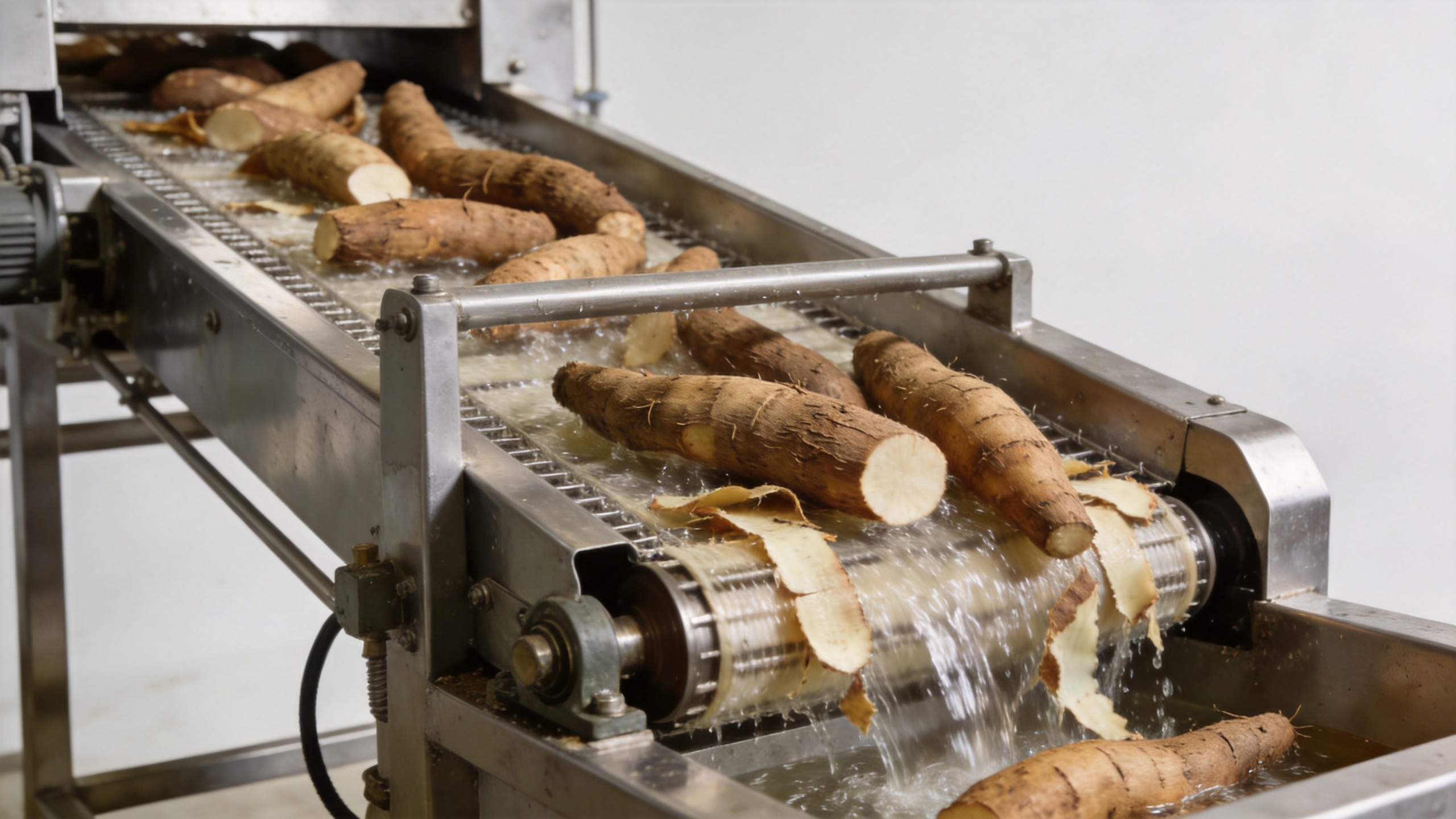
Start with the crop, not the brochure. A cassava peeling machine has to handle roots that vary in diameter, length, curvature, maturity, skin thickness, and soil load. A batch with uniform, freshly harvested roots behaves very differently from roots that have been held, mixed from several farms, or arrive with heavy soil attached. Ask the supplier to explain which input range their cassava peeling machine is designed to accept and what preparation is required.
Peeling must also be viewed as one control point in a wider process. Complete removal of outer inedible layers matters, but a peeler is not a substitute for validated washing, grating, fermentation, pressing, drying, or cooking steps where those apply. Write both points into the purchase specification: the peel-removal expectation and the handoff condition the next machine needs.
How should processors compare peeling methods?
Different cassava peeling machine designs use different combinations of abrasion, friction, rollers, water, and mechanical contact. Abrasive or roller-based equipment can suit continuous processing, but performance depends on the crop condition and the settings used. The question is not “Which method suits our operation?” but “Which method gives an acceptable balance of peel removal, flesh loss, breakage, water use, and cleaning effort for our roots?”
| Selection question | Why it matters | What to request |
|---|---|---|
| Root-size range | Very mixed roots can reduce contact consistency. | Accepted diameter and length range, plus feed preparation advice. |
| Soil and washing condition | Sand and dirt increase wear and can affect hygiene. | Upstream washing requirement and cleaning procedure. |
| Peel-loss tolerance | More aggressive action may improve removal but remove edible material. | Test samples with peel-removal and flesh-loss observations. |
| Discharge condition | The downstream step needs a predictable feed. | Output condition, discharge height, and transfer method. |
When comparing a cassava peeling machine, do not accept a generic demonstration alone. Send representative roots if possible, including the size variation and surface condition your plant actually receives. Then agree how the test will be measured before the run begins.
What does “capacity” really mean for a cassava peeling machine?
Capacity labels are only a starting point. A cassava peeling machine may have a quoted hourly figure, yet the usable line rate changes with feeding continuity, root geometry, soil load, peel thickness, operator adjustment, and the time needed for cleaning or clearing. Market references show widely different figures, from an 8-tonnes-per-day tested design to advertised multi-tonne-per-hour units. Those figures should not be compared as if they were measured under identical conditions.
Instead, specify the throughput you need at the end of a normal production shift. Work backward: expected raw-root intake, acceptable reject and flesh-loss rate, planned operating hours, sanitation stops, and the capacity of the washer, conveyor, grater, slicer, or dryer. A cassava peeling machine should be sized for the bottleneck-free line, not for an isolated peak claim.
- Ask for the stated input condition behind the capacity figure.
- Ask whether the figure is instantaneous, continuous, or net usable output.
- Define a test duration long enough to expose feeding and discharge issues.
- Record product loss and rework alongside kilograms per hour.
How should the machine fit the rest of the line?
A cassava peeling machine performs reliably when the upstream and downstream interfaces are designed together. Upstream, the line may need a receiving hopper, sorting table, washer, and controlled feed. Downstream, the processor must plan for peeled-root collection, inspection, transfer, and the next processing operation. Poor height alignment, inadequate conveyor speed, or no route for peel waste can turn a technically sound cassava peeling machine into a line bottleneck.
Before ordering, prepare a simple layout with dimensions, electrical supply, water and drainage points, floor slope, access for cleaning, and safe space around guards. If the line serves export or food-production customers, request the supplier’s documentation list early: operating instructions, spare-parts identification, maintenance schedule, electrical information, and factory test records. Those details reduce ambiguity during installation.
Which acceptance questions protect the investment?
The strongest purchasing document for a cassava peeling machine is a written acceptance plan. It should state the root sample, expected run time, target feed rate, how peel removal is checked, how flesh loss is assessed, and what happens if the actual result differs from the agreed range. That approach is more useful than a broad promise of uniform results, because cassava itself varies.
Also ask about changeover and daily operation. How are contact parts inspected? Which consumables wear first? Can the team safely clear a blockage? What spare parts should be stocked locally? How long does routine cleaning take? A lower initial price can become expensive if a cassava peeling machine causes frequent stops or requires hard-to-source parts.
A practical purchase checklist
- Characterize representative roots and the required downstream condition.
- Set a net line-throughput target rather than selecting from a headline capacity alone.
- Request a witnessed or documented trial with agreed measurement criteria.
- Confirm washing, feeding, discharge, peel-waste handling, utilities, and floor layout.
- Review safety guards, cleaning access, manuals, spare parts, and commissioning support.
- Put performance assumptions and acceptance criteria into the purchase agreement.
For processors reviewing broader peeling-equipment options, Hongle Machinery lists a commercial garlic and ginger peeling machine. That product page is relevant only as a general equipment reference: cassava-specific suitability, capacity, and results must be confirmed separately against representative cassava roots.
Final decision: match the cassava peeling machine to the process
A suitable cassava peeling machine is one that matches your root variability, loss tolerance, line rate, sanitation plan, and operating support—not the one with the boldest capacity claim. Treat the purchase as a process-engineering decision. With representative trials, clear interfaces, and measurable acceptance criteria, processors can select a cassava peeling machine that supports a more stable root-crop operation.