EN


Chip Potato Cutter: Equipment Factors for Snack Producers
For a snack producer, a chip potato cutter is not simply an upstream prep machine. It sets the shape and consistency of the slice entering washing, frying, seasoning, and packing. A home-style slicer may be suitable for trials, but a commercial line needs a cutter that can hold a repeatable cut while operators manage raw-potato variation, cleaning windows, and the pace of the rest of the process.
When evaluating a chip potato cutter, start with the product you want to sell—not the machine brochure. Thin plain chips, ridged chips, thick-cut crisps, and other formats put different demands on blades, feed handling, and downstream frying. The right decision connects cut geometry with production targets and the support your team can realistically maintain.
Separate commercial cutting needs from consumer slicer searches
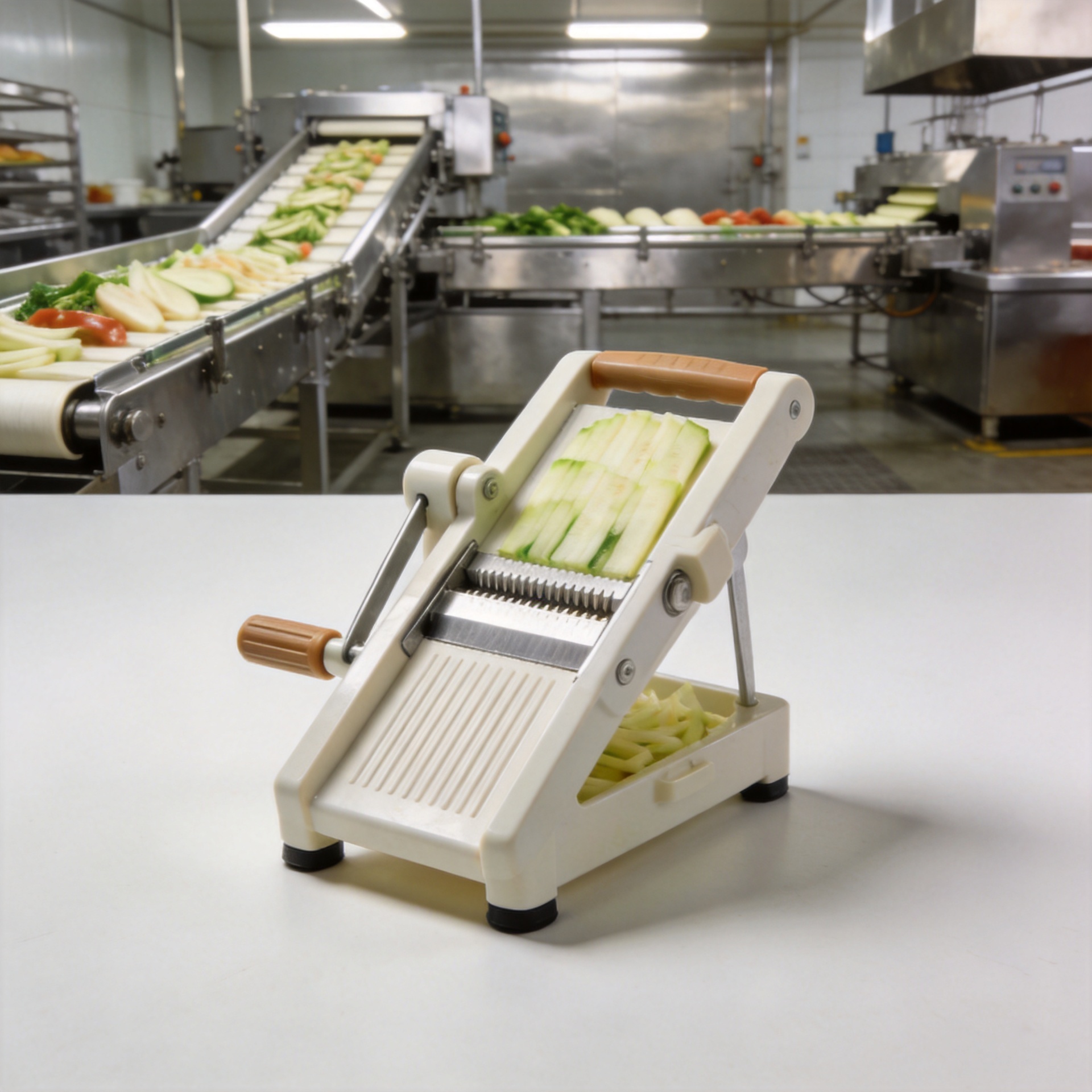
Search results for this term often mix mandolines, manual choppers, and small kitchen tools with industrial equipment. That makes it easy to compare unlike products. For a snack factory, a chip potato cutter should be assessed as part of a production system: incoming potato size range, peeling method, feed rate, slice discharge, rinsing, dewatering, fryer loading, and sanitation all matter.
A manual tool can demonstrate a cut style. It does not prove that the same result can be maintained through a shift. Commercial buyers should ask whether the cutting action, blade assembly, and discharge path are appropriate for their intended volume and whether the machine can be safely cleaned between products.
Start with the slice specification and product plan
Every chip potato cutter discussion should begin with a written slice specification. Define the target thickness, cut profile, acceptable variation, and the formats that will be sold in the next 12 to 24 months. A machine with interchangeable or adjustable cutting options may help a producer test plain, crinkle, lattice, or thicker snack formats, but only if changeovers are practical and the blade configuration is supported.
One supplier-stated commercial range found during research lists 0.5–10 mm thickness and 200–800 kg/h capacity. Treat figures like these as examples of what must be verified, rather than universal ratings. Ask each supplier to state the conditions behind a proposed throughput: potato size, preparation quality, cut size, operator method, and how output was measured.
| Selection question | Why it matters | What to request |
|---|---|---|
| What slice shape and thickness are required? | Geometry affects fryer behavior and finished texture. | Sample cuts from your potato type and proposed blade set. |
| What hourly output is needed? | The cutter must match—not overwhelm—the downstream line. | Rated and tested capacity conditions. |
| How variable are incoming potatoes? | Size and condition influence feed stability and yield. | Accepted raw-material range and operating guidance. |
| How often will formats change? | Frequent changeovers affect labor and downtime. | Blade-change procedure and spare-parts list. |
Match cutter capacity to the full snack-production line
A chip potato cutter should not be sized only by its highest advertised output. It must work with the capacity of washing, blanching if used, dewatering, frying, cooling, seasoning, and packaging. A cutter that runs faster than the fryer can accept product may create handling problems; an undersized cutter can leave expensive downstream equipment waiting.
Build a simple line-balance sheet before requesting quotations. Record target finished output, expected raw-material loss, operating hours, changeover allowance, and planned utilization. Then ask suppliers to explain the operating window in which their chip potato cutter produces stable slices, rather than relying on a single headline number.
Feed design deserves the same attention. Potatoes that bridge, bounce, or enter blades inconsistently can create uneven slices and breakage. Look at hopper access, feeder arrangement, product guides, discharge control, and whether the layout gives operators room to clear a stoppage safely.
Evaluate cut quality in relation to frying and yield
Uniformity is a commercial quality issue. When slice thickness varies too widely, pieces can brown at different rates, break more easily, or demand extra sorting. A suitable chip potato cutter for your operation is one that produces a repeatable cut from the potatoes you actually buy, not just a visually attractive sample from an ideal batch.
Arrange a meaningful test whenever possible. Send representative potatoes, including normal variation in diameter and condition. Review slice thickness, broken-piece rate, edge quality, discharge behavior, and how the cut product performs after the next process step. Record the test method so results from different suppliers can be compared fairly.
Make sanitation, safety, and maintenance part of the purchase decision
Cleaning is not an afterthought for a chip potato cutter. Food-contact areas, blade access, residue traps, and washdown compatibility can determine whether a machine fits the site’s hygiene routine. Ask what can be removed without special tools, how blades are handled, which areas require daily inspection, and what cleaning chemicals or water exposure the manufacturer permits.
Guarding, emergency stops, electrical protection, and lockout procedures should be reviewed with the same rigor. The purchase team should also request the recommended spare-blade set, wear-part list, maintenance intervals, manuals, and remote-support process. For export projects, clarity on packaging, commissioning guidance, and parts delivery can reduce avoidable startup risk.
Use a supplier checklist before placing an order
A practical chip potato cutter quotation should identify the proposed configuration rather than leaving critical details open. Compare suppliers on the following points:
- Confirmed potato input range, cut format, thickness range, and tested output conditions.
- Materials and finish for food-contact zones, plus the cleaning and inspection procedure.
- Blade configuration, changeover time, spare parts, and sharpening or replacement guidance.
- Electrical requirements, layout dimensions, guarding, and operator-access requirements.
- Installation documents, training, remote technical support, and export-service arrangements.
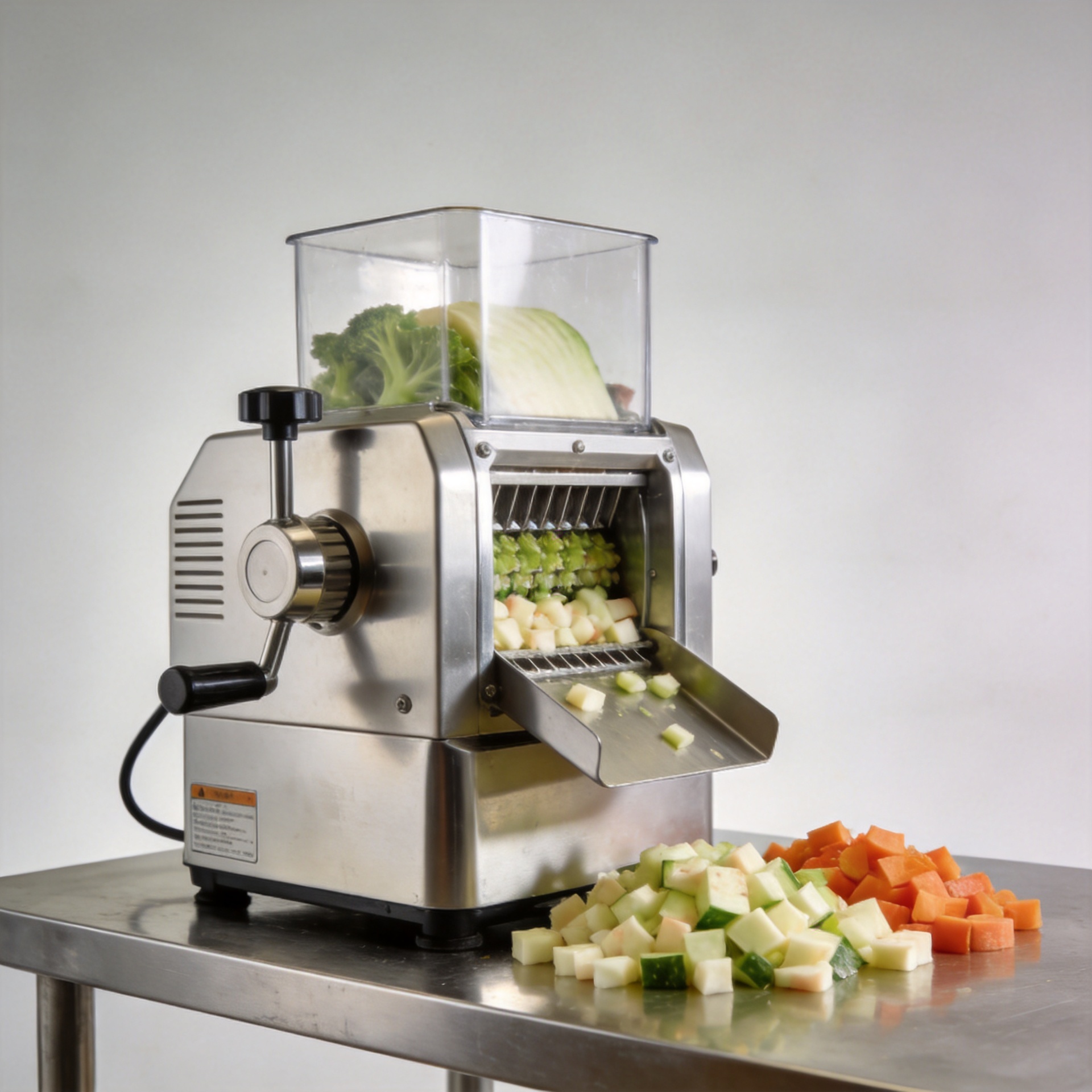
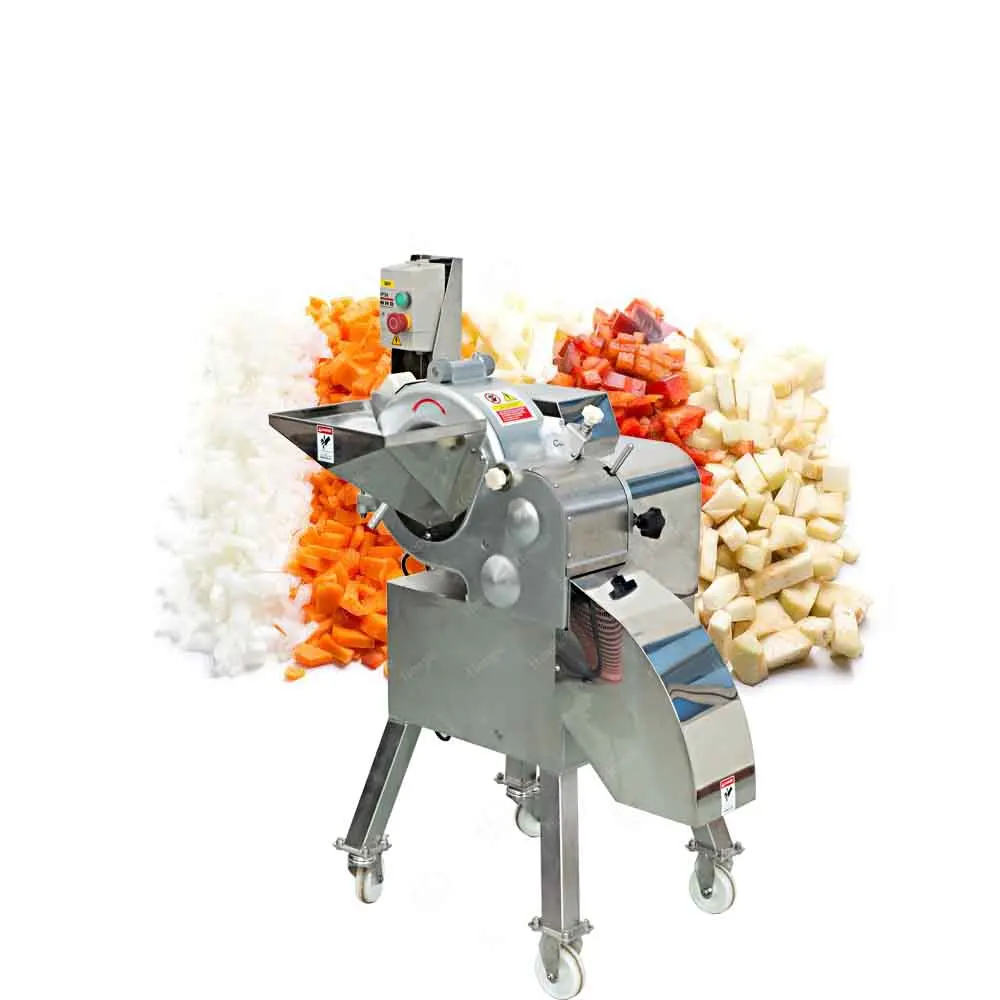
For buyers who need a commercial vegetable-cutting option for potatoes, fruit, or green onion, the Commercial Industrial Electric Vegetable Cutter Dicing Machine for Potato, Fruit & Green Onion is a relevant product category to review against the checklist. Confirm the final configuration and suitability for your intended chip process directly with the supplier before purchasing.
Choose for repeatable production, not a brochure number
The strongest chip potato cutter choice aligns slice quality, practical throughput, sanitation, safety, and support with your actual snack line. Bring the product specification, raw-potato profile, and line-balance requirements into supplier discussions early. That approach makes it easier to compare configurations on evidence and to select equipment that supports consistent production after installation.