EN
EN


Commercial French Fries Cutting Machine Supplier Checklist for Buyers
Buying a commercial french fries cutting machine is not just a question of choosing a blade size or comparing quotations. For a restaurant group, central kitchen, frozen-food processor, or equipment distributor, the more useful question is whether a supplier can document the machine, support the intended production routine, and keep it serviceable after delivery. That is why a supplier checklist is more reliable than a price-only comparison.
As a B2B buyer, start with the product you need to make: fresh fries for immediate frying, pre-cut potatoes for a prep line, or uniform strips feeding a larger processing workflow. The cutting machine should be assessed as one part of that workflow, with attention to raw-material variation, cleaning time, operator safety, power supply, and spare-part access.
1. Define the finished fry before requesting a quotation
A supplier cannot recommend a suitable commercial french fries cutting machine until the finished cut is clear. State the potato range, target strip section, acceptable variation, hourly output, and whether the line will run intermittently or continuously. Search results commonly show 3/8-inch and 1/2-inch cutting plates, but those sizes are examples rather than a universal specification. Ask for a video or sample test using potatoes close to your normal size and firmness.
Include these points in the inquiry:
- Target fry dimensions and any alternative cuts you expect to sell.
- Expected throughput per hour, plus the test conditions behind that figure.
- Raw-product condition: washed, peeled, unpeeled, chilled, or pre-sorted.
- Whether the downstream fryer, blancher, conveyor, or packaging line imposes a fixed feed rate.
One automatic-cutter search result states that 50 lb can be cut in under 90 seconds. Treat figures like this as a prompt to ask for a repeatable test protocol, not as a performance guarantee. Capacity changes with potato size, blade condition, feed method, and the chosen cut.
2. Check the cutting system and sanitation design
The cutting head is central to every commercial french fries cutting machine. Ask the supplier to identify blade material, available blade sets, changeover steps, sharpening or replacement policy, and the guards used during cleaning. Stainless cutting components are commonly highlighted in commercial equipment listings because corrosion resistance and cleanability matter in food preparation; still, buyers should request the actual material declaration for food-contact parts rather than relying on a product image.
A practical review is to ask an operator to remove and reinstall the cutting assembly on video. Look for reachable surfaces, clear cleaning access, and a process that does not depend on improvised tools. If your sanitation routine is strict, request a cleaning checklist and confirm which components may be washed, which must remain dry, and how water is kept away from the motor or electrical enclosure.
3. Verify the machine matches your site, not only the catalog
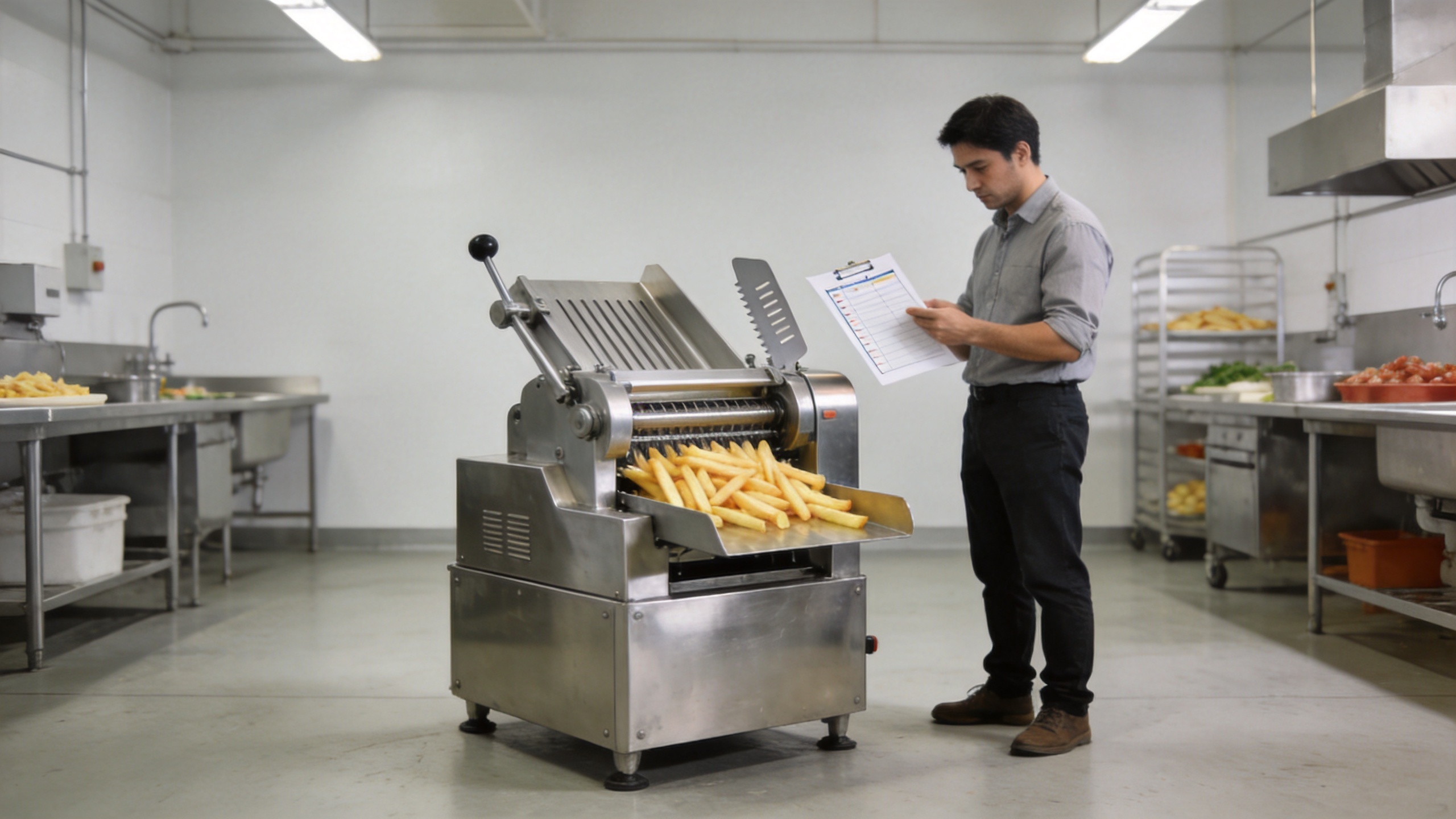
Before placing an order for a commercial french fries cutting machine, give the supplier the destination voltage, frequency, plug or wiring preference, available floor space, and local installation constraints. An otherwise appropriate cutter can become inconvenient if its motor configuration does not match the site or if access for loading, discharge, and cleaning was not planned.
| Verification area | What to request | Why it matters |
|---|---|---|
| Electrical configuration | Nameplate photo, voltage/frequency confirmation, wiring diagram | Prevents commissioning delays at the destination. |
| Output | Test video with stated potato size and cut dimension | Makes quoted capacity easier to compare. |
| Hygiene | Food-contact material list and cleaning procedure | Supports your sanitation review. |
| Safety | Guard, interlock, emergency-stop, and operating instructions | Clarifies how operators are protected. |
| Service | Recommended spares list and lead-time commitment | Reduces downtime risk after delivery. |
4. Evaluate the supplier’s support plan
A lower initial price may not be the lower operating cost if blades, seals, switches, or technical answers are difficult to obtain later. Ask the supplier which wear parts are normally stocked, how parts are identified, and whether they can provide manuals, exploded drawings, remote video guidance, and basic troubleshooting support. For export purchases, clarify packaging, shipment documentation, destination-market electrical requirements, and who is responsible for installation coordination.
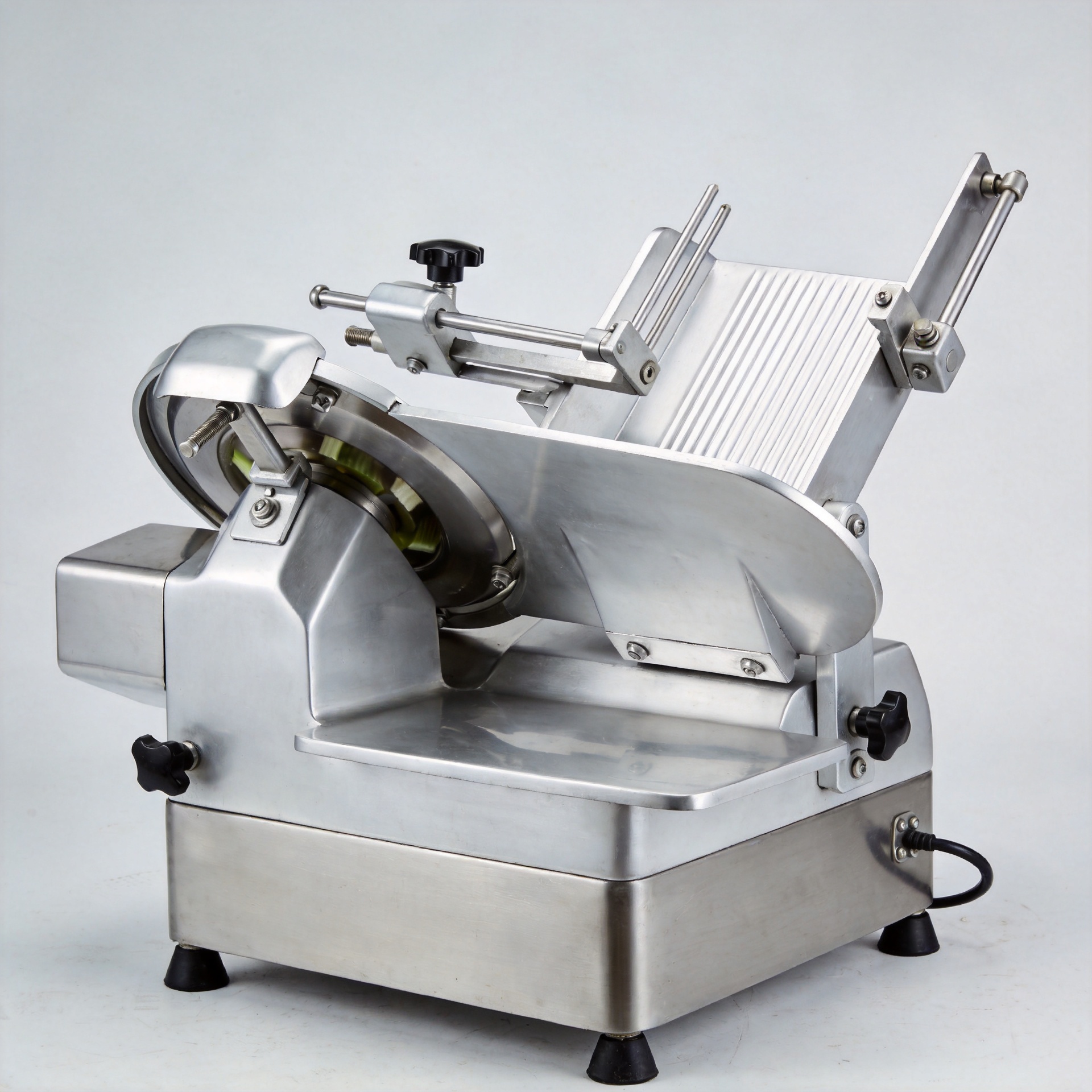
Zhengzhou HongLe Machinery Equipment Co., Ltd. positions its food-processing equipment business around selection guidance and overseas support. Buyers considering its equipment can review the available commercial industrial electric vegetable cutter dicing machine as a relevant product reference, then confirm the exact cutting configuration and suitability for a french-fry application directly with the supplier. The product title alone does not establish performance specifications, so written confirmation remains important.
5. Use a pre-shipment acceptance checklist
Before the balance payment or shipment release, turn the selected commercial french fries cutting machine specification into an acceptance list. It should include the confirmed blade set, machine model, electrical configuration, accessories, documentation, packing method, and test result. If a custom cut or local power configuration was agreed, put it on the proforma invoice and the final inspection record.
- Match the nameplate and serial information to the order documents.
- Confirm the installed blade set and any spare blades or tools.
- Review a no-load and product-cutting test video.
- Check that guards, switches, and supplied manuals are included.
- Photograph the machine, accessories, and export packaging before dispatch.
Final buying decision
The right commercial french fries cutting machine supplier is the one that can answer operational questions in writing, test the requested cut under stated conditions, and support the machine after arrival. Use the checklist to compare evidence—not marketing language—and you will be in a better position to select a cutter that fits your process, budget, and maintenance capacity.