EN


Commercial Fruit Washing Machine Buying Guide: Capacity, Material, and Cleaning Process
Buying a commercial fruit and vegetable washing machine is not simply a matter of comparing a supplier’s headline capacity. A machine can look suitable on a quotation yet become a bottleneck when produce arrives in uneven loads, a downstream cutter runs at a different pace, or operators cannot reach the areas that need sanitation. For a processor, distributor, or food-service factory, the better question is: can this equipment clean the intended produce consistently within the real production line?
This guide is written for B2B buyers who need a practical decision framework. It focuses on the three topics that deserve the closest review—capacity, food-contact material, and the cleaning process—then turns them into supplier questions and acceptance checks.
Start with line capacity, not the largest number on the quotation
Every fruit and vegetable washing machine quotation should distinguish nominal throughput from usable throughput. Nominal output may be stated under favorable loading and produce conditions. Usable output depends on the product mix, loading method, water management, operator pace, and the speed of the equipment before and after the washer.
Map the line in order: receiving, sorting, washing, draining, cutting or grading, and packing. Identify the slowest stage and use that point to set the target rate. If the washer is faster than the next machine, produce can accumulate and lose the benefit of continuous flow. If it is slower, the upstream team spends time waiting. Capacity matching is therefore a line-balance exercise, not a single-machine comparison.
Questions that make capacity claims comparable
- Which fruit or vegetable was used to state the quoted throughput?
- Is the figure based on a single pass, and what loading depth or belt coverage is assumed?
- How does output change for leafy vegetables, soft fruit, root crops, or products with attached soil?
- What are the expected dwell time, drain time, and operator handling requirements?
- Can the supplier show a process layout that matches the target line flow?
A useful purchasing rule is to request a capacity range and the assumptions behind it. That gives the buyer a basis for comparing alternatives without treating one headline figure as a guarantee.
Choose a washing method that fits the produce, not a fashionable feature
A commercial fruit and vegetable washing machine may use water agitation, bubbles, spray rinsing, brushing, or a combination of these methods. Industrial washing systems are commonly designed around controlled water movement and rinsing so that cleaning is repeatable. The right configuration still depends on the produce’s surface, fragility, soil load, and how much manual sorting remains in the process.
| Produce condition | Selection focus | What to verify |
|---|---|---|
| Soft or easily bruised fruit | Gentle handling and controlled agitation | Transfer points, water turbulence, and observed damage during a trial |
| Leafy vegetables | Water circulation and debris removal | How floating leaves, sand, and light debris are separated and drained |
| Firm produce with surface soil | Agitation, rinse coverage, or suitable brushing | Whether the method removes soil without damaging the surface |
| Mixed product lines | Adjustability and changeover practicality | Settings, cleaning time, and parts that need to be changed between products |
Do not assume that a particular technology automatically delivers a better sanitation result. A process review on fruit and vegetable handling notes that washing is closely related to product quality, which is precisely why the buyer should ask for a validation approach for their own product and water conditions. Ask the supplier to explain the process sequence: pre-rinse, wash zone, debris separation, final rinse, drainage, and transfer. The explanation should be clear enough to become part of the factory’s acceptance criteria.
Evaluate food-contact material and sanitary construction together
Material selection matters, but material grade alone is not a complete sanitary-design review. For a fruit and vegetable washing machine, buyers should examine all food-contact surfaces, weld finishing, corners, drainage paths, removable covers, seals, and areas below the water line. Stainless-steel construction is commonly preferred in food equipment because smooth, non-porous surfaces can be easier to clean; however, the real procurement task is to verify the specific material declaration and how the machine can actually be washed and inspected.
Material and construction checklist
- Request the stated grade for product-contact stainless steel and any non-metal contact parts.
- Ask where dissimilar materials are used, including belts, brushes, gaskets, nozzles, and fasteners.
- Inspect welds, seams, joints, and crevices that could retain debris or water.
- Check whether tanks, filters, spray bars, and guards can be opened or removed without excessive tools.
- Confirm that the frame and tank drain completely in the installed orientation.
- Ask for cleaning and maintenance instructions before placing the order, not only at delivery.
For overseas procurement, include packaging, spare-parts planning, remote technical guidance, and the availability of operating documentation in the supplier evaluation. Zhengzhou HongLe Machinery Equipment Co., Ltd. serves export markets and provides equipment-related technical support materials; buyers should still define the exact documents, response scope, and spare-parts list required for their project.
Turn the cleaning process into an acceptance test
The most practical way to reduce ambiguity is to ask the supplier to agree on an acceptance test before production. Rather than asking whether the fruit and vegetable washing machine is “high efficiency,” define the test product, incoming condition, loading rate, water condition, cleaning sequence, and the visual or operational criteria used to review the result.
- Define the produce: list the main crops, size range, condition, and expected soil or debris level.
- Define the line rate: state the target input rate and how product will be fed into the machine.
- Define the process: record wash-zone settings, rinse arrangement, drainage, and any manual inspection step.
- Define the result: agree on practical observations such as visible debris removal, product damage, carryover water, and cleanability after the run.
- Define the evidence: request trial video, photographs, layout drawings, and an operating checklist for the agreed configuration.
This approach is especially useful when a supplier’s standard machine must be integrated into a wider line. It shifts the conversation from generic claims to conditions that can be reviewed by production, quality, and maintenance teams.
Compare suppliers on supportability as well as machine design
Price is only one part of ownership cost. A lower initial price can be less useful if the system is difficult to clean, lacks clear operating documentation, or requires parts that cannot be identified quickly. During evaluation, ask each supplier to provide a layout, utilities list, cleaning instructions, recommended spare parts, delivery scope, and a clear description of commissioning support.
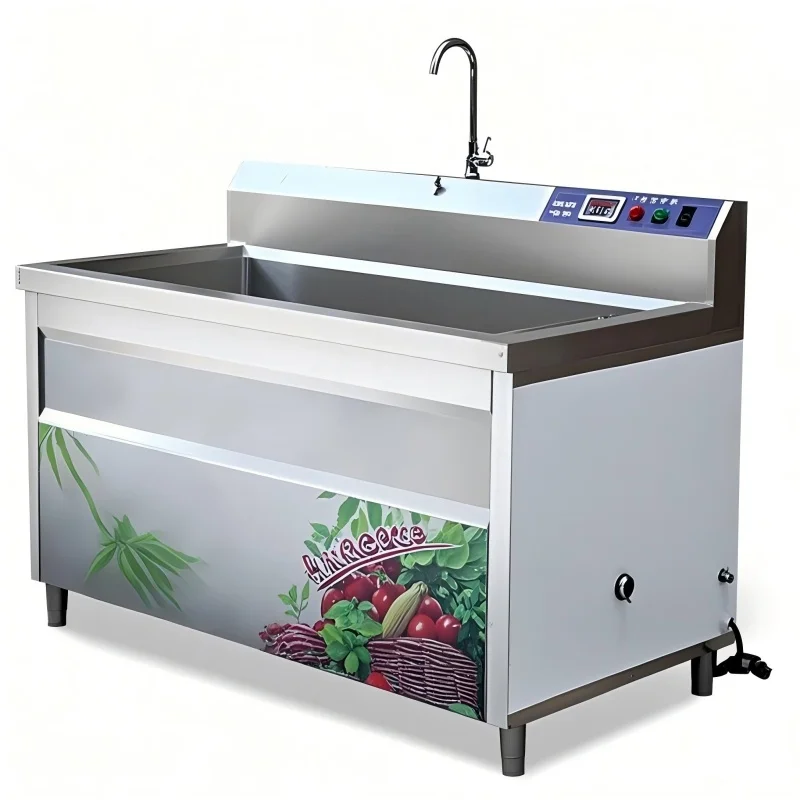
For buyers seeking a product reference, review the available details for the Vegetable and Fruit High Efficiency Commercial Stainless Steel Disinfection Vortex Fruit Washing Machine alongside the criteria in this guide. The product page should support a technical discussion, not replace a review of your produce, throughput, utilities, and sanitation requirements.
A short decision checklist for commercial buyers
Before approving a commercial fruit and vegetable washing machine, confirm that the answer to each of these questions is documented:
- Is the quoted capacity tied to our actual produce and line rate?
- Does the washing method suit product fragility, soil load, and desired process flow?
- Are food-contact materials, drainage, access points, and cleaning steps specified clearly?
- Can the supplier demonstrate the agreed process through a trial or documented acceptance plan?
- Have we reviewed layout, utilities, spare parts, training, and post-delivery support?
A sound purchase is rarely the machine with the biggest headline number. It is the fruit and vegetable washing machine that fits the product, stays cleanable in daily use, and can be supported throughout its working life. Use the checklist to turn supplier discussions into a decision based on evidence rather than assumptions.