EN


Commercial Garlic Peeler Machine Price Guide and RFQ Checklist
A commercial garlic peeling machine is rarely a like-for-like purchase. Two quotations may both say “automatic garlic peeler,” yet cover very different throughput assumptions, air systems, material contact parts, controls, delivery scope, and commissioning support. For a food processor, distributor, or project buyer, the useful question is not simply “What is the price?” It is “What configuration and verified output does this quotation actually buy?”
This guide provides a decision-stage framework for comparing a garlic peeling machine quotation and preparing an RFQ that suppliers can answer clearly. It focuses on commercial fruit and vegetable peeling lines, not small kitchen devices.
Why garlic peeling machine prices vary
Price changes with the production job the equipment is expected to do. When comparing a garlic peeling machine, confirm that each seller is quoting the same process scope before you compare the amount. Published market listings span small commercial machines through lines rated around 1,000 kg/h or more, but those figures are not interchangeable. Garlic variety, clove size, dryness, feed consistency, operator practice, and continuous-running conditions can all affect actual output and peel quality. Ask every supplier to state the test material and the basis for the stated capacity.
In practice, the quotation usually moves with five groups of choices:
- Capacity and feeding: target kg/h, hopper size, manual or continuous feed, and whether upstream separation or grading is included.
- Peeling method and utilities: dry pneumatic peeling is commonly marketed for avoiding added water, but buyers should confirm compressed-air demand, air quality, and exhaust or skin-collection arrangements.
- Product handling: the acceptable level of broken cloves, residual skin, and sorting requirements affects the machine layout and downstream inspection needs.
- Construction and controls: food-contact materials, electrical standard, control language, safety guards, and spare-parts package can change both price and export readiness.
- Scope beyond the machine: packing, freight terms, installation guidance, training, testing, and response for replacement parts belong in the cost comparison.
A low headline price can be valid for a basic configuration. It becomes misleading only when it is compared with a more complete garlic peeling machine package without normalizing the scope.
Set a capacity basis before requesting a quote
Start with your production plan rather than a supplier catalogue. A garlic peeling machine should be sized around the flow your team can actually receive, prepare, inspect, and pack. Define the required net peeled-garlic output per shift, expected operating hours, peak-season demand, and any upstream or downstream bottleneck. Then ask suppliers to distinguish rated input capacity from finished, usable output. If your raw garlic has mixed clove sizes or inconsistent drying, request a capacity range and an explanation of the condition behind each figure.
It is tempting to select the largest rating available. That may not be the economical option in every operating scenario. A larger garlic peeling machine can require higher utility capacity and may be underused if receiving, sorting, washing, or packing cannot keep pace. Conversely, a line with no allowance for peak volume may create overtime, product queues, and rushed cleaning. Match the equipment to a documented hourly flow, then keep a sensible margin for growth.
Compare quotations on total ownership cost
The quoted garlic peeling machine price is only one part of the decision. A serious comparison also identifies what the garlic peeling machine package excludes. Build one comparison sheet for all suppliers and list the same cost headings: equipment, optional modules, export packing, Incoterm, sea or inland freight, customs and local taxes, installation work, operator training, wear parts, and expected service response. This is especially important for cross-border purchases, where the delivered cost can differ materially from the factory quotation.
Also look beyond price to validation. Ask what a factory acceptance test includes, how long the machine will run, which garlic condition will be used, and what records or video can be supplied. For higher-value projects, a third-party inspection before shipment can help turn a broad performance claim into an agreed acceptance point. Zhengzhou HongLe Machinery Equipment Co., Ltd. states that it can support pre-shipment independent inspection and provide export-oriented documentation; confirm the exact scope in the final quotation and contract.
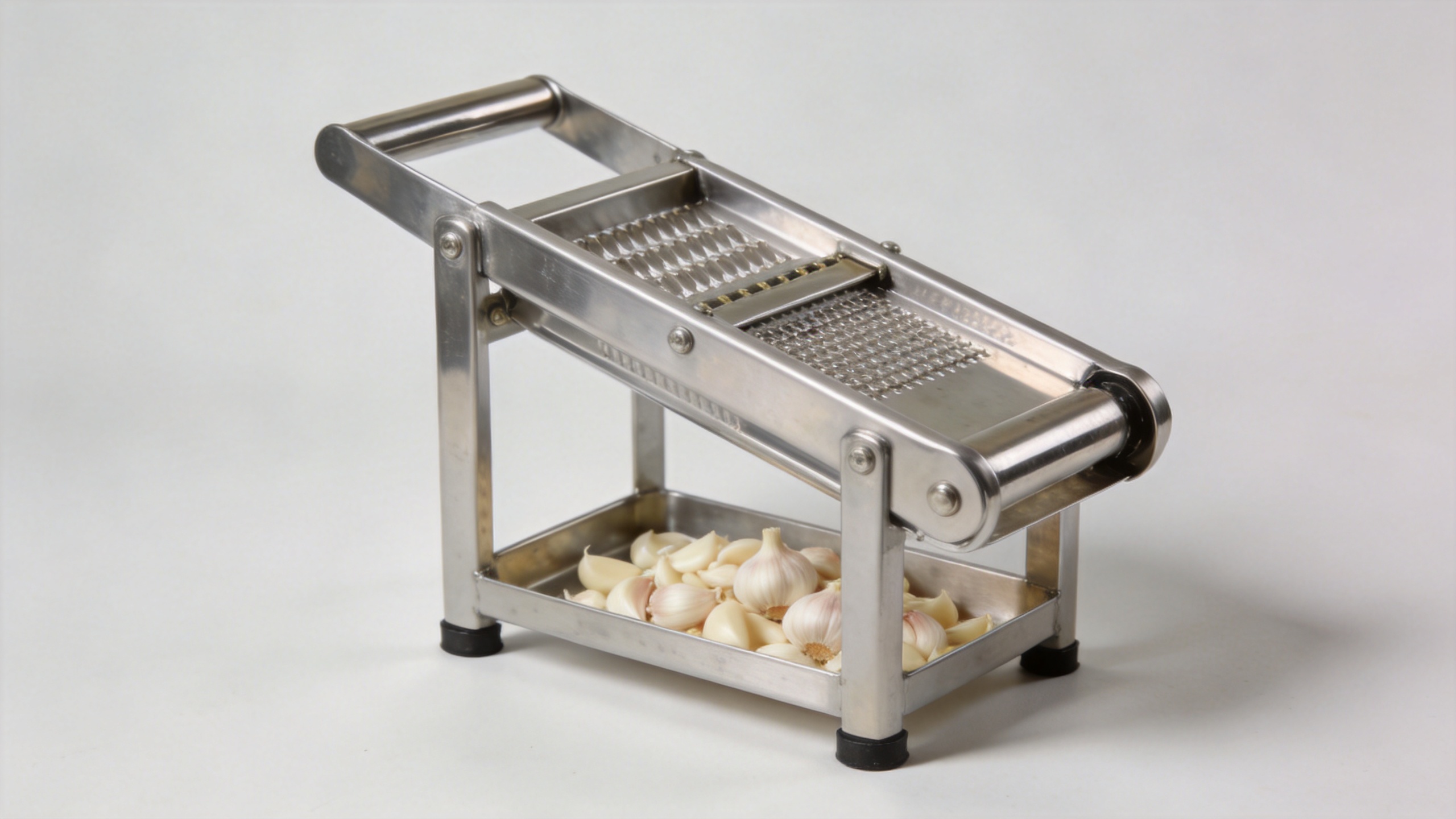
RFQ checklist for a commercial garlic peeling machine
A complete garlic peeling machine RFQ reduces back-and-forth and makes bids comparable. It gives every supplier the operating facts needed to propose a suitable garlic peeling machine configuration. Include the following items:
- Required raw-garlic input and desired finished output in kg/h and per shift.
- Garlic variety, typical clove size, moisture or drying condition, and tolerance for broken cloves or residual peel.
- Process flow before and after peeling, including sorting, washing, packing, or cold-storage interfaces.
- Available power supply, compressed-air capacity and quality, floor area, drainage, and ventilation constraints.
- Requested machine configuration, food-contact material requirements, electrical language, and safety features.
- Requested performance statement: capacity basis, peeling rate definition, damaged-clove definition, and test duration.
- Required quotation scope: machine, accessories, spare parts, export packing, manuals, remote support, and training.
- Preferred Incoterm, destination port, required lead time, warranty terms, and inspection or acceptance requirements.
Ask suppliers to answer each point in a table rather than only sending a brochure. That format makes omissions visible and helps your technical, purchasing, and logistics teams evaluate the same scope.
Questions to ask before placing the order
Before issuing a purchase order, clarify what happens at the boundary between the garlic peeling machine and the rest of the line. Who supplies the air compressor, skin separator, conveyor interfaces, and electrical connection? What does the supplier need from your site before shipment? Which parts are recommended for initial stock, and what information is needed to identify replacements later?
For buyers who need a high-capacity garlic peeling machine option, you can review the confirmed product listing for a 1000 kg/h full-automatic commercial garlic and ginger peeling machine. Treat the product page as a starting point for a configuration discussion, not as a substitute for a written performance and scope confirmation.
Use the RFQ to reach a defensible decision
A suitable commercial garlic peeling machine is not automatically the lowest-priced or highest-rated model. It is the one whose test basis, utility needs, configuration, delivery scope, and support commitments fit your actual production plan. Send the same garlic peeling machine RFQ checklist to shortlisted suppliers, request an itemized offer, and compare landed cost alongside acceptance conditions. Keep the signed garlic peeling machine specification, quote, and acceptance plan aligned so that price discussions stay tied to the promised scope. That approach gives you a clearer basis for negotiation and a more reliable path from quotation to production.