EN


Commercial Potato Cutter Buying Checklist for Food Processors
Buying a commercial potato cutter is not simply a matter of choosing the highest headline capacity. For a food processor, the right machine has to make the required cut consistently, fit the pace of the line, support the sanitation routine, and remain serviceable after delivery. This checklist is designed for decision-stage buyers comparing a commercial vegetable cutter for fries, chips, diced potato, prepared vegetables, or mixed-product production.
Start with the operating condition rather than a catalogue figure. A commercial potato cutter that looks productive on paper can still become the constraint if potato size, product temperature, cut format, feeding method, or discharge handling do not match the line. The goal is not to find one universally suitable commercial potato cutter; it is to document the machine requirements that matter for your process.
1. Define the product and cut specification before comparing machines
Your first commercial potato cutter checklist item is the finished product. List the raw-potato size range, peeled or unpeeled condition, required cut geometry, target dimensions, acceptable tolerance, and whether the same machine will handle other vegetables. Buyers often begin by comparing motor power or quoted kilograms per hour. That is useful, but it comes after the cut specification.
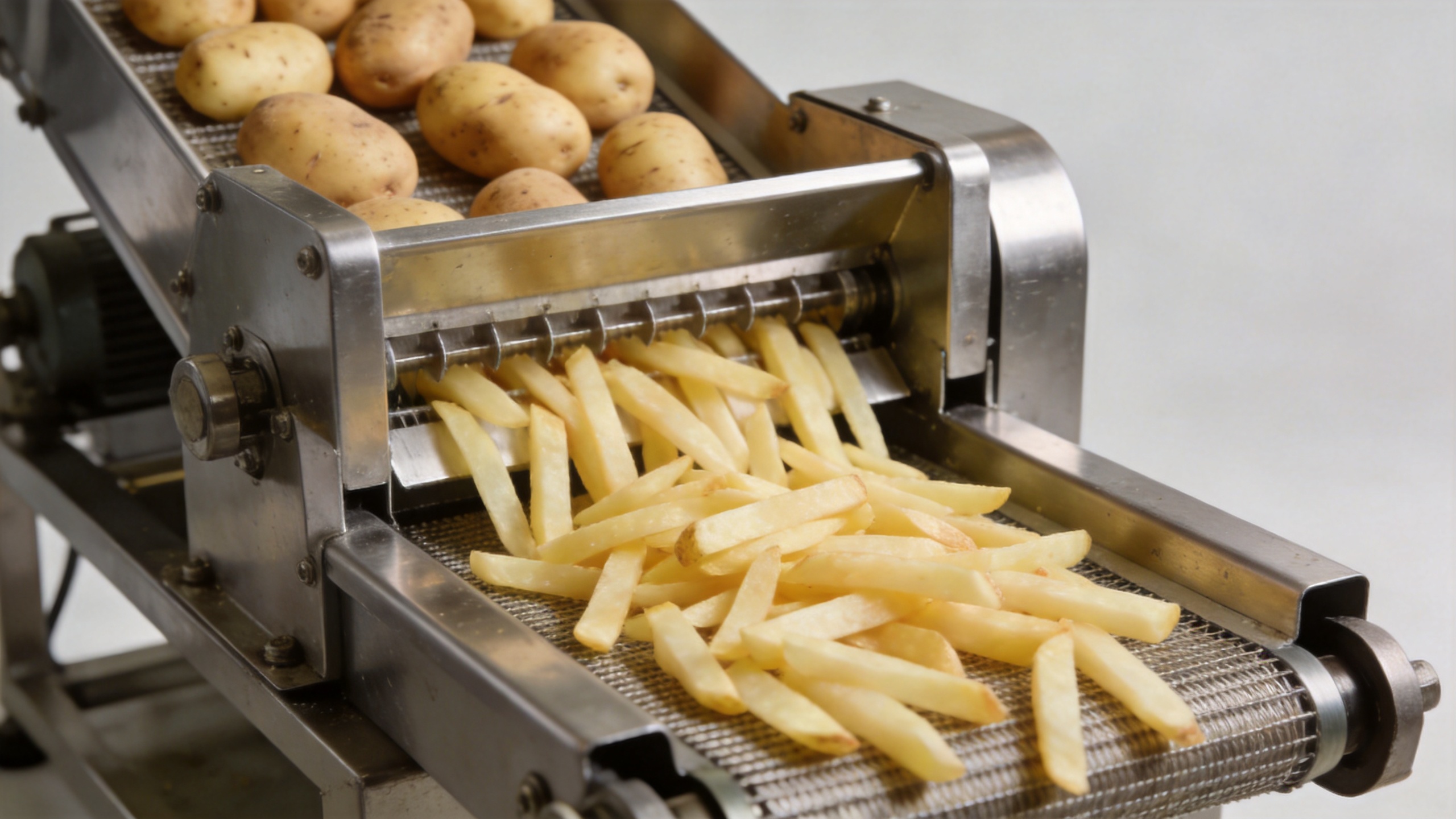
- For French fries, confirm strip profile, cross-section, length handling, and the acceptable level of breakage.
- For chips, confirm slice thickness, uniformity, and how the feed system manages irregular tubers.
- For diced potato, define cube size, edge quality, and whether downstream blanching or frying exposes inconsistent cuts.
- For multi-product production, identify every product and cut format that the commercial potato cutter must support.
Commercial cutting equipment is commonly offered around specified shapes and sizes. That makes a sample test more meaningful than a generic promise. Ask the supplier to process your own potatoes and to show the selected commercial potato cutter with the actual blade set, not a similar product or a different cut.
2. Match real throughput to the whole processing line
Throughput is the next commercial potato cutter decision point. Calculate the required hourly output from the planned finished-product volume, expected yield, shift pattern, and a realistic allowance for cleaning, blade changes, and product changeover. Then compare that requirement with upstream washing, peeling, inspection, and conveying capacity as well as downstream blanching, frying, freezing, or packing capacity.
A supplier may quote a capacity under ideal conditions, but actual output depends on raw-material size variation, feeding consistency, cut type, and operator practice. A common purchasing mistake is treating a larger capacity rating as an automatic advantage. If production fluctuates or upstream preparation cannot keep up, an oversized commercial potato cutter may operate inefficiently. Request a test report that states product type, cut style, feed condition, trial duration, and measured output.
| Question | What to verify |
|---|---|
| Target output | Hourly requirement at your planned operating time, not only peak demand. |
| Line balance | Whether washing, peeling, inspection, conveying, and downstream equipment can sustain the cutter rate. |
| Loss and rework | Broken pieces, fines, and off-spec cuts during a representative trial. |
| Changeover | Time and tooling needed when the commercial potato cutter changes cut size or product. |
3. Examine feeding, blade access, and cut consistency
A commercial potato cutter should be evaluated as a cutting system, not only as a motor and housing. Ask how potatoes enter the machine, how the feed is controlled, and what happens when tubers vary in diameter or orientation. Poor feeding can reduce consistency and increase breakage even when the blade set is suitable.
Inspect the blade and grid arrangement with the maintenance team present. Confirm how quickly operators can remove, inspect, replace, and correctly reinstall wear parts. Record the expected spare-part list, the identification method for each blade set, and the training needed to avoid incorrect assembly. If your operation also processes green onion, a japanese green onion cutting machine is a separate application question: do not assume a potato-focused cutter will deliver the same result for long, fibrous vegetables without an appropriate configuration.
4. Make sanitation and cleanability a purchase criterion
Food-contact equipment must support a cleaning and sanitising program, so sanitation should be a core commercial potato cutter requirement rather than a final inspection item. During evaluation, ask which components contact product, which parts are removable, whether tools are required, and where debris can accumulate. Look for accessible surfaces, clear cleaning instructions, and a practical method for verifying that the machine is ready for the next run.
Ask the supplier to demonstrate a complete cleaning sequence for the proposed commercial potato cutter. The demonstration should cover safe isolation, removal of product-contact parts, cleaning access around blades and discharge areas, reassembly, and pre-start checks. Your sanitation team should be able to estimate labor minutes, water use, chemical compatibility, and the likelihood of missed areas. A machine is not a better fit merely because it looks enclosed; the important question is whether the needed areas can be reached and cleaned consistently.
5. Confirm utilities, footprint, and integration details
Before issuing a purchase order, create a layout and interface sheet for the commercial potato cutter. Include voltage and frequency, installed power, water and drainage needs, floor space, feeding height, discharge height, guarding clearance, access for maintenance, and the connection to conveyors. Confirm how the machine starts and stops with the line, what interlocks are required, and how product backup is managed.
This check matters most when a line is moving from manual cutting to mechanized preparation. Many processors initially value the flexibility of manual preparation, but once volumes rise, the calculation shifts from “can we cut enough today?” to “can we control cost, consistency, and safety every day?” A well-integrated commercial potato cutter should reduce a bottleneck without creating a new one at the infeed or discharge.
6. Evaluate supplier support and total operating cost
The purchase price is only one part of the decision. For each commercial potato cutter quote, compare spare blades, consumables, recommended stock, lead times, remote troubleshooting, manuals, commissioning support, and warranty scope. First-time buyers often spend most of their time on price comparison; later, they discover that blade availability and service response can have a larger effect on downtime and operating cost.
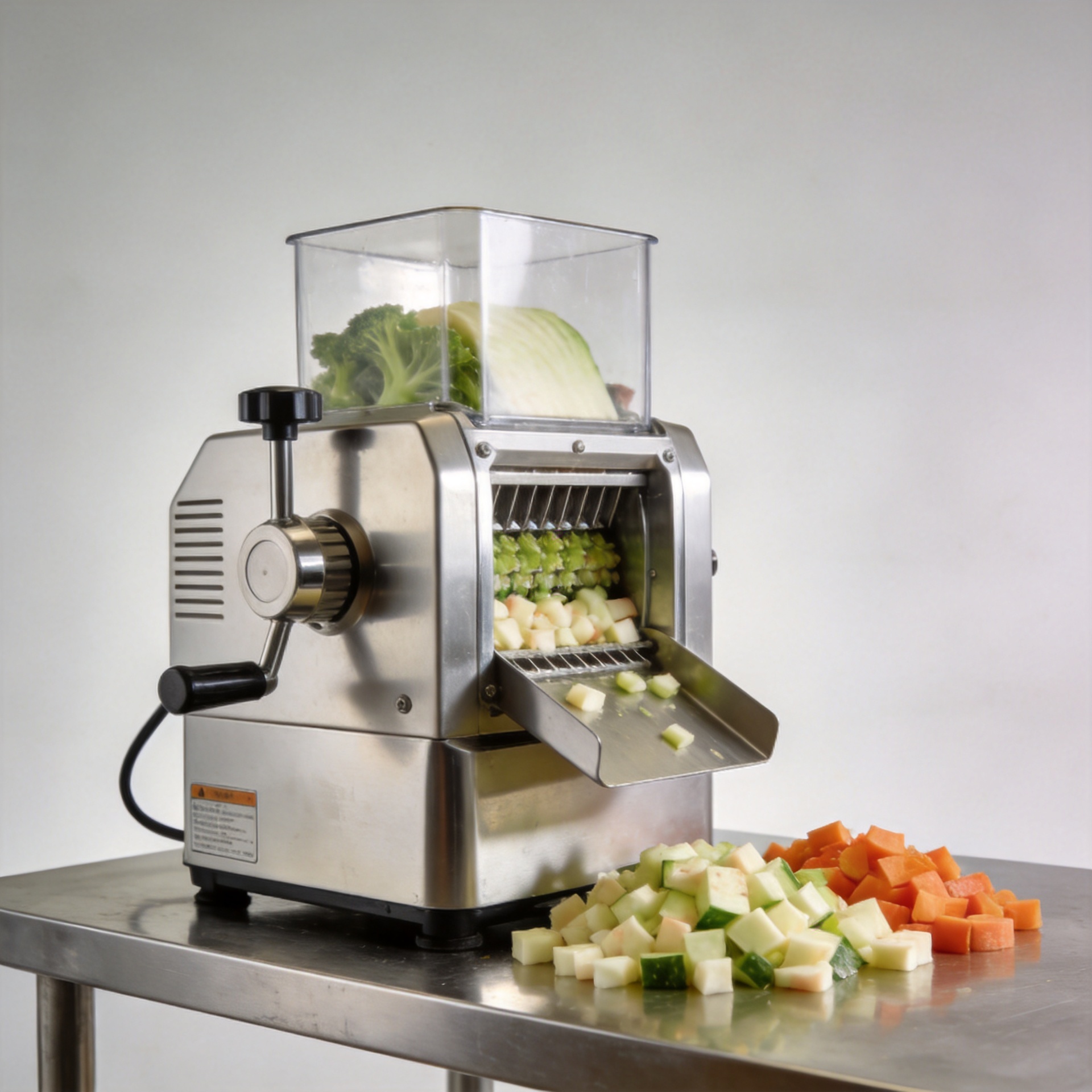
For a product reference, review the available Commercial Industrial Electric Vegetable Cutter Dicing Machine for Potato Fruit & Green Onion alongside your documented requirements. Use the product page as a starting point for a technical discussion, not as a substitute for confirming the exact configuration, cut format, capacity, and service terms needed for your project.
Final pre-order checklist
- Approve a written cut specification and representative product trial.
- Verify commercial potato cutter throughput against the full line, including downtime and changeover.
- Document blade sets, spare parts, maintenance access, and operator training.
- Review sanitation access with the people who will clean the equipment.
- Confirm utilities, layout, guarding, infeed, discharge, and control integration.
- Compare total operating cost and supplier support, not only the initial quotation.
A documented commercial potato cutter evaluation gives food processors a clearer basis for selecting equipment that fits actual production conditions. When the requirements, trial criteria, and acceptance checks are agreed before ordering, the conversation becomes more useful for both buyer and supplier—and the selected machine is more likely to support consistent production after installation.