EN


Commercial Vegetable Cutter Buying Guide: Motor, Cutting Size, and Capacity
Buying an electric vegetable cutter machine for a commercial kitchen or food-processing line is not simply a matter of comparing a motor label and an hourly output claim. The right choice must fit the vegetables you process, the cut shapes required by customers or downstream equipment, the way operators feed the machine, and the real time available for cleaning between batches. For importers, distributors, central kitchens, and prepared-food producers, a structured evaluation prevents a small specification mismatch from becoming a daily bottleneck.
This guide turns the three most visible specifications—motor, cutting size, and capacity—into a practical purchasing checklist. It also covers hygiene, operator workflow, spare parts, and supplier questions that should be answered before an order is released.
Start with the processing task, not the motor rating
An electric vegetable cutter machine performs differently with potatoes, carrots, onions, cucumbers, leafy vegetables, and soft fruit. A specification sheet can look convincing while leaving out the operating conditions that determine whether the machine is suitable for your line. First map your product mix: raw material size and firmness, the proportion of each vegetable, required cut shape, batch size, and shift pattern. Then identify what happens after cutting—washing, frying, drying, freezing, packing, or direct kitchen use.
That process map matters because an electric vegetable cutter machine is a system component. A high-speed cutter may not improve output if manual washing, tray handling, or a slow packaging station limits the line. Likewise, a cutter selected only for one hard vegetable may be inefficient when the daily menu includes fragile leafy products. Ask suppliers to confirm which products and cut forms have been tested, rather than assuming every attachment is equally suitable for every ingredient.
How to evaluate motor power and duty
Motor power is important, but it should be interpreted together with transmission design, blade configuration, feed method, and duty cycle. A useful starting point is to compare the stated motor power with the resistance created by your hardest product, the maximum feed size, and the longest continuous production run. Hard, dense vegetables and larger feed volumes generally place more demand on the drive than soft produce or short, intermittent batches.
For a commercial electric vegetable cutter machine, request clear answers on these points:
- What motor voltage, frequency, and phase options are available for the destination market?
- Is the motor intended for intermittent preparation work or repeated production shifts?
- How is overload protection handled, and what must the operator do after a jam?
- What is the relationship between motor speed, blade speed, and cut consistency?
- Which components are designed for routine inspection or replacement?
Specify cutting size as a downstream quality requirement
Cutting size affects appearance, cooking time, dehydration behavior, frying performance, portion control, and pack presentation. Therefore, do not request only “slicing and dicing.” Define the exact results your team needs: slice thickness, dice dimensions, strip width, shred style, acceptable size variation, and whether a clean cut is needed for a visible retail product.
Prepare a short cut-size sheet before comparing an electric vegetable cutter machine. Include each ingredient, target shape, target dimension, tolerance, daily volume, and the operation that follows cutting. This lets suppliers recommend compatible blades or knife sets and helps purchasing teams avoid paying for attachments that will rarely be used.
| Requirement | What to verify with the supplier | Why it matters |
|---|---|---|
| Dice size | Available grid or dicing assemblies and changeover method | Supports consistency for frozen, canned, or prepared-food applications |
| Slice thickness | Adjustment range or dedicated discs | Influences cooking, drying, and appearance |
| Strip or shred width | Blade options and suitable raw materials | Prevents tearing and inconsistent product texture |
| Cut tolerance | Sample output under normal feed conditions | Reduces reject material and downstream variation |
A commercial machine should also allow practical changeovers. If the operator needs special tools, long recalibration, or difficult blade alignment for every change, the theoretical versatility may reduce actual shift output. Include blade cleaning and reassembly time when you calculate the value of multiple cut formats.
Calculate capacity from usable output, not a headline figure
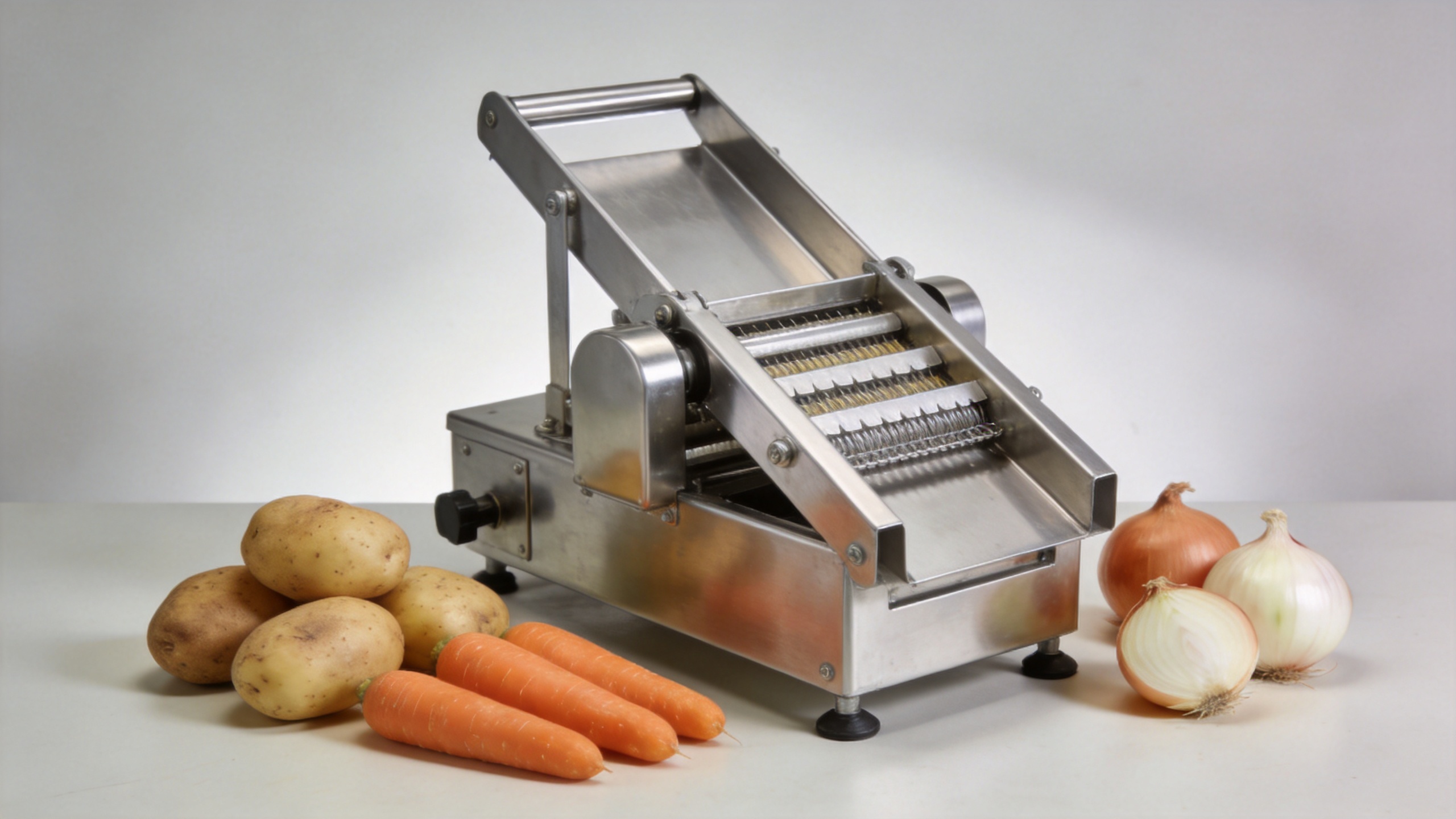
Capacity claims for an electric vegetable cutter machine may be expressed in kilograms per hour, pieces per hour, or output under ideal feeding conditions. Published machine examples range from compact equipment at roughly 120–350 kg/h to larger industrial designs rated substantially higher, but these figures are not directly comparable across product types or cut styles. A potato dice, a leafy-vegetable slice, and a soft-fruit cut can require very different feeding and handling times.
Use this simple capacity check:
- Set the required finished output per shift.
- Subtract planned breaks, cleaning, blade changes, and product changeovers.
- Estimate realistic loading and unloading time for each product.
- Ask the supplier for test output using the same vegetable type and cut size.
- Keep a capacity margin for peak orders, operator variation, and maintenance.
For example, a cutter may achieve an attractive maximum rate during continuous feeding, yet deliver lower usable output when operators must trim produce, remove defects, separate batches, and clean between allergens or product colors. The purchasing decision should be based on net line capacity. If a conveyor, washer, or packing line receives the product, make sure its speed matches the cutter so product does not accumulate or wait too long.
Document the electric vegetable cutter machine configuration
For an auditable purchase file, record each electric vegetable cutter machine configuration against the same test plan. The procurement team should list the electric vegetable cutter machine model, voltage, motor arrangement, feed method, blade set, target cut, product mix, operator count, cleaning interval, and measured net output. This gives every electric vegetable cutter machine quotation a comparable operating context.
- Test the electric vegetable cutter machine with the hardest scheduled vegetable and the most frequently used cut.
- Measure the electric vegetable cutter machine after trimming, loading, discharge, and normal operator handling are included.
- Check whether the electric vegetable cutter machine can change from slices to dice without creating an impractical sanitation delay.
- Confirm the electric vegetable cutter machine has the required electrical configuration for the installation site.
- Record blade and critical-spare-part lead times for the electric vegetable cutter machine.
This record is especially useful when several branches, distributors, or contract processors evaluate an electric vegetable cutter machine together. A repeatable worksheet avoids selecting an electric vegetable cutter machine from a maximum-output claim alone and makes later acceptance checks more objective.
Cleaning, safety, and maintenance are production specifications
Sanitation and safe operation deserve the same attention as motor power. Choose an electric vegetable cutter machine with food-contact surfaces that are accessible for cleaning, parts that can be removed without excessive complexity, and a design that does not trap vegetable debris in difficult corners. Establish the cleaning procedure before purchase: shutdown, guarding, blade removal, wash method, drying, reassembly, and inspection.
Request documentation for safety guards, interlocks, emergency-stop arrangements where applicable, operating instructions, and blade-handling guidance. Operators should be trained not to bypass guards or clear a jam while the machine is energized. For international purchasing, confirm that voltage configuration, plug or connection requirements, manuals, spare blade availability, and remote technical support match the destination market.
Use a supplier comparison checklist before placing an order
A decision-stage purchase review should combine technical fit with supply reliability. Compare quotations on the same scope: machine configuration, included blade sets, electrical specification, spare parts, packing, commissioning guidance, lead time, and warranty terms. Ask for a quotation that identifies the exact configuration instead of a broad product family description.
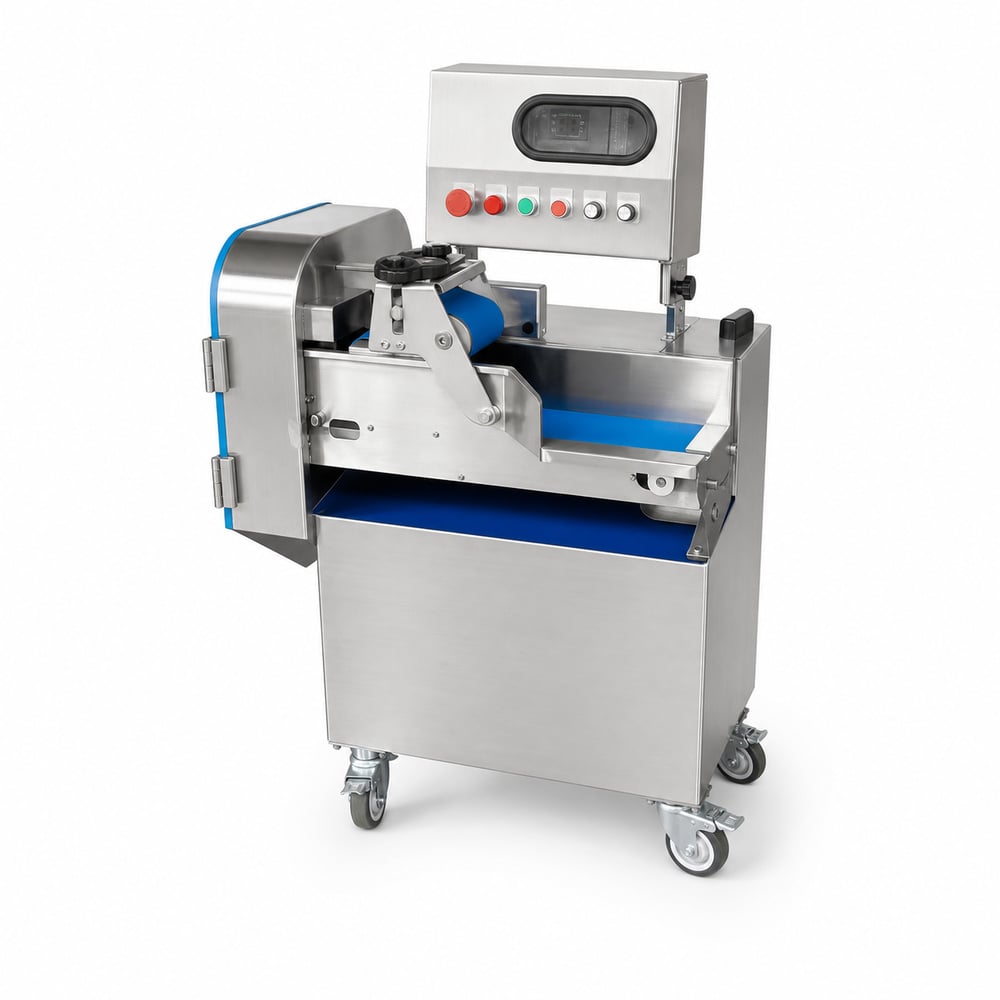
When your application aligns with its verified configuration, you can review the commercial industrial electric vegetable cutter dicing machine as one product option. Confirm all final specifications, compatible vegetables, cut attachments, and delivery terms directly with the supplier before purchase.
- Provide samples or detailed product photos for the supplier’s application assessment.
- Request a cut-quality video and an explanation of the test conditions.
- Confirm the included and optional cutting tools by part number.
- Check cleaning access, safety procedures, and daily maintenance tasks.
- Ask how fast consumable blades and critical spare parts can be supplied.
- Review export packing and after-sales support for your market.
Make the final choice with a line-fit test
A suitable electric vegetable cutter machine is one that produces the required cut consistently, at a usable rate, with an operating and cleaning routine your team can sustain. Motor capability should support the true duty; cutting tools should match the finished-product specification; and capacity should be proven against realistic product preparation and changeover time. By converting these items into a documented supplier checklist, buyers can compare offers fairly and select equipment that supports stable production rather than only an attractive headline specification.