EN


Commercial Vegetable Cutter RFQ: A Requirements Template for Food Factories
When a food factory requests a quotation for a commercial vegetable dicer machine, the useful conversation starts before a supplier receives the email. A model name alone does not tell a supplier whether the line will handle firm potatoes, wet onions, leafy greens, mixed produce, or a rotating menu. It also does not define the cut geometry, the shift pattern, the cleaning window, or the safety expectations. Those gaps often create quotations that look comparable but are not.
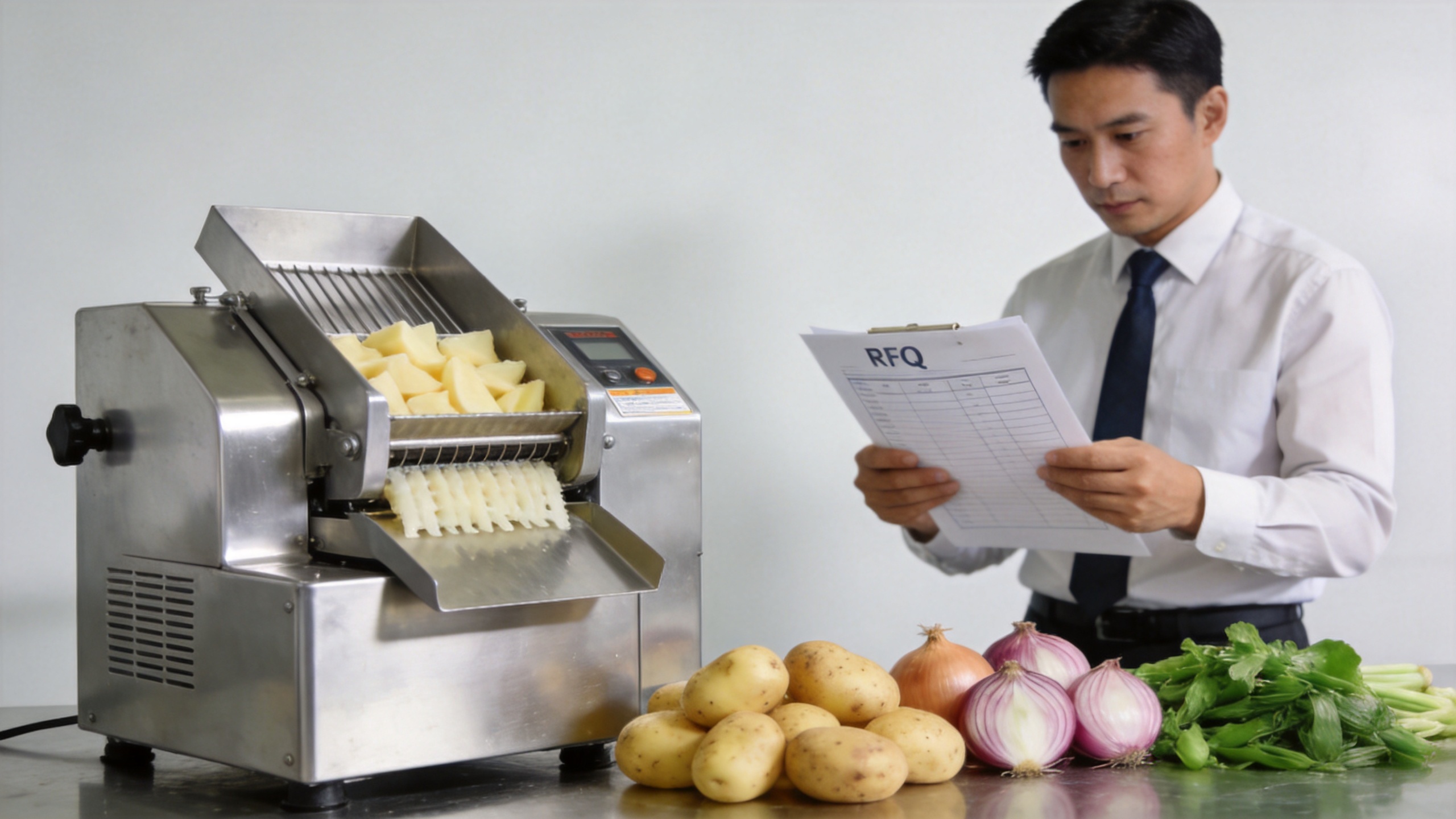
This template helps procurement and production teams turn operating needs into a structured RFQ. It is designed for factory buyers evaluating a commercial vegetable dicer machine or a commercial vegetable slicer machine for repeated food-processing work. Use it as a discussion document, then ask the supplier to confirm which requirements are supported by the proposed configuration.
Start the RFQ with the product and cut specification
A vegetable is not simply “a vegetable” from a cutting perspective. Firm root vegetables, soft tomatoes, fibrous celery, peeled onions, and wet leafy material can behave differently at the feed opening and at the cutting head. List every material that will be processed, including the condition in which it reaches the machine.
- Raw material: name, typical size range, shape, firmness, temperature, and whether it is washed, peeled, or pre-trimmed.
- Finished cut: dice, slice, strip, shred, or another shape; include the required dimensions and acceptable tolerance.
- Quality limit: note whether broken pieces, fines, bruising, or surface moisture create a downstream issue.
- Changeover plan: specify whether one cutting format is used for a full shift or several formats are needed each day.
For example, “potato cubes” is not enough. A clearer RFQ says which potatoes are used, their preparation condition, the target diced-piece size, expected yield, and what the line should do with off-size pieces. This gives the supplier a practical basis for assessing a commercial vegetable dicer machine rather than guessing from a generic application label.
Describe production rhythm, not only hourly output
Capacity matters, but the requested figure should match the operating rhythm. State the planned input per hour, number of shifts, batch size, feeding method, and the time allowed for cleaning and blade changes. A line that receives produce in intermittent batches may need a different feed arrangement from one that runs continuously.
| RFQ field | What to provide | Why it matters |
|---|---|---|
| Target throughput | Average and peak kg/h or lb/h | Helps size the machine for normal operation and peak demand. |
| Daily schedule | Shift count, run time, planned stops | Clarifies duty cycle and maintenance access. |
| Feed method | Manual, belt-fed, lift-assisted, or upstream conveyor | Determines handoff arrangement and operator-workflow needs. |
| Downstream process | Washing, blanching, freezing, packing, or further preparation | Shows which cut consistency and discharge arrangement matter. |
Ask the supplier to distinguish a published capability from the expected result for your own materials and cut sizes. A practical acceptance test uses your representative produce, the proposed cutting configuration, and an agreed measurement method for output and cut quality.
Make cleanability a purchasing requirement
Food equipment should be evaluated as part of the sanitation program, not after installation. Hygiene guidance for food-processing machinery emphasizes accessible, cleanable product-contact areas. In the RFQ, ask the supplier to show how operators reach the hopper, cutting zone, discharge area, guards, and removable components.
- Which product-contact and splash-zone parts can be removed, and what tools are needed?
- What is the normal cleaning sequence, and how long does it take under the proposed factory routine?
- Where can product residue collect, including joints, seals, covers, or areas behind guards?
- Which cleaning chemicals and water conditions are compatible with the listed materials and seals?
- What inspection points should be included in the factory’s sanitation verification procedure?
These questions are particularly important where a commercial vegetable slicer machine will process wet, sticky, or mixed raw materials. Rather than asking whether a machine is “easy to clean,” ask for drawings, removal steps, cleaning instructions, and a demonstration plan.
Include safety, utilities, and layout information
A quotation is more useful when it reflects the installation environment. Provide the available electrical supply, preferred control language, floor space, access route, drainage conditions, and the upstream and downstream interfaces. If the machine will be moved, washed down, or integrated with a conveyor, say so early.
For safety, request information on guarding, interlocks, emergency-stop arrangement, restart behavior after a stop, and the lockout approach for cleaning or blade service. Local rules and the factory’s own risk assessment remain the decision basis; the RFQ should require the supplier to identify the supplied safety features and any buyer-side responsibilities.
Ask for configuration-specific evidence before issuing the order
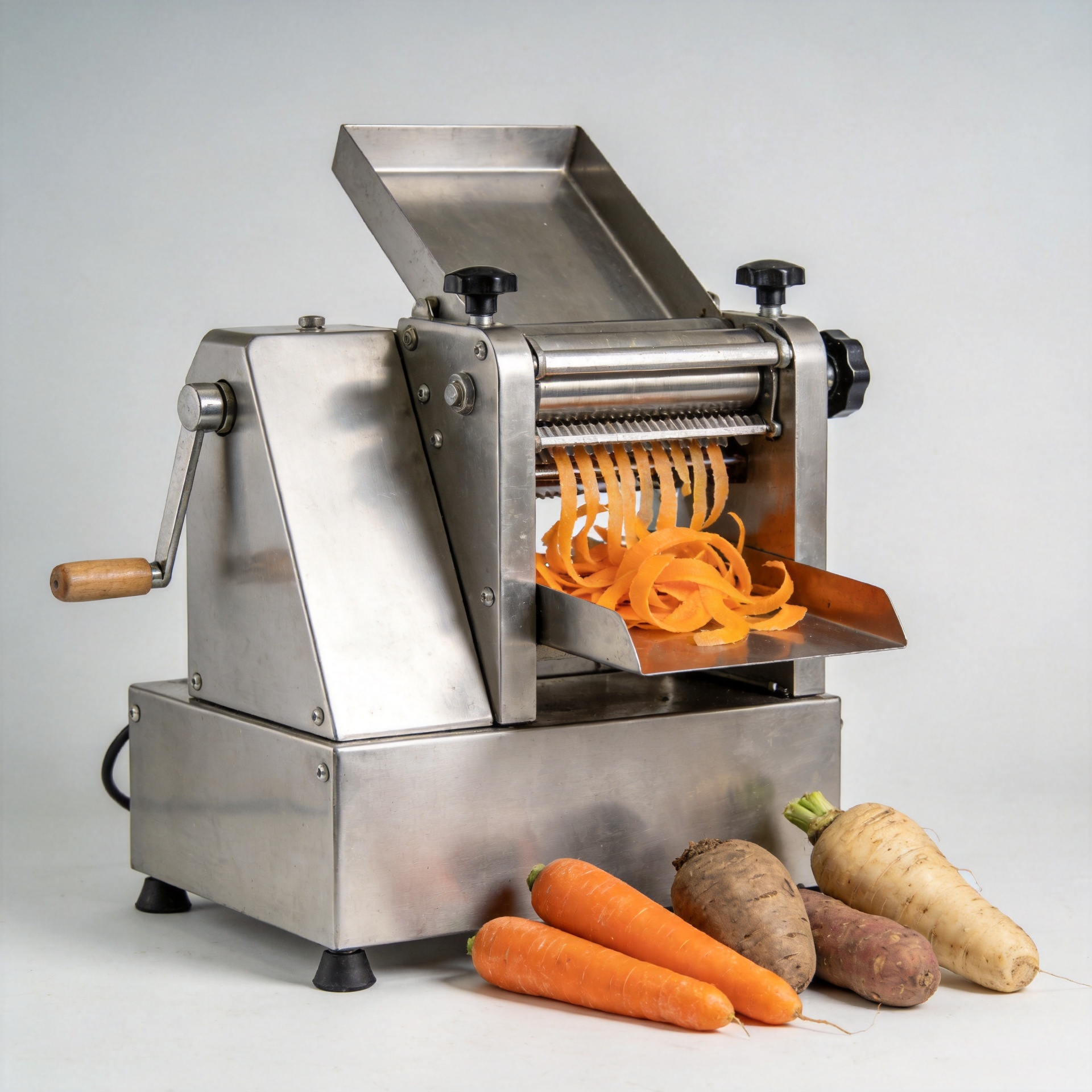
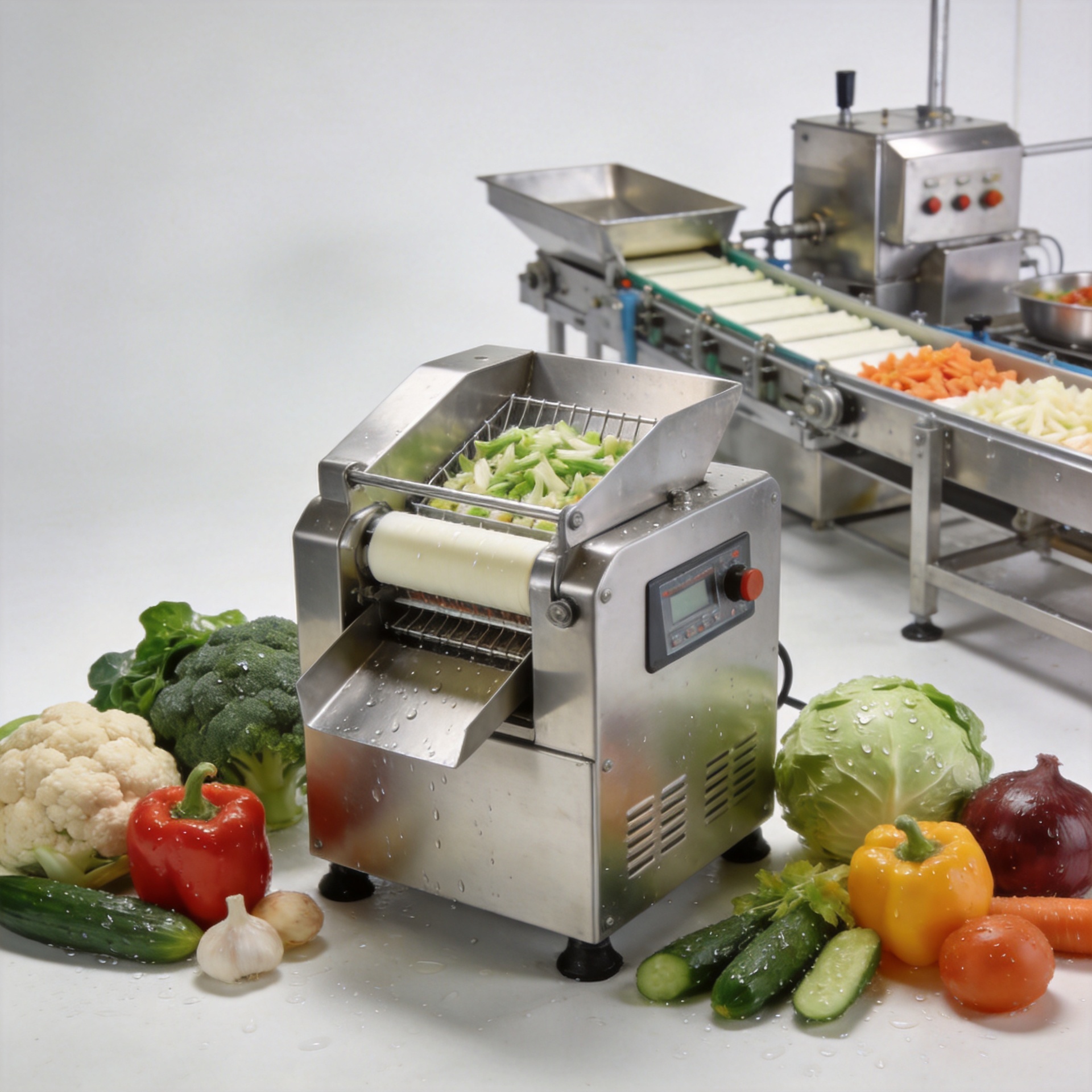
Decision-stage buyers need more than a catalogue description. Request the quotation with the exact cutting tools, accessories, electrical configuration, spare-parts recommendation, documentation set, packing approach, lead-time assumptions, and commissioning or remote-support scope. This is where a single product page can help identify the relevant machine category, such as the commercial industrial electric vegetable cutter dicing machine, but the final specification should still be confirmed against your materials and process.
Ask for a quotation line by line. If a cutting grid, knife set, feed attachment, guard, or cleaning tool is essential to the intended application, it should appear in the configuration rather than in a later assumption.
Copy-and-use RFQ template for a commercial vegetable dicer machine
Paste the following checklist into an email or procurement form. Fill in every item that is known; mark unknown items for supplier discussion.
- Application: We require a commercial vegetable dicer machine for your raw-material list in the condition received at cutting condition.
- Required cuts: the required cut form at the required dimensions, with the allowed limits for fines and breakage for fines and breakage.
- Capacity: Average the planned quantity/h; peak the planned quantity/h; the planned number shifts/day; the planned number operating days/week.
- Process handoff: Material arrives from the identified feeding method and discharges to the identified downstream equipment. Available space is the required dimensions.
- Utilities: Available electrical supply is the available voltage, frequency, and phase. State any additional utility requirements.
- Hygiene and cleaning: Please provide product-contact material information, removal steps, cleaning instructions, recommended cleaning conditions, and inspection points.
- Safety: Please describe guards, interlocks, emergency stop, restart behavior, and procedures for cleaning or blade service.
- Deliverables: Quote the machine, selected cutting tools, spares, manuals, electrical documents, packing, delivery terms, and support scope separately.
- Acceptance: Propose a test using representative material and the specified cut; define the records supplied after the test.
Turn the RFQ into a faster supplier review
A well-prepared RFQ makes it easier to compare proposals because each supplier responds to the same operating facts. It also exposes the questions that need a trial: the material condition, cutting result, changeover process, cleaning access, and support plan. Zhengzhou HongLe Machinery Equipment Co., Ltd. supplies food-processing equipment and can use a completed requirement sheet to discuss an appropriate configuration and technical support scope.
Before you request final pricing, review the completed template with production, sanitation, maintenance, and safety stakeholders. That short internal review often prevents a mismatch between a promising commercial vegetable dicer machine quotation and the reality of the factory floor.