EN


Commercial Vegetable Washing Machine vs Brush Washer: Which Fits Your Produce?
For a processing line, choosing a commercial vegetable washing machine is not simply a choice between two pieces of stainless-steel equipment. The washing action affects product appearance, soil removal, water handling, labor needs, and the way the rest of the line is laid out. A brush washer and a water-based commercial vegetable washing machine can both be valuable, but they solve different problems.
From a B2B purchasing perspective, start with the crop rather than the machine label. A commercial vegetable washer using vortex, bubble, or circulating-water action is usually the gentler choice for leafy produce and irregular shapes. A brush washer applies controlled mechanical contact, which can be useful for firmer produce with attached soil. The right decision comes from matching cleaning intensity to the surface you need to protect.
The Core Difference: Water Movement vs Mechanical Contact
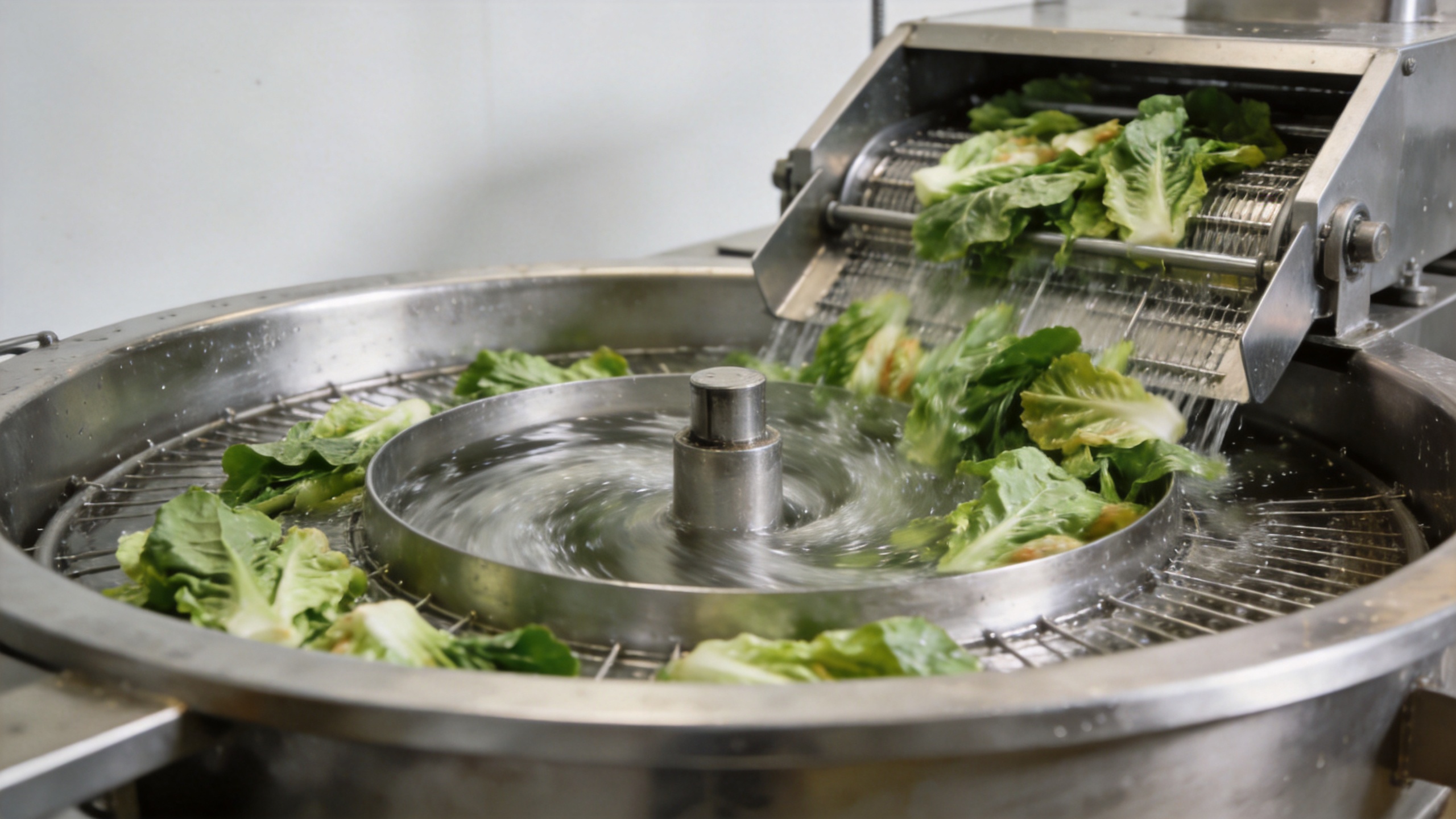
A water-based commercial vegetable washing machine loosens soil through flowing water, bubbles, or vortex circulation. Produce moves through the wash zone while water reaches folds, stems, and uneven surfaces. This makes a commercial vegetable washing machine a practical starting point for leafy greens, herbs, berries, mushrooms, peppers, tomatoes, and other produce that can be marked by aggressive handling.
A brush washer moves produce across rotating brushes while spray water helps lift away dirt. The brush contact is the main advantage—and the main selection point. For root vegetables with firm skins, a brush washer can remove clinging soil more directly than a gentle water bath. For soft or thin-skinned items, however, the same contact may increase the chance of scuffing if brush stiffness, speed, or dwell time is not set appropriately.
Match the Machine to Your Produce Surface
| Produce condition | Often better starting point | Why |
|---|---|---|
| Leafy, delicate, or irregular produce | Water-based commercial vegetable washing machine | Water circulation can reach crevices with lower mechanical stress. |
| Firm roots with visible soil | Brush washer | Brush contact can help release attached soil from robust skins. |
| Mixed produce program | Commercial vegetable washing machine plus a separate brush stage when needed | Each crop can receive an appropriate wash intensity. |
| Produce requiring final rinse and transfer | Commercial vegetable washer with adjustable water handling | It can fit a rinse, inspection, dewatering, or packing sequence. |
These are starting points, not guarantees. A buyer should test representative produce with its actual soil load, harvest condition, and acceptable appearance standard. A commercial vegetable washing machine should be evaluated with the downstream process in mind: sorting, cutting, drying, packing, or further treatment can all change the most suitable wash configuration.
Cleaning Intensity Is Only One Part of Food-Safety Control
A brush washer is not automatically “cleaner,” and a water-based commercial vegetable washing machine is not automatically more hygienic. FDA guidance notes that equipment contacting fresh produce should be kept as clean as practicable because contact surfaces can become a route for microbial contamination. In procurement terms, this means access for cleaning, smooth drainage, removable or serviceable parts, and a realistic sanitation routine deserve as much attention as wash action.
For any commercial vegetable washing machine, ask how operators will manage wash water, how solids are separated, where residues can collect, and how the machine is drained between shifts. Water temperature and treatment parameters should be set within the facility’s validated food-safety program. Equipment supports that program; it does not replace supplier controls, sanitation verification, or process monitoring.
Compare Water, Labor, and Maintenance Before You Compare Prices
A commercial vegetable washing machine may reduce manual rinsing and provide more consistent handling, but the soundest total-cost decision depends on daily throughput and product mix. Water circulation systems need a clear approach to make-up water, filtration, tank cleaning, and discharge. Brush washers need a plan for brush wear, adjustment, replacement, and cleaning around shafts and guards.
- For a commercial vegetable washing machine: review tank access, circulation paths, overflow, solids removal, and operator controls.
- For a brush washer: review brush material, spacing, rotation control, spray coverage, and access for sanitation.
- For both: review floor drainage, utility connections, guards, service space, and the handoff to the next machine.
For many buyers, the practical answer is not a strict either/or decision. A commercial vegetable washing machine can handle the initial gentle wash or final rinse, while a brush stage is reserved for sturdy root crops. This modular approach can make seasonal product changes easier without forcing every crop through the same intensity of cleaning.
How to Plan Line Integration
Before selecting a commercial vegetable washing machine, map the product flow from receiving to packing. Identify where soil enters, where water drains, where employees inspect product, and where excess moisture must be removed. A machine with suitable capacity but poor transfer points can create backup and handling damage. Conversely, a commercial vegetable washer that feeds an inspection belt or dewatering section smoothly can make the whole line easier to manage.
When you need a water-based option for commercial fruit and vegetable handling, review the Vegetable and Fruit High Efficiency Commercial Stainless Steel Disinfection Vortex Fruit Washing Machine as a product-page reference, then confirm the configuration against your crop trials and facility process.
A Buyer Checklist for the Final Choice
- List every crop, its surface sensitivity, and its typical soil condition.
- Run trials using representative lots rather than clean sample produce.
- Set acceptance criteria for cleanliness, appearance, damage, and throughput.
- Review cleaning access, drainage, and wash-water management for the chosen commercial vegetable washing machine.
- Confirm how the machine connects to inspection, dewatering, and packing equipment.
- Ask for operating and maintenance guidance that your shift team can realistically follow.
Which Option Is Better?
Choose a water-based commercial vegetable washing machine when your priority is gentle, broad-surface cleaning for delicate, leafy, irregular, or mixed produce. Choose a brush washer when firm, soil-covered roots need more direct mechanical action. If your facility handles both product groups, combining a commercial vegetable washing machine with a dedicated brush stage can offer better control than trying to make one machine do every job.
The strongest purchase decision is built on crop trials, sanitation access, water-management planning, and line integration—not on a generic comparison alone. Select the commercial vegetable washing machine that protects your produce while fitting the operating discipline of your facility.