EN


Electric Potato and Apple Peeler: Comparing Multi-Product Applications
An electric potato and apple peeler can simplify prep work, but it should not be treated as one universal solution for every fruit and vegetable. Potatoes and apples may look like a natural pairing, yet their skins, shapes, firmness, and acceptable flesh loss create very different processing requirements. For B2B buyers evaluating a fruit and vegetable peeling machine, the useful question is not simply whether a machine can remove skin. It is whether the peeling method matches the materials, output target, hygiene routine, and downstream process.
From a procurement perspective, start with the product condition and the process objective, then compare the mechanical principle, then review capacity and service requirements. This order matters because a high nominal output does not prove that an electric potato and apple peeler will deliver acceptable yield on both materials.
Why potatoes and apples need different peeling logic
Potatoes are generally handled as durable root vegetables. In commercial preparation, batch-oriented abrasive peeling can be practical when the potatoes are reasonably uniform, washed, and intended for a subsequent cutting, cooking, or further-processing step. The abrasive contact removes skin through friction, so its result depends on loading, dwell time, surface condition, and the operator’s timing. It is often selected where throughput and a simple workflow carry more weight than a perfectly smooth surface.
Apples require a different approach. Their rounded but variable profile, softer flesh, and visible end use make peel depth especially important. A contour-following knife system or a fixture that rotates and stabilizes each fruit is usually better aligned with apples, particularly when the fruit will be sliced, canned, baked, or sold in a presentation-sensitive format. If a blade is set too deeply, it can remove usable flesh together with the skin. If the fruit is poorly centered, the remaining peel and uneven cut can create rework.
That distinction is central to selecting an electric potato and apple peeler: potato compatibility does not automatically demonstrate apple compatibility, and an apple-oriented unit may not be the most suitable answer for a continuous potato line.
Material comparison: what to validate before you compare models
| Selection factor | Potatoes | Apples | Buyer validation question |
|---|---|---|---|
| Skin and surface | Often suited to friction-based removal after washing | Needs controlled blade contact to protect flesh | Which peeling principle is specified for each material? |
| Shape variation | Batch loading can tolerate some variation | Fruit diameter and symmetry influence centering and blade tracking | What diameter, length, and shape range has been trialed? |
| Yield priority | Balance speed with acceptable trim loss | Peel-loss control is often a higher priority | Can the supplier demonstrate output and usable yield on your sample material? |
| Process flow | Often followed by cutting or cooking | May require coring, slicing, or appearance-sensitive handling | Does the machine interface with the next processing step? |
| Cleaning | Starch and soil management matter | Juice and fruit residues can affect sanitation routines | Which contact parts can be accessed and cleaned between products? |
The comparison table is more useful than a broad “multi-function” claim because it forces a supplier discussion around material-specific proof. Ask for a video using your product samples, a written description of the peeling mechanism, and a clear statement of which conditions are outside the recommended operating range.
Choosing between batch abrasive, knife, and single-fruit systems
Abrasive or drum-style equipment is typically considered for root vegetables in batch or semi-continuous workflows. It can support efficient potato preparation where the product is pre-washed and visual perfection is not the only goal. The trade-off is that dwell time and friction need careful control; increasing the cycle may raise skin removal but can also increase trim.
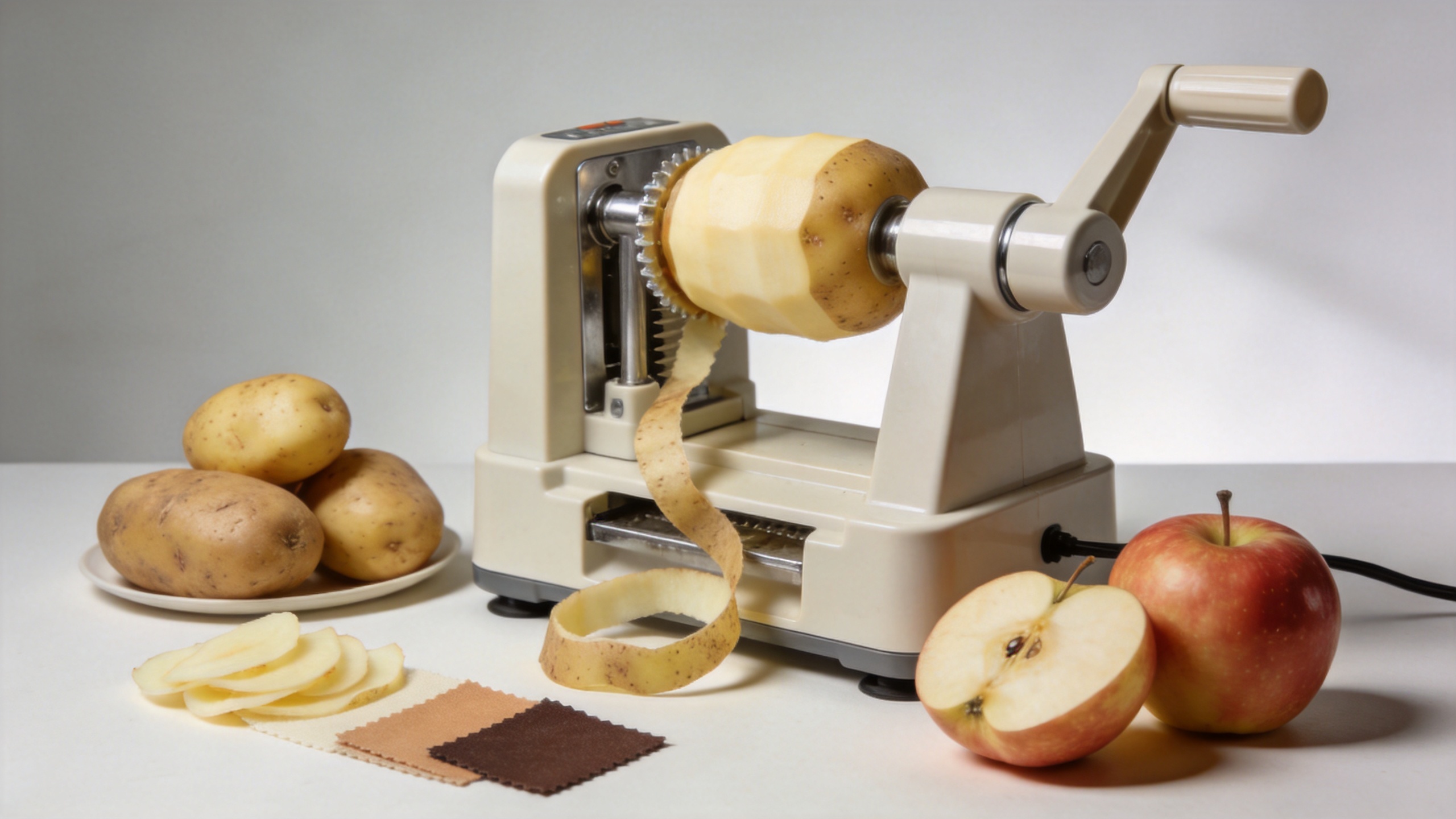
Knife-based systems are more appropriate when the peel must be removed with a controlled cut. For apples, buyers should review blade adjustment, fruit holding, centering, and whether the machine is designed to handle the actual apple size range. A single-fruit rotating system can offer more controlled handling, but it must be assessed against required throughput and labor for loading and unloading.
Some facilities need both workflows. In that case, two specialized machines may be a more defensible investment than forcing one electric potato and apple peeler to handle incompatible materials. The correct decision depends on annual volume, peak-hour demand, labor availability, quality specifications, and whether product changeover happens daily or only seasonally.
Key specifications buyers should request
- Supported material list: Require named produce types and stated operating conditions, not a generic “fruit and vegetable” label.
- Sample size range: For apples, confirm diameter and shape tolerance; for potatoes, confirm the expected grading and loading method.
- Peeling method: Identify whether the machine uses abrasion, a knife, a rotating fixture, water assistance, or a combination.
- Capacity definition: Check whether the quoted output is based on raw input, finished peeled product, or an ideal test condition.
- Yield test: Use your own materials to observe residual peel, damaged pieces, and flesh loss.
- Cleaning and changeover: Ask how operators remove residues and whether food-contact components are accessible.
- Parts and support: Clarify consumables, blade or abrasive replacement, remote guidance, and delivery planning before purchase.
Building a practical procurement trial
A good trial should include multiple lots rather than one ideal sample. Test small, medium, and large potatoes; then test apples with normal variation in diameter and firmness. Record input weight, finished usable weight, cycle time, residual peel, operator interventions, and cleaning time. It is tempting to focus only on the speed shown in a demonstration, but an electric potato and apple peeler is a process component, not a stand-alone number on a quotation.
Also define acceptance criteria before the trial. For a potato line, the limit might relate to remaining skin and downstream cutting efficiency. For apples, it may focus on peel depth, core alignment, surface appearance, and whether the fruit remains suitable for the intended recipe or package. When buyers use separate acceptance criteria for each material, comparing options becomes much clearer.
How to connect the selection to a broader peeling line
Hongle Machinery serves food-processing equipment buyers across export markets and can support discussions around equipment selection, process planning, and remote technical guidance. Its confirmed product portfolio includes a commercial garlic and ginger peeling machine, which is relevant as a reference point for buyers assessing dedicated peeling equipment. That product should not be assumed to validate potato or apple performance; each material still needs its own process review and sample test.
For a multi-product project, map the full line first: receiving, washing, grading, peeling, trimming, cutting or coring, inspection, and packaging. This makes it easier to see whether one machine is genuinely suitable for several products or whether dedicated stations will reduce waste and changeover risk.
Final recommendation
A suitable electric potato and apple peeler is one whose mechanism matches the material and the finished-product standard. Choose a potato-oriented solution when root-vegetable throughput and batch efficiency dominate. Choose an apple-oriented knife or contour-following system when shape handling and peel-loss control are critical. If your operation processes both at meaningful volume, compare the total line impact of specialized equipment against the compromises of a single multi-product unit.
Before signing a purchase order, request a material-specific trial, verify the specification basis, and document cleaning, parts, and support expectations. This practical checklist turns a broad equipment comparison into a decision that better protects yield, quality, and day-to-day production stability.