EN


Electric Vegetable Cutter: When Does Motor Power Matter?
For a commercial kitchen, central prep room, fresh-cut operation, or small food-processing line, buying a vegetable electric cutter is rarely just a question of choosing the highest wattage on a product label. Motor power matters, but it matters because it affects how the machine responds to your workload: dense vegetables, long preparation windows, repeated starts, blade changes, and the pace of people feeding product into the machine.
As a procurement decision, the useful question is not “How many watts are enough?” It is “Can this vegetable electric cutter deliver the cut quality and output we need during our real production window?” That shifts the evaluation from a single number to a practical system: motor, drive, blade set, feed design, discharge flow, and cleaning routine.
Start with the production task, not the wattage
A vegetable electric cutter used for a few trays of soft produce at a restaurant has a very different duty cycle from one used to prepare potatoes, carrots, onions, cabbage, or fruit for hours. Before comparing motor ratings, define the work in measurable terms:
- What vegetables are processed most often, and how hard or fibrous are they?
- How many kilograms must be cut in each shift or peak preparation hour?
- Which cuts are required: slicing, dicing, shredding, strips, or mixed shapes?
- Will operators feed product continuously, or in short batches?
- How much downtime is acceptable for cleaning, disc changes, or cooling?
For each task, record the expected feed rhythm and cut result. This turns a vegetable electric cutter comparison into a capacity decision instead of a catalogue comparison.
When several departments share one machine, the vegetable electric cutter also needs enough flexibility to handle their schedule without becoming the queue point in prep.
Public commercial-equipment listings show a wide range of power levels, including 150W, 200W, and 750W-class machines. That range is a reminder that no universal wattage threshold defines every commercial application. A lower-rated vegetable electric cutter may be suitable for intermittent prep of tender vegetables, while a busier line may need more torque reserve and a drive system designed for sustained loading.
What motor power actually changes
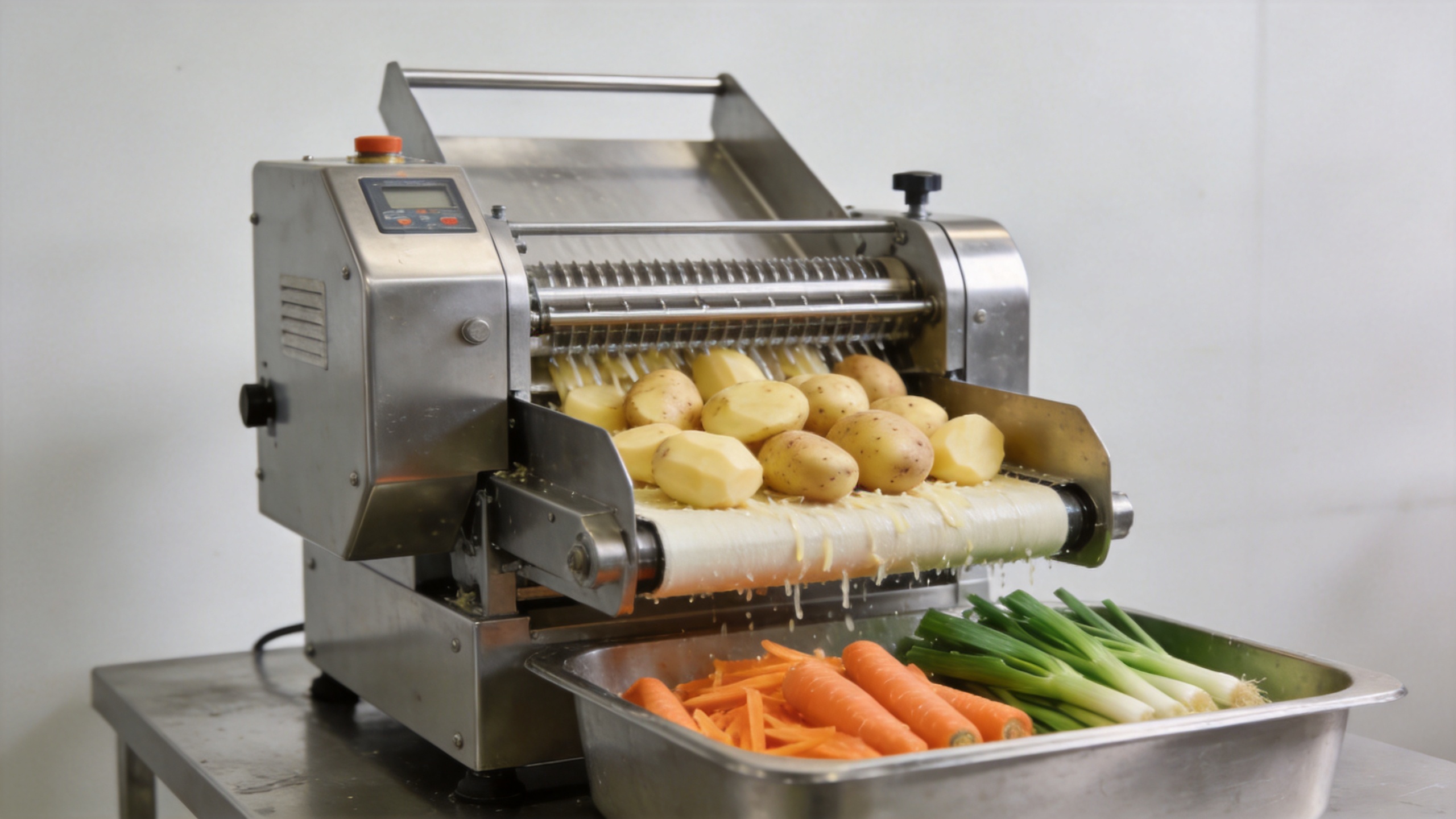
Motor power is the rate at which the motor can supply energy. In real cutting work, buyers care about the resulting torque at the blade, speed stability under load, and the ability to avoid repeated stalls. When a vegetable electric cutter encounters a firm potato or a crowded feed chute, a well-matched motor and transmission help the cutting disc maintain a consistent speed. That consistency supports more uniform pieces and reduces the temptation for operators to force ingredients through the machine.
Power alone does not guarantee better performance. A high wattage motor paired with an unsuitable blade, weak transmission, narrow feed path, or poor discharge design can still create uneven cuts and unnecessary delays. Conversely, a properly configured machine with an efficient drive and suitable cutting tools can perform well at a moderate rating when its workload is controlled.
| Operating condition | Why motor reserve matters | What else to check |
|---|---|---|
| Soft vegetables, short batches | Lower continuous load; speed recovery is usually less demanding. | Blade sharpness, simple cleaning, desired cut styles. |
| Mixed daily restaurant prep | Variable loads make stable speed and restart behavior more important. | Feed-chute size, disc-change time, operator workflow. |
| Firm roots or dense produce | Higher resistance can expose insufficient torque or overload protection. | Cutting-disc design, drive durability, safe feeding method. |
| Long commercial runs | Continuous loading increases heat and stress on the motor and drivetrain. | Duty-cycle guidance, ventilation, service access, spare parts. |
In practice, the motor of a vegetable electric cutter should be assessed after the buyer has identified the toughest regular product, not only the easiest item on the menu.
A vegetable electric cutter that keeps blade speed stable during normal loading is generally easier to operate consistently than one that needs frequent pauses.
Match throughput to the full work cell
Published commercial vegetable-preparation specifications may describe capacities as high as roughly 770 lb/h for particular machine-and-attachment combinations. Treat figures like these as configuration-specific, not as a promise for every vegetable electric cutter. Actual throughput changes with product size, preparation quality, cut type, operator technique, and how quickly finished product can be collected.
For procurement, calculate the required output from your peak hour, then leave room for handling and cleaning. If the line must process 300 kg during a two-hour prep window, a nominal capacity that barely reaches 150 kg/h offers little margin after loading, trimming, disc changes, and washdown. A machine with suitable motor reserve can help maintain flow, but the operator should not need to push ingredients aggressively to meet the target.
Track the complete cycle: loading, cutting, collecting, disc changes, and washdown. That cycle determines whether a vegetable electric cutter supports the planned output in the available prep time.
For a multi-product line, select a vegetable electric cutter with enough capacity margin for the busiest hour rather than sizing it around the average day.
Look beyond the motor: four components that decide results
1. Cutting discs and blade condition
The disc determines the cut. Dull, damaged, or incorrectly selected blades increase resistance and make a motor appear weaker than it is. Confirm available disc types, replacement availability, and the procedure for changing them safely.
2. Feed system and product preparation
A generous, well-designed feed opening can reduce pre-cutting time, but operators still need to remove unsuitable material and follow the machine’s feeding guidance. Consistent product sizing improves both cut quality and load stability.
3. Transmission and overload protection
Ask how motor output reaches the cutting assembly and what happens during a jam. A practical commercial vegetable cutter should support predictable recovery rather than encouraging unsafe manual intervention.
4. Hygiene and maintenance access
A powerful vegetable electric cutter that is difficult to clean can become a bottleneck. Assess food-contact surfaces, removable parts, drainage points, and the time needed to return the machine to service between products.
Maintenance requirements deserve the same attention as power. A vegetable electric cutter that can be inspected and cleaned quickly is more likely to keep its intended performance over time.
Before purchase, ask the supplier which service parts are most relevant to the vegetable electric cutter configuration being evaluated.
A practical buying checklist for a vegetable electric cutter
- List the top five vegetables, cut shapes, and peak-hour volume.
- Request the rated throughput for those specific products and cuts, not a generic maximum.
- Compare motor power alongside duty cycle, speed stability, and overload protection.
- Verify the blade and disc package needed for your menu or processing line.
- Review cleaning access, operator safety, power compatibility, and after-sales support.
- Ask for a realistic demonstration using comparable produce whenever possible.
Use the checklist during supplier conversations and compare like-for-like tests. A suitable vegetable electric cutter for one site may not be the right vegetable electric cutter for another site with a different mix of produce and labor.
Where possible, run representative samples through the vegetable electric cutter and document cut uniformity, operator effort, and the time needed for cleaning.
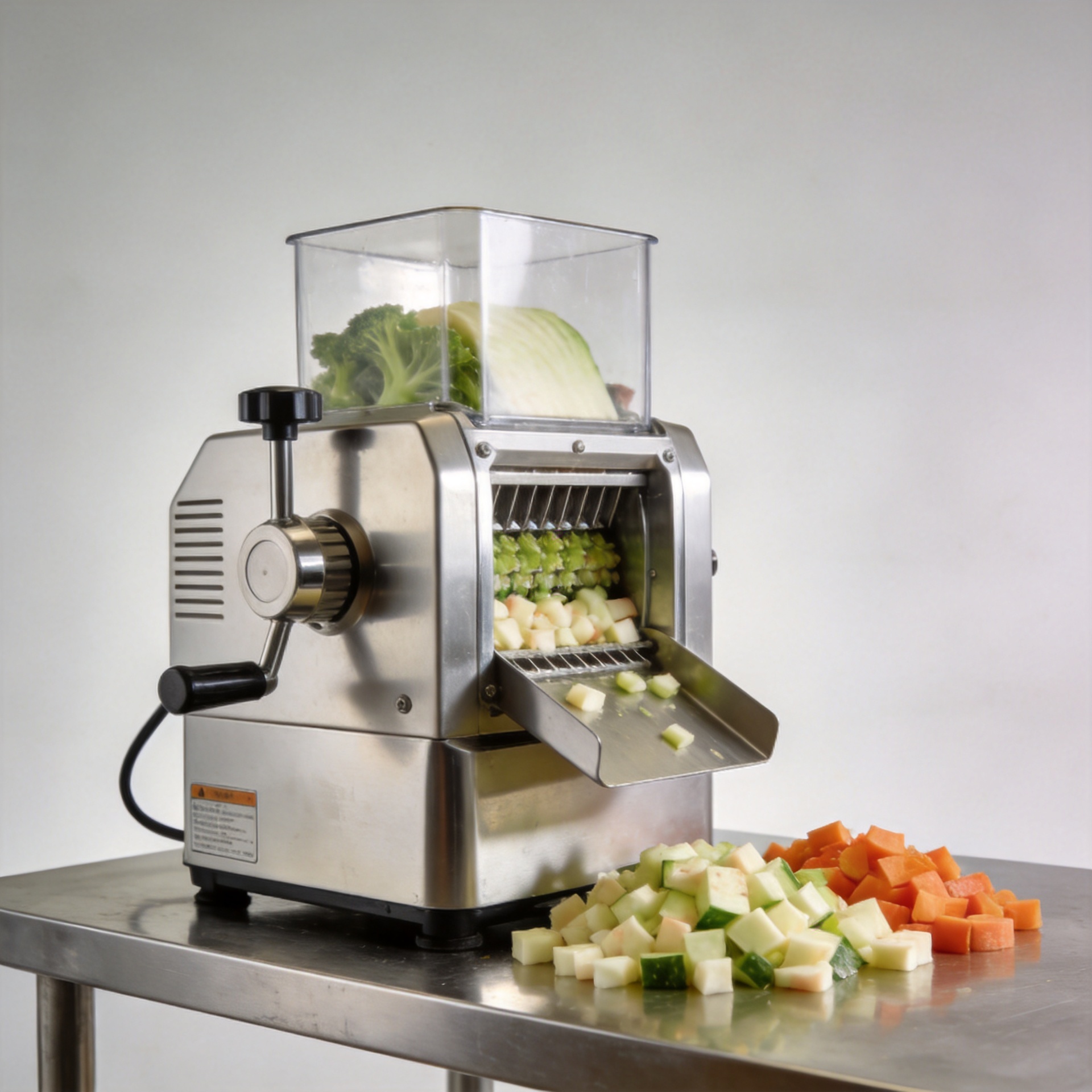
For buyers evaluating a dicing-oriented option, review the product page for the Commercial Industrial Electric Vegetable Cutter Dicing Machine for Potato, Fruit & Green Onion and confirm the configuration against your own cut sizes, material mix, and production target.
When is more power worth paying for?
More power is usually worth considering when production includes harder vegetables, frequent continuous use, demanding cut sizes, or a limited preparation window where stoppages are costly. It is less valuable when the real restriction is manual trimming, slow loading, insufficient blade choice, or cleaning downtime. In those situations, a different feed design or a better workflow may create more value than a larger motor.
For commercial buyers, the strongest choice is a vegetable electric cutter whose motor capacity fits the complete operation. Compare the rating, but make the final decision using product mix, required output, cutting tools, safety features, sanitation needs, and support. That approach protects cut consistency and helps the equipment remain useful as daily production changes.
Ultimately, motor power matters when it helps the vegetable electric cutter meet a defined commercial workload safely and repeatedly. It should be one line in the specification review, not the entire decision.
A well-matched vegetable electric cutter combines suitable power with compatible cutting tools, a practical feed system, and service support for the operating environment.