EN


Food Dryer vs Freeze Dryer: Which Process Fits Your Product?
For a food processor, choosing between food dryers and freeze dryers is not simply a question of which machine removes more moisture. It is a process decision that affects product texture, flavor retention, production time, utilities, packaging, and the price your market can support. A sensible starting point is to define the product’s value, heat sensitivity, target moisture or water activity, and expected daily throughput before comparing equipment.
How the Two Processes Remove Water
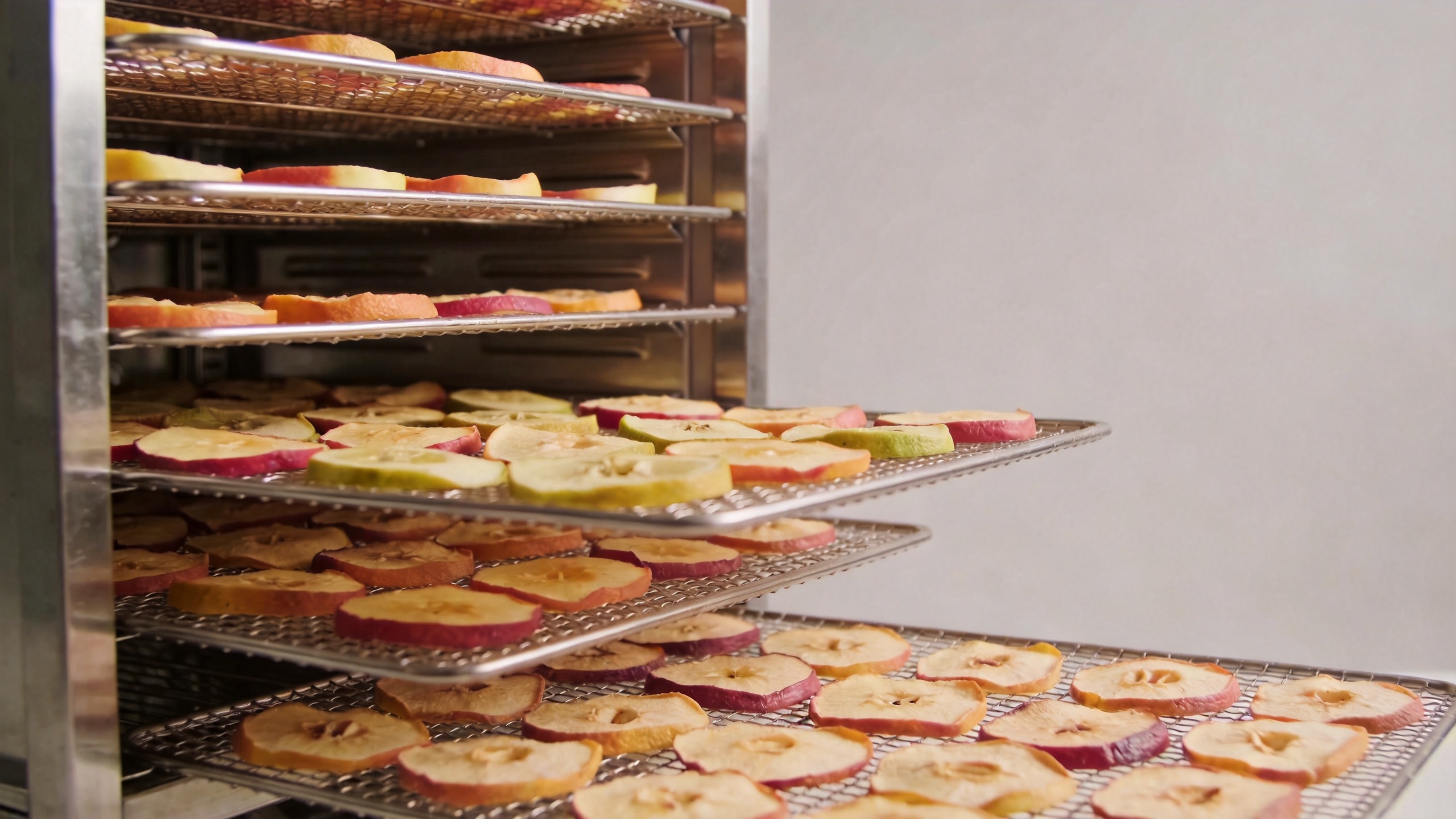
Conventional food dryers remove moisture by moving heated air across prepared food. Depending on the product, the process may use controlled temperature, airflow, layer thickness, and residence time to bring fruit, vegetables, herbs, meat, or ingredients to a stable condition. The result is often a denser product with a chewy, leathery, or crisp texture, depending on formulation and end-point control.
Freeze drying follows a different path. Product is frozen first, then placed under reduced pressure so frozen water can leave by sublimation. Because the product structure is supported by ice during primary drying, freeze-dried pieces can remain porous and rehydrate quickly. That quality can be valuable for premium fruit pieces, instant ingredients, cultures, and other products where shape, color, and reconstitution influence the selling price.
Neither route automatically guarantees shelf stability. FDA guidance identifies water activity as an important food-control parameter, while the appropriate specification depends on the food, formulation, package, and validated process. Your quality team should therefore validate the final target rather than applying one moisture number to every product.
Where Conventional Food Dryers Often Fit
Food dryers are often the practical choice when throughput, operating simplicity, and unit economics matter more than preserving a highly porous structure. They are commonly considered for sliced vegetables, fruit snacks, herbs, spices, pet-food ingredients, and many prepared materials that tolerate controlled heat exposure.
- Higher-volume everyday products: the process can suit repeatable batches or continuous production where a moderate selling price must absorb processing cost.
- Texture is part of the product concept: chewy fruit, dried vegetable pieces, jerky-style products, and ingredient flakes do not need the appearance of the fresh product after rehydration.
- Simple workflow is a priority: washing, cutting, loading, drying, cooling, and packing can be organized around a familiar heated-air process.
- Flexible product trials: adjustable temperature, airflow, tray loading, and time help processors develop different products on the same line.
When reviewing food dryers, do not focus only on chamber size. Ask how the machine manages air distribution across trays, how easily operators can clean contact surfaces, how batch loading affects airflow, and how the controls support repeatable recipes. An industrial vegetable and fruit dryer machine can be a relevant starting point for a heated-air drying line, but final configuration should be matched to your product geometry and production plan.
When Freeze Drying Can Justify Its Added Complexity
Freeze drying is generally evaluated for products that are heat-sensitive, high-value, or sold on visual quality and rapid rehydration. The process can better retain a light, open structure than hot-air drying, but it introduces freezing, vacuum operation, longer cycle planning, and more demanding capital and utility requirements.
It is worth a closer review when the product’s commercial value depends on premium appearance, low shrinkage, strong rehydration performance, or delicate components. Examples may include premium fruit inclusions, instant meal components, specialty ingredients, and certain dairy or biological materials. The key question is commercial rather than technical: will customers pay enough for the resulting format to cover the slower, more equipment-intensive process?
Compare the Processes with a Product-and-Business Lens
| Decision factor | Food dryers | Freeze dryers |
|---|---|---|
| Water-removal mechanism | Controlled heated airflow evaporates moisture. | Frozen water is removed under vacuum by sublimation. |
| Typical product character | Dense, chewy, leathery, or dry pieces depending on the recipe. | Light, porous pieces designed for strong rehydration and visual appeal. |
| Typical commercial fit | Cost-conscious, higher-throughput dried foods and ingredients. | Premium, heat-sensitive, or high-value products. |
| Process planning | Focus on airflow, temperature, loading depth, and end-point control. | Focus on freezing profile, vacuum cycle, heat input, and cycle duration. |
| Packaging implication | Protect the product from moisture pickup after cooling. | Use moisture-barrier packaging to protect the porous final structure. |
Key Specifications to Request Before You Buy
A comparison becomes useful only when suppliers quote against the same operating assumptions. Provide a product sample, its incoming moisture range, cut size or layer thickness, desired finished texture, daily production target, cleaning requirements, and available utilities. Then request a process proposal that states the basis for capacity rather than only listing a nominal machine size.
- Define the product mix and the most difficult product to dry.
- Set a validated quality target, including moisture or water-activity requirements where applicable.
- Calculate throughput from actual loading weight and expected cycle time.
- Check heating source, electrical load, ventilation, cooling, vacuum requirements, and floor layout.
- Review sanitation access, tray handling, controls, spare parts, and support for export installation.
- Test packaging early; a well-dried product can still lose quality if it absorbs moisture after processing.
How to Evaluate Food Dryers in a Side-by-Side Trial
When comparing food dryers, run the same prepared product through each candidate process and record loading weight, drying time, finished yield, texture, color, energy use, and labor. Food dryers should be assessed with the same slice thickness and the same target quality; otherwise, a capacity comparison is not meaningful.
For industrial food dryers, airflow uniformity matters because uneven zones can produce mixed texture in a single batch. Ask suppliers how food dryers are loaded, how operators rotate or manage trays when needed, and how controls document a repeatable recipe. Food dryers also need a cleaning plan that matches the ingredients being processed.
For buyers moving from pilot work to production, food dryers are usually evaluated on available floor space, heating source, exhaust arrangement, electrical load, and batch scheduling. These food dryers questions should be answered before a supplier finalizes equipment dimensions. If several food dryers are under review, compare the delivered capacity per shift rather than a headline tray count.
A trial should also show how food dryers perform after cooling and packaging. Food dryers can produce a sound product at discharge, yet quality can change if the product takes on moisture during handling. The packaging test belongs in the food dryers purchase decision, not after installation.
A Practical Choice for Food-Processing Buyers
Choose conventional food dryers when you need a versatile, scalable process for products that can accept controlled heat and a denser dried texture. Evaluate freeze drying when premium quality, low-temperature handling, product structure, or rehydration creates a clear market advantage. In many factories, the right answer is not “which technology is better?” but “which process produces the required quality at a cost and capacity that fit the business model?”
Start with product trials, confirm the final quality standard, and compare supplier proposals using the same raw material and throughput assumptions. That approach helps convert a broad food dryers comparison into an equipment decision your operations, quality, and sales teams can all support.