EN


Food Drying Machine RFQ Checklist: How to Describe Your Product and Process
A productive request for quotation does more than ask for a price. It gives a supplier enough process information to assess whether a proposed dryer fits the material, the production target, and the operating constraints. For a food processor planning a fruit dehydration process, the first RFQ should turn product knowledge into clear engineering inputs. That makes technical replies easier to compare and reduces revisions after a quotation arrives.
This checklist is written for processors buying batch food-drying equipment for fruits and vegetables. It helps a purchasing, production, or technical team explain what they need without assuming a single drying recipe works for every product.
Start the RFQ With the Commercial Goal
Begin with the business purpose of the fruit dehydration process. Is the finished product intended for snack slices, ingredient pieces, tea blends, powder preparation, or another downstream use? The answer affects the acceptable appearance, breakage level, particle size, packaging method, and production rhythm. A supplier can only make useful recommendations when the intended product is clear.
State whether the project is a trial line, a new factory installation, or an expansion of an existing operation. Also identify the decision-makers who will review the quotation: production, quality, maintenance, procurement, and finance may each need different information. For decision-stage purchasing, ask suppliers to separate the machine scope, optional items, utility assumptions, installation support, and any items the buyer must provide.
Describe the Raw Material Before Describing the Machine
The raw material is the foundation of a fruit dehydration process. List each fruit or vegetable separately instead of using a broad description such as “mixed produce.” Include common and botanical names when possible, as well as the condition at loading: fresh, washed, blanched, peeled, sliced, diced, frozen, or pretreated. For a vegetable dehydration process, include whether leafy material, root vegetables, or high-sugar ingredients will share the same dryer.
- Initial moisture condition, if known, and the desired final moisture range.
- Slice thickness, piece dimensions, and whether pieces are uniform or mixed.
- Seasonal variation in sugar, fiber, size, or incoming moisture.
- Any pretreatment, such as washing, blanching, anti-browning treatment, or draining.
- Requirements for color, aroma, texture, and acceptable breakage after drying.
These details matter because a fruit dehydration process removes a large amount of water. Extension guidance commonly notes that drying can remove roughly 80% of moisture from fruit and up to 90% from vegetables. Those figures are planning context, not a substitute for product trials. They explain why a supplier needs both incoming condition and target condition before estimating heat demand, airflow, tray area, and cycle time.
Quantify Capacity in a Way Suppliers Can Use
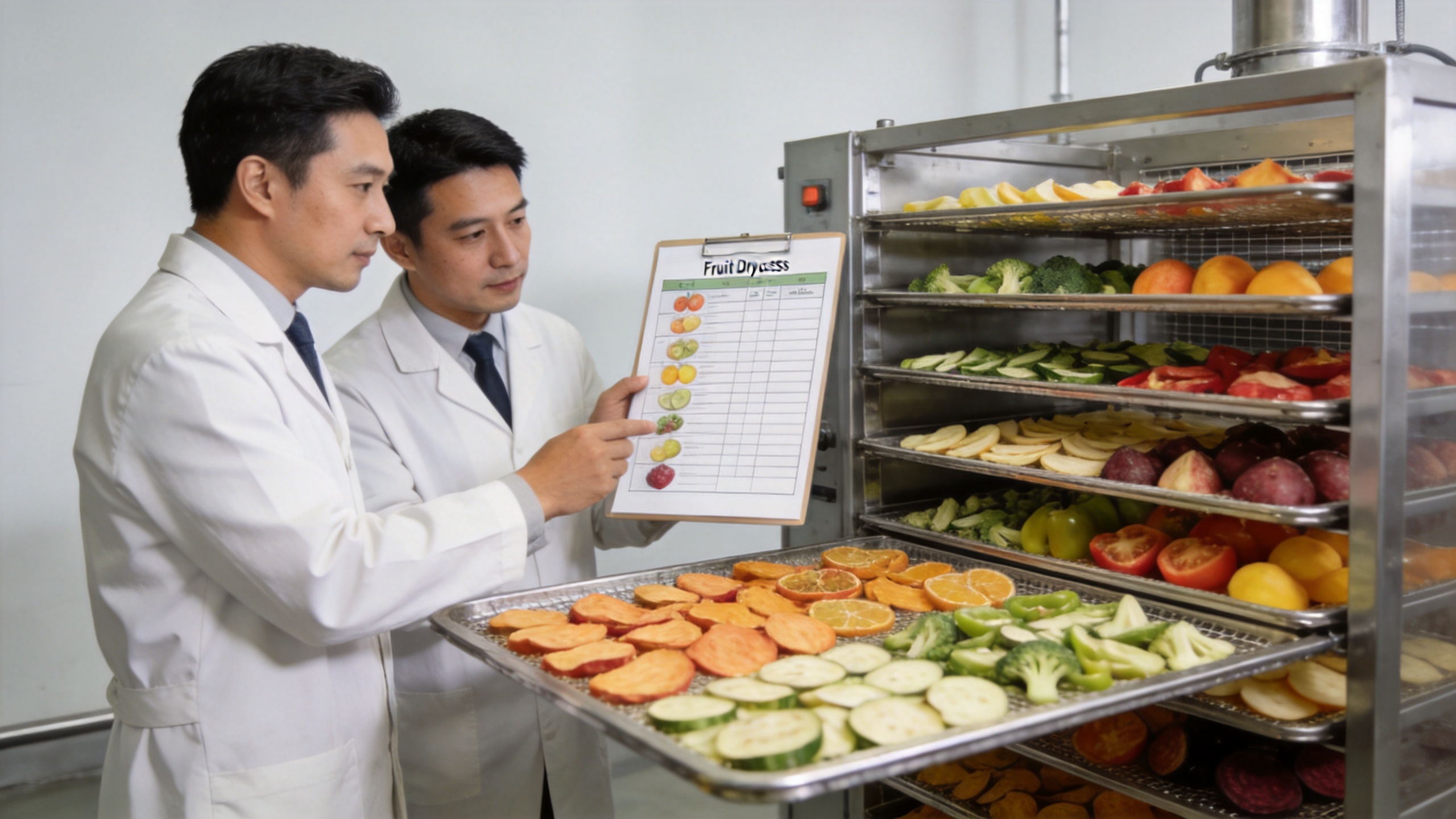
“We need a high-capacity dryer” is not enough for a fruit dehydration process. State the wet raw-material load per batch, the number of batches per shift, operating days per week, and the target annual output. If you expect growth, distinguish the first-phase requirement from the future requirement. It is also useful to state whether loading and unloading must fit within a fixed shift pattern.
For each vegetable dehydration process, explain whether the product will be loaded on trays, racks, screens, or another support surface. A practical RFQ should ask the supplier to show the assumed wet load, finished-product yield, batch duration, and turnaround time in the quotation. This allows buyers to compare proposals on throughput rather than on cabinet size alone.
Define the Drying Method and Product-Quality Controls
Specify the process controls that are important to your fruit dehydration process: adjustable temperature range, airflow direction, air-volume control, humidity removal, timing, and data recording. Rather than asking for one fixed setpoint, ask how the proposed equipment supports a recipe that changes by product, cut size, and load depth. General extension guidance often uses about 60°C as a reference point for dehydrator drying, while commercial settings must be validated for the specific product. Excessive heat may dry the outside too rapidly and make uniform moisture removal more difficult.
For a vegetable dehydration process, state whether the process requires staged temperatures, a tempering period, or a cooling step before packing. Ask how the machine addresses uniformity across trays and positions. Useful questions include:
- How is airflow distributed through the loaded chamber?
- Which settings can operators adjust during a batch?
- What data can be displayed or recorded for batch traceability?
- What test method will the buyer use to confirm final moisture and product consistency?
Set Utility, Site, and Hygienic Requirements
A supplier needs site data to configure a fruit dehydration process correctly. Include available electrical supply, frequency, fuel or heat source, compressed air if relevant, allowable installation footprint, door clearances, and ventilation limits. State local food-contact, cleaning, and safety requirements without claiming a certification that has not been confirmed.
Describe cleaning expectations for the vegetable dehydration process, including product-change frequency and whether wet cleaning is expected. Request drawings showing external dimensions, service access, drainage needs, and the materials used for product-contact surfaces. If the equipment will be exported, ask what documents, electrical diagrams, packing information, and remote technical support are included.
Ask for a Comparable Equipment Proposal
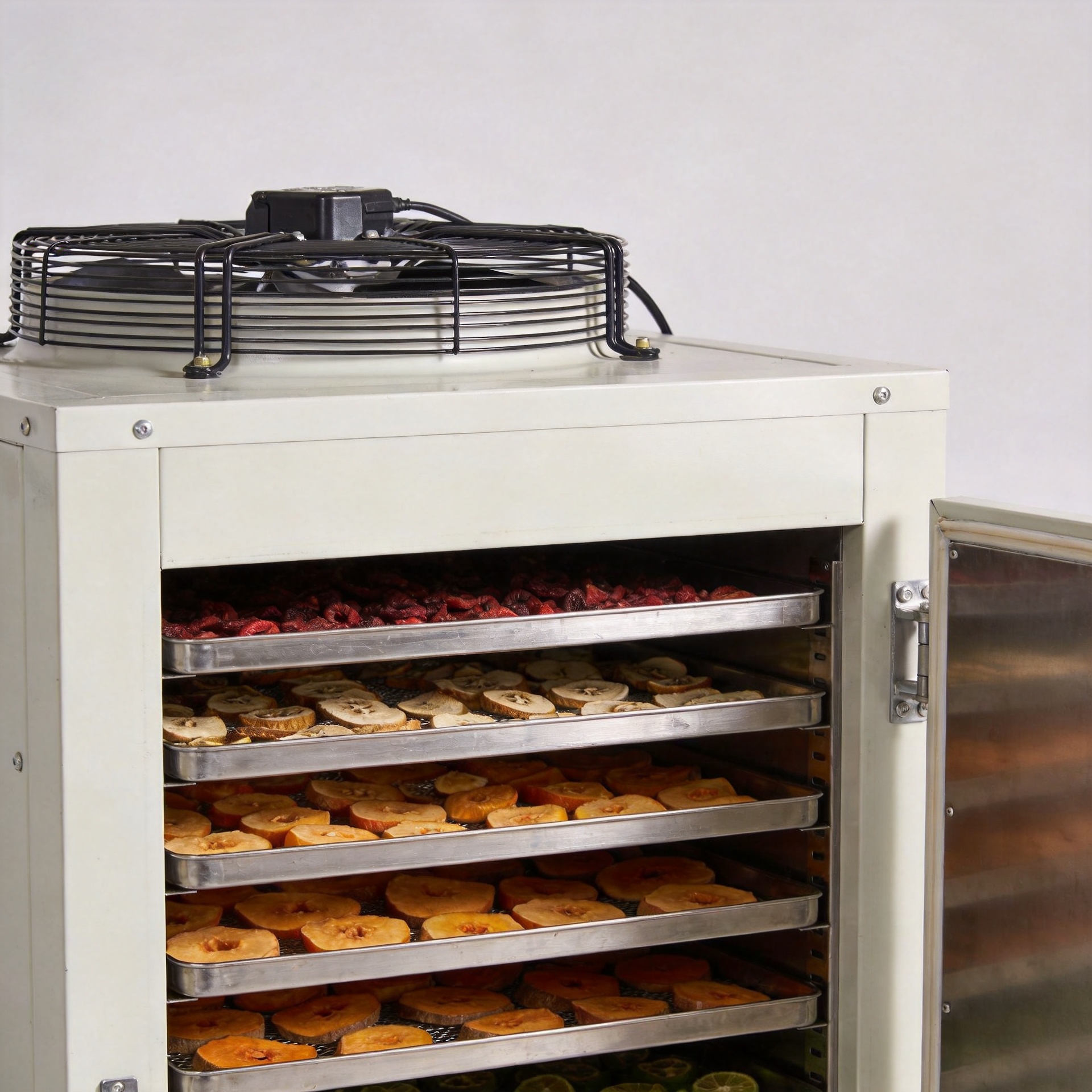
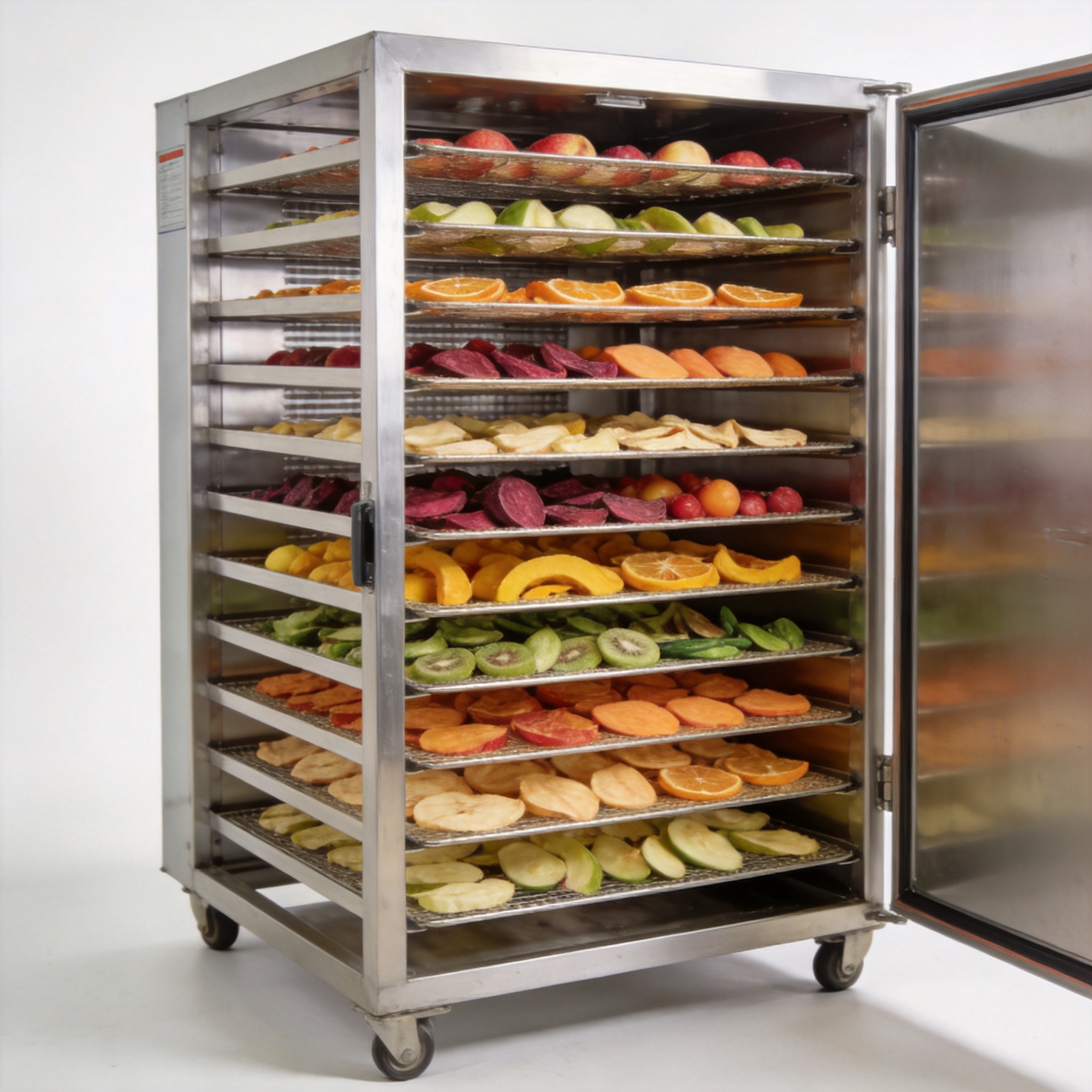
When the process is batch-based, a box-type dryer for batch dehydration and drying of fruits and vegetables can be evaluated against the same RFQ inputs: material, wet load, target output, process controls, utilities, and support scope. The product link provides a relevant equipment category; the final selection should still be based on the supplier’s documented response to your own fruit dehydration process.
Request a quotation table that makes assumptions visible. It should list machine configuration, capacity basis, utility consumption assumptions, delivery scope, exclusions, lead time, warranty terms, commissioning options, spare parts, and training. Ask for photos or drawings only as supporting material, not as proof that the configuration will meet every product requirement.
Use This Final RFQ Checklist
- Product list and preparation steps for each fruit dehydration process.
- Wet input per batch, batches per shift, and finished-output target.
- Initial and target moisture information, product dimensions, and quality criteria.
- Temperature, airflow, control, data-recording, and validation requirements.
- Utilities, site dimensions, installation conditions, and cleaning expectations.
- Requested proposal format, service scope, documents, and commercial terms.
A clear RFQ lets suppliers respond with assumptions you can challenge, validate, and compare. For a fruit dehydration process, that is more useful than collecting several prices built on different interpretations of capacity and quality. Share representative product samples when possible, document the desired finished result, and use a trial or acceptance plan to convert the chosen proposal into a production-ready process.