EN


French Fry Cutter Machine Selection for Consistent Strip Quality
For a restaurant, central kitchen, or frozen-food preparation line, a french fry cutter machine is not simply a way to cut potatoes faster. It is the first control point for portion appearance, frying behavior, and yield. When strips vary too much in width or are damaged before frying, cooks have to compensate with sorting, longer fry times, or inconsistent batches. A better purchase decision starts by defining what “consistent” means for the menu and then checking whether the machine, blade set, feed method, and cleaning routine can deliver it day after day.
From a B2B buying perspective, the useful question is not “Which cutter has the largest motor?” It is: can this french fry cutter machine create repeatable strips from the potatoes you actually buy, at the pace your staff can maintain?
Start with the finished fry specification
Set the target strip profile before comparing equipment. Record the desired cross-section, length range, acceptable breakage, skin-on or peeled preparation, and expected batch size. Commercial search results commonly show cutting formats such as 3/8 inch and 1/2 inch; these are useful starting points, but they are not universal standards. A thin-cut menu, a steak-fry menu, and a product destined for further processing can each require a different grid and a different tolerance.
Ask suppliers to identify the actual cutting grid or blade assembly that creates the required size. A claimed “multi-size” cutter is only useful when the available grids match the product specification and can be changed, cleaned, and replaced without disrupting production. If the operation will process several vegetable types, confirm that the required fry grid remains the primary reference rather than assuming one accessory works equally well for every product.
What really affects strip consistency
Blade opening is important, but it is only one part of consistency. A french fry cutter machine needs a stable cutting path from feed to discharge. Look at four practical factors:
- Potato preparation: Wide differences in diameter, irregular shapes, soft potatoes, or excessive surface moisture can increase split strips and off-cuts. Define the incoming potato range that the cutter will see.
- Feed alignment: The potato should meet the cutting grid squarely and with controlled pressure. A poorly supported feed path can push an item sideways, especially when operators work quickly.
- Grid condition: Dull, bent, or clogged blades turn a nominal cut size into an inconsistent result. Inspect the grid as a consumable production component, not an accessory to ignore until it fails.
- Machine stability: A rigid frame, secure mounting, and predictable feed action reduce variation caused by movement or uneven force during cutting.
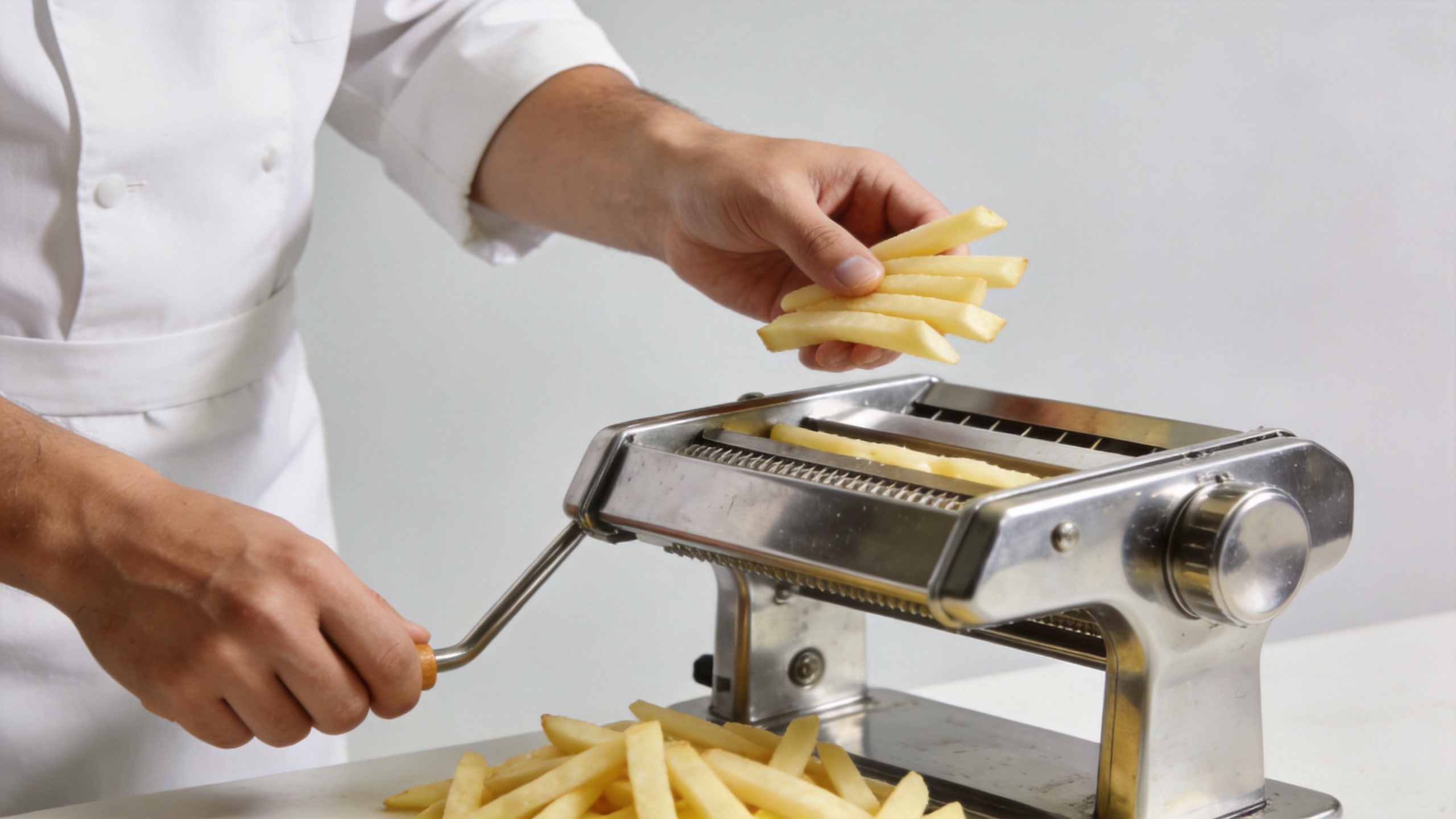
During evaluation, ask for a short test using potatoes close to your normal raw-material size and condition. Count broken pieces, compare several strips with a simple gauge, and inspect the cut faces. This acceptance check is more useful than judging consistency from a single clean demonstration potato.
Choose the cutting method around your production rhythm
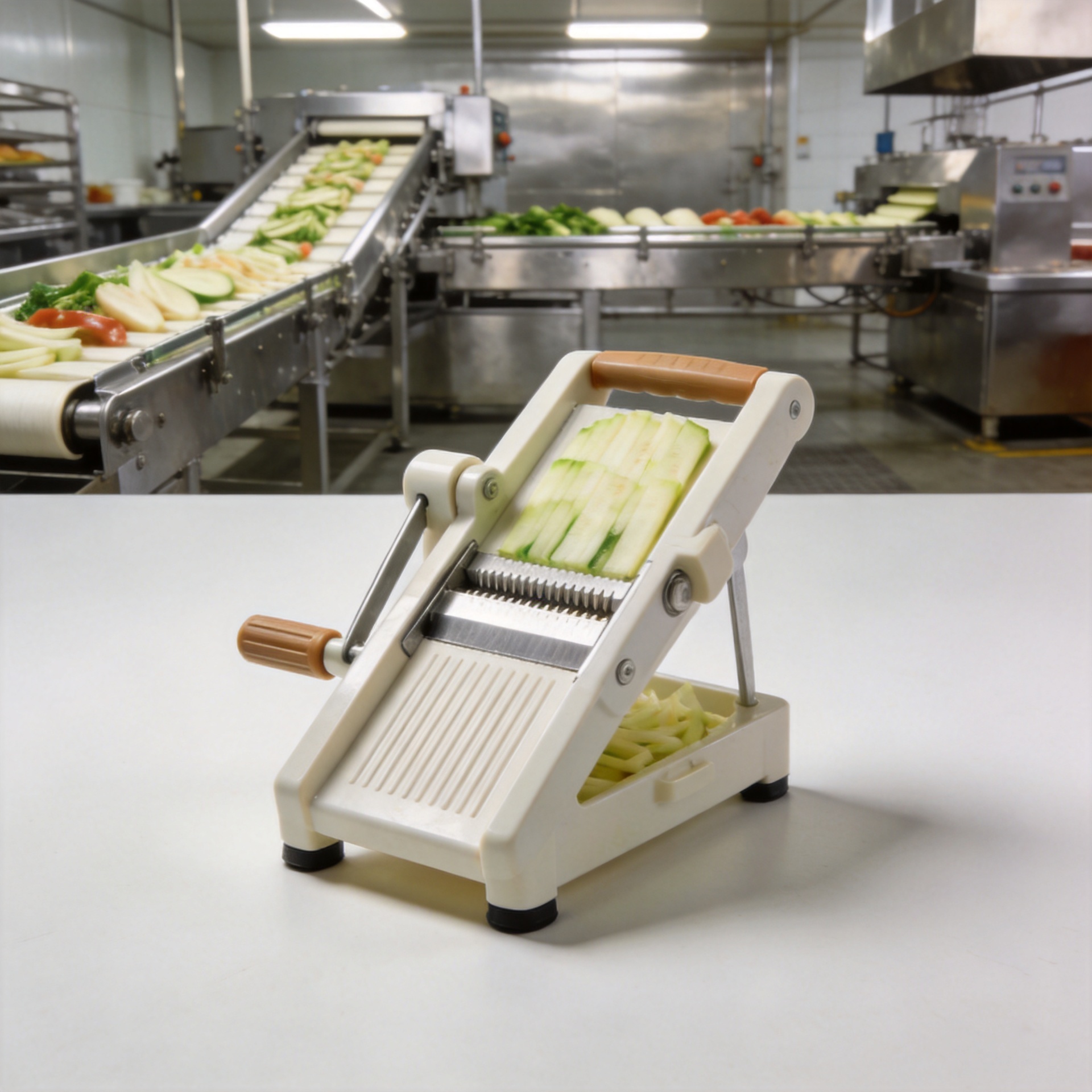
Manual lever cutters can suit low-volume operations when an operator can feed and clean them consistently. They are straightforward, but output and cut quality can vary with operator force and fatigue. Powered commercial vegetable cutters may suit higher-volume workflows because they reduce repeated manual force and can support a more repeatable feed routine. However, “powered” is not automatically synonymous with consistent: the feed design, grid fit, safety arrangement, and maintenance access still need verification.
| Buying factor | What to verify | Why it matters |
|---|---|---|
| Cutting grid | Available sizes, fit, and replacement process | Controls the intended strip profile and recovery from wear. |
| Feed system | Guides, pusher travel, and operator access | Helps keep potatoes aligned before they meet the grid. |
| Workflow capacity | Real batch pace, loading time, and cleaning intervals | Prevents a nominal capacity figure from becoming a bottleneck. |
| Cleaning access | Removable parts and access around food-contact areas | Supports reliable sanitation and avoids buildup that affects cutting. |
| Service plan | Spare grids, instructions, and remote technical support | Reduces downtime when a wear part needs attention. |
Make cleanability part of the strip-quality decision
Consistency deteriorates when starch and vegetable residue remain on a cutting grid, pusher, or discharge area. Food-contact equipment must be cleanable, and cleaning and, where appropriate, sanitizing are required for food-contact surfaces. In practical purchasing terms, that means the team should be able to access removable parts, inspect corners, and follow a repeatable cleaning procedure without improvisation.
Ask to see how the cutter is disassembled after production. Check whether operators can safely reach the grid, whether residue traps are visible, and whether the cleaning sequence fits the shift schedule. A machine that is difficult to clean may still cut well on day one, but it can become harder to keep consistent in normal service.
Compare commercial options with a repeatable test
Use the same test for every shortlisted french fry cutter machine. Prepare a sample lot with a realistic mix of potato diameters. Run a defined number of pieces, then record usable strips, broken strips, off-size pieces, changeover time, and cleaning time. Repeat the test after the machine has processed several batches. This highlights whether the result depends on a fresh grid, a careful demonstrator, or a stable operating process.
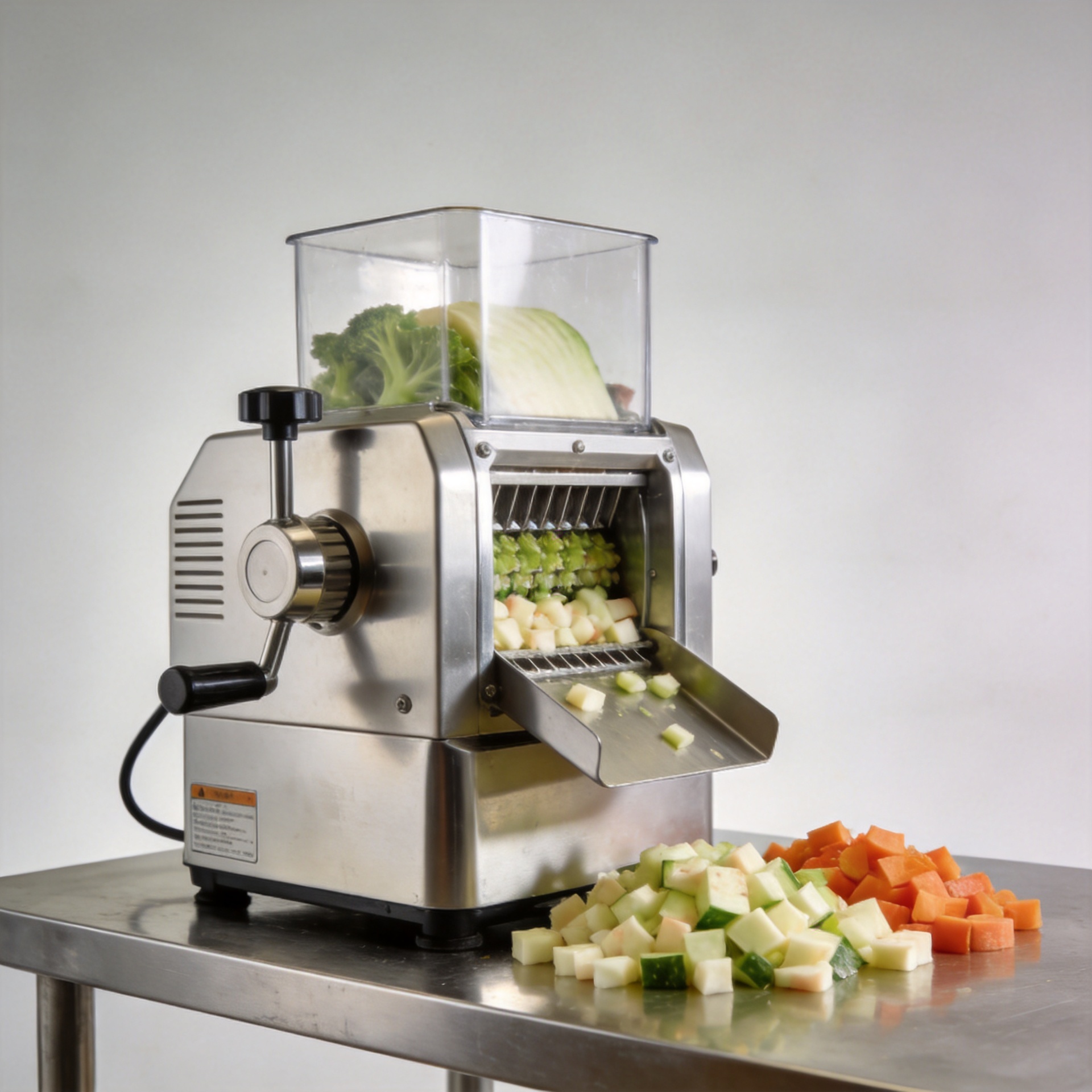
It is also useful to ask how the supplier supports export buyers with manuals, remote video guidance, and spare-part identification. Zhengzhou HongLe Machinery Equipment Co., Ltd. serves food-machinery buyers in multiple export markets and provides remote technical guidance, operating manuals, and spare-parts support as part of its overseas service approach. For a relevant equipment reference, review the commercial industrial electric vegetable cutter dicing machine with the supplier and confirm the specific grid, workflow, and product suitability before ordering.
Use a documented cutter acceptance sheet
For a fair supplier comparison, put the same checks on one acceptance sheet. The french fry cutter machine should be recorded for grid size, feed alignment, strip breakage, cleaning access, and spare-grid availability. Record the french fry cutter machine result before the test, during normal feeding, and after several batches. A french fry cutter machine that performs consistently in all three observations is easier to standardize in a commercial line.
- Check the french fry cutter machine with representative potatoes.
- Check the french fry cutter machine at normal operator pace.
- Check the french fry cutter machine after a grid change.
- Check the french fry cutter machine after routine cleaning.
- Check the french fry cutter machine for stable mounting.
- Check the french fry cutter machine for controlled feed travel.
- Check the french fry cutter machine for clean strip edges.
- Check the french fry cutter machine for acceptable broken-strip levels.
- Check the french fry cutter machine for accessible food-contact areas.
- Check the french fry cutter machine for safe operator reach.
- Check the french fry cutter machine for practical changeover time.
- Check the french fry cutter machine for identifiable spare parts.
- Check the french fry cutter machine against the agreed cut specification.
- Check the french fry cutter machine with the intended potato diameter range.
- Check the french fry cutter machine with a repeatable sample quantity.
- Check the french fry cutter machine before final acceptance.
This record makes french fry cutter machine selection less subjective. It also gives the purchasing team a shared basis for comparing every french fry cutter machine quotation, every french fry cutter machine test, and every french fry cutter machine service proposal.
Use this procurement checklist before placing an order
- Document the target fry size and the acceptable variation.
- Confirm the cutting grid sizes and the availability of replacement grids.
- Test with representative potatoes, not only uniform showroom samples.
- Observe feed alignment, strip breakage, and machine stability during the test.
- Review cleaning access and the daily sanitation workflow.
- Clarify operator training, spare parts, and support for your destination market.
- Put the agreed configuration and acceptance criteria into the purchase specification.
Conclusion
The right french fry cutter machine is the one that fits a defined fry specification and keeps delivering it under normal raw-material and staffing conditions. Prioritize a suitable grid, controlled feed path, stable construction, cleanable food-contact areas, and an achievable maintenance routine. By testing the equipment against your real potatoes and recording the result, buyers can move beyond broad capacity claims and choose a cutter that supports uniform strips, smoother frying, and more predictable production.