EN


Fruit Dehydration Process: From Preparation to Final Moisture Control
For a processing team, a reliable fruit dehydration process is not simply a matter of setting a temperature and waiting. Product quality is shaped by the handoff between washing, cutting, tray loading, drying, cooling, and final moisture verification. When those stages are connected as one controlled workflow, operators have a clearer way to manage texture, color, handling performance, and batch consistency.
This guide outlines the operating logic behind a batch fruit dehydration process. It is written for processors planning dried-fruit production and for teams that need to translate raw-fruit variation into repeatable drying decisions. The same principles also support a vegetable dehydration process, although the endpoint texture and target moisture can differ by product.
Start the Fruit Dehydration Process With a Defined Product Standard
Before processing begins, define what “finished” means for the fruit. The standard should identify the fruit variety, slice shape, target texture, intended package, and accepted moisture range. A thin pear ring, a mango strip, and a berry half do not release water at the same rate, so one generic time setting is rarely a useful production instruction.
Build a batch record that follows the lot from receiving through release. At minimum, capture raw-material condition, preparation method, slice thickness, loading density, drying setpoint, elapsed time, final moisture reading, and the result of the conditioning check. This gives the team a repeatable operating routine instead of relying on individual memory.
Prepare Raw Fruit for Even Moisture Removal
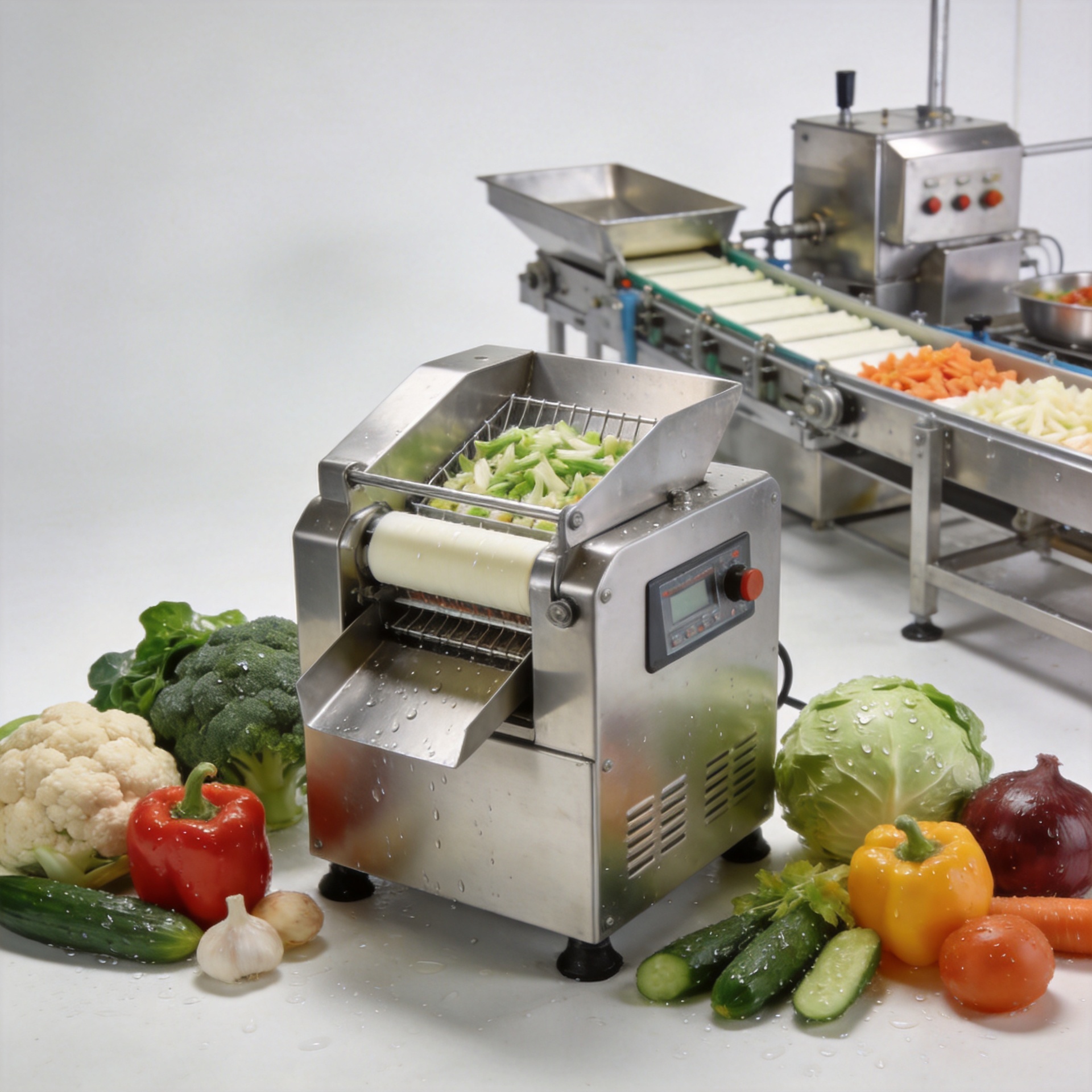
Preparation is the first major control point. Sort out fruit with visible damage or advanced deterioration, then wash and drain it so surface water does not add unnecessary load to the dryer. Remove stems, pits, cores, or skins when the intended finished product requires it. This is more than an appearance issue: similar pieces present similar surface area to moving air.
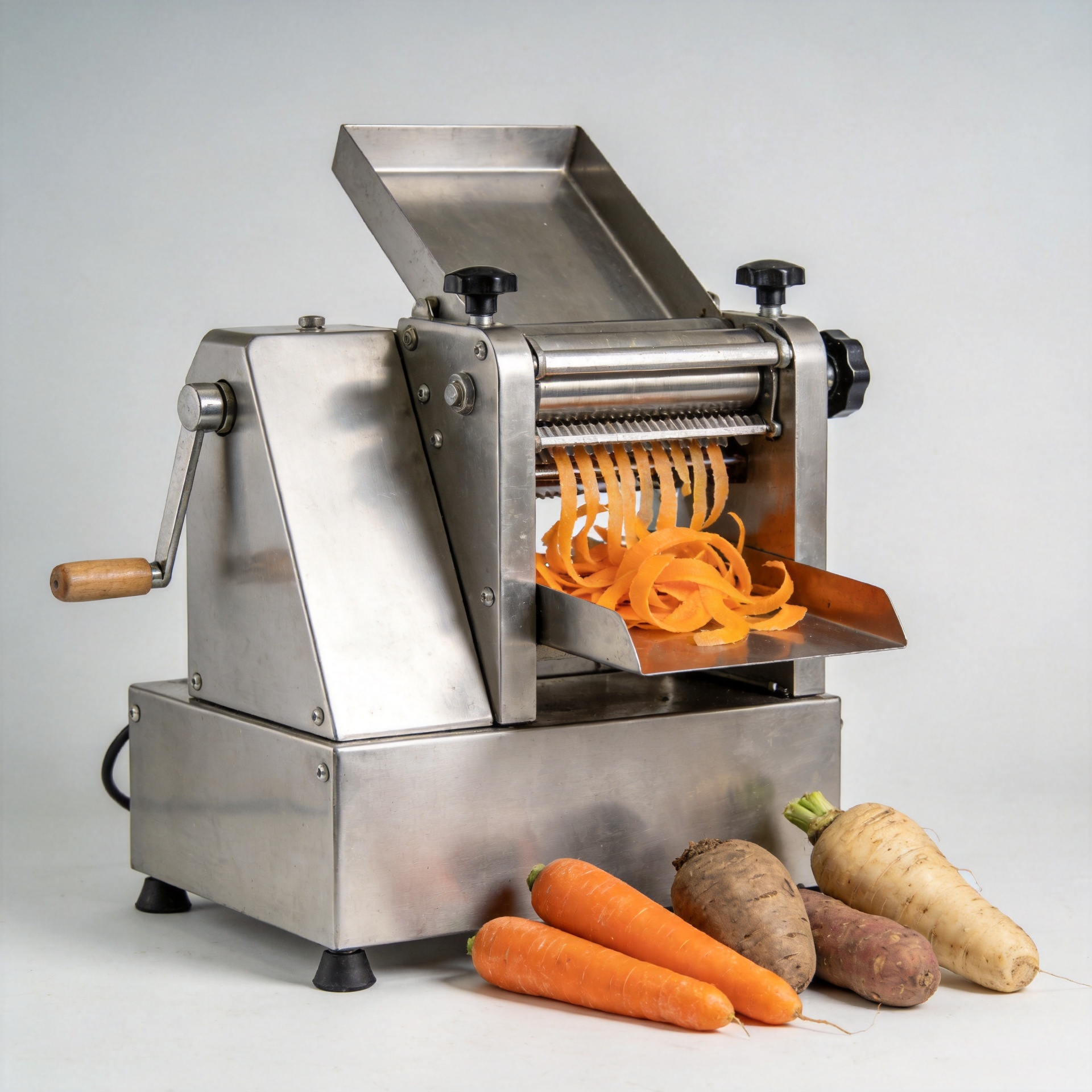
Cut geometry deserves particular attention. Pieces that vary widely in thickness finish at different times; thin edges can overdry while thick centers retain water. Use a specified cutting method, check samples from each preparation run, and keep the product form stable from batch to batch. Where browning is a concern, a processor may use a validated pretreatment that fits the product specification and applicable food requirements.
- Specify a practical thickness range for each fruit format.
- Drain washed fruit before loading to reduce surface moisture.
- Keep varieties and maturity levels identifiable when they behave differently during drying.
- Record any pretreatment so operators can compare results across batches.
Load Trays to Protect Airflow and Batch Consistency
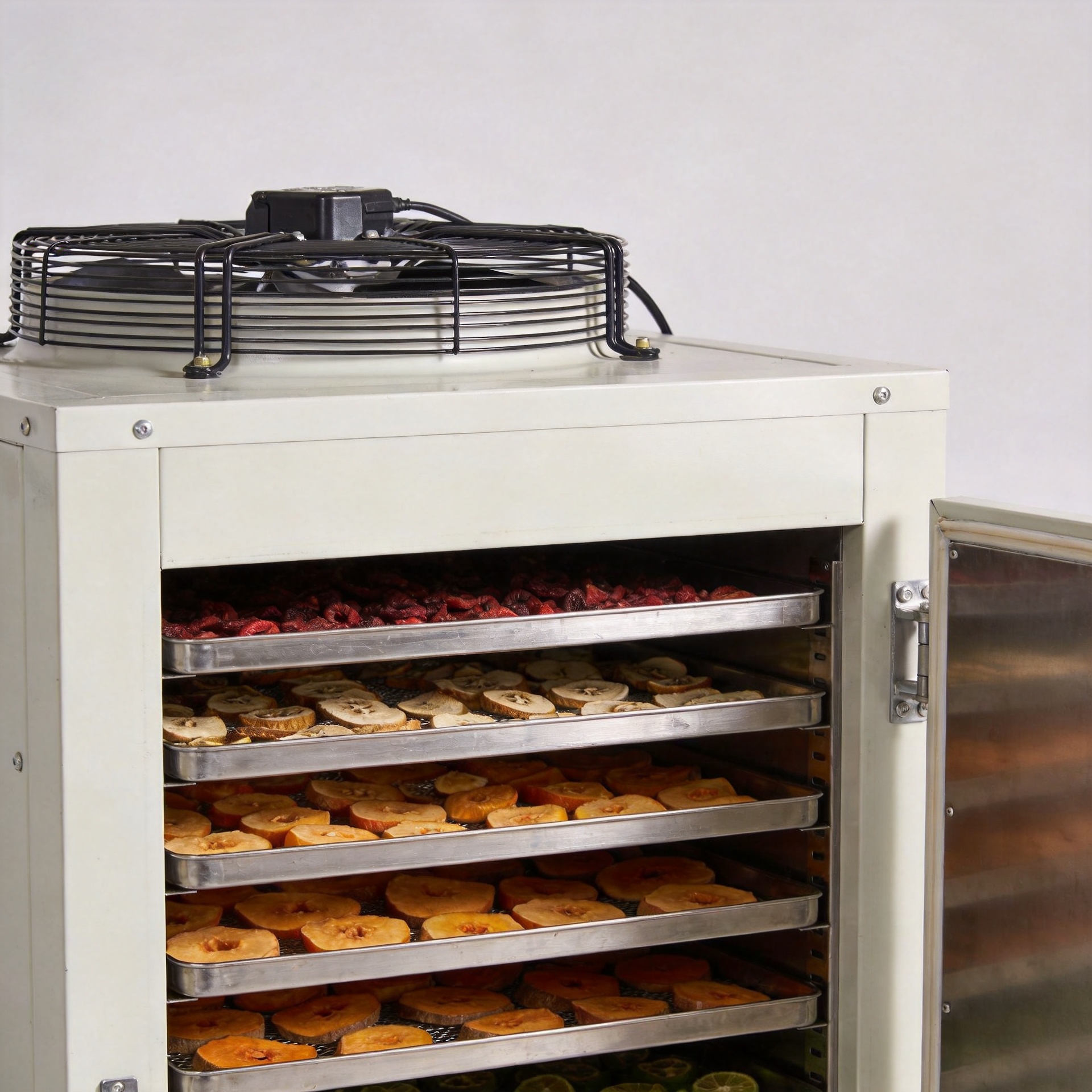
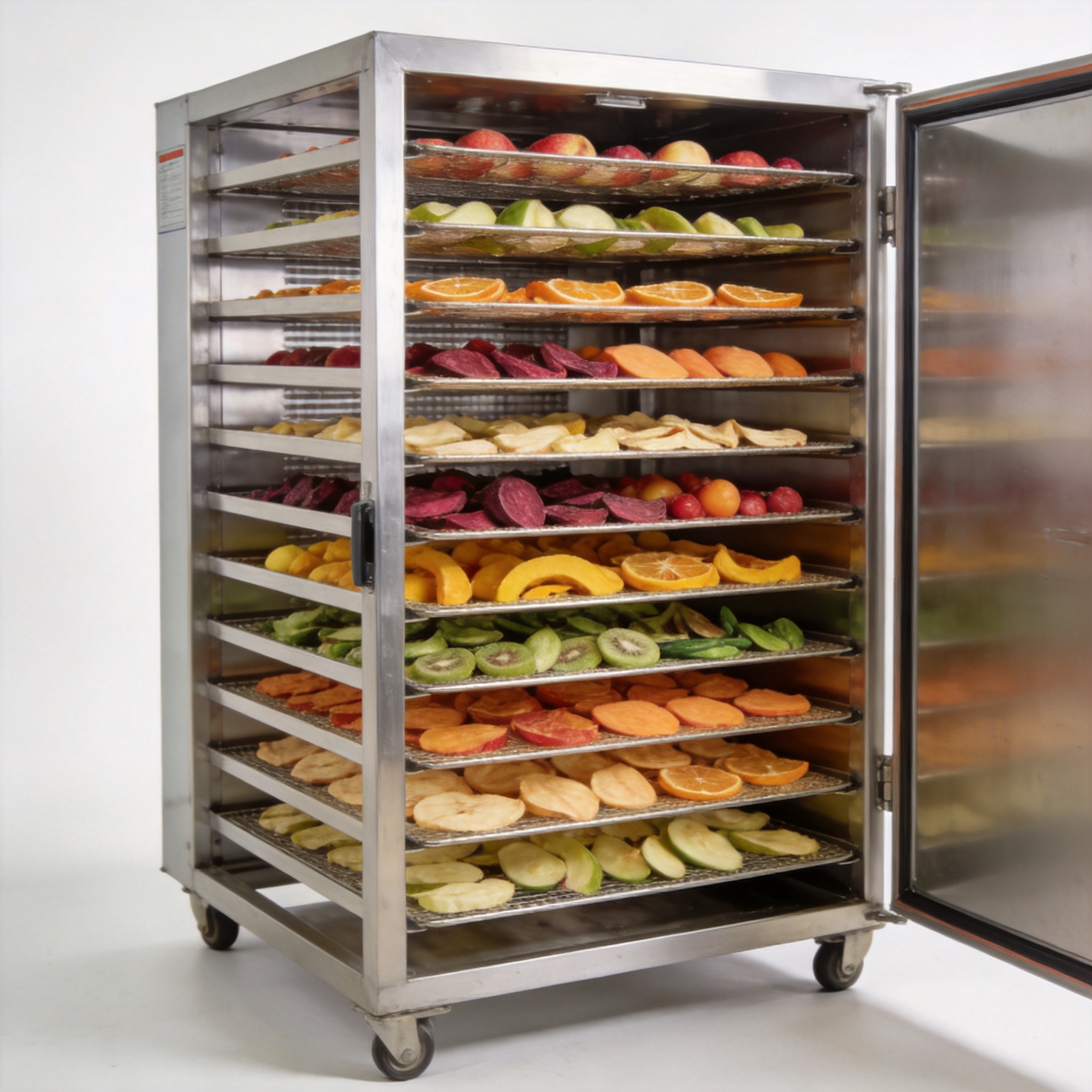
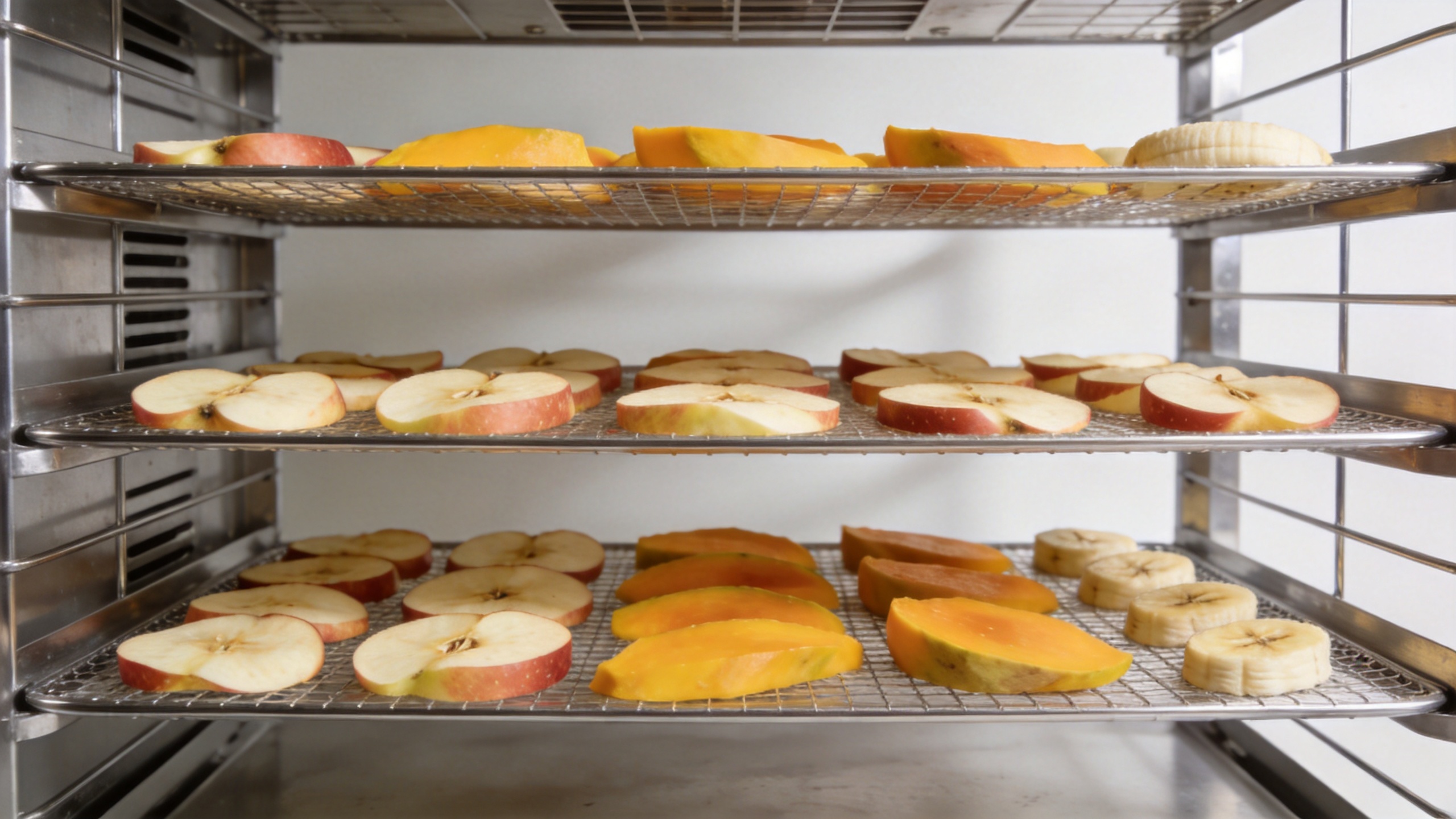
In a batch fruit dehydration process, trays are part of the process control system. Spread fruit in a single, open layer unless the product specification calls for another arrangement. Overlapping pieces or a piled loading pattern can create local zones where air movement is weaker and drying is delayed. The result may be mixed texture within one tray and variable moisture between trays.
Keep tray loading consistent enough that one batch can be compared with the next. Record the net product weight per tray, the number of trays, and the tray positions used. If the dryer design or product behavior requires tray rotation, define when it happens and log it. These checks are especially useful when a team is scaling a vegetable dehydration process alongside fruit products, because vegetable pieces may need a different loading rule.
Control Drying as a Temperature, Airflow, and Time Relationship
Temperature alone does not define the outcome. The drying rate depends on the relationship between product thickness, chamber temperature, air movement, air humidity, and load depth. Extension guidance often places fruit drying around 130–140°F (54–60°C) as a reference range, but a commercial operating point should be validated for the specific fruit, piece size, equipment, and intended texture.
A useful practice is to divide the run into stages: an early period where surface water is removed, a middle period where internal moisture migrates outward, and a final period where over-drying becomes more likely. Check representative pieces from different trays rather than judging the entire batch from one convenient location. If samples show uneven progress, review slice variation, airflow paths, tray loading, and the setpoint history before simply extending the run.
For processors evaluating a batch-drying configuration, the box-type dryer for batch dehydration and drying of fruits and vegetables provides a relevant equipment category to consider when organizing a controlled tray-drying workflow. Selection should be matched to the planned product format, throughput, available floor space, and the validation work needed for the process.
Use Final Moisture Checks Instead of Time Alone
Drying time is an operating reference, not a release decision by itself. A fruit dehydration process should end with a combination of measurement and sensory checks. As a general educational reference, extension guidance often describes dried fruit at about 20% moisture; the appropriate production target still needs to be established for the fruit, cut size, packaging system, and shelf-life objective.
Sample across trays and positions, then compare readings with the product specification. For a practical visual-and-feel check, dried fruit is commonly expected to be pliable or leathery rather than wet or brittle. No free moisture should be visible or readily expressed from a piece. If the process requires more precise control, use a calibrated moisture method and define how many samples must meet the release criteria.
| Check point | What to observe | Why it matters |
|---|---|---|
| Representative samples | Pieces from multiple tray positions | Identifies chamber or loading variation |
| Moisture result | Measured value against the product specification | Supports a consistent release decision |
| Texture and free moisture | Pliability, absence of visible wet spots | Flags pieces that need further drying or sorting |
| Batch record | Setpoint, time, loading, and observations | Helps improve the next fruit dehydration process run |
Condition, Cool, and Release the Batch
Moisture can remain unevenly distributed when fruit first leaves the dryer. Allow the product to cool under controlled, hygienic conditions and use a conditioning step before final packing. During conditioning, assess the container or test sample for condensation. Condensation indicates that moisture has redistributed to a level that needs additional drying before the batch is packaged.
Only package fruit after the final moisture decision is recorded. Packaging should protect the validated product condition from ambient humidity and handling exposure. If a batch does not meet the moisture or texture standard, segregate it, document the finding, and decide whether additional drying or another disposition is suitable under the site’s procedures.
Make the Process Easier to Improve
The most useful fruit dehydration process data is data that helps the next run. Review batch records for patterns: perhaps a specific fruit maturity needs a different slice range, or the rear trays repeatedly finish later than the front trays. Change one documented variable at a time; it is easier to see what improved the next run.
For processors building a broader fruit and vegetable dehydration process program, keep product-specific standards while using one common control framework: define the raw material, standardize preparation, protect airflow, monitor the drying profile, verify final moisture, and document the release decision. That structure gives teams a sound basis for developing their own validated process parameters.
Conclusion
Effective fruit drying is a sequence of connected controls. A clear preparation standard supports even loading; even loading supports predictable airflow; and final moisture checks confirm whether the drying result matches the product goal. By treating the fruit dehydration process as a documented system from receiving to conditioning, processors can make more confident batch decisions and create a stronger foundation for product consistency.