EN


Fruit Pulper Machine vs Juice Press: Choosing the Right Extraction Route
When a new fruit-processing line is being planned, buyers often ask whether a fruit pulper or a juice press should be the main extraction machine. The useful answer is not “one is better.” These machines do different work, and the right route depends on the fruit, the product you intend to sell, and the solids you want to keep or remove.
For a processor making puree, nectar, sauce, or a thick fruit base, a fruit pulper is usually central to the line. For a processor selling clarified or low-pulp juice, a press is often the more direct extraction step. Many commercial plants use both: first to prepare and separate fruit, then to press or finish a selected stream.
Start with the finished product, not the machine name
The first selection question is simple: are you producing a flowing fruit pulp or recovering free juice? A fruit pulper breaks softened or crushed fruit and forces usable flesh through a screen while retaining skins, seeds, fibers, or pits according to the machine configuration. This makes it a practical route for mango, tomato, apricot, passion fruit, guava, and similar materials where body and pulp are part of the desired product.
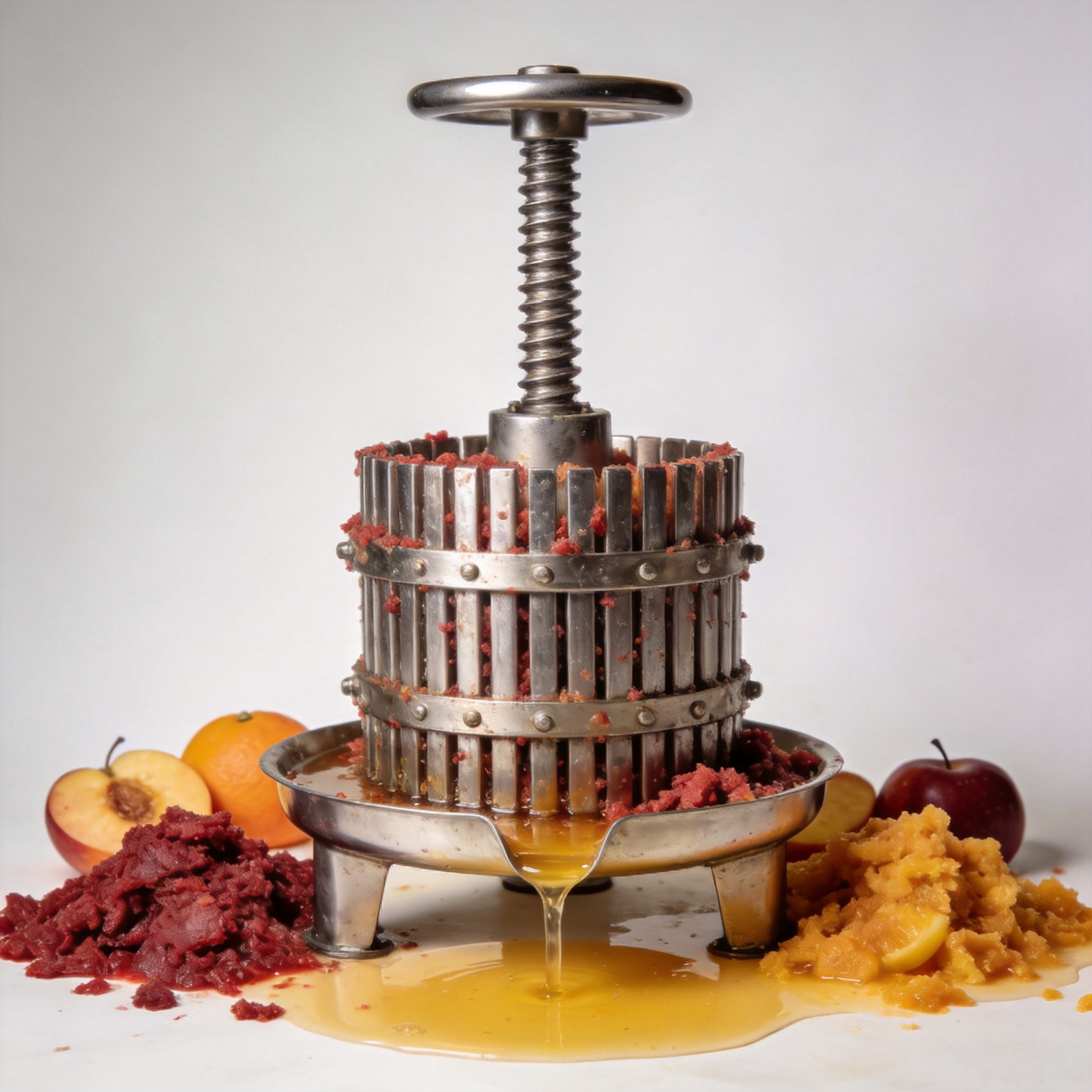
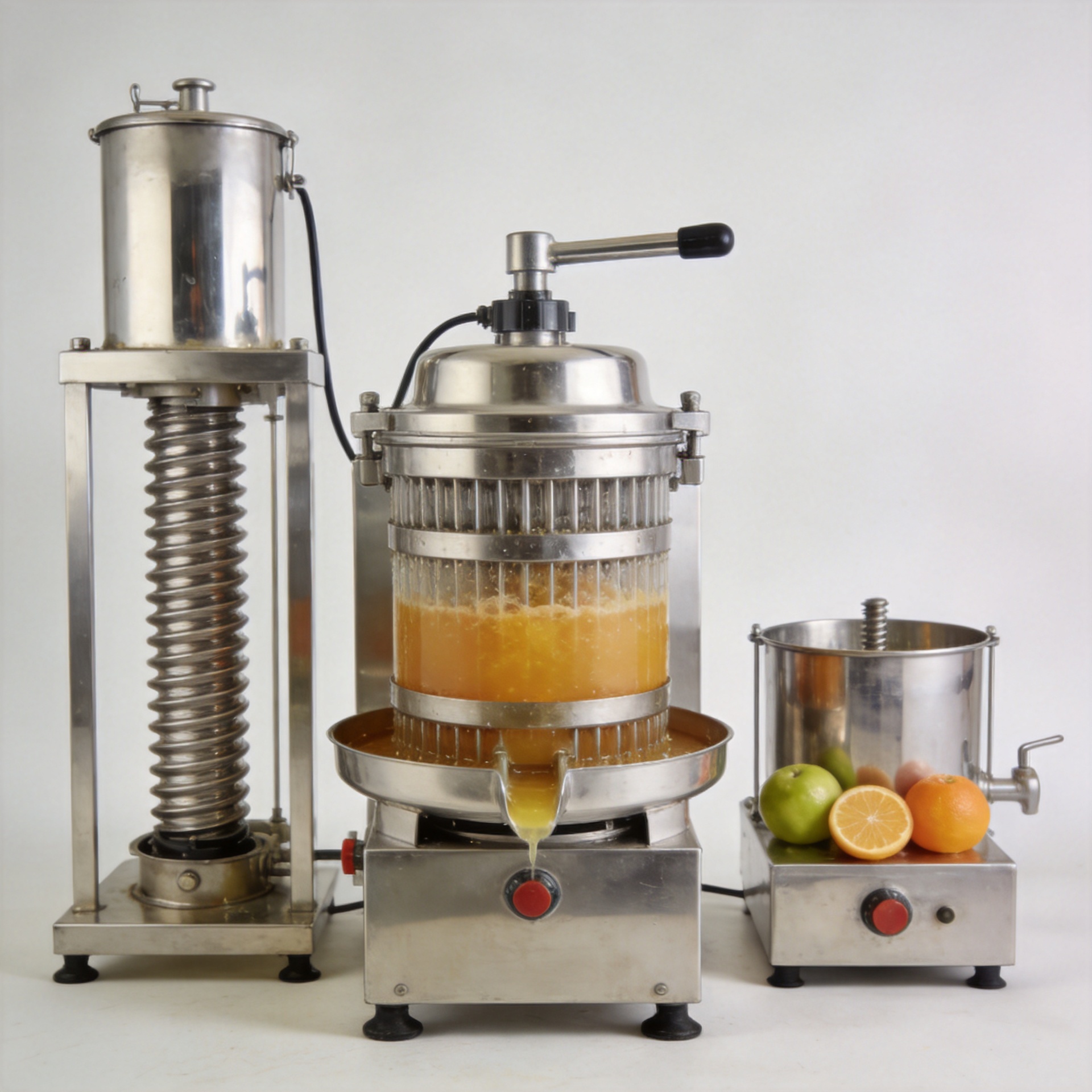
A juice press uses mechanical pressure to release liquid from prepared fruit or vegetables. It is generally chosen when the target is a juice stream and the remaining pomace will be separated. Pressing can suit apples, berries, grapes, and many vegetables after washing, sorting, and size reduction. The decision is therefore about output specification: pulp-rich base, juice-rich liquid, or a process that creates both.
How a fruit pulper changes the extraction route
A fruit pulper is not merely a crusher. In a typical line, raw material is washed, inspected, and crushed or preheated as the recipe requires. The pulp then passes through a screen or perforated surface while larger fractions are held back. For stone fruit, a destoning stage can be especially important because the process must separate flesh from pits without allowing hard material into the product stream.
This route is valuable when consistency matters as much as recovery. Screen selection, rotor speed, feed condition, and the number of pulping stages all influence the texture of the final pulp. A softer fruit may need gentle handling to avoid excessive seed breakage, while firmer fruit may need more preparation before it can pass efficiently. Buyers should treat these as process questions rather than assume that a larger machine automatically solves them.
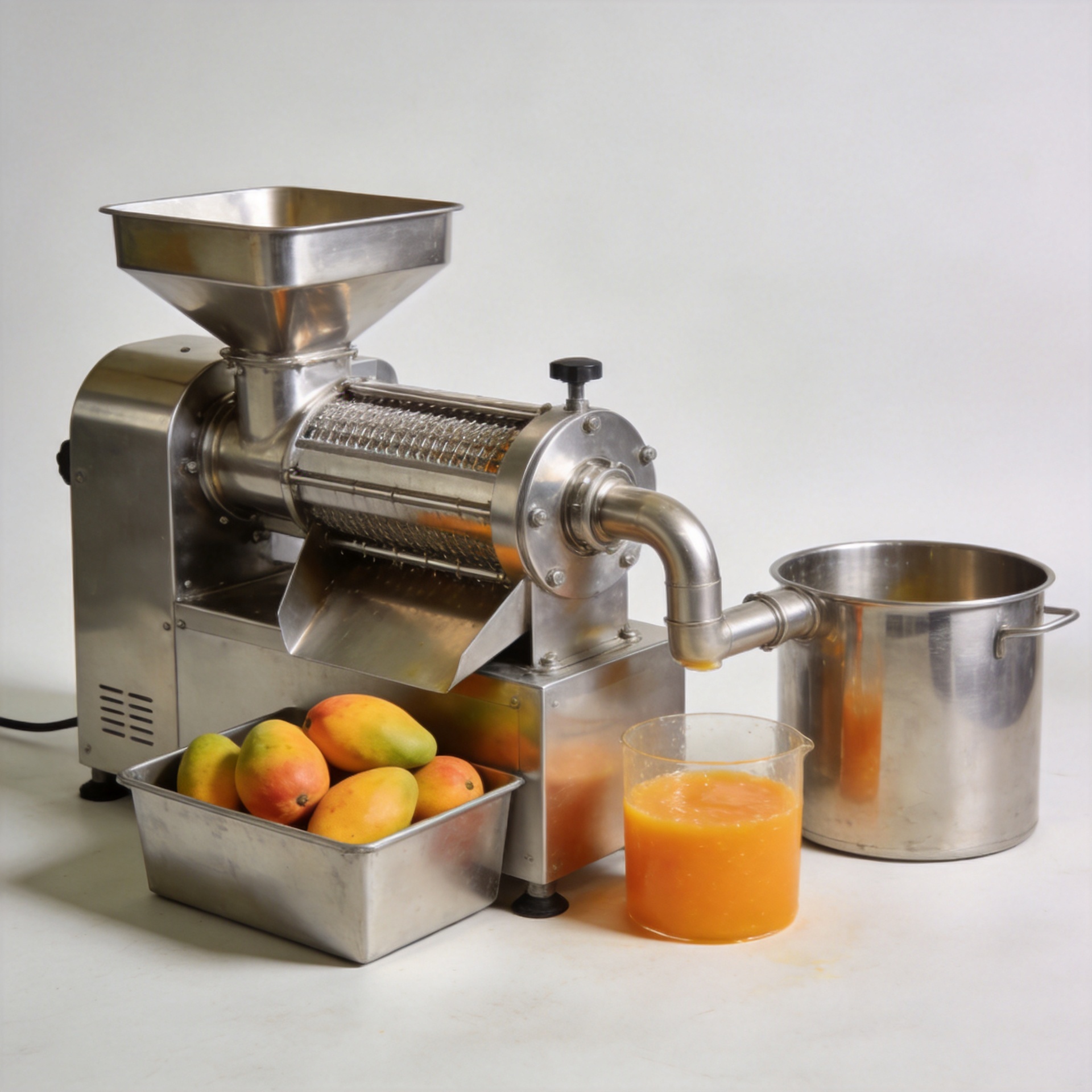
For processors evaluating a combined preparation route, Hongle Machinery offers an apricot, tomato, passion fruit crusher, mango destoner and fruit pulper machine. Its listing is relevant as an example of how crushing, destoning, and pulping can be considered as connected stages. The actual configuration should still be matched to the fruit variety, capacity target, and required screen result.
When a juice press is the stronger choice
Choose a press when the commercial priority is a liquid stream with controlled pulp carryover. Pressing applies external force after fruit has been prepared, so the feed texture matters. Apples, for example, are commonly milled before pressing; the prepared mash provides a more even bed and helps the press work consistently.
Pressure is not a one-way benefit. Higher pressure may increase liquid recovery, but it can also carry more fine solids or undesirable components into the juice stream. That is why a practical press selection includes downstream clarification, filtration, or finishing requirements. A buyer should compare total line performance—juice quality, cleanup time, pomace handling, and yield consistency—not only the extraction machine’s advertised capacity.
Compare raw material behavior before choosing
| Decision factor | Fruit pulper route | Juice press route |
|---|---|---|
| Preferred output | Puree, pulp, nectar base, sauce | Juice-focused liquid stream |
| Useful for | Soft, fleshy, seeded, or stone fruit after suitable preparation | Prepared mash from fruits or vegetables with recoverable juice |
| Separation task | Separates usable flesh from skins, seeds, fibers, or pits | Separates expressed liquid from pomace |
| Key control points | Screen size, rotor action, feed condition, destoning need | Feed preparation, pressure profile, drainage, solids control |
| Typical downstream need | Blending, deaeration, pasteurization, filling | Clarification or filtration when a cleaner juice is required |
Quick fruit pulper fit check
Use this fruit pulper fit check before requesting quotations. If the recipe needs visible body, puree viscosity, or a controlled level of suspended flesh, a fruit pulper should be evaluated before a press. If the recipe calls for a low-pulp beverage, evaluate the press and downstream clarification as one package. In either case, provide suppliers with fruit samples and target solids so the fruit pulper screen and the press preparation stage can be discussed with the same production objective.
A sitafal pulp machine is a clear illustration of the first route: the processor wants edible flesh while managing a high seed load. For that job, the sitafal pulp machine selection should focus on separation behavior and cleanability, not only hourly capacity. The same fruit pulper decision logic can be applied to mango and tomato pulp lines, though each fruit needs its own test conditions.
Consider a sitafal pulp machine as a useful example of why fruit behavior matters. Custard apple has soft flesh and many seeds, so a pulp-oriented route that manages separation is usually more relevant than treating the material as a conventional press feed. The same logic applies to other fruits with difficult seeds, pits, or fibrous structure.
Use both machines when the process needs both functions
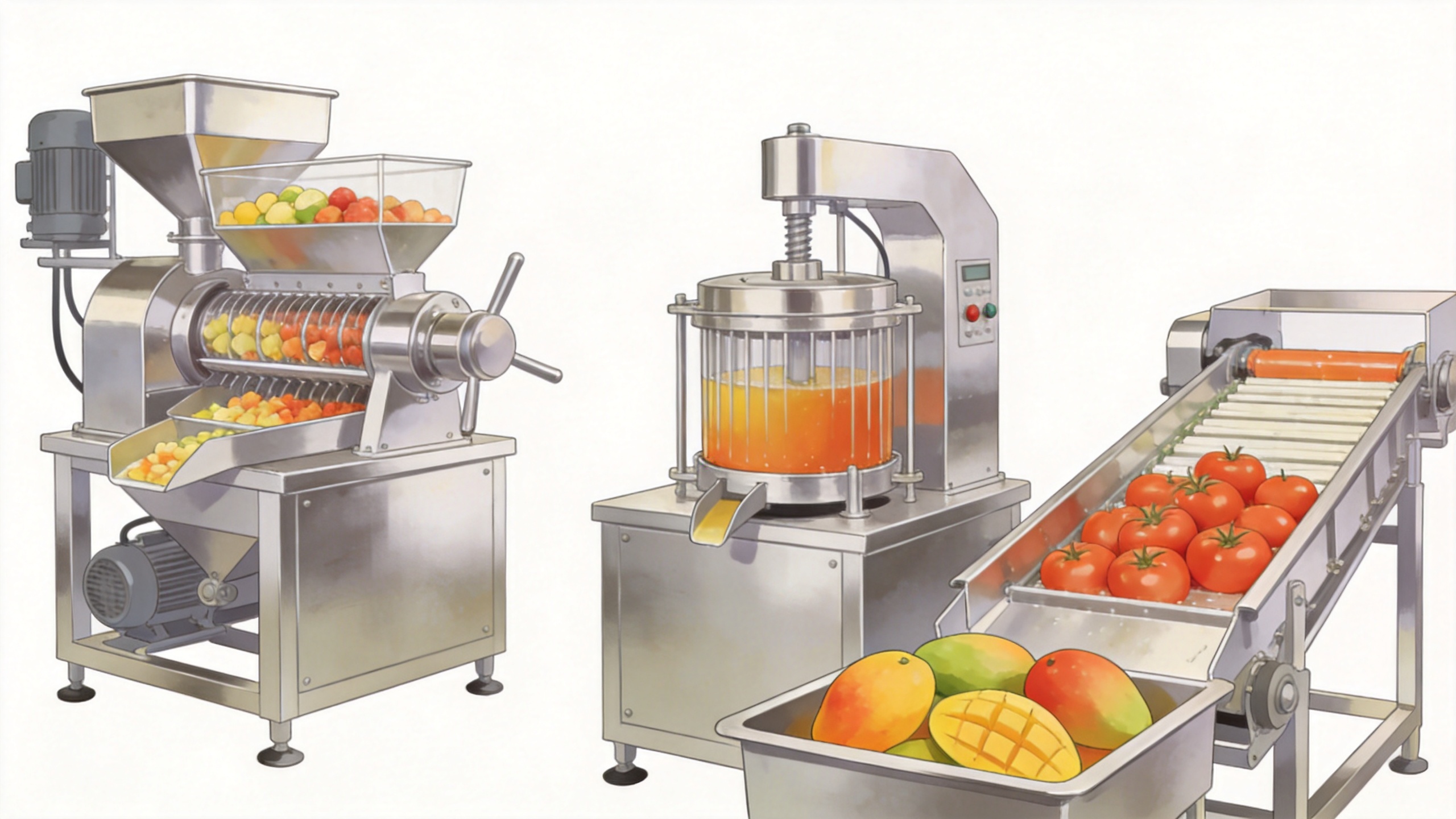
In a larger processing line, pulping and pressing are often complementary. A crusher or pulper can prepare fruit and remove coarse material; a press can then recover liquid from a specific fraction. Conversely, a pressed juice stream may require a finisher to manage residual pulp. The right sequence comes from the product specification and trials with the real raw material.
Ask suppliers to map the entire process: receiving, washing, sorting, crushing, heating if needed, pulping or pressing, separation, pasteurization, and filling. This approach is more reliable than selecting a fruit pulper or press as an isolated purchase. It also exposes practical questions early, including cleaning access, changeover time, utility demand, and how waste streams will be handled.
A procurement checklist for the right extraction route
- Define whether the saleable product is pulp, puree, nectar, cloudy juice, or clarified juice.
- List fruit varieties, ripeness range, stone or seed content, and seasonal capacity.
- Decide which fractions must be retained and which must be excluded.
- Specify downstream finishing, filtration, heat treatment, and filling requirements.
- Request a line proposal that states the role of each machine and the handoff between stages.
- Where possible, validate screen selection and extraction behavior with representative fruit samples.
During supplier evaluation, ask for a practical explanation of where the fruit pulper will be installed, what enters the machine, and which fraction leaves each outlet. For press-based projects, request the same map for milling, pressing, and clarification. This documentation turns a fruit pulper quotation into a comparable process proposal instead of a capacity-only comparison.
Make the choice around separation, not labels
A fruit pulper is the better starting point when valuable flesh and controlled pulp texture define the product. A juice press is the better starting point when liquid recovery is the primary objective. If your plant must make several product styles, a combined route may provide more flexibility than either machine alone.
A sound investment is one that matches fruit behavior to a clearly defined product stream. By reviewing separation needs, target solids, and the sequence of upstream and downstream equipment, buyers can turn the “pulper versus press” question into a workable extraction plan.