EN


Heat Pump Dryer vs. Conventional Food Dryer: What Food Processors Should Compare
For a food processor, choosing a heatpump dryer is not simply a choice between a newer machine and a familiar hot-air cabinet. It is a process decision: how consistently can a line remove moisture, protect product quality, fit production schedules, and control operating cost? A conventional food dryer can be the right answer for a high-temperature or short-cycle application. A heatpump dryer can be a strong candidate when controlled, lower-temperature dehumidification and energy recovery matter. The sensible comparison starts with the product, not the brochure.
As a practical buying rule, test each heatpump dryer and conventional alternative against the same product specification, loading pattern, target moisture or water activity, and production window. That gives the purchasing team a decision based on usable output rather than a headline power rating.
Start with the drying duty, not the machine label
A heatpump dryer recirculates process air, removes moisture through condensation, and reheats the air in a controlled loop. Conventional systems often use electric, gas, steam, or biomass-heated air and exhaust a portion of moist air. Neither approach is automatically superior. The better choice depends on whether the food needs gentle drying, how wet it enters the dryer, how much water must be removed per batch, and what temperature range the recipe can tolerate.
Build the specification around measurable requirements: product type and cut size, starting and final moisture, acceptable color and texture change, maximum product temperature, batch mass, daily operating hours, cleaning time, and target throughput. A heatpump dryer should be compared at those conditions, not against a conventional dryer running a different tray load or endpoint.
Compare temperature and humidity control as a pair
Temperature alone does not describe a drying process. The drying potential also depends on air humidity, airflow distribution, and how these conditions change as the product gives up water. A heatpump dryer is often selected because a closed-loop dehumidification system can hold a narrower temperature-humidity environment. That can be useful for fruits, vegetables, herbs, and other products where excessive heat may affect color, aroma, texture, or heat-sensitive components.
A conventional dryer may offer a wider high-temperature range or faster early-stage moisture removal. Ask suppliers to show setpoint accuracy, sensor locations, control logic, airflow direction, and how the machine responds when humidity rises during a heavy load. For either design, request a chart of temperature and relative humidity over a representative cycle. A heatpump dryer with poor airflow uniformity will not solve a tray-loading problem, and a hot-air dryer with good zoning may perform better than expected on robust products.
Measure usable throughput and batch consistency
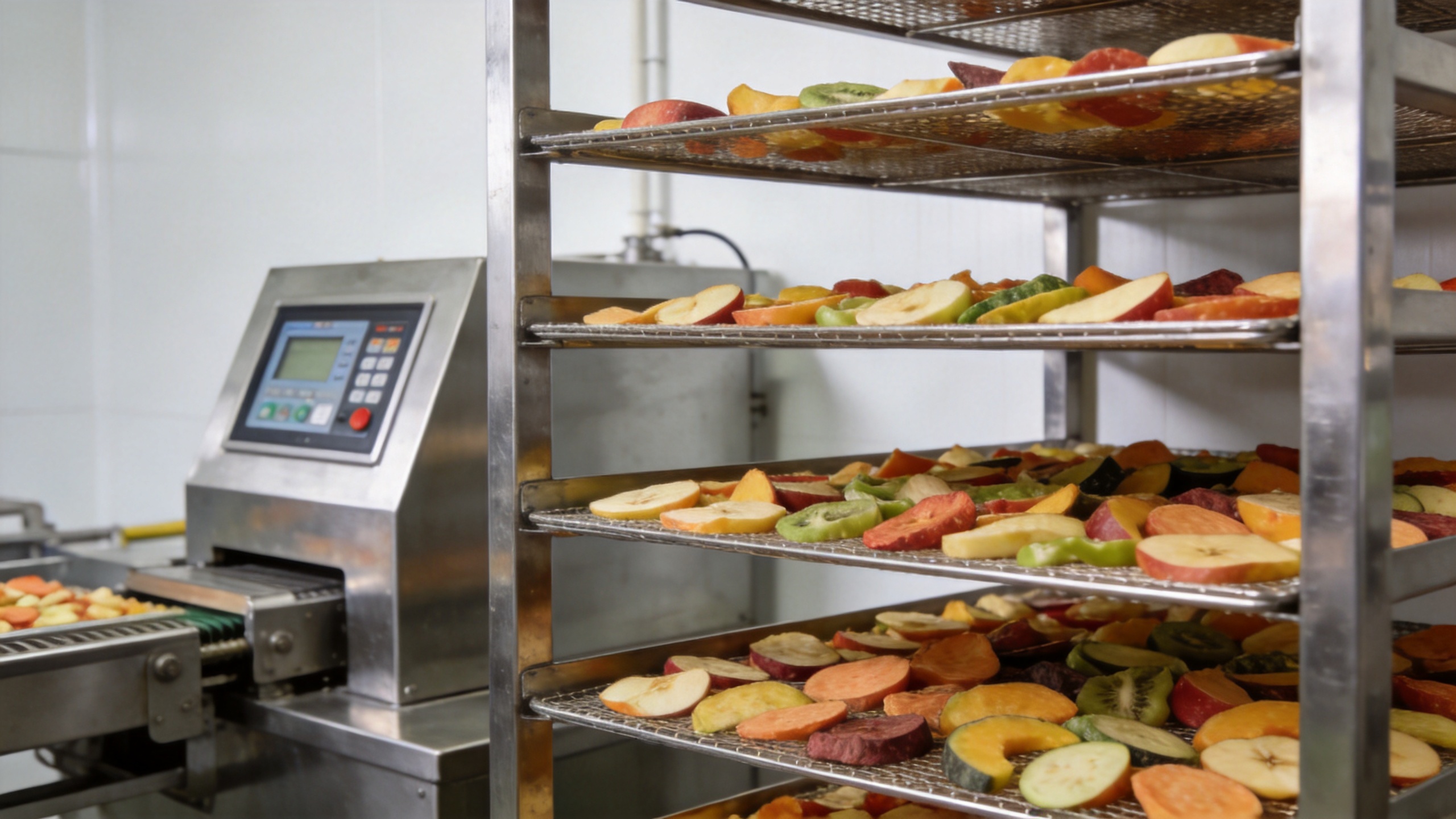
Food processors sell finished kilograms, not empty-chamber capacity. Compare kilograms of finished product per hour, kilograms of water removed per hour, cycle length, loading density, and the percentage of trays that meet the agreed moisture endpoint. A heatpump dryer can take longer than a high-temperature conventional process, so the comparison must include batch overlap, shift structure, and how many chambers are required to meet the weekly plan.
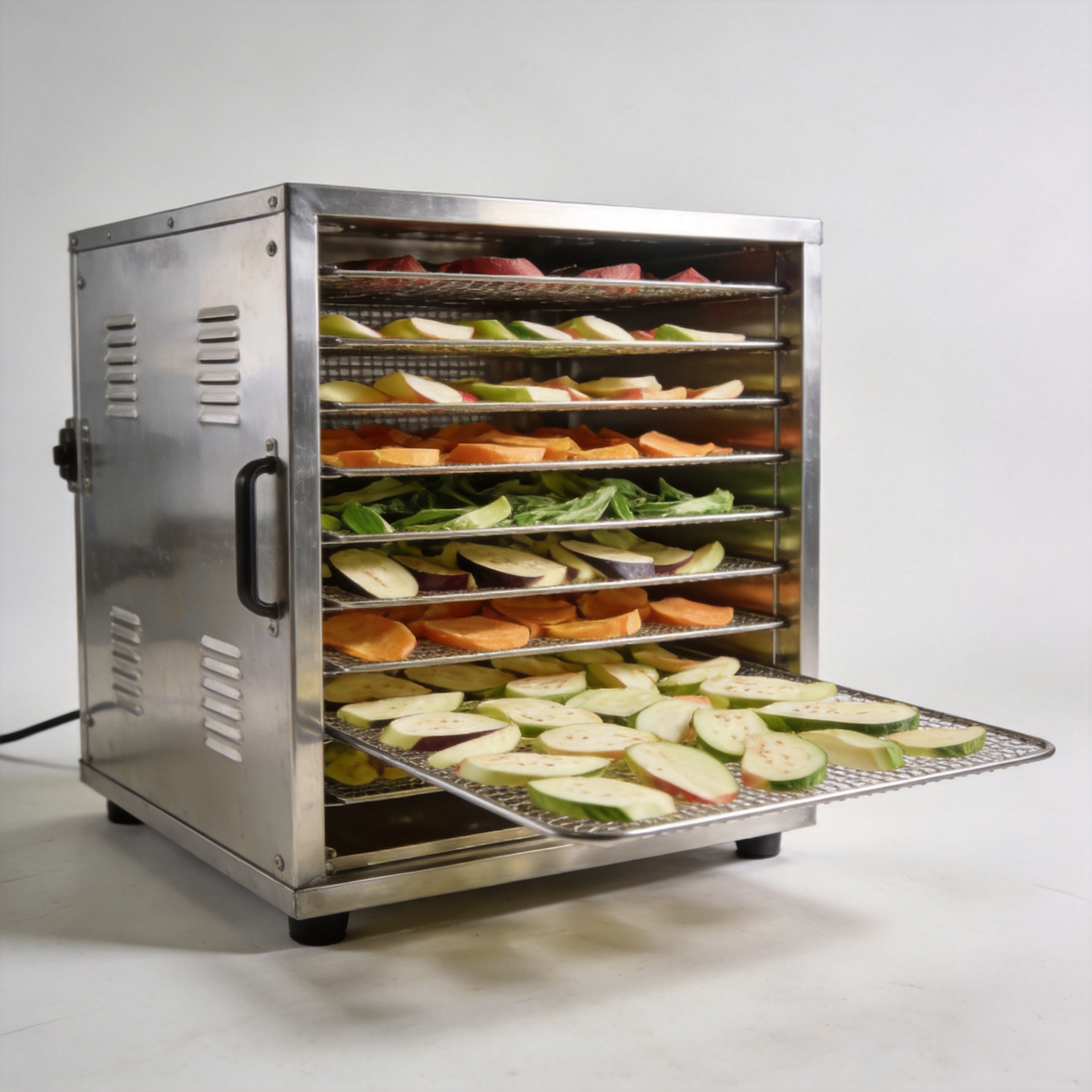
During a site trial, sample the front, center, rear, top, and bottom of the load. Record final moisture, water activity where relevant, color, shrinkage, breakage, and rework. The most valuable heatpump dryer trial is one that reveals the worst-case tray, not one that presents only the most favorable sample. For processors with several SKUs, repeat the trial for a thin product, a dense product, and a sticky or sugar-rich product.
Use specific energy consumption, not nameplate power
Energy is a key reason to evaluate a heatpump dryer, but nameplate kilowatts are not a cost comparison. Calculate kWh per kilogram of water removed and kWh per kilogram of saleable finished product. Include fans, compressors, heaters, defrost cycles, conveying, and any required makeup-air or ventilation equipment. Recent food-drying reviews report that heat-pump systems can reduce energy use substantially versus conventional approaches, but the outcome varies with the food, starting moisture, set temperature, and annual operating hours.
Ask each supplier for a transparent test basis and meter the trial if possible. A heatpump dryer may improve energy performance most when it runs long hours at moderate temperatures. A conventional dryer may remain competitive when a plant already has low-cost steam, when high-temperature drying is required, or when its duty cycle is too intermittent to realize the anticipated savings.
Evaluate food quality and safety validation separately
Lower-temperature control is a benefit only when it supports the approved product outcome. A heatpump dryer can help maintain a controlled environment, but it does not replace process validation. Drying lowers water activity and can slow deterioration, yet microbial results still depend on raw material, pretreatment, time-temperature exposure, sanitation, and packaging.
For each candidate heatpump dryer or conventional system, define acceptance criteria before the test: final moisture, water activity, microbiological limits, color, sensory attributes, yield, and shelf-life checks. Review cleanability, drain design, condensate management, access panels, materials of construction, and documentation. The right equipment is the one that helps the processor reproduce a validated recipe batch after batch.
Compare maintenance, utilities, and operational resilience
A heatpump dryer adds refrigeration components, coils, controls, filters, and defrost behavior to the maintenance plan. Verify service access, spare-parts lead time, diagnostics, compressor protection, and what happens when ambient conditions or product load change. A conventional dryer may have a simpler thermal system but can require more ventilation, burner maintenance, or heat-source management.
Also compare installation constraints: electrical capacity, exhaust ducting, steam or gas availability, floor drainage, noise, heat rejection, and room conditions. A heatpump dryer with a closed-loop design may reduce exhaust-air demands, while the plant must still plan for cleaning and condensate handling. Hongle Machinery can support processors evaluating an industrial vegetable and fruit dryer within a wider processing-line discussion; the final selection should remain tied to verified product trials and site utilities.
A procurement scorecard for the final decision
Use one weighted scorecard for every supplier. Score product quality, drying uniformity, finished output, specific energy use, labor, cleaning time, maintenance, utility changes, footprint, controls, warranty, and supplier support. Then convert the result into total cost of ownership over the expected operating period. This avoids choosing a heatpump dryer only for energy claims or choosing a conventional dryer only because the technology is familiar.
For many processors, a practical next step is a controlled pilot: run the same SKU in a heatpump dryer and in the current or proposed conventional system, record the full process data, and compare saleable yield and cost per finished kilogram. If gentle, repeatable drying and long operating hours drive the business case, the heatpump dryer may be compelling. If the product needs high heat, fast peak capacity, or uses an existing low-cost thermal utility, a conventional solution may still be the better fit.