EN


How Does a Commercial Vegetable Washing Machine Improve Food Safety?
For a produce processor, restaurant central kitchen, or fresh-cut line, washing is not simply the first cleaning task. It is a control point that affects what happens next: sorting, cutting, packing, and cold storage. A commercial vegetable washing machine can make that control point more consistent by moving produce through a defined wash process instead of relying on improvised tubs, variable manual agitation, or uneven rinse practices. The machine is not a substitute for a food-safety plan, but it can help a team perform that plan with greater repeatability.
From a production-floor perspective, the practical question is not “does the machine wash vegetables?” It is whether the wash workflow removes loose soil, protects produce from unnecessary handling, controls wash water, and gives operators clear checks to complete. Those are the ways a commercial vegetable washing machine can support safer handling of leafy greens, root vegetables, herbs, and many other fruits and vegetables.
Food Safety Starts With a Repeatable Produce-Washing Workflow
Fresh produce can arrive with soil, plant debris, and microorganisms from growing, harvesting, transport, or handling. A commercial line needs a workflow that separates visibly dirty incoming product from cleaned product and keeps equipment contact surfaces under control. A commercial vegetable washing machine helps standardize the physical washing stage: product enters at a planned rate, receives controlled water movement, and exits for inspection or a downstream rinse.
That consistency matters because food-safety performance is rarely improved by a single action. It comes from several linked controls: clean equipment, suitable water, a sensible product load, trained operators, and documented cleaning between runs. When the workflow is defined, supervisors can see where a deviation occurred and correct it before it becomes routine.
How Vortex Washing Helps Remove Soil Without Excess Handling
Many commercial systems use circulating water or vortex-style agitation to loosen soil and light debris from product surfaces. Compared with repeated manual stirring, controlled water movement can give operators a more uniform washing action across each batch. It can also reduce the amount of direct hand contact during a busy shift.
However, agitation must match the product. Delicate leafy vegetables may need gentler handling than firm potatoes or carrots. The useful operating approach is to set a product-specific load, wash time, and water-flow routine, then check the result visually. Overloading a tank or running a single setting for every crop can reduce cleaning consistency and may damage sensitive produce.
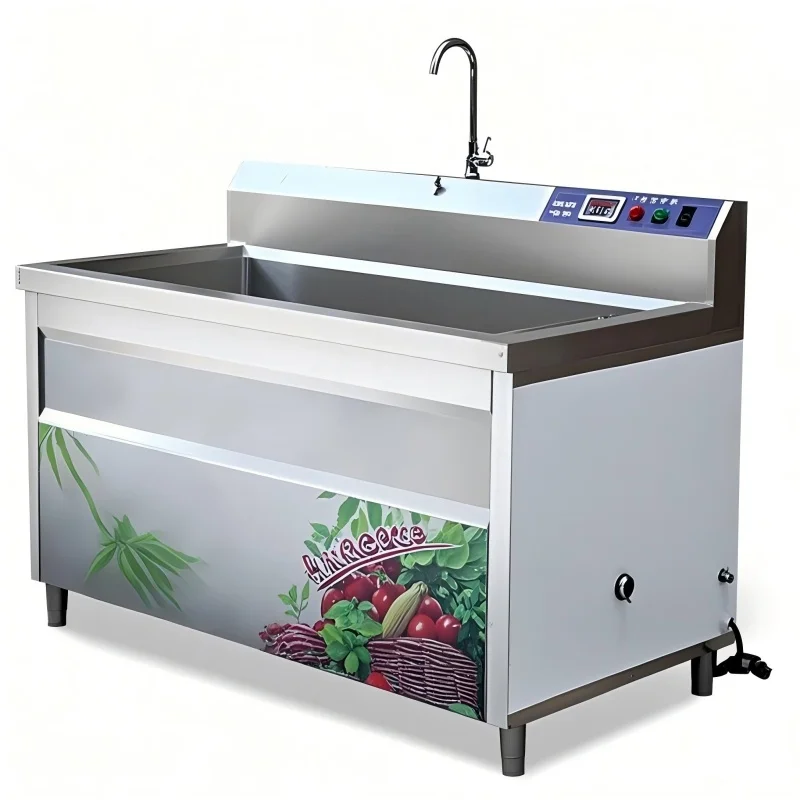
For operations evaluating a vortex-style option, the Vegetable and Fruit High Efficiency Commercial Stainless Steel Disinfection Vortex Fruit Washing Machine provides a relevant example of equipment designed for commercial fruit and vegetable washing workflows. Equipment selection should still be matched to product type, expected throughput, layout, and the site’s validated sanitation procedures.
Wash Water Management Is Part of the Safety Control
A commercial vegetable washing machine is most effective when wash water is managed as carefully as the produce. Food-safety guidance for fresh produce highlights that reusing water across continuous loads can increase cross-contamination risk. In practical terms, a wash tank should not become a place where soil and contamination from one load are carried to the next.
Operators need clear rules for water quality, make-up water, change frequency, drainage, and cleaning. If a site uses an approved sanitizing treatment, the concentration and contact time should be verified according to that product’s label, local requirements, and the facility’s food-safety program. A machine does not determine these values by itself. The site must validate and document them.
- Start each shift with cleaned and inspected food-contact surfaces.
- Remove accumulated debris before it can circulate through later loads.
- Define when water is refreshed or replaced based on product soil load and the facility plan.
- Keep washed produce moving toward a clean handling area rather than back toward receiving.
Better Equipment Hygiene Supports Safer Produce Handling
Equipment is only as hygienic as its cleaning routine. Produce-safety requirements emphasize appropriate storage, maintenance, and cleaning of equipment and tools that contact produce. For a commercial vegetable washing machine, that means more than rinsing the visible tank. Teams should inspect screens, drains, nozzles, conveyors, seams, and any area where debris or water can remain after production.
Stainless-steel food-processing equipment can be a practical choice because it is commonly used in cleanable production environments, but material alone does not guarantee sanitation. Accessibility, drainage, cleaning tools, and staff discipline all matter. A short pre-operation inspection and a documented post-operation clean can reveal issues such as blocked spray points, damaged seals, or residue around drains before they affect the next run.
Operating Checks Buyers Should Plan Before Installation
Buyers should think beyond machine capacity. A suitable commercial vegetable washing machine for a site is one that fits into an end-to-end hygiene workflow. Before purchase or installation, confirm how receiving, trimming, washing, dewatering, cutting, and packing will be separated. Review whether the floor has enough drainage, whether the water supply is appropriate, and whether operators can safely access the machine for cleaning.
| Operating check | Why it matters |
|---|---|
| Product load and flow | Helps avoid overcrowding and inconsistent soil removal. |
| Water condition and change rules | Supports control of debris and reduces avoidable carryover between loads. |
| Cleaning access | Makes routine sanitation easier to complete and verify. |
| Drainage and dry-down | Helps prevent standing water around the washing area. |
| Operator records | Creates evidence that key checks and corrective actions were completed. |
Use the Machine as One Layer of a Food-Safety System
A commercial vegetable washing machine can improve food safety by giving the washing stage a controlled, repeatable role in the process. It can support soil removal, reduce unnecessary handling, improve workflow discipline, and make sanitation checks easier to organize. But it should operate within a broader system that includes supplier controls, employee hygiene, wash-water management, equipment cleaning, and product-specific procedures.
For food businesses building or upgrading a produce-prep line, start with the process map rather than the machine alone. Define the hazards, assign the operator checks, and select a commercial vegetable washer that can be cleaned, inspected, and operated consistently in that workflow. That approach turns equipment from a stand-alone purchase into a useful part of a stronger food-safety program.