EN


How Does an Industrial Vegetable Cutter Improve Prep-Line Efficiency?
In a vegetable-processing line, cutting is rarely an isolated task. It is the handoff between washing and the next operation—mixing, blanching, freezing, cooking, packing, or further size reduction. When that handoff is slow or inconsistent, people often blame the cutter first. In practice, the bigger question is whether the industrial vegetable cutter is matched to the material flow around it.
From a production-supervisor perspective, a useful machine is not simply the one with the highest stated output. It is the one that keeps washed product moving, produces a cut that downstream equipment can handle, and lets operators clean, change, and restart without creating a queue. For processors working with potatoes, fruit, leafy vegetables, or green onion, that operational fit can make prep work far more predictable.
Where an Industrial Vegetable Cutter Fits in the Prep Line
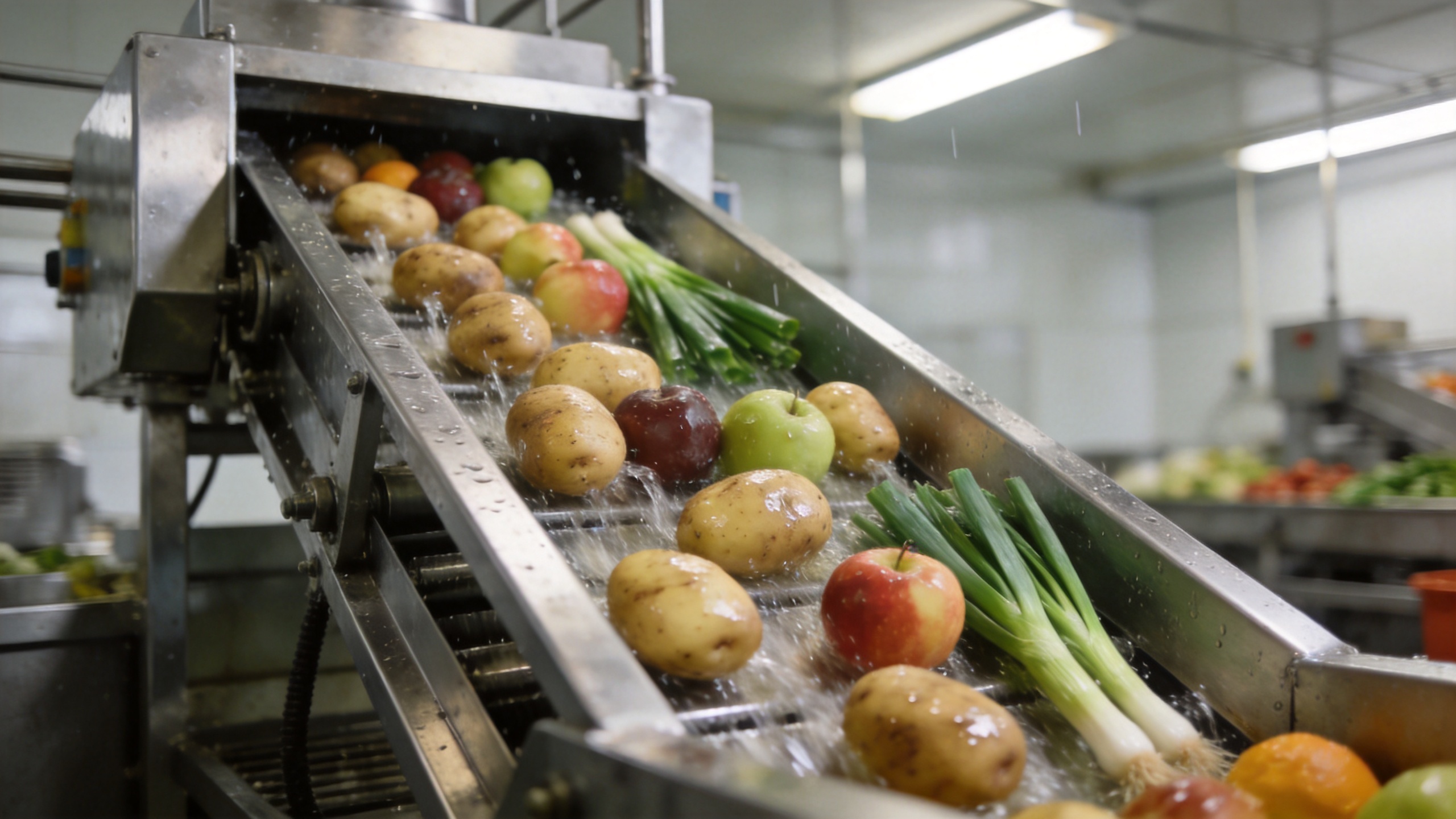
A typical line begins with receiving and sorting, followed by washing and inspection. The industrial vegetable cutter then converts clean raw material into slices, dice, strips, or other specified forms before the product reaches its next process. This placement matters: if washing supplies product faster than the cutter can accept it, bins accumulate; if the cutter discharges product too quickly for the next station, operators may need to pause it repeatedly.
Mapping these handoffs before selecting equipment helps identify the real bottleneck. Look at three questions:
- How is washed produce fed into the cutting zone—manually, by conveyor, or from a buffer hopper?
- What cut form and size can the downstream process accept without extra sorting or rework?
- How much time is lost when operators change varieties, remove debris, or clean contact areas?
Answering them turns an industrial vegetable cutter from a stand-alone purchase into part of a controllable workflow.
Consistency Reduces Downstream Variation
Manual cutting can be flexible, but cut size often varies by operator, fatigue level, and the shape of the incoming vegetables. A properly configured industrial vegetable cutter helps standardize the output pattern. That consistency matters because pieces that differ widely in size can behave differently in later stages: smaller pieces may move or cook differently from larger pieces, while irregular cuts can complicate portioning and visual inspection.
The operational benefit is not an abstract claim about speed. It is fewer decisions at the next station. When output is closer to the requested slice, dice, or strip specification, downstream teams can spend less time separating outliers and more time monitoring normal line conditions.
For green-onion applications, a japanese green onion cutting machine should be evaluated in the same way: not only for the cut it can produce, but also for how the material is presented to the machine and how the pieces are collected. Long, flexible vegetables can expose feeding inconsistencies that are less obvious with firm potatoes or root vegetables.
Higher Throughput Comes From Fewer Interruptions
It is tempting to compare cutters only by nominal hourly capacity. A more realistic measure is usable output over an entire shift. The industrial vegetable cutter that runs smoothly through normal material changes, routine cleaning, and operator handoffs may contribute more to prep-line efficiency than a larger unit that requires frequent stops.
Start with the line’s required finished volume, then work backward through expected losses and downtime. Include time for loading, checking cut quality, clearing small accumulations, cleaning, and changing cutting tools where applicable. This makes it easier to see whether the cutter has enough practical capacity rather than just enough nameplate capacity.
| Operating point | What to observe | Why it affects efficiency |
|---|---|---|
| Infeed | Steady product presentation after washing | Uneven feeding can cause pauses and inconsistent cuts. |
| Cut specification | Slice, dice, strip, and size tolerance required downstream | Correct output reduces sorting and rework. |
| Discharge | How cut product enters the next conveyor or container | Controlled discharge prevents backup at the next station. |
| Changeover | Time needed to clean and reset between products | Short, repeatable routines protect usable shift output. |
Match the Cutter to the Vegetable and the Workflow
No single configuration is ideal for every product. Firm root vegetables, soft fruit, leafy vegetables, and long-stem produce each behave differently at the feed and cutting stages. Before finalizing an industrial vegetable cutter, document the product range, typical size variation, desired cut forms, and the condition of the produce after washing. This information helps suppliers discuss a suitable arrangement without turning general capability into an unverified performance promise.
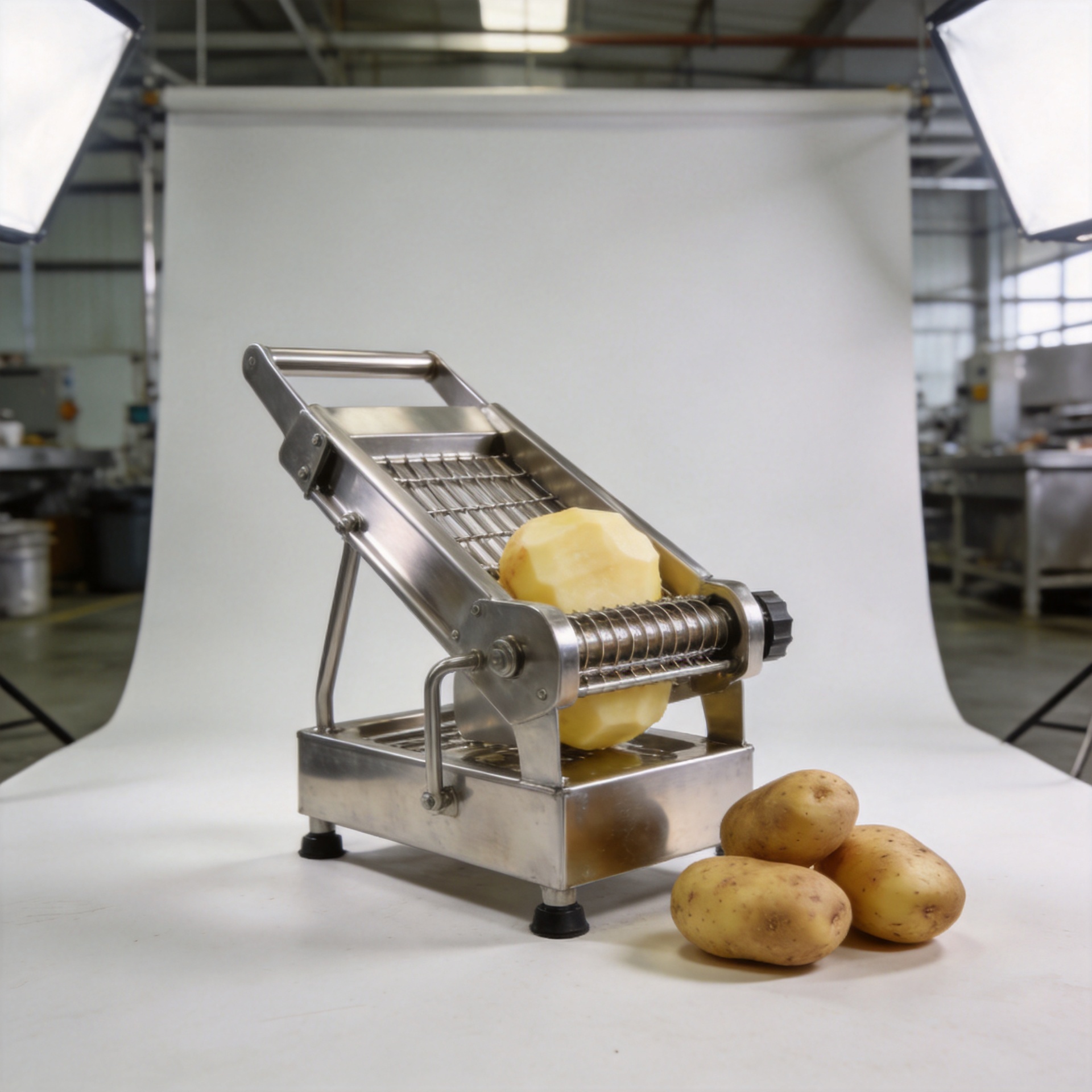
Hongle Machinery offers a Commercial Industrial Electric Vegetable Cutter Dicing Machine for Potato Fruit & Green Onion as a relevant product-page reference for teams reviewing potato, fruit, and green-onion preparation needs. The product page should be considered alongside the line’s actual cut specification, infeed arrangement, and sanitation process.
For a japanese green onion cutting machine application, ask for a trial using representative material whenever possible. Confirm the required cut length, the acceptable range of incoming stalk sizes, and the way cut pieces will transfer to the next process. The same approach applies to potatoes and fruit: the useful question is whether the resulting cut supports the next operation consistently.
Use a Simple Pre-Installation Review
Before adding or upgrading a cutter, walk the line with operations, sanitation, and maintenance personnel. A short review can prevent a technically capable machine from becoming a new source of waiting time.
- Measure the normal and peak flow coming from washing, rather than relying only on daily production totals.
- List every required cut type and note which products need a different setup or cleaning sequence.
- Check the available footprint, infeed height, discharge direction, power arrangement, and access for cleaning.
- Define a practical acceptance check for cut consistency at startup and after product changes.
- Plan how operators will communicate a slowdown upstream or downstream before product begins to pile up.
These steps are especially useful for processors building a new line. Zhengzhou HongLe Machinery Equipment Co., Ltd. focuses on food-processing machinery and can support equipment discussions around broader line planning and overseas technical support; final requirements should still be confirmed against the buyer’s own process conditions.
Turning Cutting Capacity Into Line Efficiency
An industrial vegetable cutter improves prep-line efficiency when it makes the whole flow easier to control. The most valuable outcomes are steady feeding after washing, repeatable cut results for downstream processing, fewer avoidable stops, and a cleaning routine that fits the shift. Those benefits depend on matching the equipment to the vegetable, the requested output, and the real handoffs on the floor.
Instead of asking only, “How fast can this machine cut?”, ask, “How will this cutter keep our wash-to-processing line moving?” That shift in evaluation helps teams choose a solution that supports stable production rather than simply adding another machine to the layout.