EN


How to Assess Vegetable Peeler Machine Suppliers for Root Crop Processing
Choosing a vegetable peeler machine supplier for carrots, potatoes, beets, taro, or similar roots is not the same as choosing a small kitchen appliance. A production line needs a vegetable peeler machine that matches raw-material variability, upstream washing, downstream cutting or packing, and the team that will maintain it. For procurement teams, the supplier’s answer to a technical question often matters as much as the quotation.
As a buyer, I would treat a specification sheet as the start of supplier assessment, not the finish. A supplier can describe a vegetable peeler machine clearly, yet still leave questions about sample tests, utility conditions, wear parts, commissioning, and response channels unanswered. The framework below helps turn those questions into a practical comparison.
Start by Defining the Job for the Vegetable Peeler Machine
Before comparing suppliers, write a short process brief. State the crops, size range, skin condition, incoming soil load, target throughput, working hours, desired peel finish, and the next process after peeling. This makes it easier to identify whether a supplier understands the intended vegetable peeler machine application or is only matching a generic model to a broad inquiry.
Root crops behave differently. A firm, fairly uniform carrot may call for a different removal action from irregular potatoes or delicate pre-washed produce. Abrasive action can suit some firm roots, but more aggressive removal may also raise peel loss. Ask a supplier to explain why a proposed vegetable peeler machine method fits your material rather than accepting a method name alone.
- Which crops and size range has this vegetable peeler machine been set up to handle?
- What raw-material conditions need washing or sorting before loading?
- Which utilities, drainage, water controls, and floor space are assumed?
- Where does the product exit, and how will it connect to the next process?
Make a Representative Sample Test a Procurement Gate
A sample run is one of the most useful ways to assess a vegetable peeler machine supplier. Send material that reflects your real crop condition—not only clean, uniform pieces selected for demonstration. Include the normal variation in diameter, shape, surface damage, and soil level where practical. Then agree beforehand on what the test must show.
Ask the supplier to document feed condition, run time, product appearance, visible residual skin, breakage, peel loss observations, cleaning steps, and any adjustments made. The goal is not to demand a universal output figure; actual results depend on crop variety and condition. The goal is to see whether the supplier can explain the trade-off between finish, yield, and throughput for your vegetable peeler machine process.
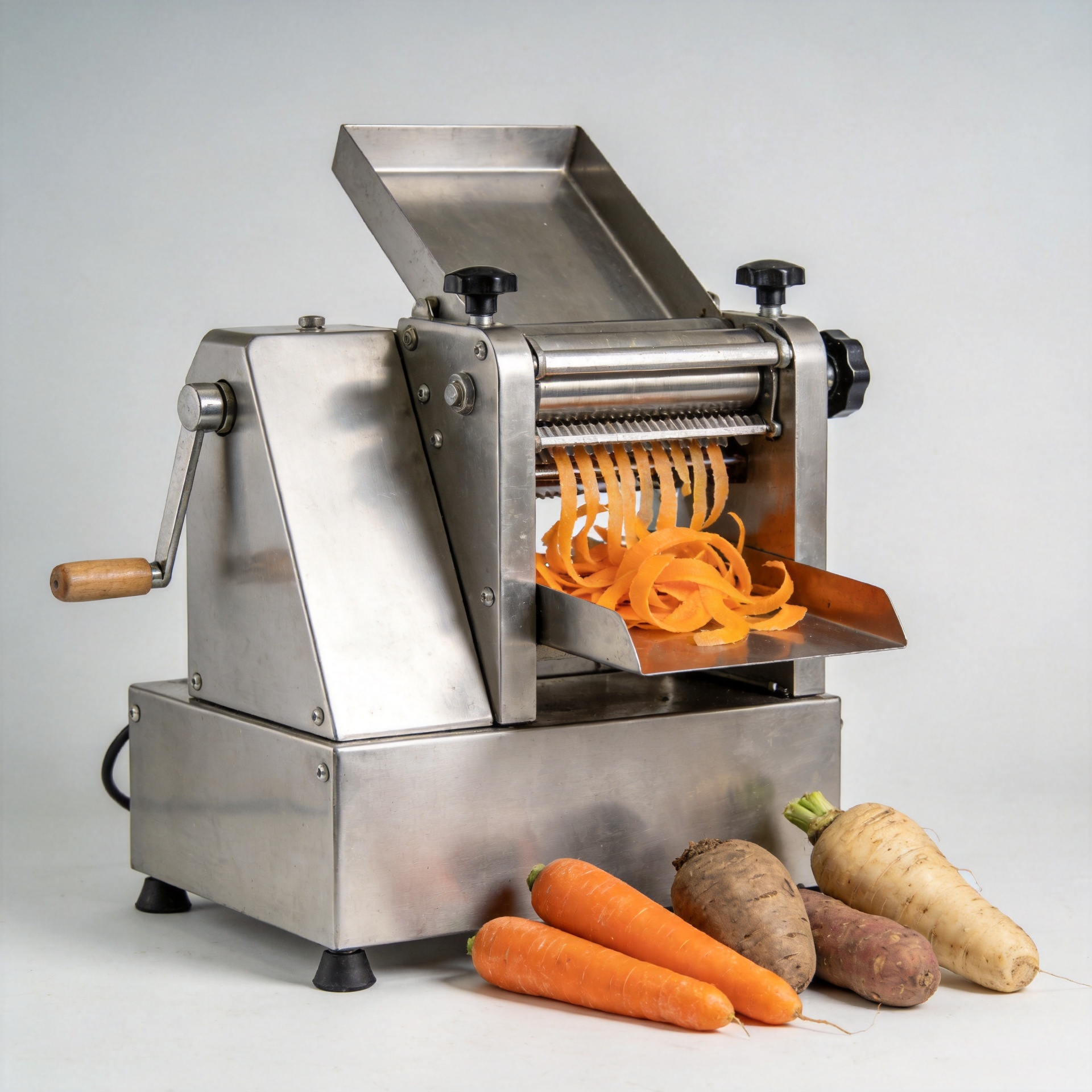
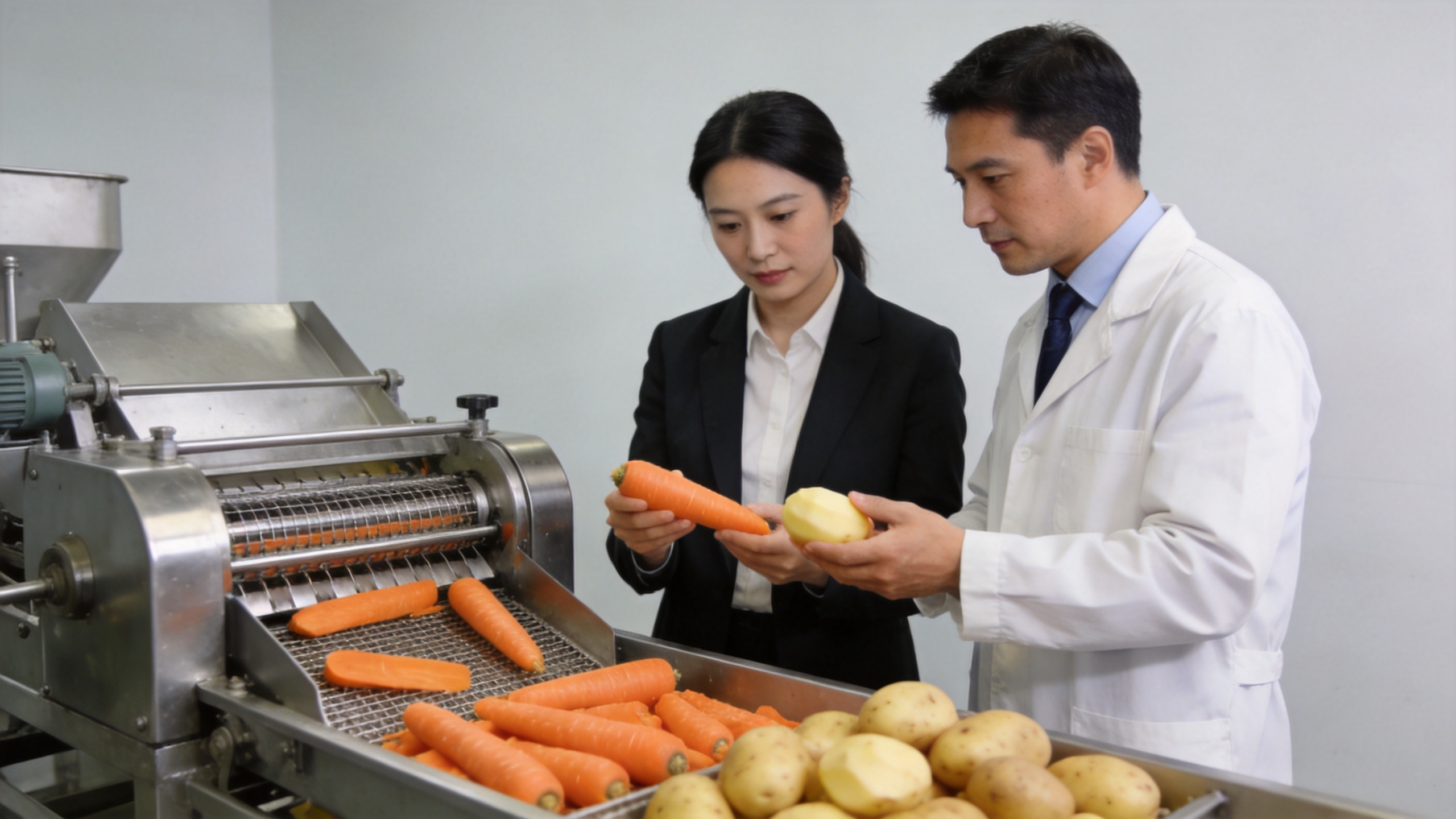
For an example of a blade-peeling option to discuss during a quote review, see the New Technology Carrot Peeler Blade Peeling Type Automatic Carrot Peeling Machine. Use the product discussion to request process-specific evidence rather than assuming that a product title confirms suitability for every root crop.
Compare Supplier Capability Beyond the Vegetable Peeler Machine Quote
Two quotations for a vegetable peeler machine can look similar while their delivery scope differs materially. Put each supplier’s response into the same comparison table. Include the equipment configuration, included accessories, electrical and water assumptions, documentation, export packing, commissioning support, operator training, lead-time basis, and acceptance criteria.
| Assessment area | What to request | Why it matters |
|---|---|---|
| Process fit | Crop list, sample-test plan, and adjustment limits | Clarifies whether the vegetable peeler machine matches actual material. |
| Scope clarity | Itemized inclusions and utility requirements | Reduces avoidable integration questions at installation. |
| Acceptance | Written trial and inspection criteria | Creates a shared reference before shipment. |
| Service | Named response channel, manuals, and training format | Shows how support will work after delivery. |
| Maintenance | Wear-part list, part numbers, and recommended stock | Helps plan continuity for the vegetable peeler machine. |
In cross-border projects, clear written scope is especially useful. A supplier that explains the limits of the proposed vegetable peeler machine is often easier to work with than one that gives only broad assurances. Look for responses that identify conditions requiring an adjustment, extra handling, or a different configuration.
Check Communication, Documentation, and Delivery Support
Supplier evaluation should include how the team communicates before an order. Are technical questions answered directly? Are drawings, utility lists, and operating assumptions consistent with the quotation? Can the supplier separate what is included from what remains buyer-supplied? These habits are useful indicators for a vegetable peeler machine project, where installation coordination can affect start-up timing.
Ask for the documentation package before you finalize the order: operating instructions, cleaning guidance, routine inspection points, wiring information where applicable, packing details, and a recommended spare-parts list. If remote support is part of the offer, clarify the contact method, time-zone coverage, language capability, and information the operator should provide when reporting a problem.
Do not compare only the initial price. A lower-price vegetable peeler machine may create a different maintenance burden if replacement components are hard to identify or service guidance is unclear. Conversely, a higher quoted scope should be checked against evidence, not simply treated as more complete.
Review Wear Parts and Service Boundaries Before Ordering
Wear items deserve a specific conversation because they influence availability over the life of a vegetable peeler machine. Ask which parts contact produce, which parts need routine inspection, how replacement is performed, and what should be held on site. Request item names, drawings or photos where available, quantities, and the supplier’s recommended replenishment approach.
Also ask the supplier to distinguish routine maintenance from fault diagnosis, installation assistance, and operator training. A useful service statement defines the boundary: what the supplier provides remotely, what site conditions the buyer must prepare, and what information is needed to diagnose a vegetable peeler machine issue. That level of clarity can be more useful than a vague promise of support.
Use a Final Supplier Scorecard
Before issuing a purchase order, have the procurement, production, and maintenance stakeholders review the same scorecard. Weight process fit, sample-test quality, scope clarity, service readiness, wear-part planning, communication, and commercial terms according to your project. The right vegetable peeler machine supplier is the one whose evidence fits your operating conditions and whose responsibilities are clear.
For buyers considering an automatic fruit and vegetable peeler, the same principle applies: start with the raw material and process requirement, then evaluate the supplier’s ability to test, document, deliver, and support the proposed vegetable peeler machine. A disciplined inquiry creates a more comparable decision than a quotation-only review.