EN


How to Build a Potato Washing and Cutting Line for French Fries
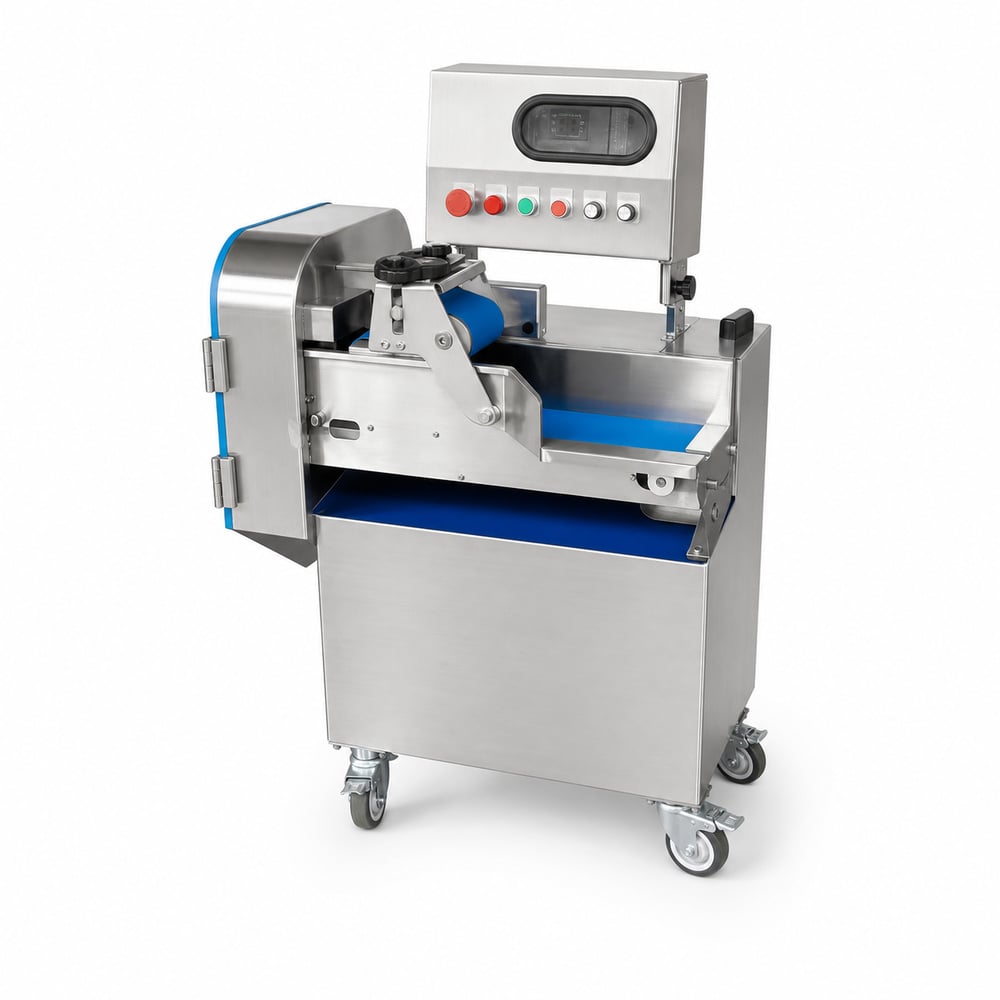
For a French-fry producer, a commercial potato cutter is not a stand-alone purchase. It is one handoff point in a process that starts with raw-potato receiving and finishes with a consistently sized product ready for the next operation. As an industrial equipment technical adviser, I would first map the material flow, then compare the equipment interfaces, and only then specify the cutter.
A practical line has to protect three things at the same time: potato condition, cut consistency, and cleanable operation. The right commercial potato cutter is therefore the one that fits the planned throughput, the incoming potato range, the target fry profile, and the wash-line discharge—not simply the machine with the largest advertised capacity.
Start with the process map, not the cutter model
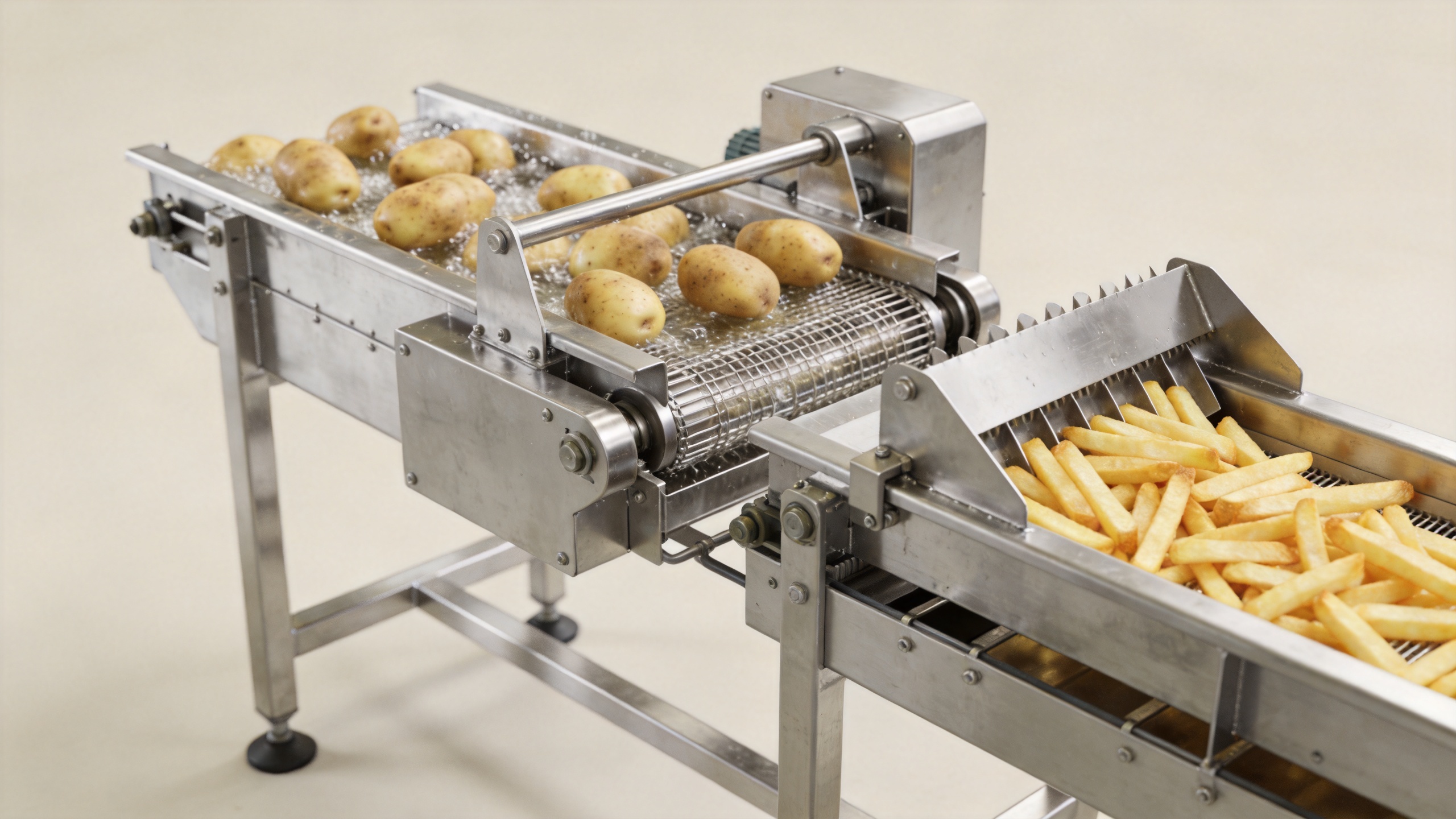
Map every transfer before asking for a quotation. A typical flow is receiving and dry sorting, soil removal, washing, optional peeling or trimming, inspection, cutting, post-cut rinsing, and transfer to blanching, drying, frying, freezing, or packaging. The commercial potato cutter sits after potatoes are clean enough to protect knives and before the downstream step that depends on uniform pieces.
At each handoff, define the product direction, elevation, buffer time, and reject route. If the washer discharges potatoes too quickly, the commercial potato cutter can be starved or flooded. If a conveyor drops product too far into the cutter feed, bruising and irregular orientation may increase. A simple sketch showing equipment sequence, operator access, drainage, and service clearance often identifies these issues before fabrication begins.
Build the washing section around soil load and sanitation
Incoming potatoes do not arrive in identical condition. Field soil, stones, damaged potatoes, and seasonal variation influence whether the first stage should be dry removal, spray washing, bubble or vortex washing, brushing, or a combination. The washing section should remove contamination without creating an uncontrolled bottleneck before the commercial potato cutter.
Hygienic design matters as much as washing action. Food-processing equipment should have accessible, cleanable surfaces and avoid unnecessary crevices where product residues can remain. Confirm how wash water is refreshed, where solids are separated, how the machine drains, and how operators can inspect contact surfaces. These questions also matter for the commercial potato cutter, because starch and small fragments can accumulate around feeding and cutting areas.
For a planned French-fry line, agree on the acceptable potato condition at the washer outlet: no visible soil, controlled free water, and a predictable feed rate. That outlet condition becomes the design input for the next conveyor and the commercial potato cutter.
Specify cut geometry before selecting a commercial potato cutter
Start with the finished product specification: straight-cut fries, crinkle cuts, cubes, slices, or another format; then define the target cross-section and the tolerance your downstream process can accept. A commercial potato cutter should be evaluated against this finished-product requirement, not against an abstract list of blade options.
Ask how the machine handles size variation, soft potatoes, and occasional defects. Knife configuration, feed control, and access for blade changes all affect daily performance. In a high-volume setting, a commercial potato cutter also needs a realistic cleaning and maintenance routine. A fast changeover is useful only if the crew can complete it safely and repeatably.
| Selection question | Why it matters |
|---|---|
| What fry size and shape will be sold? | Sets the blade and cutting-head requirement. |
| What is the planned hourly throughput? | Determines whether the commercial potato cutter and its infeed have adequate capacity margin. |
| What potato sizes and conditions are expected? | Influences pre-grading, trimming, and feed stability. |
| How will the line be cleaned and serviced? | Shapes access, drainage, removable parts, and downtime planning. |
Match the equipment handoffs
The key engineering task is matching actual flow rather than nominal machine ratings. The conveyor leaving the washer must deliver potatoes at a stable rate to the commercial potato cutter. The cutter discharge must then transfer cut product gently enough to prevent unnecessary breakage before rinsing or blanching. If the cutting stage is expected to run faster than washing, include an appropriately sized buffer; if it runs slower, control the upstream feed rather than allowing pile-up.
Water management deserves the same attention. The wash system, post-cut rinse, floor drainage, and cleaning procedures should be reviewed together. Confirm available water, drainage capacity, electrical supply, compressed air where applicable, and operator space. A commercial potato cutter can be mechanically suitable but still create a poor line fit if utilities or cleaning access were left out of the layout.
Use a staged procurement checklist
- Define product format, hourly target, operating shifts, and expected raw-potato variability.
- Set the wash-to-cut material-flow diagram, including inspection and reject points.
- Request drawings that show infeed and discharge elevations for the commercial potato cutter.
- Review blade access, guarding, sanitation access, spare-parts planning, and operator training.
- Confirm how the cutter will connect to post-cut rinsing and the chosen downstream process.
Where a washing-machine option is being evaluated, review the confirmed product information for the Automatic French Fries Washing Machine for Vegetables Drying Function-Cleaning Red Chilli Stone Dust Vortex Fruit Mushroom Ozone alongside the cutter layout. The useful question is not whether one machine can solve the whole process, but whether its discharge conditions support the selected commercial potato cutter.
Choose the line by operating fit
There is no universal single-choice commercial potato cutter. A smaller operation may prioritize straightforward cleaning and a manageable changeover, while a larger line may prioritize steady feed control, integration, and service access. In both cases, define the interfaces first and use supplier discussions to validate the layout.
Zhengzhou HongLe Machinery Equipment Co., Ltd. supplies food-processing equipment and can support a line-planning conversation around washing, processing flow, and overseas service needs. Bring a product sample, target output, available footprint, and utility details to the discussion. That information makes it much easier to select a commercial potato cutter and wash section that work as one production line rather than as disconnected machines.