EN
EN


How to Buy a Commercial Electric Garlic Peeler Machine: Capacity, Price Factors, and Supplier Tips
When I started sourcing an electric garlic peeler machine for a mid-sized food processing client, one thing became clear right away: the spec sheet is only a starting point. Capacity figures, price tags, and certification claims all need to be read in context. What works at 25 kg/h for a restaurant kitchen is a different calculation from what a factory processing several hundred kilos per shift actually needs. This guide walks through the key criteria for selecting and purchasing a commercial electric garlic peeler machine so you can make a confident sourcing decision.
1. What Capacity (kg/h) Actually Means for Your Operation
The capacity rating on an electric garlic peeler machine spec sheet represents the maximum theoretical throughput under ideal conditions — dried garlic, consistent clove size, continuous operation. In practice, effective output often runs 15–25% lower depending on garlic moisture content, clove size variation, and batch changeover time.
Before comparing models, calculate your target hourly requirement based on your shift production plan:
- Small commercial electric garlic peeler machine (20–30 kg/h, ~200W): Suitable for restaurant kitchens, catering operations, or small-batch food processing. These units are widely available and competitively priced.
- Mid-range commercial (100–500 kg/h): The practical range for most food processing facilities. An electric garlic peeler machine in this range handles daily volumes that would otherwise require significant manual labor.
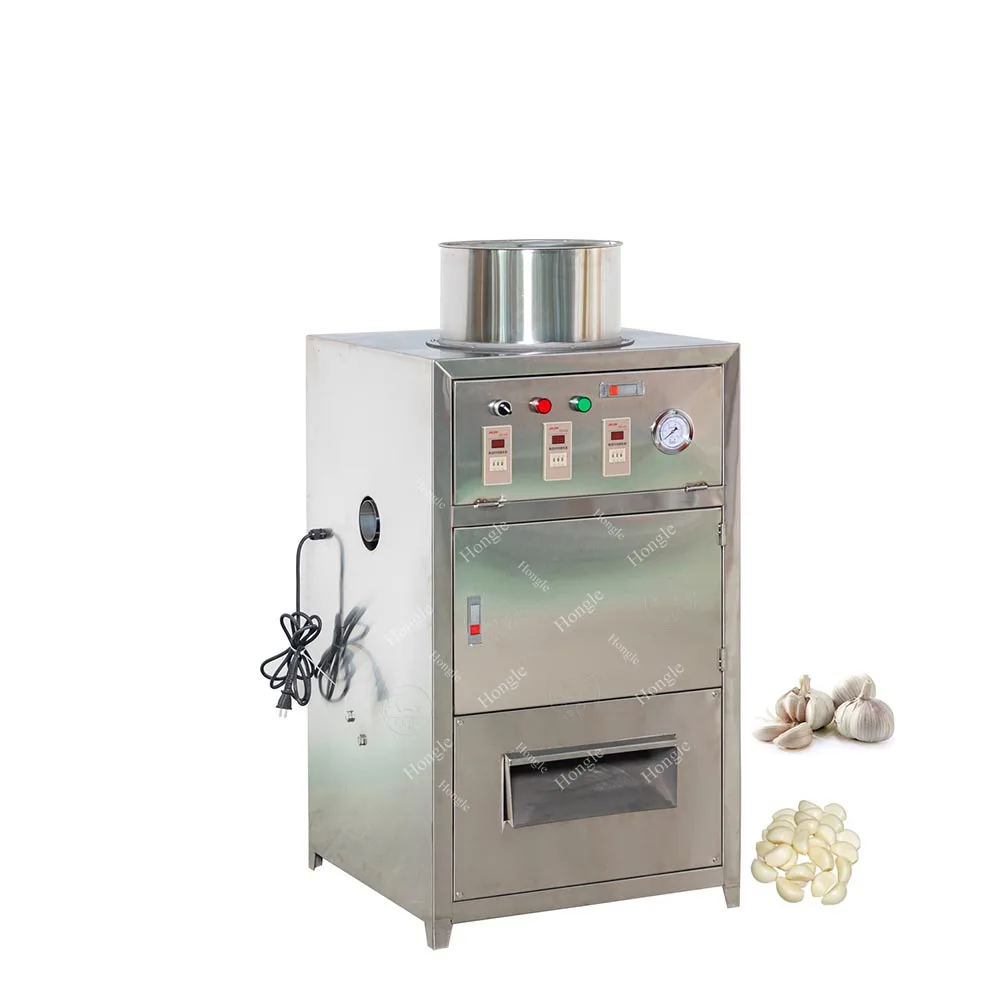
- Industrial-scale electric garlic peeler machine (up to 1,000 kg/h): Full-automatic commercial systems designed for high-volume garlic and ginger processing, such as the 1000 Kg/H Full-Automatic Commercial Garlic and Ginger Peeling Machine from Hongle Machinery. These configurations suit processors supplying industrial food manufacturers or export-scale operations.
Here is a quick way to frame it: if your daily processing target is 2,000 kg across an 8-hour shift, you need roughly 250 kg/h effective throughput. That means specifying an electric garlic peeler machine rated at 300–350 kg/h to leave room for real-world efficiency variation.
2. Technical Parameters That Determine Real-World Performance
Capacity tells you how much the machine can process per hour. Three other parameters shape how well it does that job:
- Peeling rate: Commercial-grade dry-process units typically achieve 95%–98% peeling rate. Anything significantly below 95% will require additional manual re-peeling, which undermines the labor-saving value of the equipment.
- Motor power and drive system: For mid-to-high-capacity machines, a variable-frequency drive allows the operator to adjust throughput speed for different garlic varieties, reducing damage to sensitive cloves.
- Material compliance: All food-contact surfaces should be food-grade stainless steel (typically 304 or 316 grade). This is non-negotiable for export-market food processing and helps meet hygiene audit requirements.
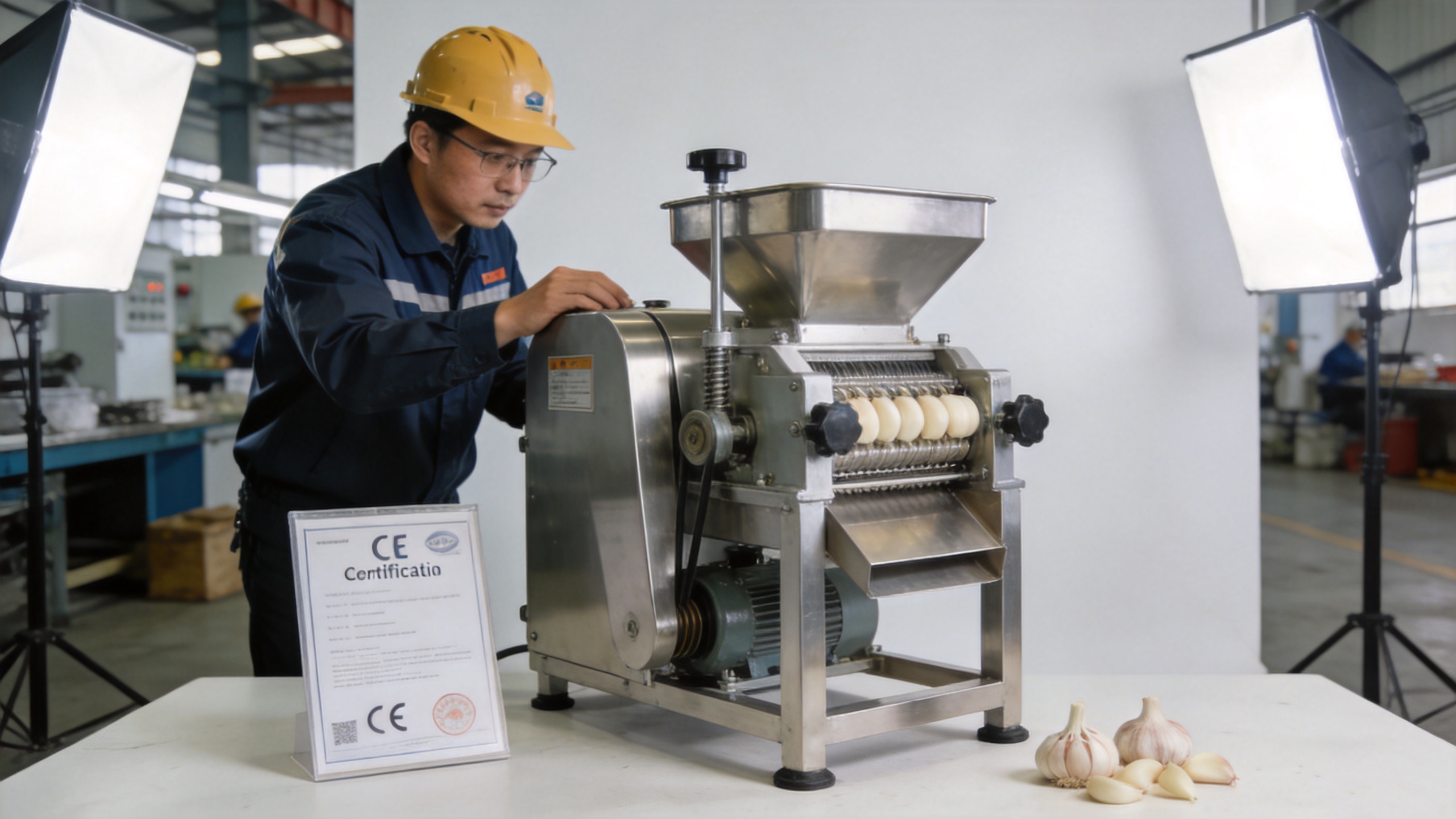
CE certification is specifically relevant if your facility sells into European markets or supplies buyers with EU compliance requirements. Whether you are purchasing a 200W tabletop commercial unit or a 1,000 kg/h industrial electric garlic peeler machine — be sure to verify the actual CE test report documentation, not just the label on the machine.
3. Price Factors and the Full Cost of Ownership
Many buyers focus on unit price first when evaluating an electric garlic peeler machine. That is understandable, but the unit price is often the smaller component of your total investment. Consider the full cost structure before committing:
- Unit price: Mid-range commercial electric garlic peeler machines (100–500 kg/h, CE-certified) typically range from approximately $520 to $1,200 FOB, depending on capacity, automation level, and supplier. Industrial-scale full-automatic systems are priced higher.
- Freight and import duties: Landed cost from China to Africa, Southeast Asia, or South America can add 10–25% depending on destination port and incoterms.
- Installation and commissioning: Budget for technical commissioning support — either an onsite visit or structured video-guided startup. Established suppliers include this at a defined cost or as part of the package.
- Consumables and spare parts: Key wear parts — peeling chambers, rubber components, drive belts — should be available within a reasonable lead time. Ask whether critical spares can be sourced locally or only from the factory.
- After-sales response: Technical support responsiveness during production peaks is worth more than it appears on a cost sheet. One production-halting fault without accessible support will cost more than the price difference between a mid-tier and a well-supported supplier.
4. How to Evaluate and Compare Suppliers
Most procurement mistakes happen not during negotiation, but during the verification stage. Buyers who skip this step when sourcing a commercial electric garlic peeler machine often discover the problem after the machine arrives. Here is what to check:
Certification and Compliance Verification
Request the actual CE test report (not just the CE declaration), and verify it corresponds to the specific model you are ordering. For food processing equipment exported to regulated markets, also confirm whether the machine meets local hygiene standards applicable to your end customer's requirements.
Factory Verification
If you cannot visit in person, request a live video walkthrough of the production floor and a running demonstration of the specific electric garlic peeler machine model with your target garlic specification. This is a standard service that established manufacturers readily accommodate — and a meaningful signal of operational credibility.
Spare Parts and Ongoing Support
Ask specifically: what is the lead time for replacement peeling chambers? Are key electrical components — PLCs, motors, sensors — from standard industrial brands that can be sourced locally if needed? Suppliers who think about your long-term operation tend to answer these questions without hesitation.
Regional Delivery Experience
Established suppliers serving Africa, Southeast Asia, and South America understand local grid voltage requirements, export packaging constraints for long-haul shipping, and the value of multilingual operating manuals. Ask for references or documented delivery cases in markets similar to yours.
5. Supplier Inquiry Checklist
Before sending an RFQ for a commercial electric garlic peeler machine, prepare to ask these specific questions:
- What is the effective peeling rate at our target garlic moisture content?
- Is the CE certificate linked to this exact model number — can you provide the test report?
- What is the lead time for the top 5 wear parts?
- What voltage and frequency specification does the machine ship as standard, and what is the custom-spec lead time?
- Does the price include a spare parts kit? What is included?
- What commissioning support is provided — onsite visit, video call, or documentation only?
- Can you provide references at facilities processing at a similar scale?
Hongle Machinery, based in Zhengzhou, manufactures food processing equipment including commercial garlic and ginger peeling machines with delivery experience across Africa, Europe, Asia, and the Americas. If you are evaluating a high-capacity full-automatic electric garlic peeler machine, you can review the 1000 Kg/H model specifications as a reference point for your capacity comparison.
Final Considerations
An electric garlic peeler machine is a long-term production asset. The selection criteria that matter at the decision stage — capacity accuracy, certification authenticity, total cost transparency, and supplier service capability — are exactly the factors that determine your post-purchase experience. Apply these criteria consistently, and prioritize suppliers who answer your technical questions with specifics rather than generalities.