EN
EN


How to Buy a Commercial Vegetable Chopper: Specs, Output Capacity, and Factory Checklist
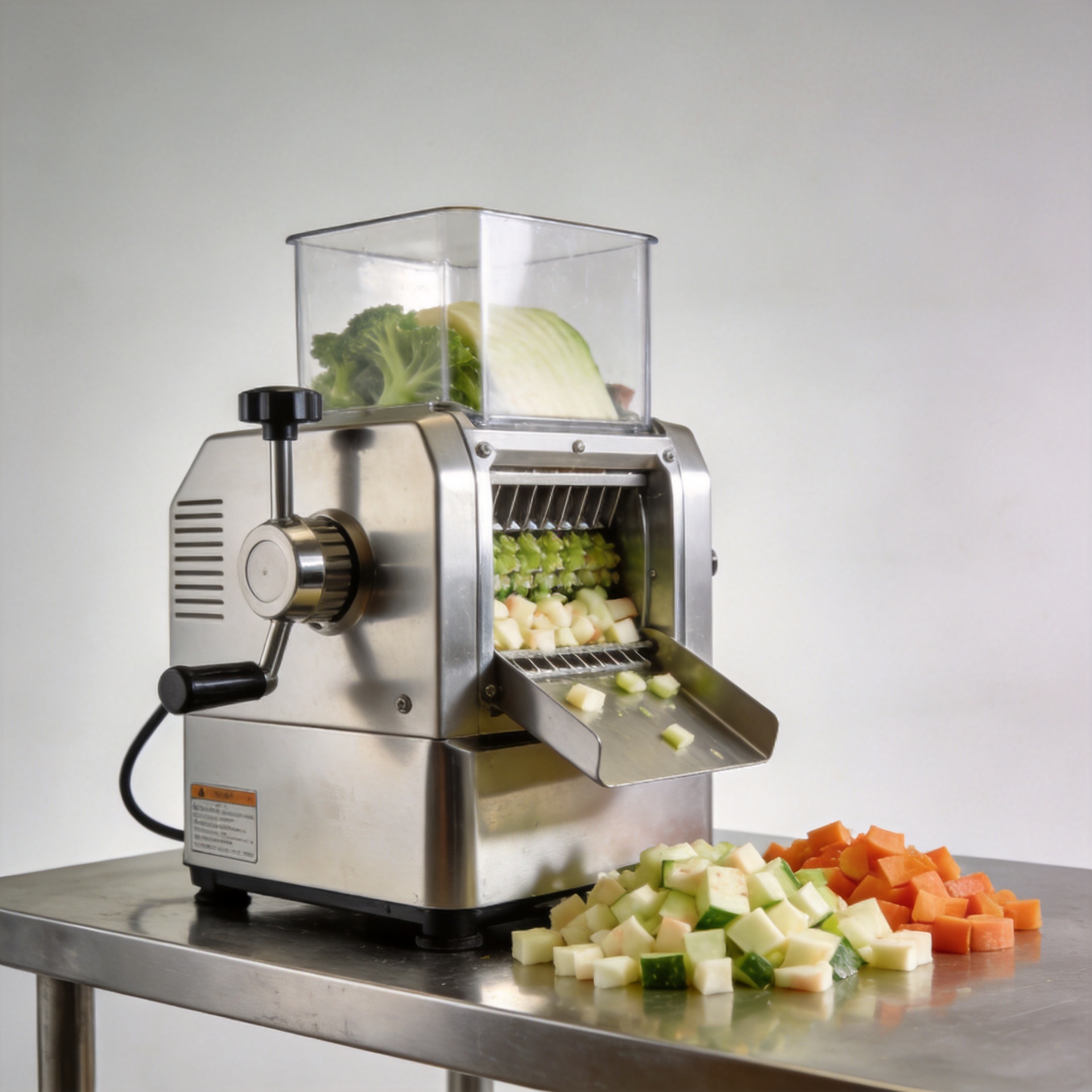
Buying a commercial vegetable chopper for a restaurant chain, central kitchen, or pre-made food factory is not the same as ordering kitchen tools. The specs that matter in a high-throughput production line (motor power, cutting precision, hygiene compliance, after-sales support) are rarely explained clearly in product listings. As someone responsible for equipment procurement for food processing facilities, I learned early on that the supplier's spec sheet is just the starting point. The real evaluation happens when you map those numbers to your actual daily throughput requirements.
This guide walks you through a practical evaluation framework for sourcing a commercial vegetable chopper, covering the specifications that matter, the hygiene standards you should demand, and a factory-side checklist to use when verifying suppliers before placing an order.
Step 1: Define Your Output Capacity Requirements First
Before you evaluate any commercial vegetable chopper model, calculate how many kilograms of vegetables your operation needs to process per hour. This single number determines which equipment tier you actually need.
A useful benchmark: restaurant-grade commercial slicers typically handle 50–200 lbs/hour (roughly 23–90 kg/h). Entry-level continuous-feed processors with a 3/4 HP motor (~560W) can reach up to 500 lbs/hour (~225 kg/h), which is sufficient for most mid-volume food service operations. If you are running a central kitchen or pre-made food factory processing root vegetables and leafy greens simultaneously, you are likely looking at 300–1,000+ kg/hour — which requires industrial-grade multi-function vegetable cutting equipment with combined motor power ranging from 1.0 kW to 3.35 kW.
If your daily throughput is in the 500–800 kg/day range, a 1000W single-motor commercial vegetable chopper running two or three shifts may cover your needs. If you are processing 3,000+ kg/day, a dual-head or multi-function system is worth evaluating. Match equipment capacity to your peak-hour demand, not your average.
Step 2: Key Specs to Evaluate — Motor Power, Blade Configuration, and Material
When comparing any commercial vegetable chopper, motor power directly determines continuous-run reliability and the range of vegetables the machine can handle without slowing down. Here is a practical breakdown by power tier:
- 200W – 550W: Suitable for light commercial use — salad bars, small canteens, or restaurant prep. Well-suited for leafy vegetables and soft produce. Not recommended for dense root vegetables under sustained load.
- 550W – 1,000W: Mid-range commercial and light industrial. Handles potatoes, carrots, onions, and peppers at consistent volumes. If you need a commercial industrial electric vegetable cutter for potato, fruit, and green onion with motor as the core component, this power range is typically the minimum for steady-state central kitchen operations.
- 1,000W+ (multi-motor configurations): Industrial-grade. Dual-head configurations using combined motor power of 1.1 kW + 0.75 kW + 1.5 kW achieve 600–1,000 kg/hour on root vegetables. These are appropriate for pre-made food factories with high daily volumes.
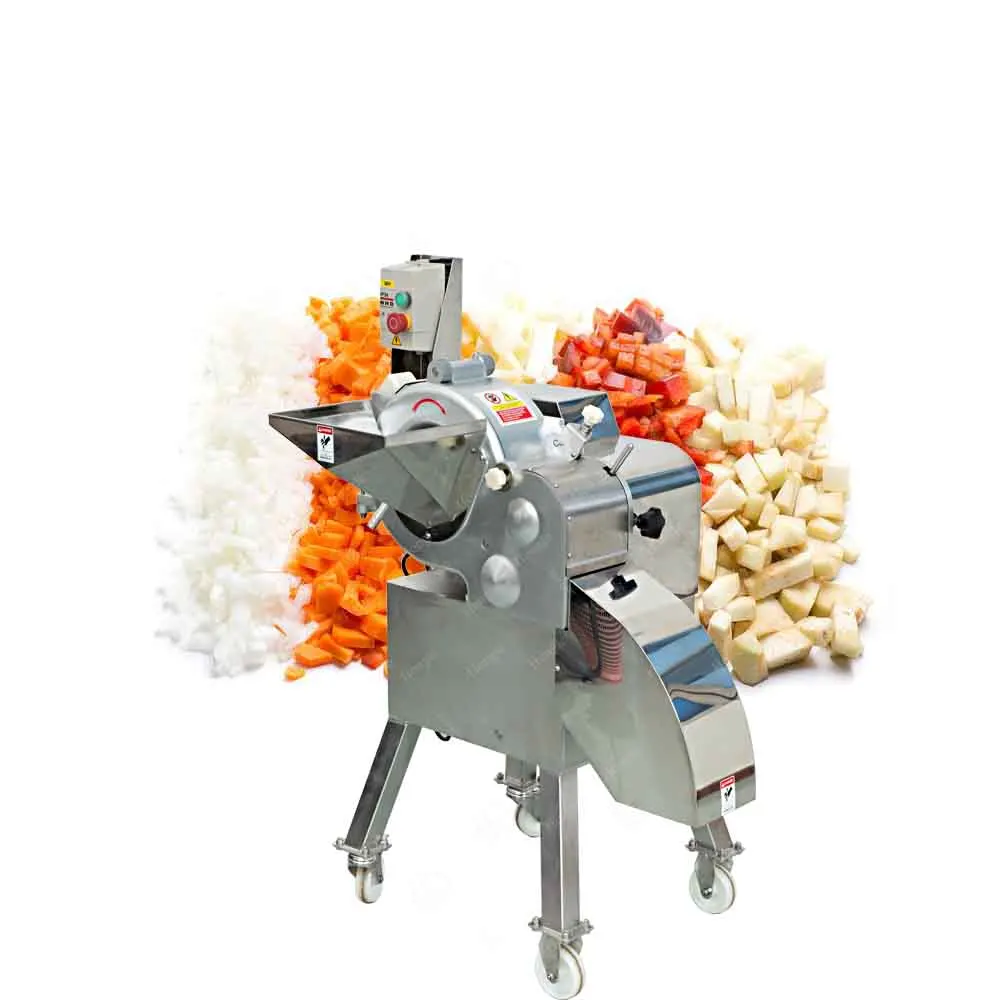
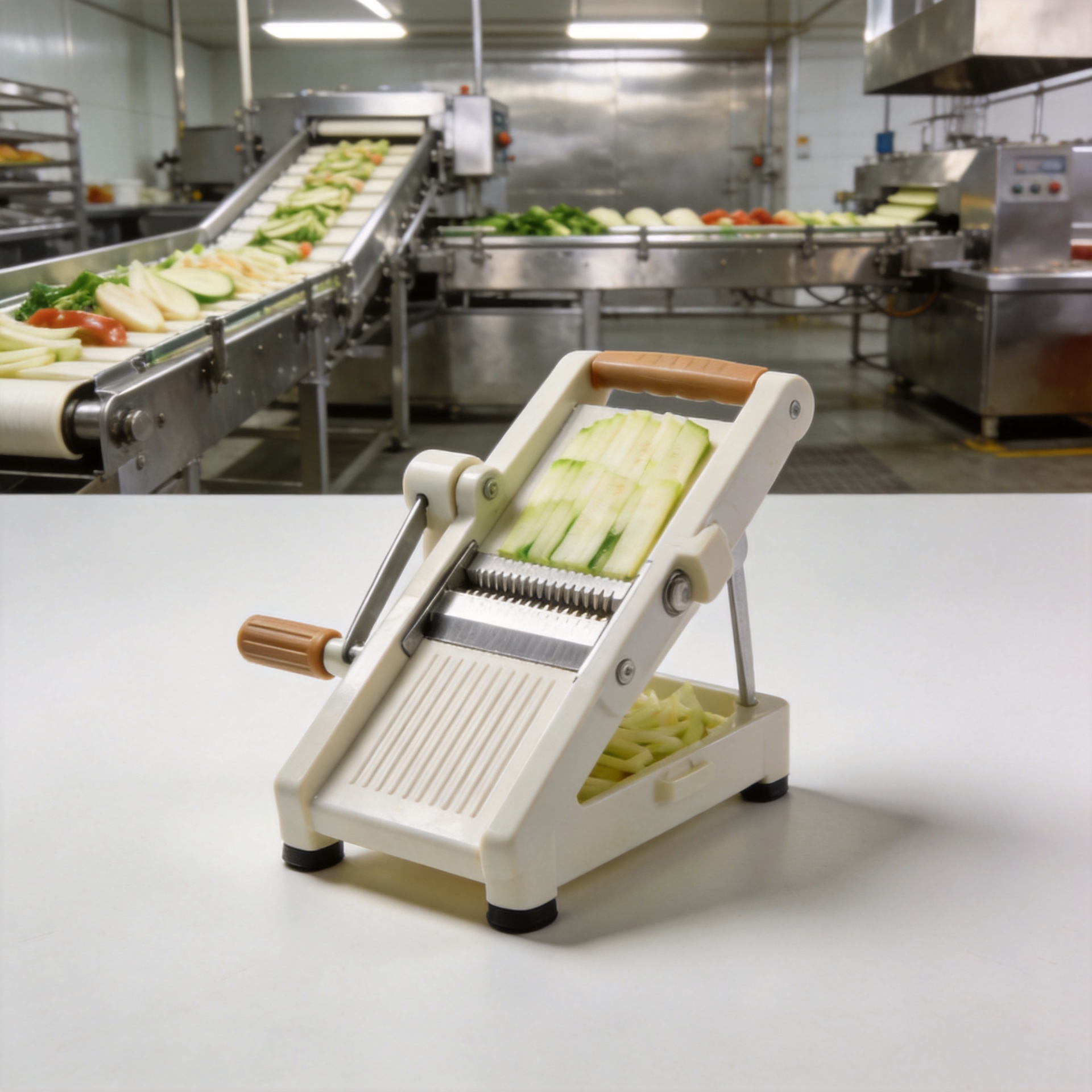
For blade configuration on any commercial vegetable chopper, verify the available cut types — slicing, dicing, shredding, julienne — along with the blade change mechanism and whether blades are available as standard replaceable parts. A machine with proprietary blades that are difficult to source locally will cost more in downtime than you saved on the initial purchase price.
Step 3: Hygiene Compliance — Why SUS304 Matters and What to Verify
In food processing environments, hygiene compliance cannot be an afterthought when selecting a commercial vegetable chopper. SUS304 (304 stainless steel) is the minimum acceptable material grade for wet-process vegetable cutting equipment that comes in contact with food. It is not just about corrosion resistance — it is about maintaining a surface finish that can be properly cleaned and sanitized between production batches.
Check these points in the supplier's technical documentation:
- Material designation: The hopper, cutting chamber, blade holder, and discharge area must all be SUS304 or higher. Request the material certification report before placing an order.
- Surface finish standard: For wet-process food equipment, internal surface finish should meet Ra ≤ 0.8 μm. This specification prevents bacterial build-up in micro-scratches that a rougher finish would harbor.
- Gaskets and seals: Confirm that rubber or silicone components are food-grade rated. This is frequently overlooked in spec comparisons but matters for HACCP compliance.
- Disassembly and drainage design: A commercial vegetable chopper with accessible blade removal and smooth drainage slopes reduces cleaning time and contamination risk significantly.
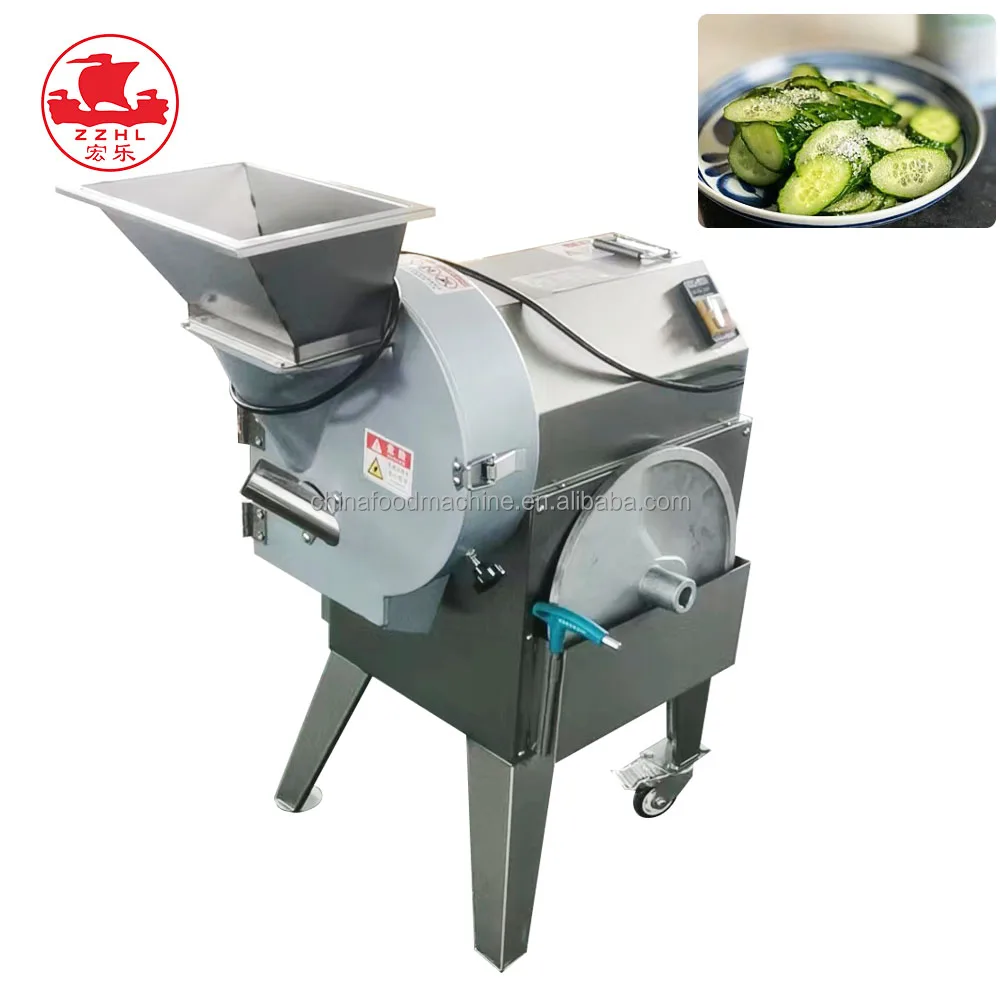
A well-designed multi-function vegetable cutting machine should allow full blade-set removal and reassembly in under ten minutes. If a supplier cannot demonstrate a cleaning and disassembly procedure, treat that as a warning sign.
Step 4: After-Sales Service — The Spec That Is Missing from Every Brochure
After-sales support tends to get overlooked right up until the machine stops. Before that happens, build these questions into your supplier evaluation:
- What spare parts kit is included with the machine? What is the lead time for replacement blades and motors from your location?
- Does the supplier provide remote video technical guidance for commissioning and troubleshooting?
- Is a multi-language operation manual included — critical for non-Chinese-speaking operators?
- What is the warranty period and what does it cover — manufacturing defects only, or wear parts as well?
- Does the supplier have experience shipping to your target market and can they confirm export packaging for your logistics route?
Step 5: Factory Verification Checklist for Cross-Border Procurement
For most buyers sourcing a commercial vegetable chopper from China, an in-person factory visit before placing an order simply is not an option. A structured pre-order checklist helps close that gap.
| Verification Item | What to Request | Watch Out For |
|---|---|---|
| Factory credentials | Business license, CE or ISO certifications if required by your market | Supplier deflects or cannot provide documentation |
| Material certification | SUS304 material test report for all food-contact components | Verbal assurance only, no written documentation |
| Pre-shipment video | Video of your actual machine running at your target output capacity | Only demo video of a different model, or refusal to provide |
| Batch consistency | Confirm whether production units use the same motor supplier as the sample | Evasive answer about component sourcing for batch orders |
| Packaging specification | Export packaging dimensions, weight, and crating material for sea freight | Standard domestic packaging not adapted for long-haul shipping |
| Technical support contact | Dedicated technical contact with clear response-time commitment | Only general sales contact, no dedicated technical support structure |
Sample RFQ Template for Your Commercial Vegetable Chopper Inquiry
Use this as a baseline when sending initial inquiries. A supplier worth working with will respond to all seven points without needing to ask what you mean:
- Motor power (kW) and rated output capacity (kg/hour) for your specific application — leafy vegetables, root vegetables, or mixed use including potato fries cutter commercial applications
- Material specification: confirm all food-contact surfaces are SUS304 or higher, with material certification available upon request
- Available blade configurations: slicing thickness range, dicing sizes, shredding and julienne options
- Power supply requirements: voltage and frequency for your target country
- Machine dimensions and weight for installation planning and shipping cost estimation
- Warranty terms and spare parts availability in your country or region
- Pre-shipment inspection options: video acceptance test or third-party inspection arrangement
If a supplier's response addresses all seven points clearly, you are working with a manufacturer who understands export procurement standards. If you receive only a catalog link in reply, that communicates something about their after-sales support structure as well.
Selecting the right commercial vegetable chopper — whether you need a potato fries cutter commercial scale machine or a full industrial cutting system for your central kitchen — comes down to matching capacity to your peak-hour demand, verifying SUS304 material compliance, and confirming the supplier's ability to support your operation after delivery. Use this framework as your evaluation baseline and adjust the capacity thresholds to match your actual production targets.