EN
EN


How to Choose a Commercial Vegetable Cutting Machine for Food Factories
A commercial vegetable cutting machine can remove a major preparation bottleneck, but only when it is matched to the product, line rhythm, and sanitation routine of the factory. For procurement teams, the useful question is not simply “Which machine is fastest?” It is “Which cutter can produce the required cut quality, at a usable rate, without creating a cleaning or maintenance problem?”
From a B2B buying perspective, the headline capacity is only a starting point. Root vegetables, leafy vegetables, onions, and fruit behave differently at the feed point and at the blade. A machine that looks suitable in a catalog may still be a poor fit if the raw material condition, required cut geometry, or downstream packing speed has not been defined first.
Start with the production task, not the machine format
Before comparing a commercial vegetable cutting machine, write down the actual work it must perform during a normal shift. Include the vegetables or fruit to be processed, the incoming size range, whether material is washed or peeled before cutting, the required shapes, and the acceptable variation in cut size. This turns a broad equipment search into a practical specification.
For example, a line making diced potato needs different handling from a line slicing cabbage or cutting green onion. Firm, round products may need controlled feeding and a different cutting action from soft or irregular products. If one machine will serve several recipes, clarify whether blade changes and cleaning changeovers can fit the production schedule.
- List each product and its condition at the machine inlet.
- Define the finished cut: slice, dice, strip, shred, or another format.
- State the cut-size range and the quality issues that matter most.
- Map the machine between washing, inspection, mixing, packing, or freezing steps.
This preparation also makes supplier discussions more efficient. Instead of asking for a generic commercial vegetable cutting machine recommendation, a buyer can ask how a proposed configuration handles the actual product mix and what needs to be tested before an order is released.
Match usable throughput to the whole line
Capacity claims vary widely across commercial processors. Market examples can range from several hundred pounds per hour to much larger kilogram-per-hour figures, but those figures are meaningful only with the supplier’s test conditions. Product type, feed preparation, operator loading, blade condition, and the definition of acceptable yield can all change usable output.
For that reason, calculate the required hourly rate from the factory plan, then leave room for loading, inspection, cleaning, and normal interruptions. The cutter should not become the limiting point when the washer, conveyor, blancher, or packing station is running at its intended pace. At the same time, buying excess capacity is not automatically better if it makes feeding less controlled or increases waste.
| Question | Why it matters | What to confirm |
|---|---|---|
| Required output per shift | Sets the production target | Planned volume, operating hours, and allowance for downtime |
| Actual feed rate | Determines usable throughput | How product is loaded and whether preparation is needed |
| Downstream capacity | Prevents line imbalance | Conveyor, packing, or further-processing rate |
| Yield and cut quality | Affects saleable product | Trim loss, breakage, and consistency requirements |
A good supplier conversation should distinguish rated capacity from expected capacity for your product. If your production volume fluctuates, a slightly different conclusion may be needed: the most valuable machine is often the one that matches normal operating demand and can be run consistently, rather than the one with the largest quoted number.
Compare cutting functions and changeover requirements
A commercial vegetable cutting machine may be selected for one dedicated cut or for a broader range of slices, dices, strips, and shreds. The right choice depends on the menu or SKU plan. A dedicated setup can simplify repeat production, while a more flexible arrangement may help a factory process seasonal products or multiple customer specifications.
Ask to see the available cutting tools, the stated method for changing them, and the way the supplier identifies compatible configurations. Also ask how the machine handles the products that are most difficult for your line—not only the product shown in a standard demonstration. This is where an on-site or video test using representative materials can be more informative than a general product list.
When evaluating options, avoid treating every machine feature as equally important. For a processor with frequent SKU changes, tool-change time and cleaning access can matter as much as the cutting function. For a stable, high-volume product, repeatable feeding and cut consistency may be the first priorities.
Make sanitation and operator safety part of the buying decision
Food factories should review cleaning steps before approving a commercial vegetable cutting machine. Look at the surfaces around the feed area, cutting chamber, discharge zone, guards, and collection points. The goal is not to assume a sanitation claim; it is to understand how the team will access, clean, inspect, and reassemble the machine between runs.
Request a clear cleaning procedure, the recommended cleaning frequency, and guidance on parts that need regular inspection. If the line handles allergen-sensitive or strongly colored products, changeover planning deserves extra attention. A cutter that is fast to run but slow to clean can reduce practical line availability.
Operator safety should be reviewed in the same session. Confirm how feeding is controlled, how guards are used, how the machine stops, and what training is required. The factory’s own safety program and local requirements remain the governing standard; supplier information should support, not replace, that review.
Evaluate supplier support and the evidence behind the proposal
For export equipment, the purchase decision includes more than the cutter itself. Ask what documents are supplied, what spare or wear parts are recommended, how remote technical guidance is arranged, and what information is needed for installation planning. These questions help a procurement team compare total operating risk rather than purchase price alone.
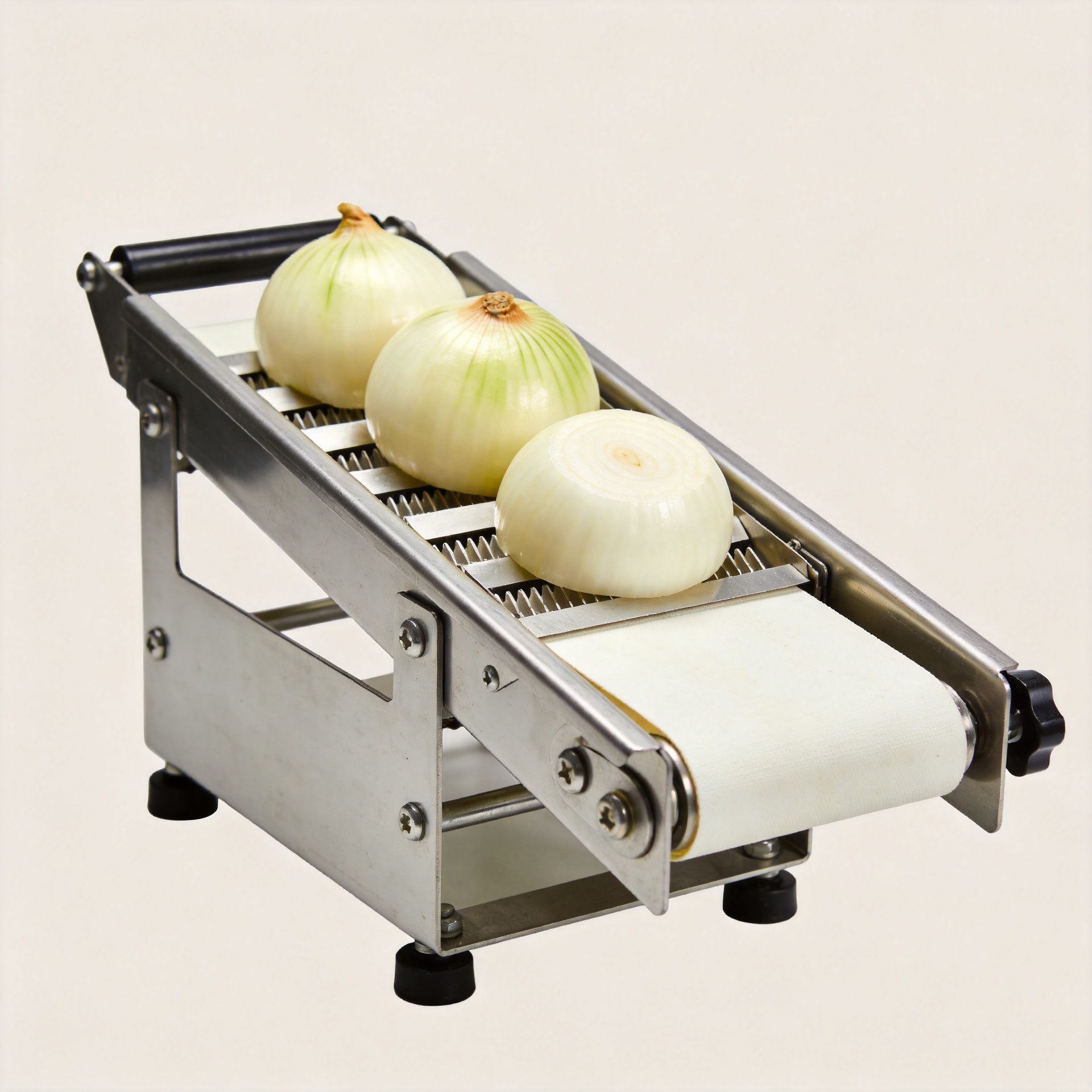
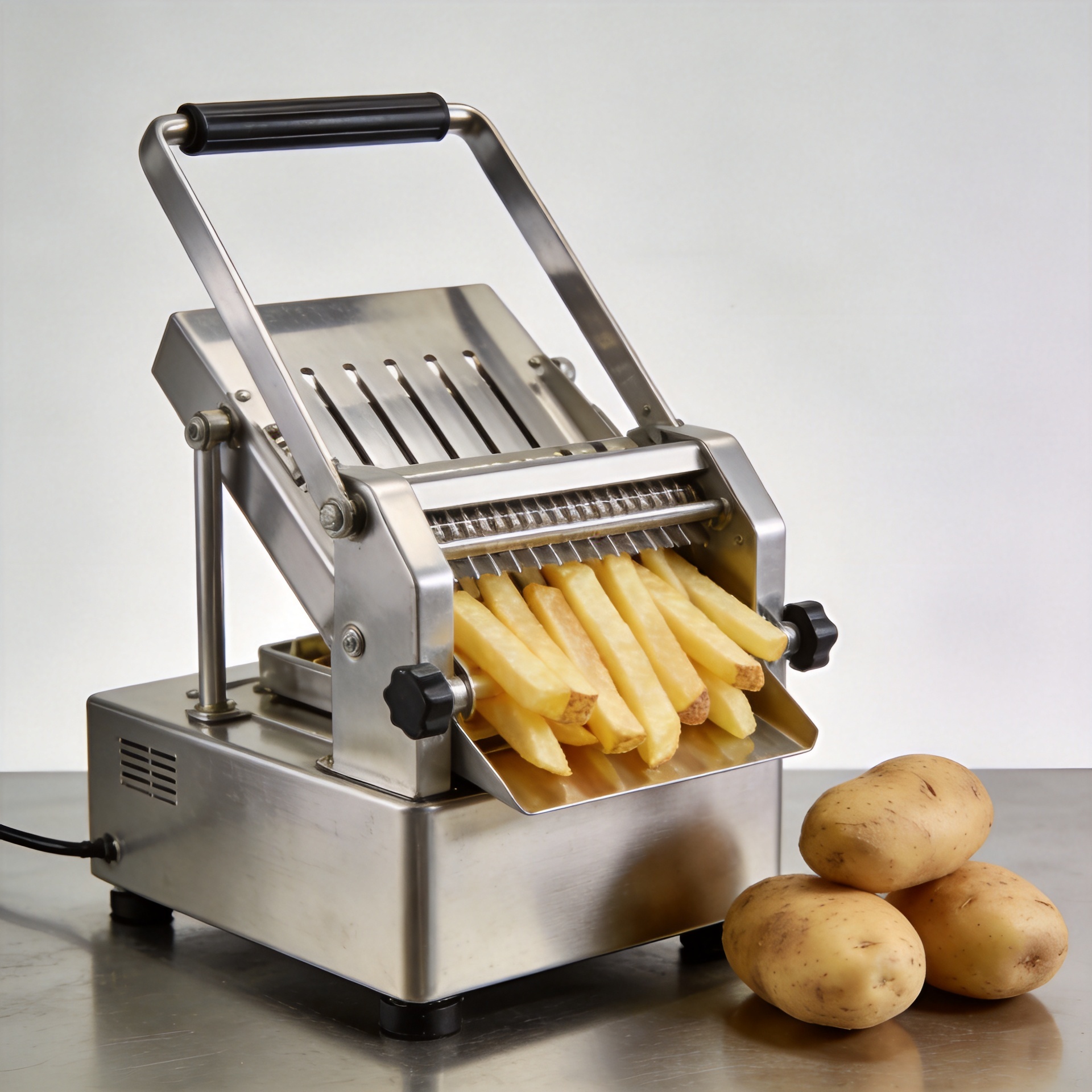
Hongle Machinery supplies food-processing equipment for international markets and can discuss equipment selection in the context of a buyer’s production workflow. For a product-level starting point, review the commercial industrial electric vegetable cutter dicing machine for potato, fruit, and green onion. The final configuration should still be confirmed against the raw materials, target cuts, and operating conditions of the intended line.
A practical factory procurement checklist
- Document the product mix, incoming condition, and required cut results.
- Calculate required usable output and compare it with upstream and downstream capacity.
- Verify the proposed blade and feed arrangement for representative materials.
- Review cleaning access, changeover steps, guards, and operator procedures.
- Request a complete quotation scope, recommended spare parts, and support details.
- Confirm layout, power requirements, and installation responsibilities before final approval.
Choosing a commercial vegetable cutting machine is ultimately a process decision. When the product specification, throughput target, sanitation plan, and support requirements are evaluated together, a food factory can select equipment with a clearer path to stable daily operation.
Commercial vegetable cutting machine FAQ for factory buyers
How should a factory compare a commercial vegetable cutting machine with a food processor?
A commercial vegetable cutting machine should be compared by feed control, cutting tools, changeover needs, and the production rate it can sustain. A commercial vegetable cutting machine may suit a dedicated factory task better when its cutting path and discharge arrangement fit the line. Before choosing a commercial vegetable cutting machine, ask for a representative product test rather than relying on a general demonstration.
What information should be sent to a commercial vegetable cutting machine supplier?
Send the raw-product list, product dimensions, target cut sizes, daily volume, available power, layout limits, and cleaning expectations. This information helps a commercial vegetable cutting machine supplier propose the right feeding and blade arrangement. It also gives the buyer a clear basis for checking whether the commercial vegetable cutting machine can meet the required workflow.
Is the highest rated capacity necessarily the right choice?
No. The appropriate commercial vegetable cutting machine is the one whose usable output fits the line and maintains the required cut quality. A larger commercial vegetable cutting machine can be useful for growth, but it should not force unsuitable feeding practices or make cleaning unnecessarily difficult. Compare a commercial vegetable cutting machine against normal production demand as well as peak demand.
How can buyers assess cleaning practicality?
Ask to see the cleaning sequence, removable parts, access points, and reassembly method. A commercial vegetable cutting machine should support the factory's documented hygiene routine. For frequent product changes, commercial vegetable cutting machine cleaning time can influence real daily capacity as much as the cutting rate.
What should be included in final acceptance?
Final acceptance for a commercial vegetable cutting machine should cover the agreed products, cut results, safe operation, documentation, and installation scope. A commercial vegetable cutting machine quotation should also clarify recommended wear parts and available support. These checks help the commercial vegetable cutting machine become a dependable part of the food-factory process rather than an isolated purchase.