EN


How to Choose a Vacuum Food Dehydrator for Small and Medium Food Plants
Choosing a vacuum food dehydrator is not the same as buying a larger version of a countertop dryer. A small or medium food plant has to match the machine with product behavior, daily batch flow, operator skills, utilities, sanitation routines, and the level of process control it can realistically manage. That is especially important for processors considering vacuum drying fruits, vegetables, herbs, chili products, or other materials whose appearance and texture can change when heat exposure is poorly controlled.
From a B2B procurement perspective, a supplier specification sheet is only the start. The useful question is not “Which vacuum food dehydrator has the largest stated capacity?” It is “Which configuration fits our material, operating schedule, and support resources?” This guide gives your team a practical framework before requesting quotations.
Start with the food material, not the machine model
The first selection step for a vacuum food dehydrator is to document what will enter the chamber. List the ingredient, cut size or particle size, initial moisture, target moisture, sugar or oil content, load thickness, and intended final texture. These details influence how readily moisture moves through the product and how evenly a batch dries.
Vacuum drying uses reduced pressure and a low-oxygen environment; this can allow moisture to evaporate at lower temperatures than in atmospheric drying. That does not mean every product needs the same recipe. Thin fruit slices, sticky fruit pieces, chopped vegetables, puree sheets, and spices can behave very differently. For vacuum drying fruits, include representative samples of the ripeness range and formulation you normally process. If your product changes by season, say so early in the discussion.
Ask suppliers which product data they need for a trial and how they define a successful trial. A useful answer should cover batch loading, temperature and vacuum ranges, drying time, final moisture testing, and the appearance or texture criteria your team will use. A vacuum food dehydrator should be evaluated against your acceptance criteria, not only a generic demonstration material.
Define batch throughput before comparing chamber size
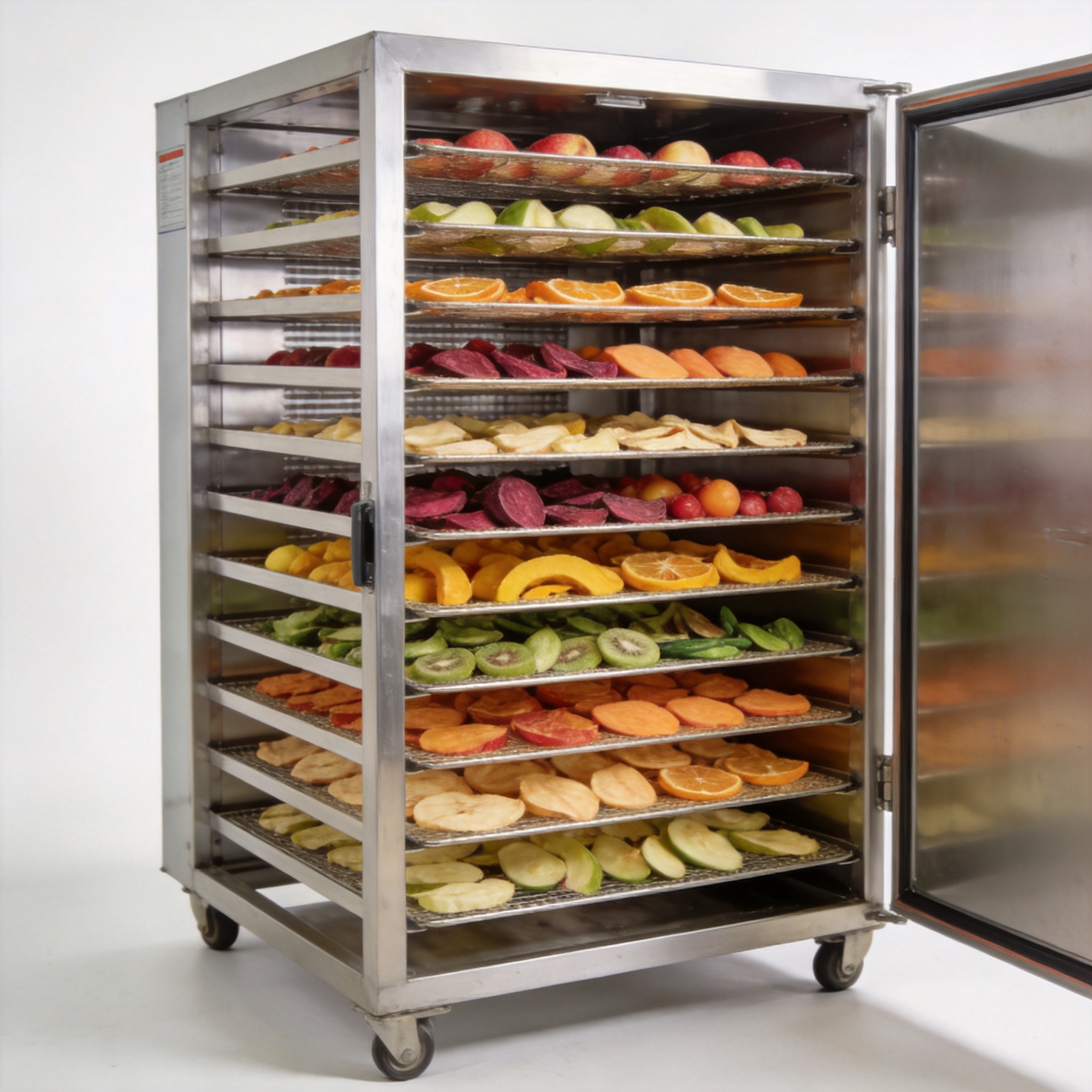
Chamber volume alone does not tell you whether a vacuum food dehydrator will meet production needs. Build a simple production picture: kilograms loaded per batch, batches per shift, expected drying cycle, changeover time, unloading time, and the buffer needed before packing. Then compare this with your actual incoming material flow.
For a growing plant, it is tempting to select the largest machine within the budget. In practice, an oversized vacuum food dehydrator can create underloaded batches, awkward cleaning routines, and more difficult operator training. A smaller unit that fits the current shift pattern may be easier to validate and run consistently. The opposite risk also matters: if loading and unloading consume too much of the day, a compact chamber may become a bottleneck even when its quoted output looks adequate.
| Question | Why it matters |
|---|---|
| What is the usable batch weight by product? | Loose herbs, sliced fruit, and dense pieces occupy trays differently. |
| How many completed batches are needed per shift? | This turns a capacity claim into a schedule requirement. |
| How long are cleaning and changeover? | These periods affect real availability of a vacuum food dehydrator. |
| Is the product portfolio expanding? | It guides whether modular capacity or a second unit is more practical. |
Compare the process package, not only the dryer body
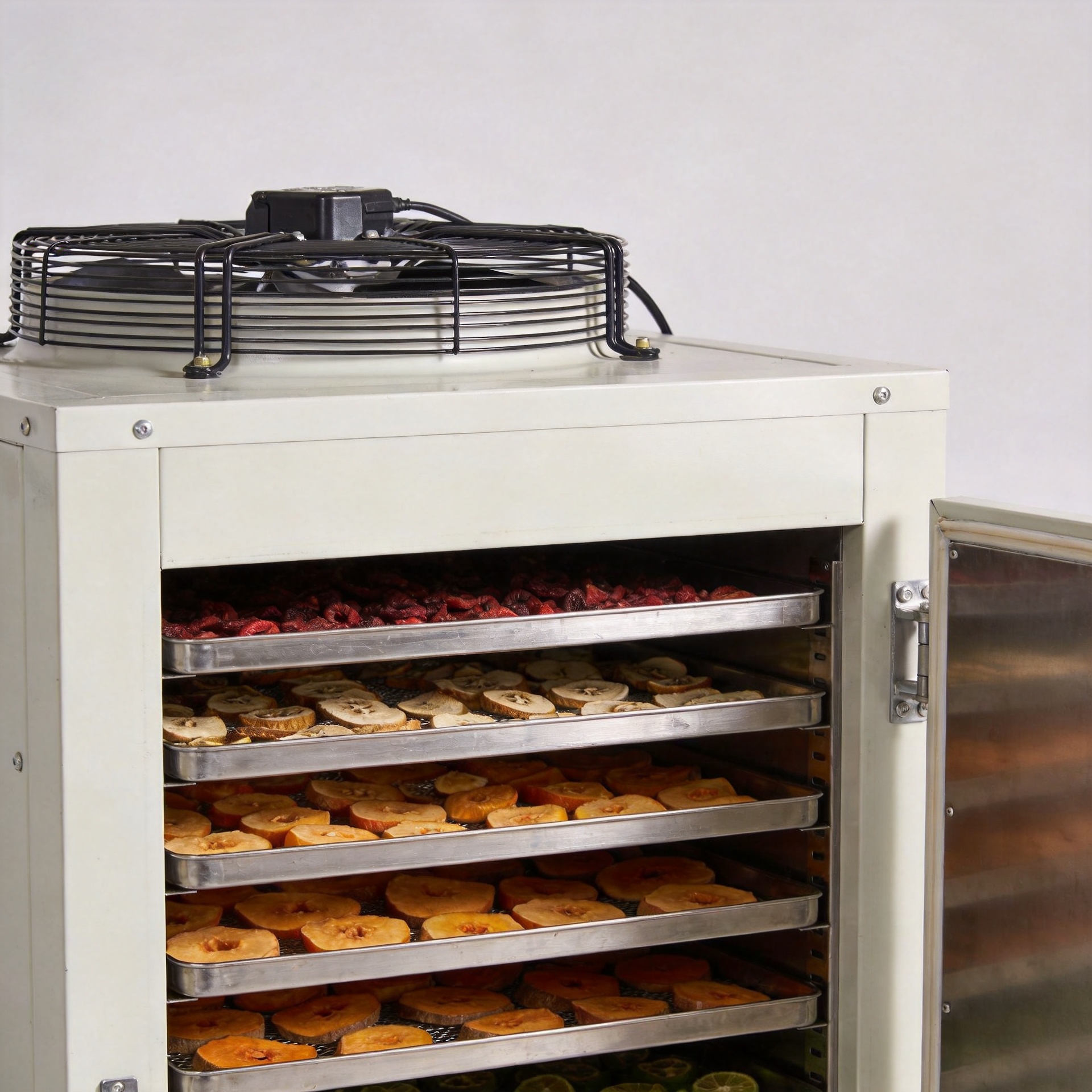
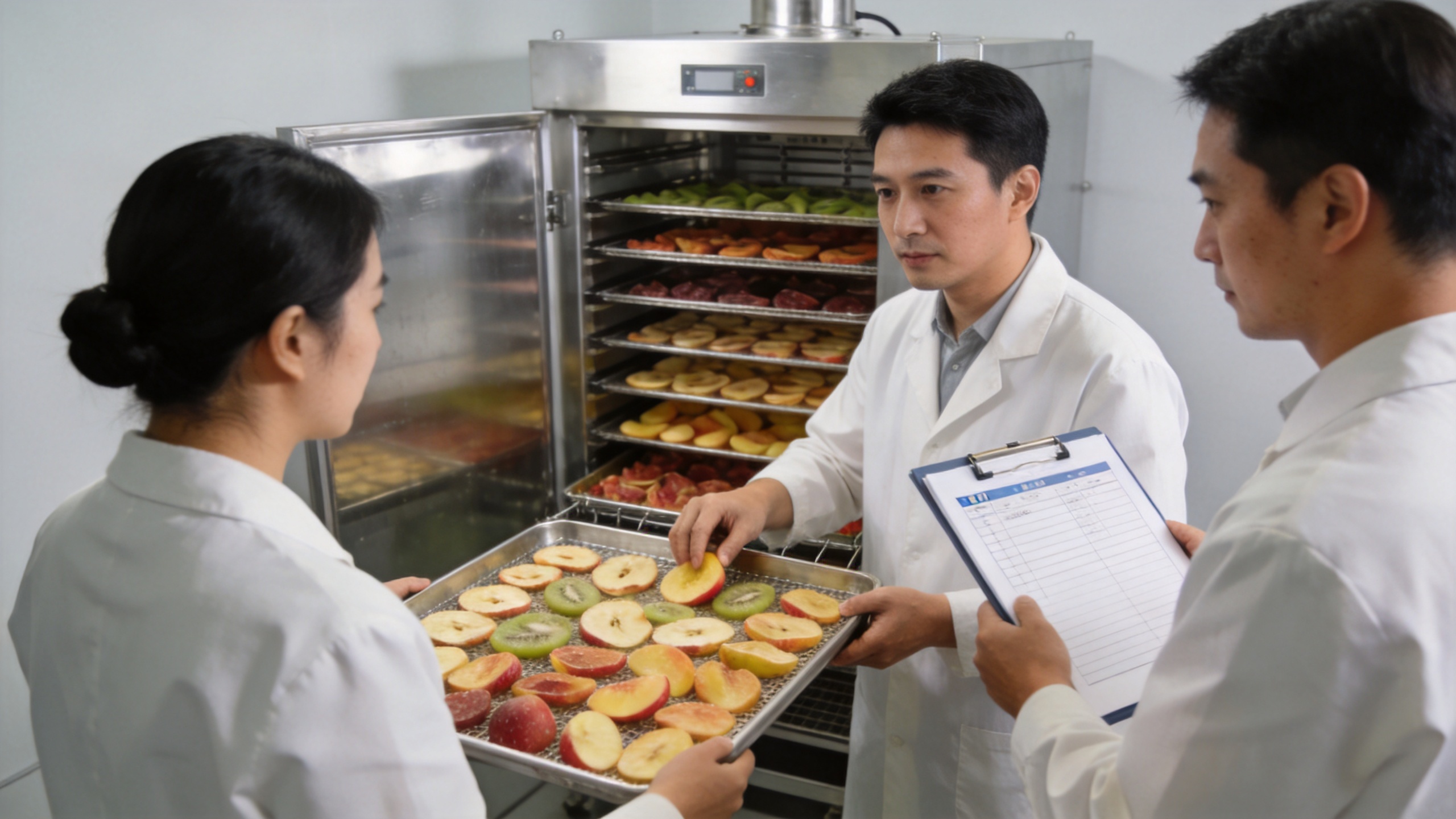
When comparing a vacuum food dehydrator, ask how heat is supplied, how vacuum is controlled, how condensate or vapor is handled, and what sensors are included. Your team should also clarify whether tray arrangement, shelving, rotation, or product movement is needed for the product format. A low purchase price can be misleading if the system needs several manual interventions or if it cannot give repeatable batch records.
The required utility list deserves equal attention. Confirm electrical supply, water or cooling requirements where applicable, drainage, compressed air if used, ventilation, floor loading, room access, and installation clearances. Before placing an order, share a plant layout and ask the supplier to identify interfaces that need to be ready on site. It is much easier to resolve these questions before shipment than during commissioning.
Make sanitation and maintenance part of the selection
Food processors should inspect how a vacuum food dehydrator will be cleaned between products. Ask which surfaces contact food, how trays and seals are removed, whether corners are accessible, what cleaning method is expected, and how moisture is managed after washing. The right design depends on your hygiene plan and product category; do not assume a feature shown on one machine is appropriate for every process.
Maintenance should be discussed with the same level of detail. Request a list of routine checks for the vacuum pump, gaskets, valves, sensors, heating components, and control system. Ask which spare parts are consumable, which items should be held locally, and what remote troubleshooting information the supplier can provide. For overseas buyers, a clear parts list, operating manual, and remote technical guidance can reduce uncertainty after installation.
Prepare a supplier inquiry that produces comparable proposals
A structured inquiry helps you compare each vacuum food dehydrator proposal on the same basis. Send the product description, photos, target output, operating hours, available utilities, site constraints, cleaning expectations, desired control level, destination country, and request for trial conditions. Also state what information you need about delivery, installation support, training, spare parts, and warranty terms.
If you are reviewing equipment for chili or similar food-drying applications, you can use the verified product page for the Automatic Industrial Microwave Drying System 220V Electric Vacuum Dryer for Chili Food Drying Equipment as a starting point for a technical conversation. Confirm the final configuration against your own material trials and plant conditions; a product page is not a substitute for process validation.
A practical decision checklist
- Have we supplied real product samples and defined measurable acceptance criteria?
- Does the proposed vacuum food dehydrator fit our batch schedule rather than only its nominal chamber size?
- Are utilities, installation access, cleaning, and drainage verified for our site?
- Do we understand the operating steps, routine maintenance, and spare-parts plan?
- Can the supplier explain the trial method and the information recorded for each batch?
The right vacuum food dehydrator is a process decision as much as an equipment decision. For a small or medium plant, the soundest choice is usually the system that lets operators run repeatable batches, clean it sensibly, maintain it with available resources, and expand through a planned production path. Start with a clear material and throughput brief, then use trials and supplier discussions to narrow the options.