EN


How to Compare Commercial Onion Cutting Machines for Processing Lines
Choosing a commercial onion cutting machine is less about finding the largest unit in a catalog and more about matching a cutter to the way onions arrive, move, and leave your line. For a processor, the relevant question is not simply “How many onions can it cut?” It is whether the commercial onion cutting machine delivers the required cut while protecting flow, sanitation routines, and downstream yield.
As a technical selection exercise, start with the real production conditions: onion grade, preparation steps, target format, peak rather than average throughput, available operators, and the equipment before and after the cutter. A machine that looks efficient in isolation can create bottlenecks when feeding, washing, dewatering, inspection, or packing are considered together.
Start With the Processing-Line Job, Not the Cutter Name
A commercial onion cutting machine should be specified from the line backward. Map the product flow: receiving, peeling or trimming, washing where applicable, cutting, separation or inspection, and packaging. Then record where onions accumulate, where manual handling occurs, and what happens if one station slows down. This reveals whether you need a stand-alone cutter, a hopper-fed unit, a conveyor-linked system, or a cutter integrated with upstream preparation equipment.
Feed consistency deserves special attention. Whole onions, halves, peeled onions, and irregular pieces do not behave the same way in a hopper or conveyor. A commercial onion cutting machine that is suitable for one feed condition may require different guides, orientation control, or pre-cutting for another. Ask suppliers to explain the expected infeed condition rather than accepting a general statement that the unit “handles onions.”
If your line processes several vegetables, also compare changeover needs. The allocated auxiliary term palak cutter machine is normally associated with leafy-vegetable cutting, so it should not drive an onion-cutter decision. Its practical lesson is useful, however: machines designed for soft leafy materials and machines designed for firm, layered onions can require different feed and cutting arrangements.
Compare Feed Methods and Product Control
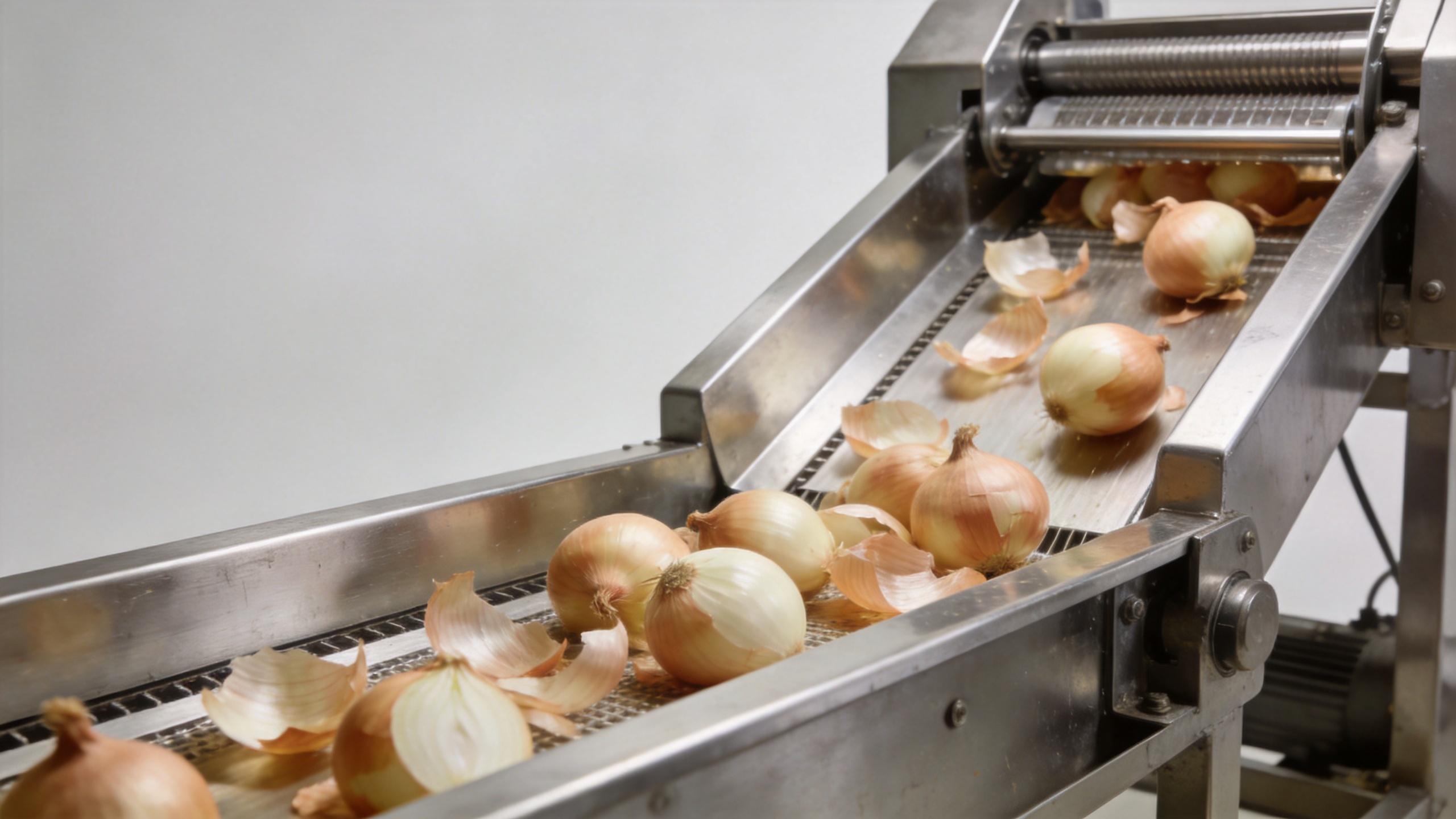
When comparing a commercial onion cutting machine, examine how the product is introduced to the cutting zone. Gravity hoppers can be compact and simple, but the process team should check bridging, piece overlap, and access for clearing. Conveyor or inclined-feed arrangements can make the flow more predictable when they are synchronized with upstream peeling or downstream conveying, but they add controls and more points to inspect.
| Comparison point | What to inspect | Why it matters |
|---|---|---|
| Infeed format | Whole, halved, peeled, or pre-sized onions | Determines whether the commercial onion cutting machine can accept the product without manual correction. |
| Feed method | Hopper, chute, belt, or elevator connection | Influences product spacing, line stability, and recovery after a short stoppage. |
| Orientation control | Guides, pushers, or operator placement | Can affect cut consistency and the risk of uneven pieces. |
| Discharge interface | Height, chute geometry, and conveyor handoff | Prevents the cutter from becoming a transfer bottleneck. |
Do not compare feed systems only by automation level. For moderate-volume operations with frequent product changes, a straightforward commercial onion cutting machine with fast access may be more workable than a highly automated feed system that is slow to clean or adjust. For a stable, higher-throughput line, consistent feed control may justify the added integration work.
Match Cutting Formats to the Next Process
The cut is not an end in itself. Before selecting a commercial onion cutting machine, define the required slice, dice, strip, or chunk format and the tolerance that downstream cooking, freezing, drying, mixing, or packing can accept. Also identify whether the process needs one format every day or several formats during a shift. Blade and disc availability, change time, adjustment clarity, and verification procedures can be as important as the nominal cutting options.
A useful purchasing discussion separates three issues: the format requested by sales, the format the product can produce after peeling and trimming, and the format the next station can handle. If the line includes drying or freezing, small variations in piece size may affect later handling. If the product goes into a prepared-food mix, excessive fines may matter more than maximum output. The right commercial onion cutting machine is therefore the one whose cutting behavior fits the complete process, not merely the one with the longest list of discs.
Make Hygiene and Cleaning Time a Core Comparison Item
Onion juice, skins, and small fragments can build up around product-contact surfaces and transfer points. Evaluate a commercial onion cutting machine by walking through the cleaning task: which guards open, which parts are removable, whether drains are accessible, and whether the operator can visually inspect the cutting and discharge areas. Food-contact stainless construction may be a useful design feature, but buyers should verify the actual material specification, finish, and cleaning procedure for the model under review.
Ask for the cleaning sequence in writing. Include lockout requirements, tool needs, blade-handling precautions, typical parts removed, and the checks used before restart. This is not just a hygiene conversation; a cutter that takes too long to clean can change the effective availability of the line. A well-chosen commercial onion cutting machine balances protected cutting components with practical daily access.
Check Compatibility, Service, and Total Operating Fit
Line compatibility means more than footprint. Compare power supply, discharge direction, conveyor height, controls interface, guarding, spare-parts access, and the responsibility for commissioning. Request a layout drawing that shows the commercial onion cutting machine with the upstream and downstream equipment, including safe operator clearance. If the supplier proposes an output figure, ask what onion condition, cut size, and feed method were assumed.
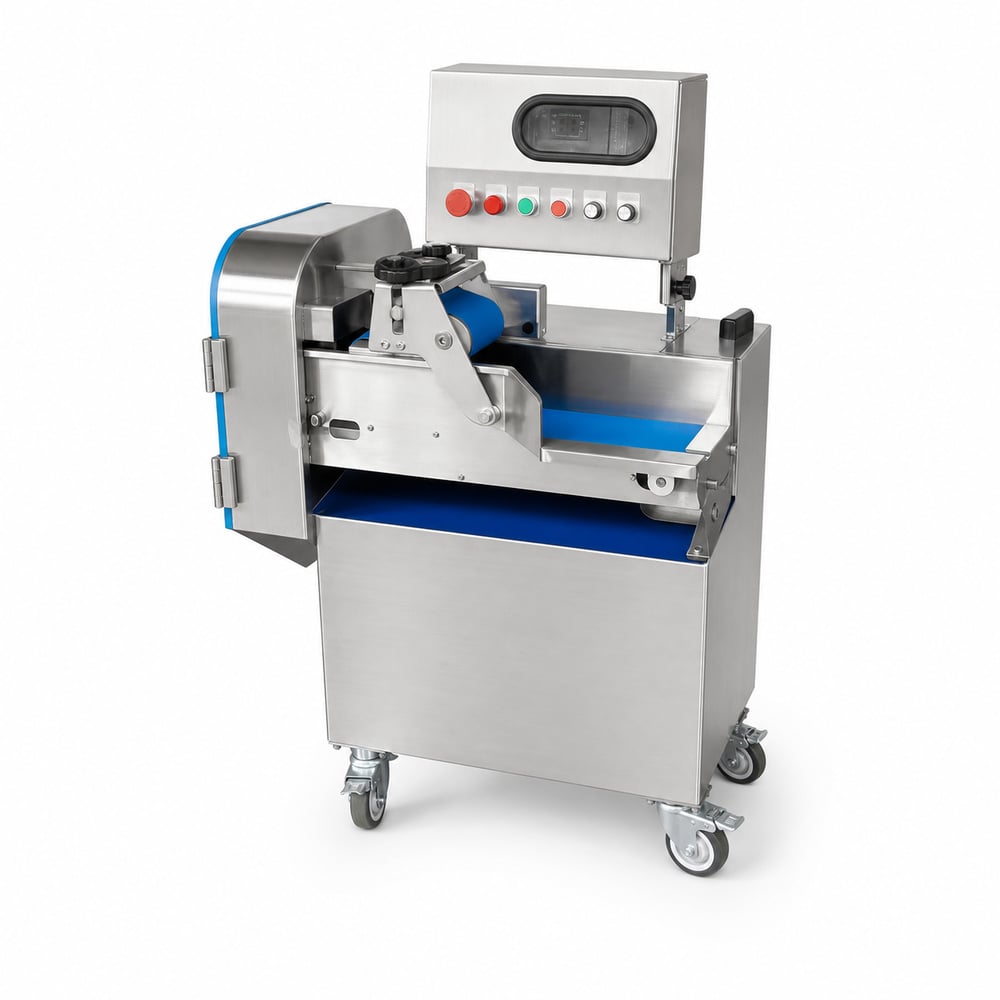
For buyers building or upgrading a broader vegetable-processing line, Zhengzhou HongLe Machinery Equipment Co., Ltd. can be approached for equipment-selection and line-planning discussion. The available product record includes a commercial vegetable cutting machine; confirm its material suitability, cutting configuration, and line fit directly before considering it for onion processing.
A Practical Comparison Checklist
- What exact onion condition enters the commercial onion cutting machine?
- Which cut formats and changeovers are required in a normal week?
- How will the cutter accept product and hand it off to the next station?
- Which areas must be opened, removed, and inspected during cleaning?
- What line layout, utilities, controls, and safety interfaces are required?
- Which spare parts, blades, manuals, and remote support options are available after delivery?
In short, compare a commercial onion cutting machine as one working station in a processing system. Feed behavior, cut quality, hygiene access, and integration details usually determine the better choice. A structured comparison gives your team a clearer basis for supplier discussions and helps avoid buying a cutter that is capable on paper but difficult to run in the actual line.