EN


How to Request a Peanut Butter Processing Machine Quotation
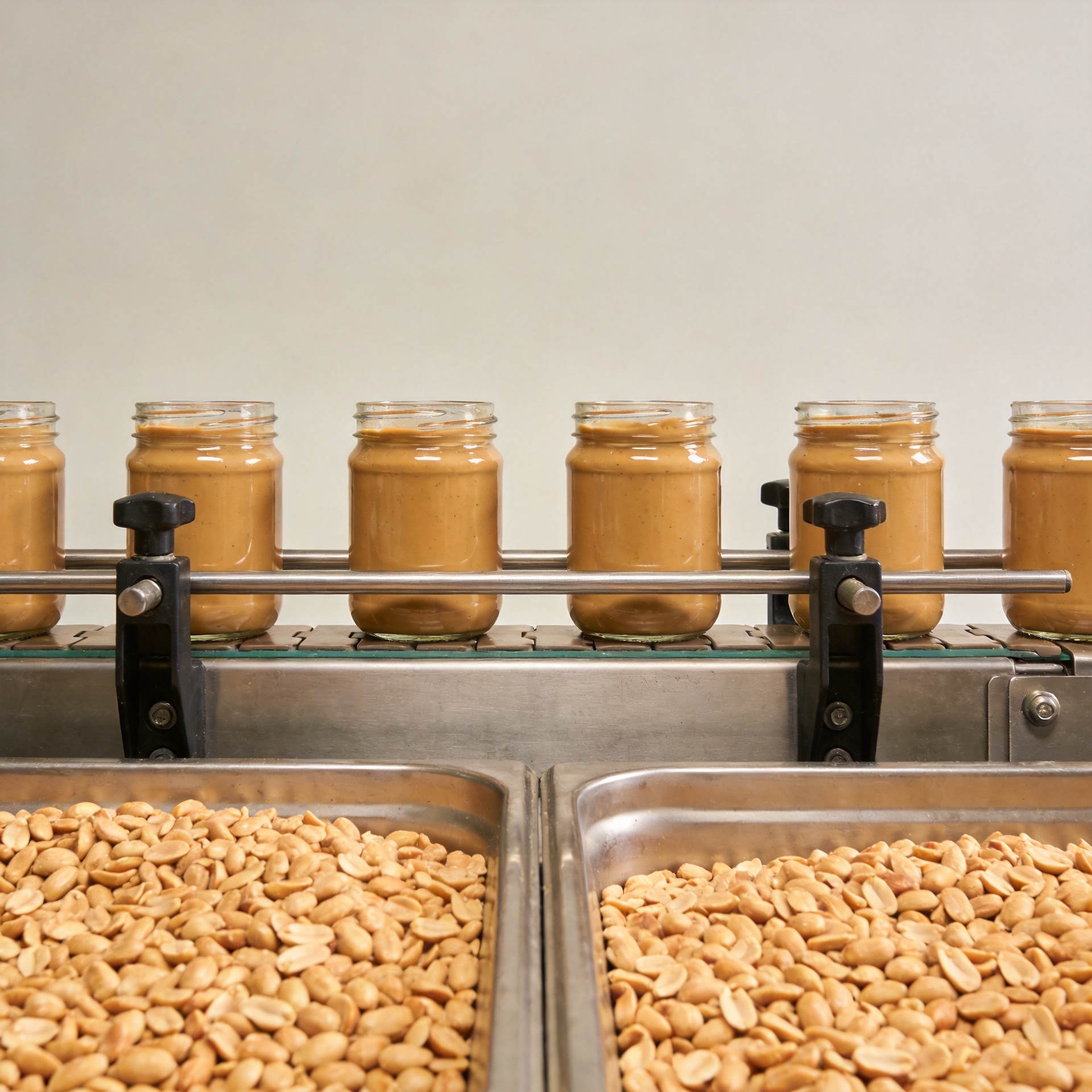
When you ask for a peanut butter processing machine quotation, the quality of the answer usually depends on the quality of the brief. A machine name alone leaves too much open to interpretation: one supplier may quote a grinder, while another may quote a coordinated peanut butter production line with roasting, cooling, peeling, mixing, filling, and controls. For a factory buyer, those are not comparable offers.
From a B2B procurement perspective, a quotation is the start of technical alignment, not simply a price list. The practical goal is to give each supplier the same production facts, then compare what is included, what is excluded, and how each proposed solution fits the plant. If your priority is a stable start-up schedule, first focus on process definition and utilities; a low headline price does not resolve missing scope.
Start With the Product You Intend to Make
Describe the product before you describe the equipment. State whether you will process roasted peanuts only or handle raw peanuts, whether the recipe includes sugar, salt, stabilizers, cocoa, or other ingredients, and whether you expect smooth, crunchy, or mixed textures. Tell suppliers about allergen controls, cleaning expectations, and any local food-contact requirements your project team has identified.
These details affect the proposed peanut butter processing machine configuration. Grinding performance, mixing time, tank arrangement, and the need for a buffer tank can all change with viscosity, particle expectations, and ingredient additions. It is tempting to ask for the largest grinding specification available; however, actual output depends on the recipe and the pace of the downstream process, not on one nameplate figure alone.
- Peanut condition: raw, roasted, blanched, split, or pre-cleaned
- Formula: ingredients, approximate oil content, and expected texture
- Food-contact and cleaning expectations
- Planned working pattern: shifts per day and planned operating days
Define Output as a Production Target, Not a Vague Capacity Request
Ask for a quotation against a target such as kilograms per hour, kilograms per shift, or annual output, then explain which measure matters most to your plant. Commercial equipment searches commonly show a wide range of capacity discussions—from smaller installations to lines at several hundred kilograms per hour and beyond—so “I need a peanut butter machine” is not enough to establish a comparable scope.
Include the target output, expected utilization, and any growth plan. Also ask the supplier to state the basis of its capacity claim: product type, process sequence, and operating condition. A peanut butter production line should be evaluated as a flow. If roasting, cooling, grinding, mixing, or filling becomes the bottleneck, a fast individual machine does not make the whole line fast.
| Information to provide | Why it changes the quotation |
|---|---|
| Target output and shifts | Supports sizing of each process stage and utility demand. |
| Current and future volume | Helps suppliers distinguish a starter system from an expandable line. |
| Batch or continuous preference | Changes material handling, control logic, and labor assumptions. |
| Available floor space | Determines line layout, conveyors, access space, and installation planning. |
Map the Required Process Stages
A useful RFQ lists the stages you expect suppliers to cover. A commercial peanut butter processing machine project may involve cleaning, roasting, cooling, peeling, grinding, blending or mixing, holding, and filling. Not every plant needs every module, especially if some operations already exist. State what you have and what you want the supplier to include.
For each stage, ask whether it is supplied directly, integrated with the rest of the line, or left to a third party. This makes scope gaps visible early. It also helps you compare quotations that otherwise use similar language but include different conveying, control, or commissioning work.
- List existing equipment and identify what will remain in service.
- Mark the first and last process point included in the supplier’s scope.
- Request a preliminary flow diagram and layout concept.
- Ask for the interfaces between modules, including material transfer and control handoff.
Explain Packaging and the Downstream Handoff
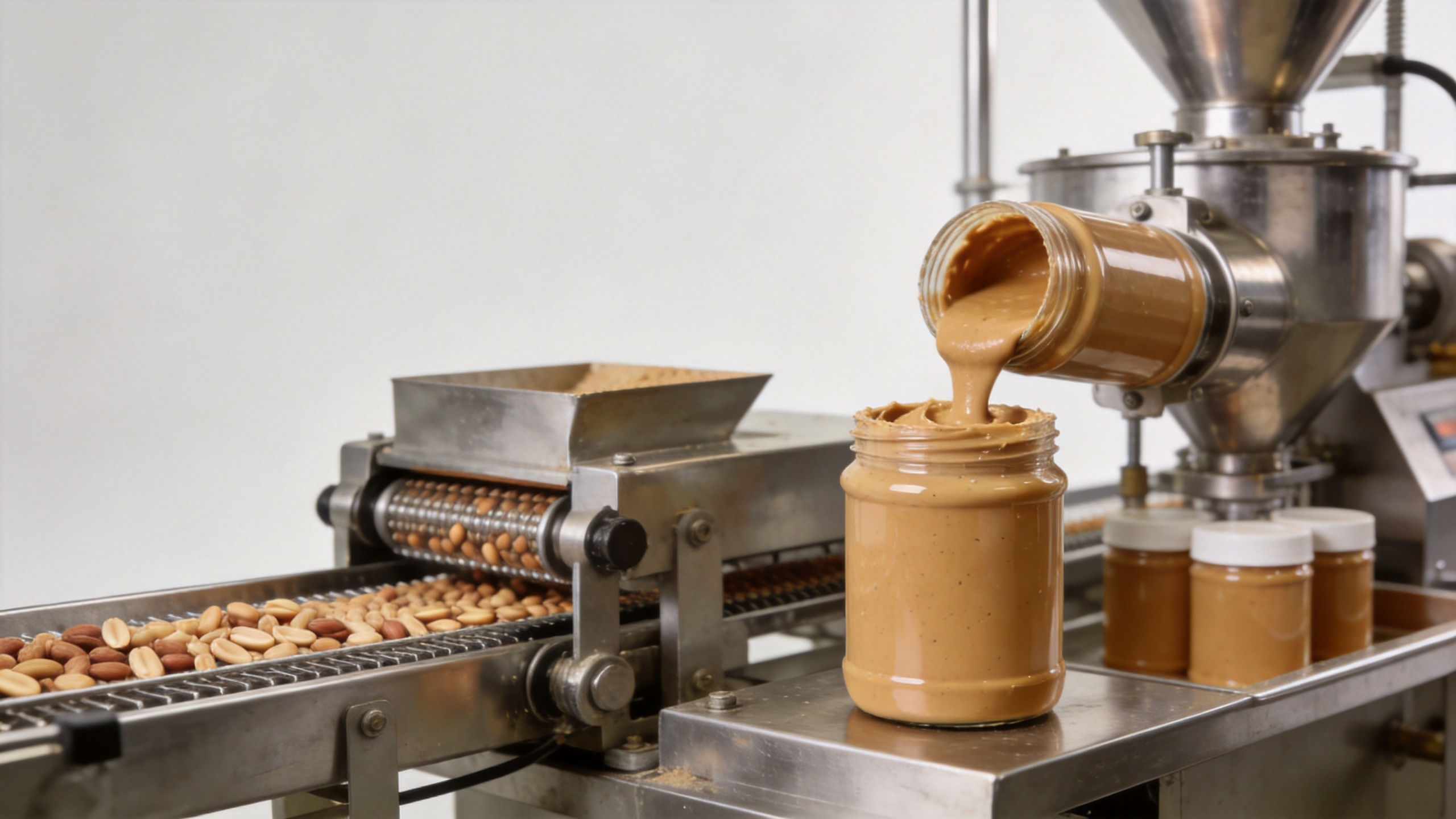
Packaging is often where a seemingly complete peanut butter production line stops being complete. Tell the supplier the container type, fill weight range, cap style, labeling needs, and whether you require vacuum handling or another packaging condition. If filling is not in scope, specify where finished product must be delivered and how you will connect the line to the filler.
For example, the confirmed product direction on this site is an automatic peanut butter production machine for nut factories. Treat details such as its stated 200 kg/h direction, vacuum-packing option, or design description as points to confirm against your own recipe and packaging plan—not assumptions that automatically fit every project.
Give the Site, Utility, and Delivery Information Suppliers Need
A technically suitable peanut butter processing machine still needs to fit the site. Include available power voltage and frequency, compressed-air availability, water and drainage conditions, ceiling height, access routes, and destination country or port. If you are buying across borders, ask for the proposed shipping basis, packing approach, installation boundaries, and the documents included with the equipment.
Be specific about what support you need after delivery: remote commissioning, operating manuals, spare-parts recommendations, operator training, or on-site service if required. Experienced export buyers learn that delivery terms, spare-parts planning, and service response can affect the project more than a small difference in equipment price.
Request a Quotation You Can Actually Compare
Send the same brief to each supplier and ask them to reply in the same format. Request an itemized scope, model list, process flow, technical parameters, estimated lead time, commercial terms, warranty scope, and exclusions. If a supplier proposes an alternative, ask them to explain the operational trade-off rather than simply replacing the requested configuration.
The following checklist helps turn a general inquiry into a usable comparison:
- Product formula, peanut condition, texture, and hygiene requirements
- Target output, shifts, and planned expansion
- Required process stages and existing equipment
- Packaging format and where the supplier’s scope ends
- Site dimensions, utilities, destination, and installation conditions
- Requested documents, training, commissioning, warranty, and spare-parts support
- Required commercial format: itemized price, lead time, terms, and exclusions
Turn Your Inquiry Into the Next Technical Conversation
A well-prepared request makes the supplier’s response more useful and reduces revision cycles. A useful peanut butter processing machine quotation is not necessarily the lowest initial figure; it is the one with a clearly defined process, visible interfaces, realistic capacity basis, and support terms that match your project.
Before sending the RFQ, have production, engineering, and purchasing review the checklist together. That small alignment step can reveal whether you need a stand-alone grinder, an integrated peanut butter production line, or a phased project that connects to equipment already in the factory.