EN


How to Set Cleaning and Changeover Requirements for Commercial Vegetable Cutting
For a food factory, a commercial vegetable slicer machine is not selected only by whether it can cut carrots, potatoes, onions, or leafy vegetables. It also has to fit the plant’s hygiene program and the way production changes from one raw material, cut style, or recipe to the next. A practical specification turns cleaning and changeover from a vague expectation into a repeatable release process.
From a production-supervisor perspective, the central question is simple: after a run, can operators remove product residue from every food-contact area, restore the required cutter configuration, and document that the line is ready for the next product? The answer affects product consistency, labor planning, and cross-contamination control.
Start with the processing task, not the commercial vegetable slicer machine label
“Slicer” and “dicer” describe outcomes, but the cleaning burden depends on the actual product and cutting task. A commercial vegetable slicer machine used for dry, firm potatoes may create a different residue pattern from one used for wet onion, shredded cabbage, or soft fruit. Before writing a sanitation requirement, list each intended product family, the target shape, the blade or disc used, and the likely residue zones.
- Slicing tasks: define slice thickness, orientation, fragile-product handling, and whether product fibers can collect around guards or discharge areas.
- Dicing tasks: define the grid, knife assembly, feed condition, and whether small fragments can lodge behind the cutting set.
- Mixed production: identify changes involving different ingredients, seasoning systems, or allergen profiles; these normally require a more deliberate clean-break decision than a simple size change.
This task-first map also helps a buyer compare a commercial vegetable slicer machine with a commercial vegetable dicer machine configuration. The useful comparison is not “which machine is better,” but which cutting head, feed path, and disassembly routine suit the planned product mix.
Define cleanable zones before approving a commercial vegetable slicer machine
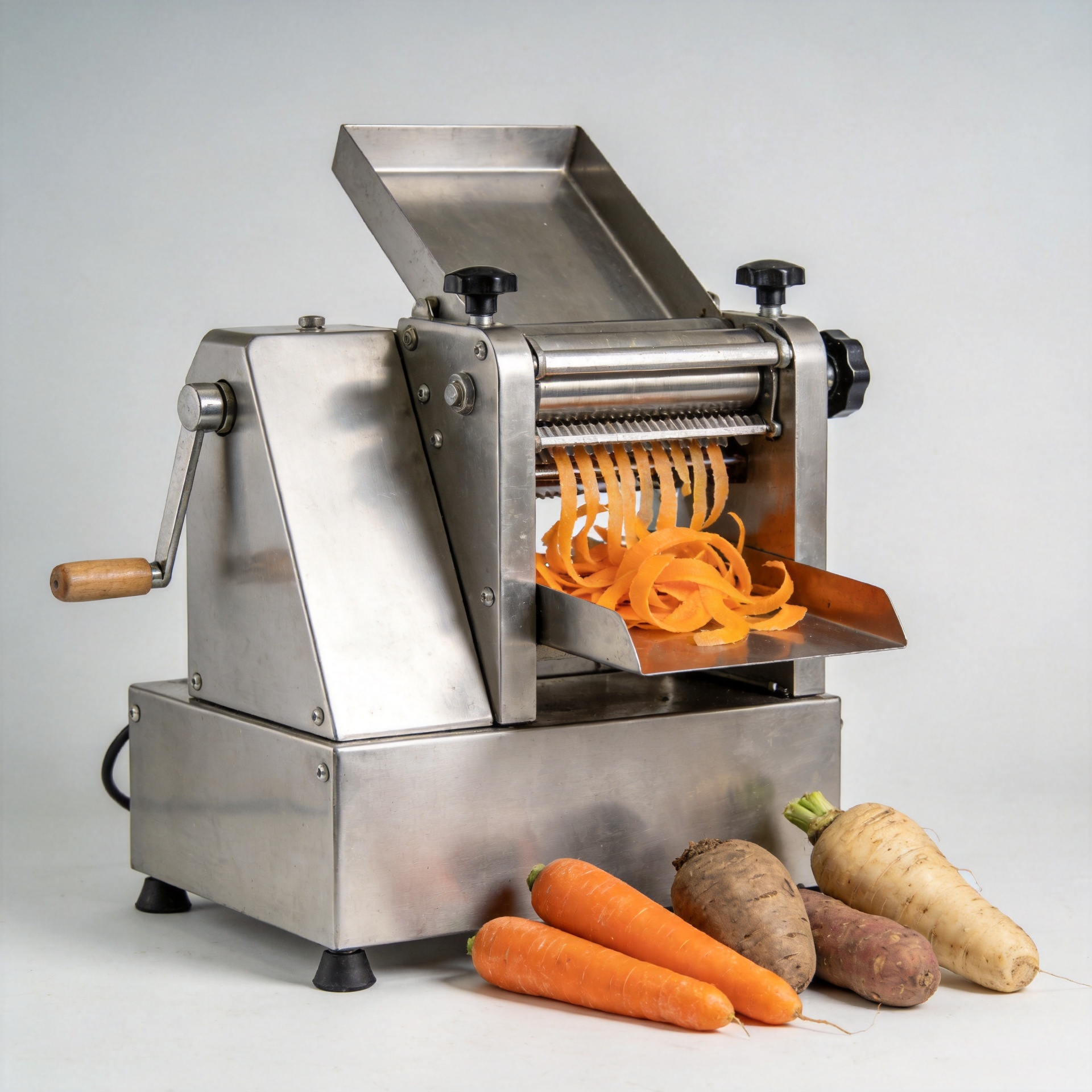
For a commercial vegetable slicer machine, a purchasing requirement should name the areas that must be inspected rather than relying on a general phrase such as “easy to clean.” For each commercial vegetable slicer machine, ask the supplier to show how operators access the feed hopper, pusher or feed mechanism, cutting disc or knife set, retaining hardware, discharge chute, product collection area, splash guards, and adjacent frame surfaces.
Write requirements in observable terms. For example, require tool-free or controlled-tool removal where appropriate, a documented safe sequence for isolating power before blade handling, and enough access to inspect surfaces that contact product or receive product fragments. If a surface cannot be seen or reached during the planned cleaning method, the team should decide how it will be verified before approving the configuration.
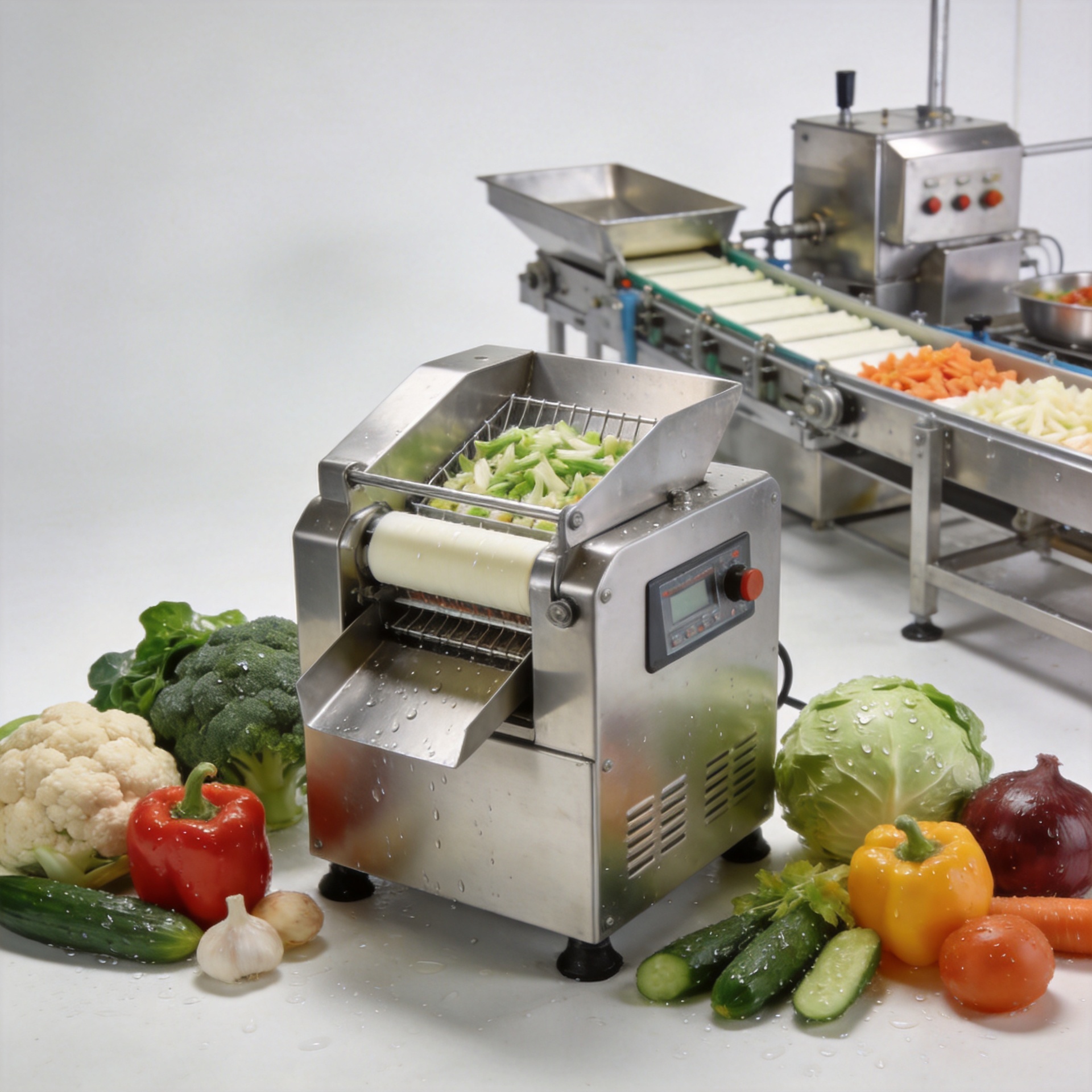
For an example of a product category to assess against this checklist, review the available commercial industrial electric vegetable cutter dicing machine. The product page link supports equipment evaluation; it does not replace a site-specific sanitation review.
Build a cleaning sequence for each commercial vegetable slicer machine
Cleaning and sanitation are related but distinct activities. A workable procedure should state the order of work, the responsible role, the approved chemicals and concentrations where applicable, required contact times, and the release check. Food-contact surfaces should be cleaned before the applicable sanitizing step, and the plant’s own food-safety plan and local rules should control the final method.
- Stop and secure the equipment. Isolate the energy source and confirm that the cutting assembly is safe to handle.
- Remove visible product matter. Clear the hopper, blade zone, discharge path, and collection points using the approved tools.
- Disassemble the defined change parts. Remove discs, grids, knives, guards, and other parts identified in the machine-specific work instruction.
- Wash, rinse, and sanitize as specified. Follow the facility’s validated chemical, temperature, and contact-time controls; do not treat a quick visual wipe as a complete sanitation step.
- Air-dry and reassemble. Refit the correct cutting components and verify guards, fasteners, and product-contact parts are correctly seated.
- Inspect and release. Record the visual, operational, and any required allergen or hygiene verification results before the next lot begins.
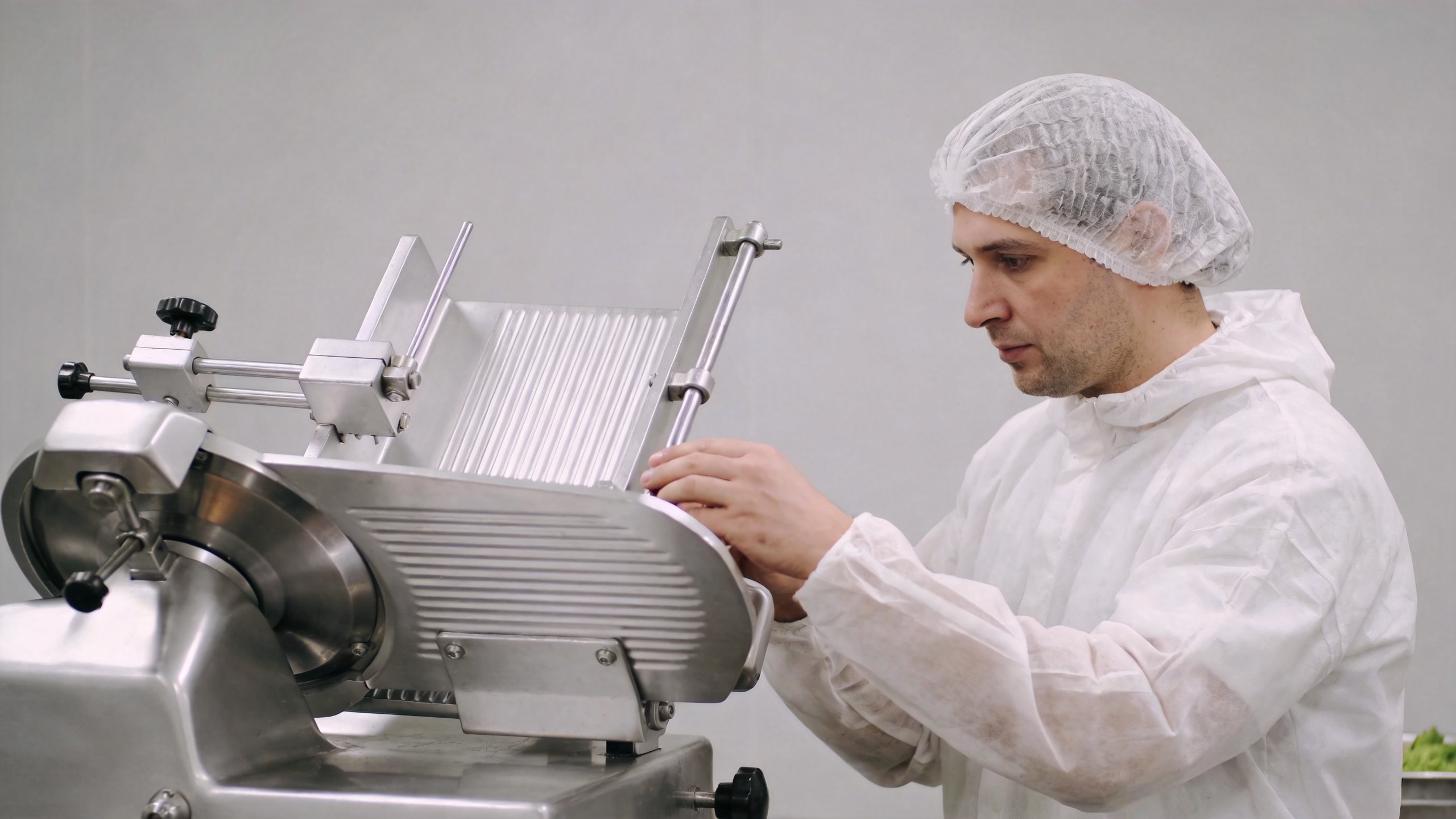
A short, machine-specific standard operating procedure is more useful than a long generic document. Include photographs or diagrams of the exact residue traps identified during commissioning and show the correct orientation of cutting components after reassembly.
Classify commercial vegetable slicer machine changeovers by risk
Not every changeover needs the same work scope. Classifying changeovers gives production planners a shared language for scheduling downtime and assigning verification. The categories below can be adapted to the facility’s hazard analysis.
| Changeover type | Typical trigger | Requirement focus |
|---|---|---|
| Same product, same cut | Routine restart after a planned stop | Pre-operational inspection and any routine cleaning defined by the plant. |
| Same ingredient, new cut size | Slice-to-dice or a thickness change | Remove the prior cutting set, clear fragments, install the new set, and verify the first pieces. |
| Different produce with similar risk | Potato to carrot, for example | Clean food-contact paths and assess carryover that could affect appearance, taste, or yield. |
| Allergen, seasoning, or higher-risk change | Recipe or product-family change identified in the food-safety plan | Use the facility’s validated clean-break procedure, defined verification, and documented release authority. |
For a commercial vegetable slicer machine, the point is not to apply one universal schedule. It is to make sure the commercial vegetable slicer machine is configured and documented so the required depth of cleaning can actually be performed within the planned changeover window.
Specify verification criteria before buying a commercial vegetable slicer machine
Buyers should request a commissioning checklist that production, quality, and maintenance can use together. It should include a visual inspection of food-contact surfaces, confirmation that the correct blade or dicing set is installed, guard and fastener checks, a controlled test cut, and the records needed to release the line. Where the site’s program requires additional hygiene or allergen verification, define the method, acceptance criteria, and responsible approver separately.
Also ask how spare cutting components will be identified, stored, and cleaned. A changeover can lose time when a clean, correctly labeled disc or grid is unavailable. Clear part identification supports both cut consistency and sanitation discipline.
Turn commercial vegetable slicer machine requirements into a supplier checklist
During commercial vegetable slicer machine supplier discussions, use questions that reveal operational detail:
- Which product-contact components are removed during a standard clean?
- What tools and access points are needed to reach the cutter, feed, and discharge zones?
- Which parts change between slicing and dicing, and how are they identified?
- Can the supplier provide machine-specific cleaning, assembly, and safety instructions?
- What test-cut process confirms that the selected configuration delivers the required product form?
- How will the machine fit the facility’s existing sanitation chemicals, drainage, operator training, and documentation practices?
Zhengzhou HongLe Machinery Equipment Co., Ltd. supplies food-processing machinery to international markets and can support buyers who need to align cutting equipment selection with a production workflow. The final sanitation procedure, however, should be validated by the operating facility for its products, hazards, regulations, and approved cleaning controls.
Make cleaning and changeover part of the commercial vegetable slicer machine specification
A commercial vegetable slicer machine should be evaluated as part of a complete process: product preparation, cutting configuration, cleaning access, verification, and restart. When those requirements are defined before procurement, teams can compare slicing and dicing options on the criteria that matter on the factory floor—consistent cuts, usable changeover time, and a cleaning process operators can carry out and document.
Use the checklist above in your next equipment review, then convert the agreed steps into a machine-specific work instruction before production begins.