EN


How Vegetable Drying Methods Affect Product Quality and Shelf Life
Vegetable drying is more than removing moisture. For a food processor, the drying route sets the balance among colour, texture, flavour, nutrient retention, process time, energy use and storage stability. A product that looks dry can still disappoint in the market if it browns too much, becomes excessively hard, reabsorbs moisture in transit or develops off-flavours during storage.
From an equipment-engineering perspective, the useful question is not “Which method is the right fit?” but “Which method creates the quality profile your product and market need?” Hot-air, vacuum, microwave-assisted and freeze-drying systems remove water in different ways. That changes how heat reaches the vegetable tissue and how quickly internal moisture can escape.
Why vegetable drying changes quality
In commercial vegetable drying, product quality is determined by more than the final weight loss. The drying method, air or vacuum conditions, product depth and endpoint all influence whether the finished vegetable meets its intended use.
Fresh vegetables contain a cellular structure that gives them their original crispness, colour and aroma. During vegetable drying, heat and mass transfer alter that structure. If the surface dries much faster than the centre, a firm outer layer can slow further moisture removal. If temperature exposure is too severe or too long, pigments and heat-sensitive compounds may decline, while browning and flavour changes become more noticeable.
Quality also affects shelf life through water activity, not only through total moisture content. Water activity describes the water available for microbial and chemical reactions. Reducing it helps limit the growth of many common bacteria and slows some deterioration reactions. However, dried foods can still absorb moisture from humid air, and some microorganisms can survive low-water-activity conditions. That is why sound raw-material hygiene, a validated drying endpoint and moisture-barrier packaging work together.
For this reason, a vegetable drying program should define quality targets before the first production trial: acceptable colour, texture, aroma, rehydration behaviour, water activity and storage condition. Those targets help turn a broad vegetable drying choice into measurable process controls.
Hot-air drying: practical capacity with careful temperature control
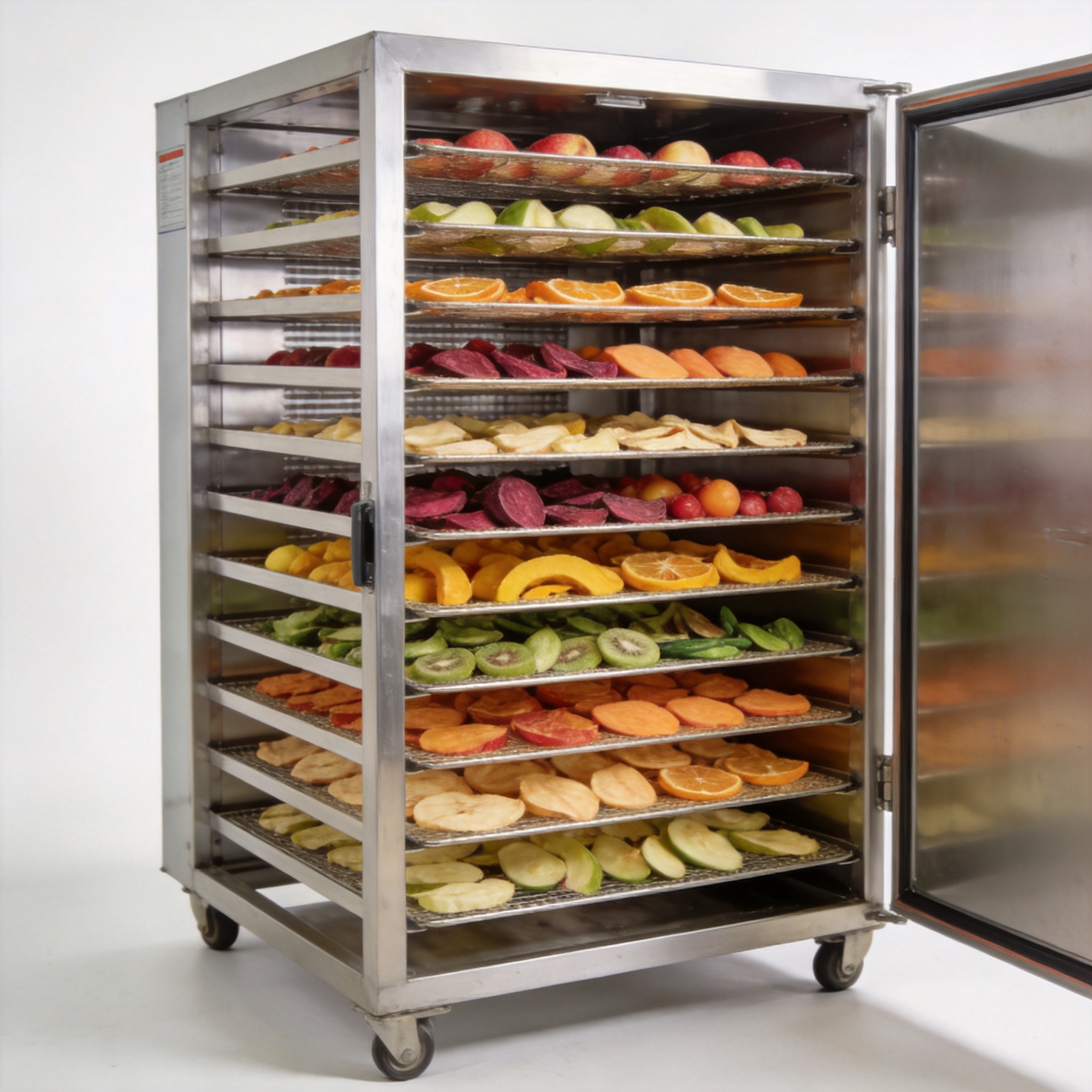
Hot-air drying moves heated air across prepared vegetables. It is widely used because the process is understandable, scalable and compatible with batch as well as continuous production. For many processors, this form of vegetable drying provides a sensible starting point when the priority is dependable throughput rather than the highest possible retention of colour or delicate texture.
The trade-off is exposure time. Higher air temperature can shorten a cycle, but it can also raise the likelihood of colour loss, surface hardening and cooked flavour notes. Lower temperature may better protect some attributes, yet an overly long cycle adds energy demand and leaves more time for oxidation. In practical vegetable drying, the answer is to validate the time-temperature-airflow combination for each cut size and vegetable type instead of treating a nominal temperature as a universal setting.
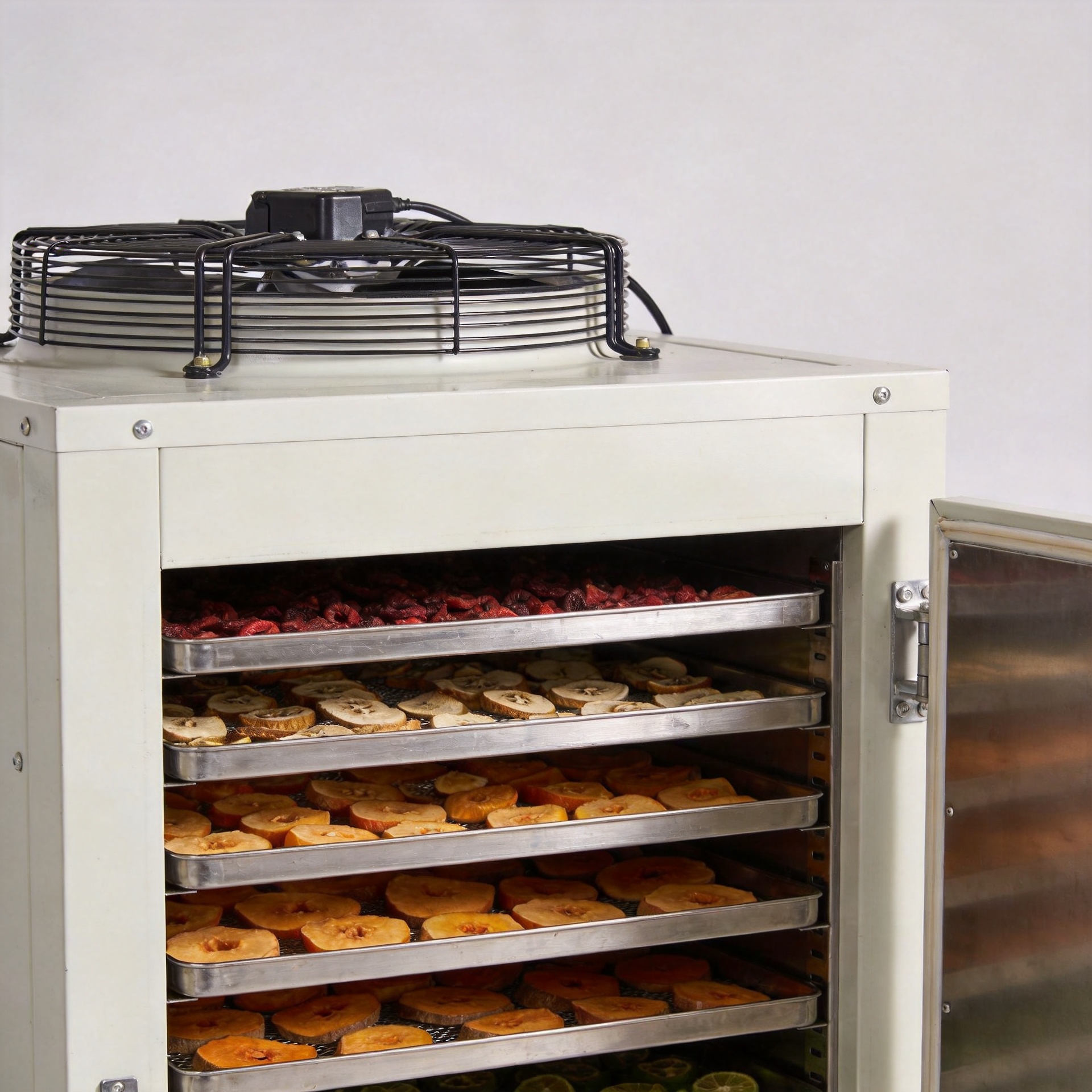
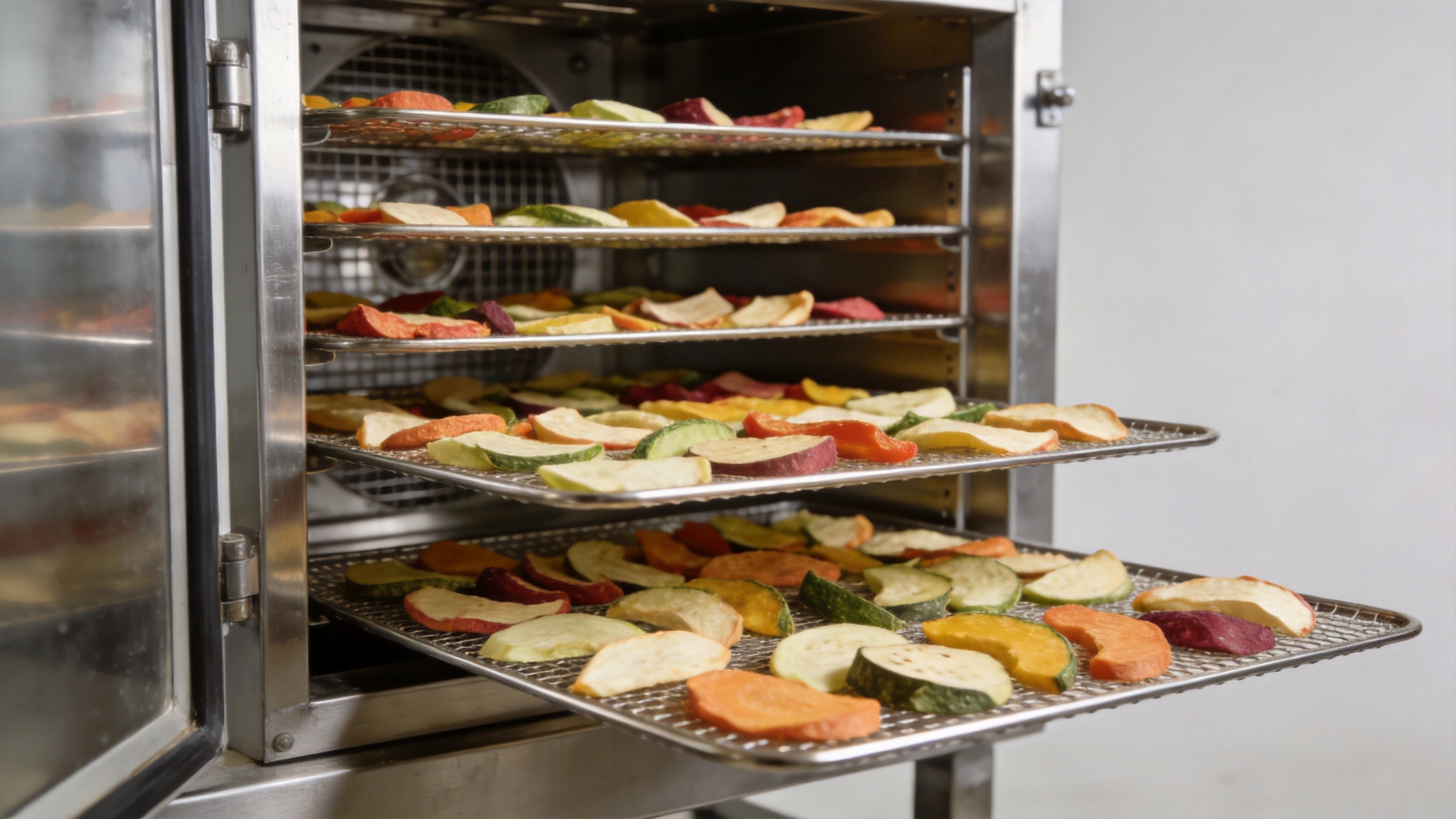
For batch processors assessing adjustable-temperature equipment, a box-type dryer for batch dehydration of fruits and vegetables can provide a straightforward platform for comparing recipes and drying endpoints. The product title confirms its batch-dehydration purpose; actual settings and product performance should be verified with the processor’s own material.
Vacuum drying: lower-temperature potential for sensitive products
In vegetable drying, vacuum drying lowers the pressure around the product, which can allow moisture to evaporate at lower temperatures than in an atmospheric process. That can be useful when colour, aroma or heat-sensitive characteristics are high priorities. Lower oxygen exposure may also be helpful for products prone to oxidative changes.
That said, vacuum operation is not automatically a quality guarantee. Loading depth, product geometry, vacuum stability and heat-transfer design all influence results. The equipment and operating complexity are also usually greater than a basic hot-air system. A realistic comparison therefore includes the desired visual grade, acceptable cycle time, labour requirements and the value the finished product can command—not just a single retention claim.
Vacuum vegetable drying is particularly worth piloting when a processor has a high-value product where visual grade, aroma or rehydration performance influences purchase decisions. It should be compared against hot-air vegetable drying using the same raw-material lot and storage test.
Microwave-assisted drying: speed can protect, but control matters
For vegetable drying, microwave-assisted drying heats water within the material, so it can speed internal moisture movement. When combined with vacuum, it may reduce the time a vegetable spends at elevated temperature. Research summaries on fruit and vegetable drying indicate that vacuum-microwave approaches can preserve colour, shape or selected nutrients well in some products.
The important qualifier is in some products. Uneven field distribution, product thickness and load consistency can create local overheating if the process is not designed and monitored carefully. For processors considering microwave assistance, pilot trials should compare quality after storage, not only the appearance at the end of the drying cycle.
Microwave-assisted vegetable drying also needs a clear validation plan: monitor temperature uniformity, assess lot-to-lot consistency and check how the dried product behaves after packaging. Faster vegetable drying is beneficial only when the final quality is consistent.
Freeze drying and other gentle routes
Within vegetable drying, freeze drying can preserve a porous structure and is often associated with strong visual quality, but its equipment investment and cycle duration can be significant. It may suit premium ingredients or applications where rehydration, shape and visual appeal carry a high commercial value. Infrared, solar and hybrid systems can also be relevant, but each requires its own evaluation of uniformity, hygiene, weather dependence or process control.
In other words, vegetable drying is a product-design choice as much as a preservation step. A snack ingredient, a soup inclusion and a powdered vegetable base may each justify a different combination of appearance, density and cost.
Regardless of method, vegetable drying should be evaluated as a complete process rather than as an isolated machine cycle. Preparation, pretreatment, drying, cooling and sealing each affect the quality a buyer receives.
How drying method affects shelf life after the dryer
Vegetable drying makes longer storage possible by lowering available water, but the dryer does not finish the shelf-life job on its own. A well-dried product can lose stability after packaging if it encounters humid air, oxygen or temperature swings. Choose packaging with a moisture barrier appropriate to the target climate, seal it consistently and use storage trials to confirm the chosen shelf-life target.
- Control the drying endpoint: set a product-specific moisture and water-activity specification rather than relying only on cycle time.
- Prevent reabsorption: cool product in a controlled environment and minimise exposure before sealing.
- Protect sensory quality: assess colour, aroma, texture and rehydration after storage, not only on production day.
- Maintain hygienic handling: drying slows microbial growth but does not replace clean raw materials and sanitary processing.
A simple method-selection framework for processors
| Priority | Questions to ask | Likely process direction |
|---|---|---|
| Reliable standard production | Is throughput and straightforward operation the main need? | Validated hot-air drying may be a practical fit. |
| Colour and aroma protection | Will the market pay for a more premium quality profile? | Evaluate vacuum or other lower-temperature routes. |
| Shorter drying exposure | Can the product and plant support tighter process control? | Trial microwave-assisted or hybrid configurations. |
| Premium structure or rehydration | Does product appearance justify higher investment and longer cycles? | Consider freeze drying after a commercial feasibility review. |
Start with the vegetable variety, cut size, desired finished form and distribution climate. Then run a controlled comparison: measure water activity, evaluate product appearance and texture, and retain samples for storage testing. That sequence is more reliable than choosing a drying method from a brochure specification alone.
Final takeaway
Effective vegetable drying combines the right heat-and-moisture-removal path with a clearly defined storage strategy. Hot air offers practical capacity; vacuum and microwave-assisted methods may improve selected quality attributes when properly matched to the product; freeze drying can serve premium objectives. The right choice is the one that consistently reaches a safe, stable endpoint while delivering the colour, texture, flavour and cost position your buyers expect.