EN


Industrial Citrus Juicer Supplier Checklist for B2B Buyers
Buying an industrial citrus juicer is not simply a matter of comparing catalog prices. For a juice plant, beverage co-packer, fruit processor, or export distributor, the machine has to fit the fruit stream, the hygiene plan, the downstream process, and the support model. A supplier that can explain those connections is usually more valuable than one that only sends a specification sheet.
This checklist helps procurement teams evaluate an industrial citrus juicer supplier before issuing a purchase order. It focuses on equipment scope, capacity evidence, documentation, commissioning, and service terms—the points most likely to affect production risk after delivery.
1. Define the job before comparing an industrial citrus juicer
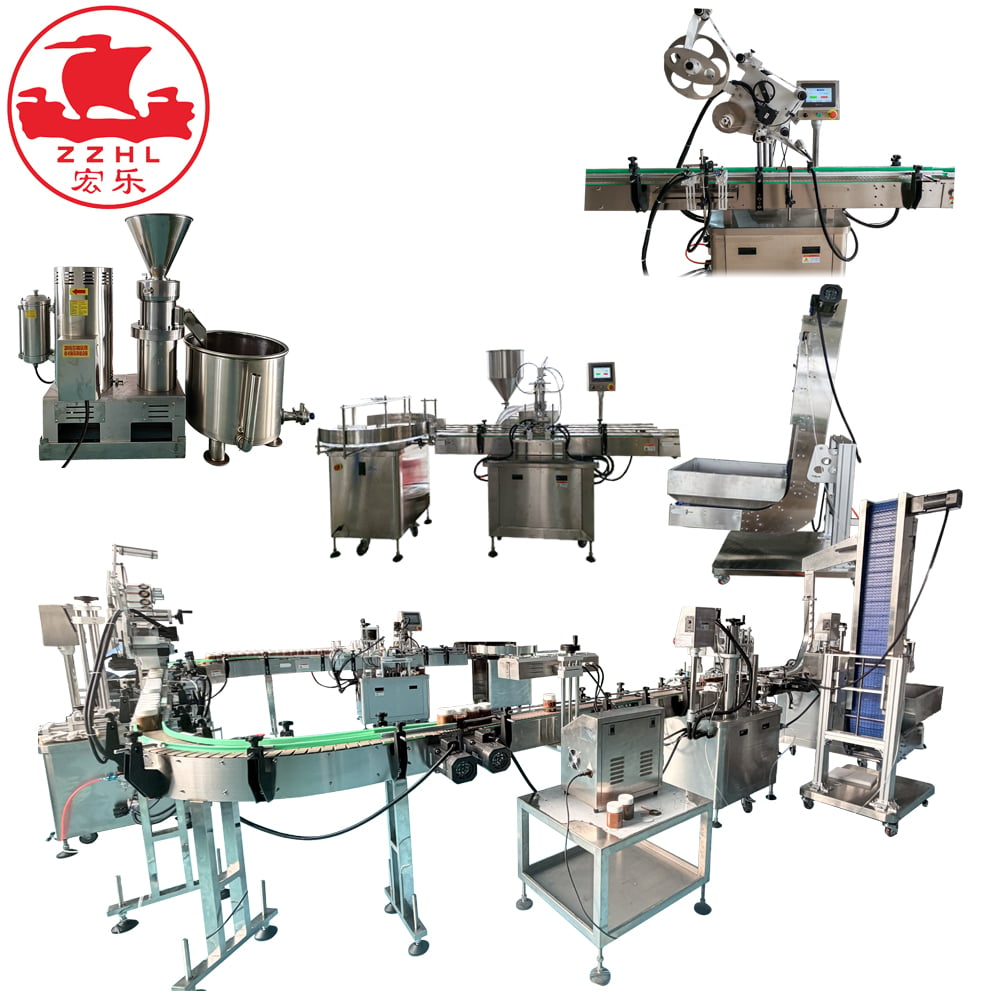
Start with the process, not the machine name. “Citrus juicer” can describe a whole-fruit extractor, a reamer-based unit, or a press used after fruit preparation. A broader industrial orange juicer machine line may also include washing, sorting, peeling or cutting, pulping, screening, pasteurization, and filling equipment. Ask each supplier to map exactly where their equipment starts and ends.
- Which fruits will run: oranges, lemons, limes, grapefruit, or mixed citrus?
- What is the incoming fruit condition, size range, and expected seasonal variation?
- Is the goal fresh juice, concentrate feed, pulp recovery, or a mixed fruit-and-vegetable line?
- What equipment is upstream and downstream, and who owns the interface responsibility?
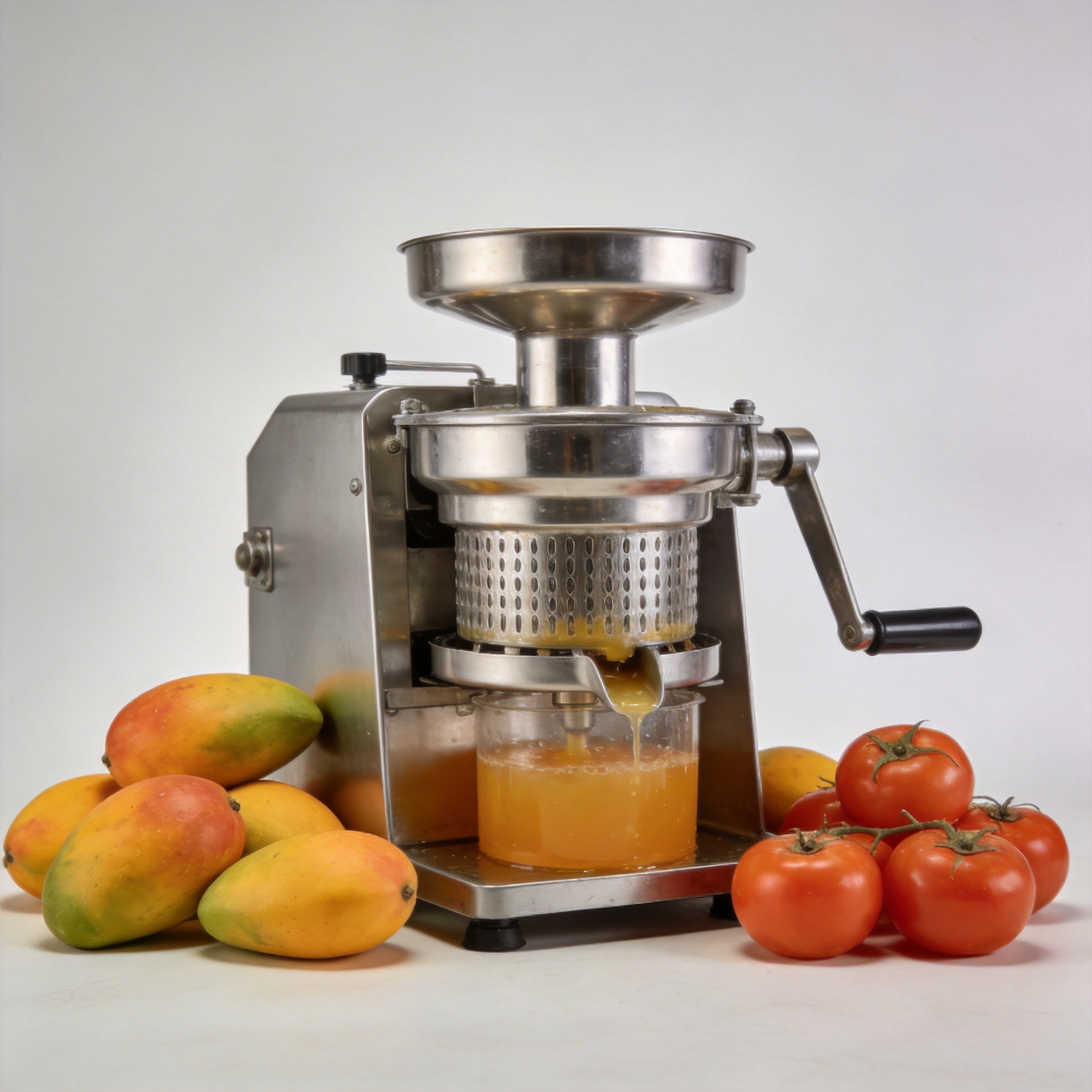
A supplier should identify any limitations early. For example, a screw press and a whole-fruit citrus extractor do not solve the same process problem. If the proposed solution is a press, request a clear explanation of the preparation stage, pulp handling, and expected juice quality for your recipe.
2. Ask for capacity and yield evidence—not headline claims
Throughput claims only become useful when the test basis is clear. Request the rated input capacity, the fruit type used for the test, the condition of the fruit, the operating hours assumed, and the way downtime was handled. Also ask whether capacity means raw-fruit input, juice output, or finished product flow.
For context, the matched product record for a Food-Grade Screw Press for Fruit & Vegetable Processing lists a stated 0.5–1 T/H capacity and an 80% juice-yield claim. Those figures can be a useful starting point for discussion, but a B2B buyer should ask for the fruit variety, feed preparation, moisture conditions, pulp setting, and measurement method behind the numbers.
| Evidence to request | Why it matters |
|---|---|
| Video or factory acceptance test using comparable fruit | Shows the actual feed, discharge, and operating rhythm. |
| Capacity calculation with input and output definitions | Prevents a mismatch between raw-fruit and juice-output assumptions. |
| Yield test method and sampling record | Lets you compare suppliers on the same basis. |
| Utility consumption at the proposed duty point | Supports operating-cost and line-integration planning. |
3. Verify food-contact design and cleanability
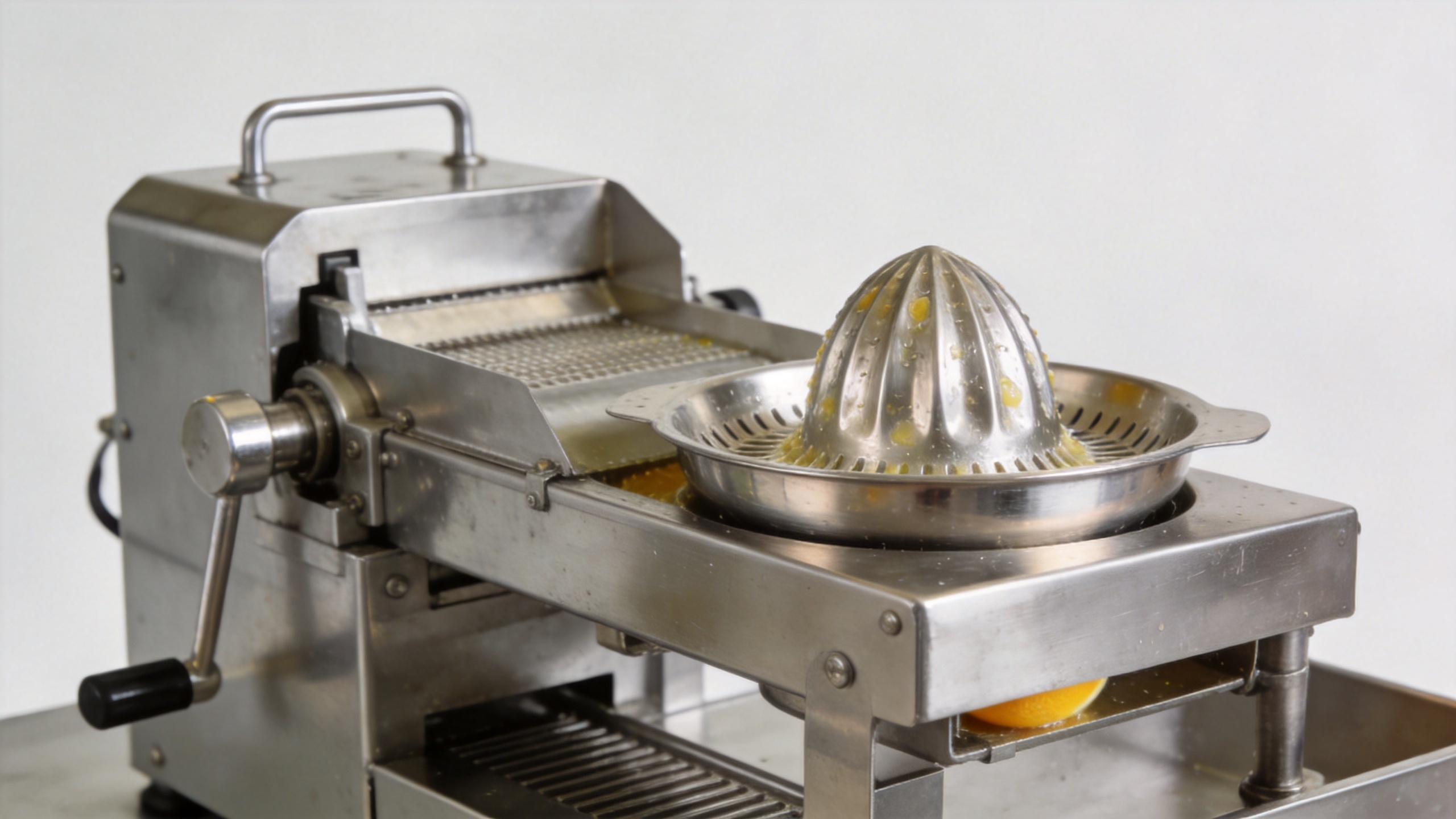
For an industrial citrus juicer, hygiene is a system issue. Ask for a bill of materials that identifies food-contact components, stainless-steel grades where applicable, seals, screens, piping connections, and cleaning access. Do not assume that a food-grade material claim covers every component that touches product.
Request drawings or photos that show how operators access the feed zone, extraction area, residue discharge, and drainage points. Clarify whether cleaning is manual, clean-in-place compatible, or dependent on disassembly. A machine that is difficult to inspect and clean can create a bigger production burden than its purchase price suggests.
If the finished juice will be supplied into regulated markets, involve your food-safety team early. FDA juice HACCP guidance illustrates why buyers need documented hazard analysis and validated process controls; the appropriate requirements depend on the product and destination market. The supplier should support the equipment documentation and process interfaces needed by your own compliance program, without claiming that the machine alone guarantees regulatory compliance.
4. Check the supplier’s documentation package
A dependable supplier should be able to list the documents included with the order before payment terms are finalized. At minimum, ask for the commercial specification, general arrangement drawing, electrical information, operating manual, maintenance schedule, spare-parts list, and commissioning requirements. For a line project, add a responsibility matrix that identifies who supplies controls, cabling, utilities, foundations, and integration work.
- Confirm voltage, frequency, control language, and local electrical requirements.
- Ask for a list of wear parts and recommended first-year spares.
- Define acceptance criteria for throughput, product condition, and safety checks.
- Agree on the format of remote support, such as video guidance and troubleshooting records.
These details matter especially in cross-border projects. Zhengzhou HongLe Machinery Equipment Co., Ltd. states that it supports overseas customers with remote video technical guidance, operating manuals, and spare-parts support. Treat that as a service discussion to confirm in the contract: ask for response windows, language coverage, training scope, and the escalation path for a start-up issue.
5. Evaluate service terms as part of the industrial citrus juicer purchase
Service terms should be measurable. Ask who will conduct commissioning, what preparation is required at your site, how many training sessions are included, and what happens if the actual fruit differs from the agreed test material. For an industrial orange juicer machine project, the most useful supplier is often the one that can identify adjustment points and limits before shipment.
Review lead time, packing method, Incoterms, warranty scope, excluded consumables, and the process for ordering replacement parts. If remote support is the primary service route, confirm how time-zone coverage and on-site escalation will be handled. A clear answer is more valuable than an unlimited-sounding promise.
6. Use a final pre-order checklist
- Process scope and fruit assumptions are documented.
- Capacity and yield claims are tied to a stated test method.
- Food-contact materials, cleaning access, and drainage are reviewed by the buyer’s technical team.
- Utilities, controls, and upstream/downstream interfaces have named owners.
- Acceptance criteria, documentation, training, and spare parts are written into the commercial agreement.
- Warranty and remote-support terms include practical response expectations.
The right industrial citrus juicer supplier helps a buyer turn these questions into an executable project plan. Before selecting a model, share your fruit type, target capacity, process flow, destination market, and available utilities, then request a proposal that answers the checklist point by point.